Toronto Pearson Airport moves roughly 30% of everyone who flies in or out of Canada, and in 2026 it is doing that while the largest rebuild in its history goes on around you. Two passenger terminals, a third airside concourse reached by bus, a free 24-hour train between the buildings, and a flat $70 taxi to Union Station. This guide is the airport itself: which terminal your airline actually uses, how arrivals and departures work, where to wait out a layover, and what you are owed when a flight falls apart.
Two things surprise first-timers. Pearson is not in Toronto — the site is in Mississauga. And the terminals are not split the way the internet says: “Terminal 1 is Star Alliance, Terminal 3 is everyone else” is wrong in both directions, and turning up at the wrong building costs you a train ride and a chunk of your buffer. Once you are through the doors, our guide to transport in and around Toronto takes over.
Toronto Pearson Airport at a glance
Officially Toronto Lester B. Pearson International Airport, IATA code YYZ. The GTAA is a not-for-profit that has run it under a federal ground lease since 1996, extended in December 2024 by twenty years to 1 December 2076 — which is why the current construction is measured in decades rather than seasons. Pearson handled 47.3 million passengers in 2025 across five runways, serving about 200 destinations and 45% of Canada’s air cargo.
One trend runs against the headlines: US-bound traffic is falling, not growing, so transborder checkpoints are quieter than they were while international arrivals halls are busier.
Terminal 1, Terminal 3 and the Infield Concourse
Check your terminal on the GTAA’s own airline list, not on your memory of alliances. Emirates and ITA Airways are Terminal 1 despite not being Star Alliance; Delta, Air France, KLM, Cathay Pacific, British Airways, American and WestJet are all Terminal 3. No airline relocations were announced at Pearson in 2025 or 2026.
| Terminal | Airlines (2026) | What is there |
|---|---|---|
| Terminal 1 | Air Canada, Air China, Air India, Air North, Avianca, Copa, Egyptair, Emirates, Ethiopian, Etihad, EVA Air, ITA Airways, LOT, Lufthansa, Royal Air Maroc, Swiss, TAP, Turkish, United | UP Express station. All GO, MiWay and Brampton buses — TTC stops here and at T3. Canada’s only CBSA eGates. Air Canada lounges. |
| Terminal 3 | Aer Lingus, AeroMexico, Air France, Air Transat, Alaska, American, Arajet, British Airways, Cathay Pacific, China Eastern, Condor, Delta, Finnair, Flair, Iberia, Icelandair, KLM, Korean Air, Philippine, Porter, Qatar, Saudia, SAS, Sun Country, Virgin Atlantic, WestJet and others | No UP Express station — ride the free LINK one stop to T1. TTC stops on Arrivals. The LINK platform is over the Sheraton Gateway’s bridge. |
| Infield Concourse | Overflow gates, rotating carriers — expect a gate number in the 500s | A separate airside building, 10 minutes by bus. Own Plaza Premium lounge, Quiet Room, play area, pet relief. |
The free Terminal Link train
The LINK is free, automated, runs 24 hours and takes two to eight minutes between three stops: Terminal 1 (Parking Garage Level 5), Terminal 3 (through the Sheraton Gateway’s pedestrian bridge) and Viscount Station. Maximum waits are eight minutes overnight and mid-morning, four the rest of the day; some parking pages claim a flat four, but the Terminal Link page is the one to trust. It carries non-folding mobility aids, and overnight closures are covered by a bus. Viscount serves the ALT Hotel, off-airport rental agencies and parking shuttles, and lets a driver skip the terminal curbs.
Pearson LIFT: what the construction means in 2026
Pearson LIFT — Long-term Investment in Facilities and Terminals — broke ground on 11 May 2026. It is no longer a proposal, and it is also not a new terminal. Three programmes sit under it.
Accelerator is $3 billion and in construction since May 2026: new airfield lighting control, roughly 30 km of baggage infrastructure including new Terminal 1 carousels, and an expanded airfield with new stands and a high-speed taxiway, supporting up to 28,000 extra passengers a day. T1/T3 Revitalization is $1.5 billion, with contracts awarded on 21 July 2026 to NORR-DIALOG and PCL Construction — expanded terminal space, refreshed lounges, modernised check-in and improved customs halls, staged so the airport keeps running. The contracts are signed but the diggers are not in the terminals yet: the GTAA still files this one under “on the horizon” and says it is onboarding partners. Gateway, the net-new terminal that would add 15 million annual passengers, is not being built: the GTAA’s wording as of September 2026 is that it is “currently in the competitive procurement phase.”
Practically: airside work is live, terminal work is contracted but not yet under way, and no closure schedule has been published. Check the live gate on Pearson’s flight tracker rather than the one printed on a boarding pass issued hours earlier, and add fifteen minutes to your usual buffer.
Getting from Toronto Pearson Airport to downtown
For most visitors heading to the core it is the train; for three or four people with luggage it is the flat-rate taxi. The full door-to-door comparison lives in our breakdown of the routes between Pearson and the city centre — below is the airport-side view.
| Option | Time | Cost (2026, CAD) | Where you catch it | Verdict |
|---|---|---|---|---|
| UP Express to Union | 28 min | $12.35; $9.25 with PRESTO | Terminal 1, beside the LINK platform | The default. No traffic risk. |
| Taxi | Traffic-dependent | $70 flat to Union, taxes in | T1 Door D; T3 Door E | Best value for three or four with bags. |
| Limo | Traffic-dependent | $77 flat to Union | T1 Door C; T3 Door E | Sedan, SUV or accessible van. |
| Uber, Lyft, Hopp | Traffic-dependent | Variable, subject to surge | Assigned zones, T1 Ground and T3 Arrivals | May undercut the taxi, or badly exceed it. |
| TTC 900 Airport Express | 20-25 min to Kipling, then Line 2 | $3.30 PRESTO / $3.35 cash | T1 Column R4; T3 Columns C8-C12 | The cheap option, about 45 min downtown. |
| TTC 52A, and overnight 300A/332/352 | 45-90 min | $3.30 PRESTO | Same bus stops | For Lawrence and Eglinton, or 2-5 a.m. |
| GO 40 and 94; MiWay 7, 24, 107 | Varies | GO: use the fare calculator. MiWay $3.50 PRESTO | T1 Columns Q2-Q4 and S4 | Regional, not downtown. |
| Car rental | Immediate | Agency rate plus city parking | Level 1 of the T1 and T3 garages | Good for day trips only. |
UP Express: 28 minutes, not 25
Almost every article written before 2026 says 25 minutes. UP Express’s own site now states the run to Union takes “a reliable 28 minutes,” while Pearson’s departures pages still say 25 in places. The two official sources contradict each other; the operator’s figure is the one to plan around. From Pearson: Weston 12 minutes, Mount Dennis 15, Bloor 19, Union 28.
Trains run every 15 minutes, first from Pearson at 5:27 a.m. on weekdays and 6:24 a.m. at weekends, last at 12:54 a.m. daily. The station is in Terminal 1 beside the LINK platform, so from Terminal 3 you ride the LINK one stop and follow the “Train to City” signage. Adult one-way is $12.35, or $9.25 with PRESTO; children 12 and under travel free; online group passes run $25.00 for three, $32.50 for four and $40.00 for five, which beats a taxi for five with light bags.
One trap: the One Fare programme, which gives free transfers between the TTC and GO, Brampton, Durham, MiWay and YRT, does not include UP Express. Budget it separately — our explainer on PRESTO for visitors covers whether the card earns its keep, and concession fares and the intermediate stations are in our rundown of the airport train.
Line 5 Eglinton does not go to the airport
Line 5 opened on 8 February 2026 and its western terminus is Mount Dennis, not the airport; Line 6 Finch West does not serve Pearson either. There is exactly one rail link to the terminal and it is UP Express. What Line 5 adds is an interchange — Mount Dennis is now a UP station, so you can ride 15 minutes from Pearson and change for midtown. The Crosstown West Extension to Renforth is under construction with no published opening date, and the airport segment beyond it is still only being explored. Our guide to riding the TTC covers how the new lines fit the network.
Taxis, ride-share and rental cars
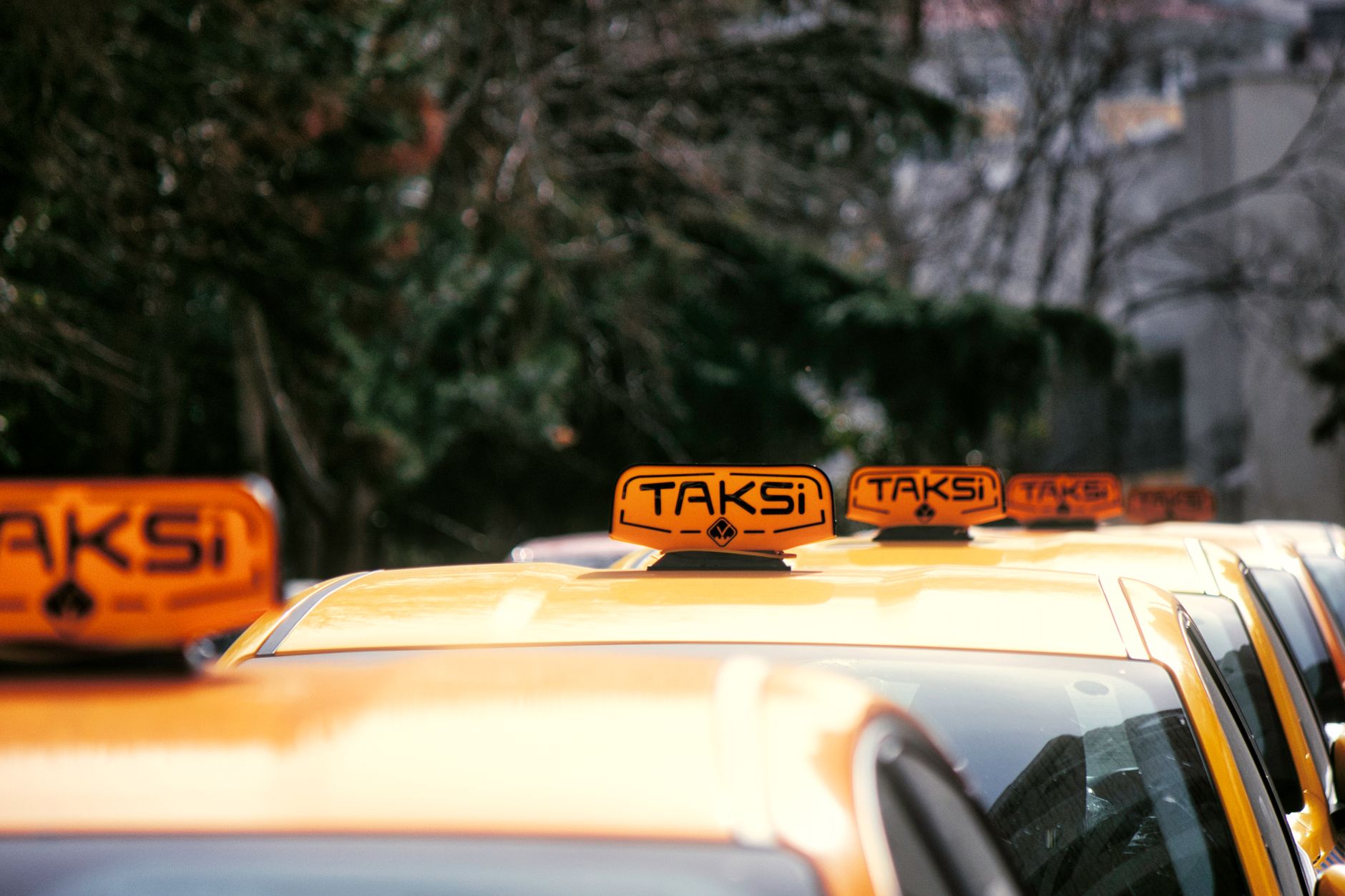
Licensed taxis and limos charge flat rates to Toronto destinations with no surge pricing and no card surcharge. The GTAA’s own fare estimator returns $70 for a taxi to Union Station — sedan for four or van for six — and $77 for a limo, guaranteed regardless of traffic, taxes included. The “$50 to $60” still quoted elsewhere comes from a tariff sheet dated February 2024.
Add $15 for five or more passengers or four or more checked bags, $15 per extra drop-off, and $10 per ten minutes for a requested stop. Taxis wait at T1 Door D and T3 Door E, limos at T1 Door C, and accessible vehicles are arranged at the Door A desk. Check the GTAA plate on the bumper and ignore anyone who approaches you inside the terminal — our notes on staying safe in Toronto apply the same instinct to the city.
Ride-share zones
Three apps are licensed in 2026: Uber, Lyft and Hopp, the last new enough that older guides miss it. At Terminal 1, Lyft and Hopp use Zone 3 and Uber Zones 4 and 5; at Terminal 3 Arrivals, Lyft and Hopp use Zone 2, all three share Zone 3, and Zones 4 to 6 are Uber. Nobody publishes fare bands from Pearson and we will not invent one: ride-share is surge-priced while the taxi is a guaranteed $70. Uber WAV carries a non-folding mobility aid; Lyft does not.
Rental cars and hotel shuttles
Avis, Budget, Dollar and Thrifty, Enterprise, Hertz, National and Alamo have counters on Level 1 of the T1 and T3 parking garages, not in the terminal halls; off-airport agencies collect at Viscount Station via the free LINK. No rental vehicle at Pearson can carry a non-folding mobility aid, and Highway 407 ETR is all-electronic, so its tolls follow you home. Our assessment of when a rental car is worth it in Toronto lands mostly on day trips.
More than thirty airport-area hotels run shuttles from T1 Arrivals Door E and T3 Arrivals Doors B and G; the ALT Hotel and the Sheraton Gateway use the LINK instead. The GTAA does not state that shuttles are free as a class, so confirm with your hotel — and most visitors should not stay out here at all. See our accommodation guide by neighbourhood and the shortlist of downtown hotels worth booking.
Arriving: customs, kiosks and Canada’s only eGates
Canadian border processing runs on Primary Inspection Kiosks, still in use in both terminals in 2026: scan your document, answer the declaration questions, take the receipt to an officer. Up to five travellers can share a kiosk. Terminal 1 also has eGates, the only ones in Canada, which process one person at a time. Under-14s cannot certify their own declaration or use the eGates, and unaccompanied under-16s cannot use the kiosks at Pearson at all.
The best time-saver is free. Submit a CBSA Advance Declaration in ArriveCAN up to 72 hours before landing and the CBSA’s own figure is that you report through the kiosk 30% faster; at Pearson it also gets you Express Lanes. It cannot be combined with NEXUS kiosks, and ArriveCAN itself is optional. Both terminals also run a “Goods to Declare” lane, piloted since 28 May. The CBSA explains how the kiosks and eGates work on its own site.
On allowances: nothing under 24 hours away; CAN$200 after 24 hours, excluding tobacco and alcohol, and exceeding it costs the whole exemption rather than just the excess; CAN$800 after 48 hours, which can include 1.5 litres of wine or 1.14 litres of spirits. Cannabis is prohibited for import regardless of its status here, and CAN$10,000 or more must be declared in either direction.
NEXUS, preclearance and connections
NEXUS is US$120 for five years and free under 18 — some US CBP pages still show an older US$50 figure, but the CBSA number is current. At Pearson it buys a dedicated arrivals kiosk, security line and US Customs line, and the enrolment office runs Monday to Friday, 08:00-15:45. Global Entry members use the NEXUS kiosks.
US preclearance operates in both terminals, so you clear American immigration, customs and agriculture here and land in the US as a domestic passenger. CATSA screening opens at 3:00 a.m. and USCBP processing runs 3:30 a.m. to 9:00 p.m.; Pearson publishes no “extra time” figure, so follow your airline. For connections, its Connection Guide tells you whether you clear customs, change terminals or re-screen. The GTAA publishes no minimum connection times; your airline sets them, so ignore the 40-minute and 90-minute figures on forums.
Departing from Toronto Pearson Airport
Two official sources disagree on how early to arrive. CATSA says two hours for domestic and three for US and international. Pearson says “a general rule of thumb is 90 minutes for domestic travel and 3-4 hours for international,” and otherwise defers to your airline. Treat CATSA’s numbers as the floor and Pearson’s international range as the target at peak times.
Check two live tools before leaving: Pearson’s wait-time dashboard for check-in, security and customs, and CATSA’s screening waits, updated every two minutes. Pearson has seven separate checkpoints across the two terminals — domestic, international and transborder in each, plus a second T1 domestic line — and they do not queue alike, so look up yours rather than an average.
Security here is better than its reputation. CATSA’s standard was upgraded to 95/15 — 95% of passengers waiting under 15 minutes annually at Class 1 airports — and actual performance over the past year is 96% under 15 minutes and 91.7% at peak, so any article quoting the old 85/15 standard is out of date. That published wait excludes check-in, bag drop and the walk to your gate.
YYZ Express and the other fast lanes
YYZ Express is a free virtual queue with no membership: reserve online or take a walk-up appointment, then show the QR code at the virtual-queue logo. It runs at the T1 D Gates checkpoint 5:00 a.m.-9:00 p.m. and the T3 B and C Gates checkpoint 6:00 a.m.-10:00 p.m. The catch that gets everyone: it is not available for US-bound flights.
Verified Traveller benefits vary by checkpoint here: full divesting benefits at T1 Domestic Level 3 and T3 Domestic, reduced benefits at both transborder checkpoints, and front-of-line access only at T1 and T3 International. Pearson also runs Trusted Traveller, Family and Special Assistance lines and an American Express Priority Security Lane.
Baggage rules are standard: liquids in 100 ml containers inside one one-litre clear bag, carry-on size set by your airline rather than the airport, lithium batteries always in carry-on. Expect random enhanced electronics screening, so charge devices enough that they power on. What goes in the bag is a seasonal question — our season-by-season packing list is built for it.
Lounges and where to wait
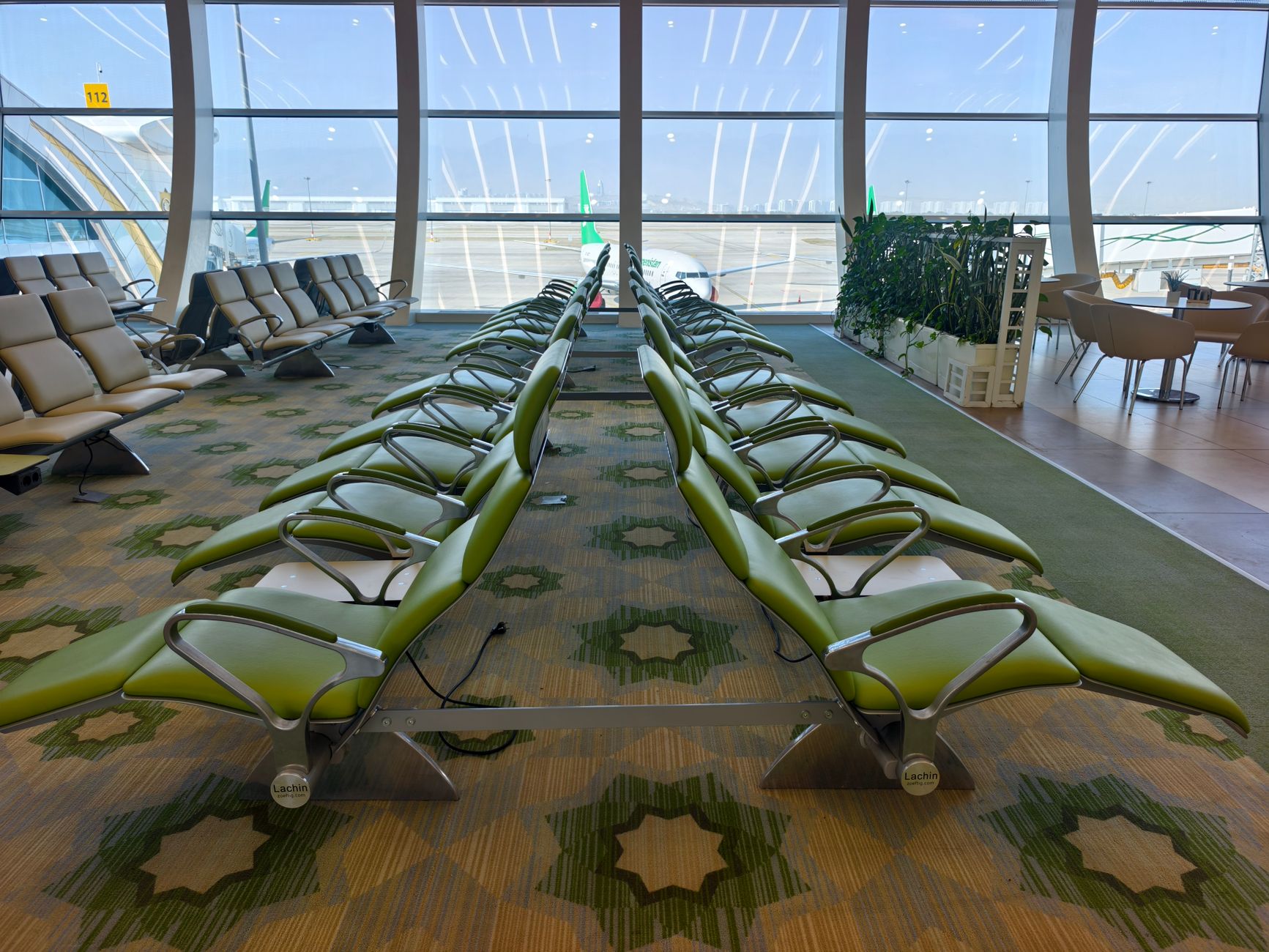
Air Canada’s Maple Leaf Lounges are in Terminal 1 only, on the domestic, US transborder and international sides, with showers and toiletries. The trap is the pricing: a guest costs $59, but buy-in access must be bought at booking or at least 24 hours ahead, not at the airport on the day — $49 with Premium Economy or Latitude, $59 with comfort, $79 with Flex. Maple Leaf Club membership purchases are currently suspended.
Plaza Premium is the only walk-in operator Pearson officially points to, open to all passengers regardless of airline or ticket class. These are the “from” rates showing in September 2026.
| Plaza Premium location | Hours | From (2026, CAD) |
|---|---|---|
| T1 Domestic | 05:30-01:00 | $24.68 |
| T1 US Transborder | 05:30-21:00 | $24.68 |
| T1 Lounge-to-Go | 05:30-01:00 | $30.00 |
| T3 Domestic | 05:30-22:00 | $73.00 |
| T3 International | 05:30-01:00 | $25.00 |
| T3 US Transborder | 05:30-19:30 | $73.00 |
| Infield Concourse | 15:00-22:30 | $24.86 |
The two Terminal 3 lounges at $73 cost roughly three times their Terminal 1 equivalents. Two claims to ignore: there is no confirmed American Express Centurion Lounge at Pearson, since Amex Platinum access in Toronto runs through Plaza Premium; and nothing on the GTAA site confirms sleep pods, rest cabins or a public pay-per-use shower. Free alternatives are the Infield Quiet Room, the Pearson Chapel landside in both terminals, and a GoodLife Fitness before security in Terminal 1.
Amenities you will actually use
Luggage storage and cash. Excess Baggage runs storage in both terminals before security — Terminal 1 in Domestic Arrivals near Tim Hortons, 5:00 a.m.-11:00 p.m., and Terminal 3 near check-in counter 5, 5:00 a.m.-10:00 p.m. Prices are not published, so ask at the counter. International Currency Exchange has pre-security booths in both terminals dealing in more than 70 currencies, at airport rates — change a little here and more in the city, if you need cash at all, which our breakdown of what a Toronto trip costs suggests is barely.
Families. Children’s play areas sit in the T1 departure lounge near gate D24 and in the Infield Concourse near gate 521. Mamava nursing pods, unlocked through the free Mamava app, are at T1 gates D22, E80/81 and F59 and at T3 opposite C30-31, near B22 and opposite A12/A13, with separate nursing rooms in both terminals. Our family travel guide picks up where the terminal ends.
Pets and everything else. Relief zones are at T1 Departures Aisle 15, T1 Ground Level, T3 outside Arrivals Door A and four spots in the Infield Concourse. Terminal 1 has a pharmacy, a bank branch and Lost and Found; Terminal 3 gained BLVD Pizza Bar on 28 August 2026. Pearson pushes flight updates and a chatbot through WhatsApp on +1 289-804-5748 — worth saving alongside the tools in our list of Toronto apps to download.
Accessibility at Toronto Pearson Airport
Pearson holds Rick Hansen Foundation Accessibility Certification, but the division of responsibility is what people get wrong: the airport handles terminals and facilities, while your airline handles curb-to-boarding assistance, mobility aids and connection support — notify the airline at least 48 hours ahead. Accessible taxis and limos are arranged at the Door A desk in both terminals, and accessible drop-off is on the Departures level. The only confirmed calm space is the Infield Quiet Room; we could not confirm a Sunflower lanyard programme or a sensory room, so do not plan around either.
Layovers: what four, eight or twelve hours buys you
The maths decides everything. UP Express is 28 minutes each way, so 56 minutes riding, plus up to 15 minutes of headway in each direction, plus the LINK if you fly from Terminal 3, plus re-screening on the return. Call it three and a half hours of overhead before you have looked at anything.
Four hours: stay airside. Buy into a Plaza Premium lounge — from about $24.68 in T1 domestic or transborder, $25.00 in T3 International — and treat it as a meal, a shower and a seat with a plug.
Eight hours: downtown is feasible. UP Express sells a Long Layover Return for $12.35, online only, valid from Pearson and expiring after seven hours — the best-value ticket at this airport, and almost nobody mentions it. Check the live CATSA waits before heading back. Union puts you a short walk from the waterfront and the underground walkways, so our guide to the PATH network is the one for bad weather, and the single-day Toronto plan cuts down to a half-day.
Twelve hours or overnight. Now it is a proper trip or a hotel — the Sheraton Gateway connects directly to Terminal 3 and the ALT sits at Viscount on the free LINK, so neither needs a shuttle. If you would rather see the city, the first half of our two-day Toronto itinerary maps onto a long overnight, and the wider list of things to do fills whatever shape your hours take.
Not leaving at all? The LINK is free and runs 24 hours, so a round trip to Viscount costs nothing and passes twenty minutes. Store your bags at Excess Baggage first.
Parking, drop-off and pick-up
Posted 2026 rates without a reservation. Booking online is cheaper, an email signup gets 10% off a first reservation, and cancellation is free up to 24 hours before entry.
| Car park | Rate (2026, CAD) | Maximum | Distance | Height limit |
|---|---|---|---|---|
| Express Park (T1 only) | $7 per 20 min for entries 12:00-19:59; $6 otherwise | $59 per day | 2-3 min | 2.4 m |
| Daily Park (T1 garage) | $8 per 20 min for entries 12:00-19:59; $7 otherwise | $42 per day; $235 for 7 days | 3-5 min | 2.4 m |
| Daily Park (T3 garage) | $7 per 20 min for entries 12:00-19:59; $6 otherwise | $42 per day; $235 for 7 days | 3-5 min | 2.0 m; EV charging |
| Valet Care (T1 Departures, Post 9) | $20 one-time valet fee | $56 per day; $275 for 7 days | Kerbside | Rates dated July 2025 |
| Value Park Garage (6145 Viscount Rd) | $32 per day, covered | $160 for 7 days, then $32/day | 6-12 min on the LINK | 2.2 m |
| Value Park Lot (6135 Viscount Rd) | Online only; pricing may vary | Not posted | 9-15 min on the LINK | 14 accessible spaces |
Third-party sites quote a specific daily rate for the Value Park Lot. The GTAA publishes none, so we are not repeating it, and the same goes for Preferred Park and Fast Track Parking.
Meeting someone off a flight
What used to be the cell phone lot is now the free waiting area: free for up to 45 minutes, you must stay with your vehicle, and there are two of them off Viscount Road via Network Road. An Express Pass booked online gives free covered-garage parking for pick-up and drop-off, though the pick-up page says 20 minutes and the arrivals page says 18 — treat it as under 18.
There is no curbside drop-off fee as of September 2026. Brief stops are allowed at Arrivals or Departures; waiting is not, and idling vehicles are monitored around the clock. The fines are real: $50 for parking on the roadways leading to the terminals and $85 for dwelling on the terminal curbs, enforced by licence-plate photo. The GTAA advises meeting international arrivals one to three hours after the scheduled landing, which sounds excessive until you have waited at a curb you are not allowed to wait at.
In winter, storms routinely delay flights and the GTAA runs a standing banner telling passengers to check with the airline before travelling to the airport — an open airport is not a departing flight. Impressive claims circulate about Pearson’s de-icing facility, but the GTAA confirms only that glycol is used and recovered, so the numbers stay out. Nor is there published data on the busiest days; the one indirect signal is that both garages charge their higher rate for entries between noon and 7:59 p.m.
Delays, cancellations and what the airline owes you
Most websites get this wrong. Canada’s Air Passenger Protection Regulations are still SOR/2019-150, current to 21 June 2026 and last amended on 8 September 2022. The proposed reforms are not in force. They appeared in Canada Gazette Part I on 21 December 2024 and the Canadian Transportation Agency has said only that it “will determine next steps” — no Air Passenger Protection item appeared in either part of the Gazette at any point in 2026. Bill C-52, often described as the reform vehicle, died on 6 January 2025 and never passed.
So the three-category framework still governs your claim, including the part that frustrates passengers most:
- Within the airline’s control — compensation, treatment and completion of your itinerary.
- Within its control but required for safety — treatment and itinerary completion, but no compensation. This carve-out is the whole ballgame, and removing it is exactly what the proposed amendments would do if they are ever brought into force.
- Outside its control — itinerary completion only.
A large airline is one that carried at least two million passengers in each of the two preceding years. Everyone else is small.
| Situation | Large airline | Small airline |
|---|---|---|
| Arrival delay 3-6 hours | $400 | $125 |
| Arrival delay 6-9 hours | $700 | $250 |
| Arrival delay 9 hours or more | $1,000 | $500 |
| Refund taken instead of rebooking | $400 | $125 |
| Denied boarding 0-6 hours | $900 | $900 |
| Denied boarding 6-9 hours | $1,800 | $1,800 |
| Denied boarding 9 hours or more | $2,400 | $2,400 |
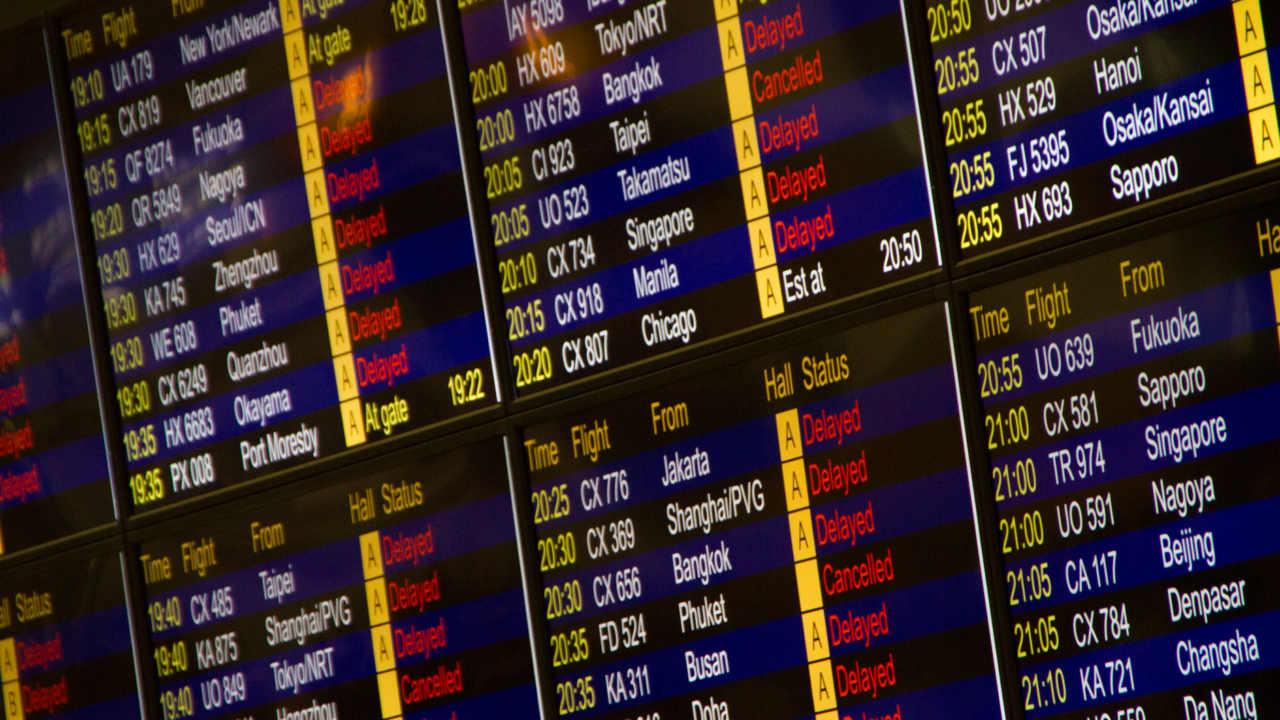
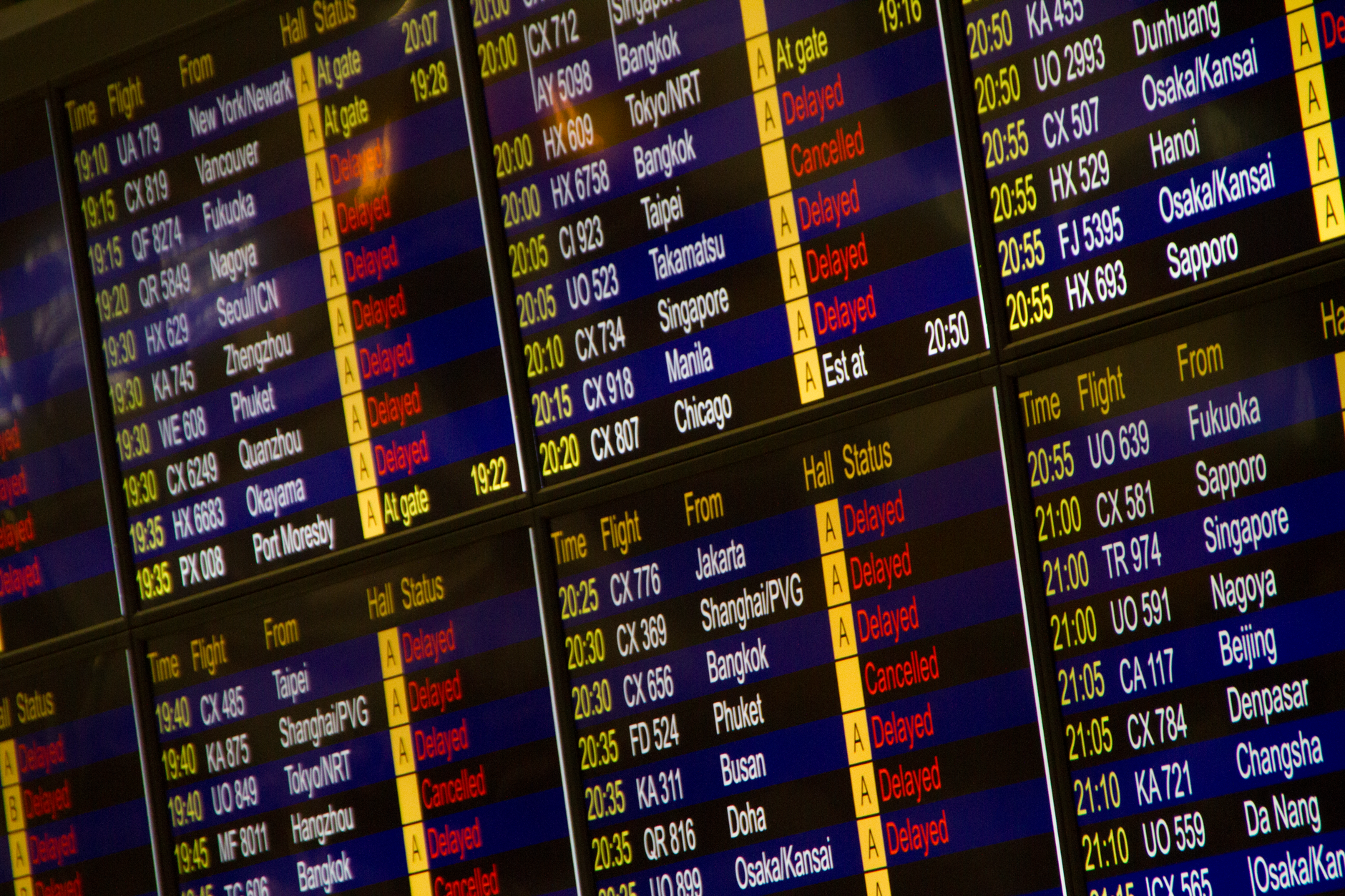
Treatment starts earlier than compensation: on a delay within the airline’s control, safety-related or not, after two hours you are owed food, drink and a means of communication, and an overnight wait means free accommodation and transport to it. On the tarmac the aircraft must return to the gate after three hours, with one exception — it may sit a further 45 minutes if take-off is genuinely likely and the treatment keeps coming. Rebooking begins at three hours or immediately on cancellation, and if the disruption is within the airline’s control — this time whether or not it was required for safety — and it cannot get you away within nine hours of the original departure, a large carrier must rebook you on any airline, including a competitor. Baggage liability runs to roughly $2,350 under the Montreal Convention.
How to actually claim
Complain to the airline in writing first and wait 30 days. You have one year to claim; the airline has 30 days to pay or explain. If it refuses, escalate to the CTA’s Complaints Resolution Office — binding, confidential, free, no lawyer needed. Expect a long wait: the CTA’s own stated figure is more than 18 months, against a backlog of 84,398 complaints as of 31 March 2025. The maximum penalty has risen to $250,000 per violation from $25,000. Its summary of the regulations is the document to quote back at an airline. File it yourself; claims agencies take a cut of an award you can win with an email and patience.
Billy Bishop: Toronto’s other airport
Billy Bishop Toronto City Airport (YTZ) sits on the Toronto Islands three kilometres from downtown, and for some trips it beats Pearson outright: a free pedestrian tunnel from curb to check-in in under six minutes, a 90-second ferry that is free on foot, and a complimentary shuttle to Union Station. Porter and Air Canada Express fly from here, though Porter’s E195-E2 jets use Pearson. The 2026 change matters: US preclearance opened on 10 March 2026, carrying a new CBP user fee of $22.50 CAD per US-bound passenger in year one, collected by the airline at ticket purchase. Traffic was up 10% year on year from May to July 2026, with US traffic tripling since launch. On the jets question, Transport Minister Steven MacKinnon announced on 25 July 2026 that the government will not support expansion, citing consultations in which 87% of respondents opposed it.
Frequently asked questions
How long does it really take to get from Toronto Pearson Airport to downtown?
UP Express takes 28 minutes to Union Station on a timetable rather than in traffic, with trains every 15 minutes. A taxi is a flat $70 and takes as long as the Gardiner takes. The TTC’s 900 Airport Express plus the subway is about 45 minutes. Add 15 minutes if you start from Terminal 3.
Which terminal do I need?
Check the GTAA airline list rather than guessing from the alliance. Air Canada, United, Lufthansa, Emirates and ITA are Terminal 1; WestJet, Delta, American, British Airways, Air France, KLM and Porter are Terminal 3. If you get it wrong, the free Terminal Link train takes two to eight minutes plus the walk at either end.
Is UP Express 25 minutes or 28?
Twenty-eight. UP Express’s own site states 28 minutes to Union Station while Pearson’s departures pages still say 25 in places. The two official sources genuinely disagree, and the operator’s number is the one to plan around.
Can I leave the airport during a layover?
With eight hours or more, yes. UP Express sells a Long Layover Return for $12.35 online, valid from Pearson for seven hours; budget roughly three and a half hours of overhead for travel, headway and re-screening. With four hours, stay airside and buy a Plaza Premium pass — from about $24.68 in Terminal 1.
Is there free Wi-Fi at Pearson?
Lounge Wi-Fi is confirmed and UP Express trains carry free Wi-Fi, but we could not confirm the terms of airport-wide Wi-Fi on the GTAA’s own pages. Download boarding passes, maps and entertainment before you arrive. Billy Bishop, by contrast, confirms free Wi-Fi throughout its terminal.
What happens if my flight is cancelled?
It depends on the reason. Within the airline’s control means $400 to $1,000 compensation on a large carrier, plus treatment and rebooking. Within its control but required for safety means treatment and rebooking but no compensation — that loophole is still law in 2026. Outside its control means rebooking only.
Landing is the easy part; the first twenty-four hours are where visitors lose time. If this is your first trip, it is worth knowing before you clear customs that the lake is always south, that Yonge Street splits east addresses from west, and that tapping a contactless card on the TTC buys two hours of unlimited travel while paying cash does not. Our guide to your first time in Toronto collects the thirty things that actually matter.
If you’re only passing through, Pearson is closer to the city than it feels from the gate. With a layover of eight hours or more, the UP Express can have you at Union Station in under half an hour, in time for the CN Tower and lunch at St Lawrence Market before heading back. Our Toronto layover guide does the honest maths on customs, security and train times, with plans for 4, 8 and 12 hours.
Plan the rest of your Toronto trip
Landing well is the first ten per cent. Our full Toronto trip-planning guide covers timing, budget and the shape of a first visit, and the city-wide transport overview explains how the subway, streetcars and PRESTO fit together once you are past the airport.
Still deciding between the train and a cab? The cost comparison in our airport-to-city transport breakdown works through the price per person at every group size, and the deeper look at how the airport train works covers ticketing and the stations in between. For what to do once you are there, start with the landmarks and attractions roundup — and before you tip at the airport bar, the conventions are in our tipping guide.