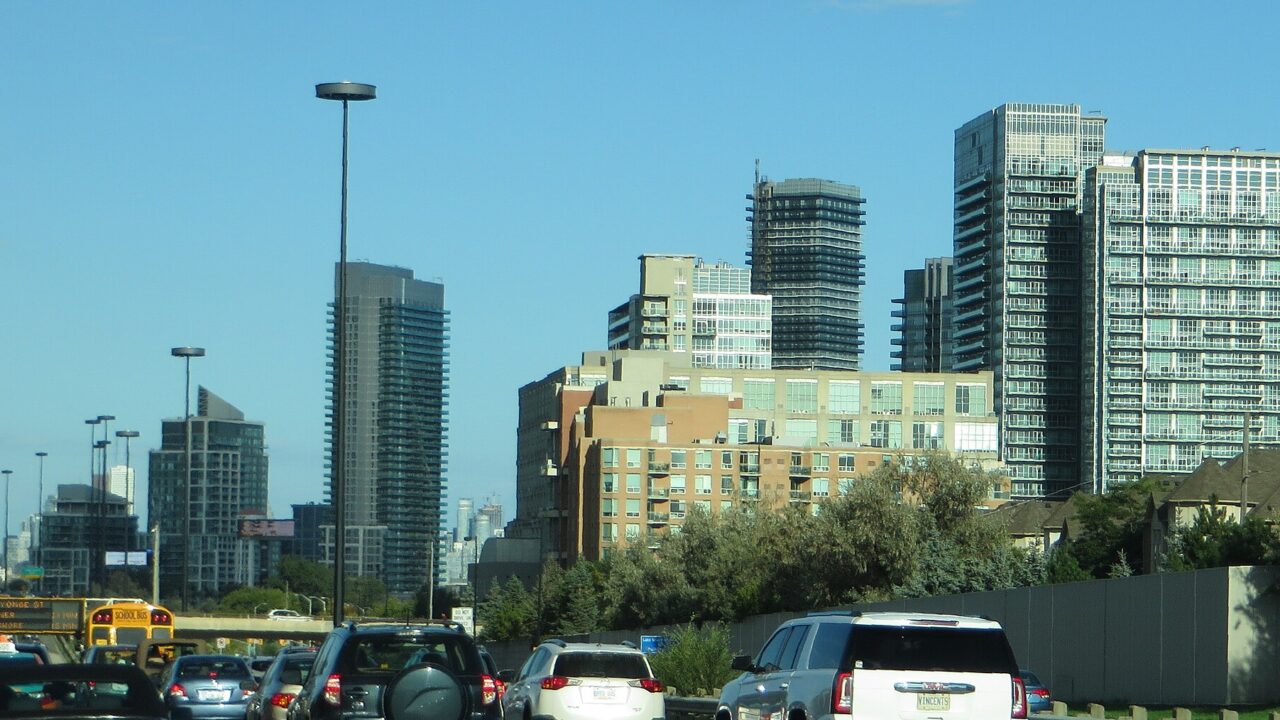
The overhead sign on the eastbound Gardiner says eighteen minutes to Yonge Street, and it is lying by about ten. Everyone in the three lanes around you knows it, nobody minds much, and by the time you crawl past the Humber Bay condo towers you have understood the first rule of driving here: Toronto is not a dangerous city to drive in, just a slow and expensive one. The second rule arrives when you find somewhere to stop. Parking in Toronto is a game with clear rules, generous signage and very efficient enforcement, and visitors lose it mainly because nobody told them the rules exist.
This guide covers both halves: how the roads actually behave, what the local driving laws expect of you (several catch out American and European drivers alike), how Green P and street parking work, what a ticket costs, and where to leave the car when you are heading for the big attractions. Prices were checked in September 2026 and are in Canadian dollars; parking rates move every year or two, so treat them as the right order of magnitude rather than a quote.
At a Glance: Parking and Driving Costs
| Item | What to expect (2026) |
|---|---|
| On-street parking (Green P meters and app) | $1.50 to $6.75 an hour, tax included; the top band covers the downtown core |
| Default time limit on city streets | Three hours, unless a sign says otherwise |
| Rush-hour restrictions | Typically 7–9am and 4–6pm on major roads — no stopping at all |
| No Parking ticket | $60 |
| No Stopping or fire hydrant ticket | $150 |
| Parking in an accessible space without a permit | $450 |
| Paying a ticket late | Adds a $32.10 late payment fee |
| Exhibition Place surface lots (e.g. Royal Winter Fair) | $18 by day, $15 after 6pm |
| Hotel parking downtown | Rarely included; ask for the nightly charge before you book |
| Highway 407 ETR | Electronic toll, no booths — billed by plate, and rental firms add their own fee |
Should You Drive in Toronto at All?
Start with the honest answer, because it saves a lot of money: if your trip is downtown Toronto and nothing else, you do not need a car and you will regret having one. The core — the waterfront, the Entertainment District, Old Town, Kensington, Yorkville, Queen West — is compact, walkable and knitted together by the subway and the 501 and 504 streetcars. A PRESTO or contactless tap costs $3.30 and includes a two-hour transfer. A car, by contrast, costs you a nightly hotel parking charge, an hourly rate every time you stop, and the evening you spend circling the block outside a restaurant on Ossington. Our guide to getting around Toronto and the TTC guide will get a downtown visitor everywhere they need to be.
A car starts to make sense in three situations. The first is day trips: Niagara-on-the-Lake’s wineries, Prince Edward County, Muskoka, Blue Mountain and the Hamilton waterfalls are all far easier with your own wheels, and some are close to impossible without them. The second is a family trip with small children and the kit that comes with them, particularly if you are staying out in the suburbs. The third is a base outside the core — North York, Mississauga, Markham — where the subway does not reach and buses run on long headways.
The sensible hybrid, which a lot of visitors end up doing on the second trip, is to spend the downtown days car-free and rent for a day or two only when you head out of town. Our guide to renting a car in Toronto covers where to pick up, what insurance you actually need and why the airport counters are not always the cheapest.
Is it hard to drive in Toronto?
Not in the way people fear. Drivers here are neither aggressive nor especially polite; they are impatient in a very ordinary, big-city way. The grid is simple, street names are clearly signed, and the main arteries run in straight lines north–south (Yonge, Bay, University, Spadina, Bathurst) and east–west (Front, King, Queen, Dundas, College, Bloor). If you can drive in Chicago, Boston or Manchester, you can drive here.
What makes it hard is three things that are particular to Toronto: streetcars sharing the road with you, a downtown full of turn restrictions that are not obvious until you are sitting at them, and congestion that turns a twelve-kilometre trip into a forty-minute one. The first two are rules problems and are covered below. The third you just plan around.
The Roads: Where the Traffic Actually Is
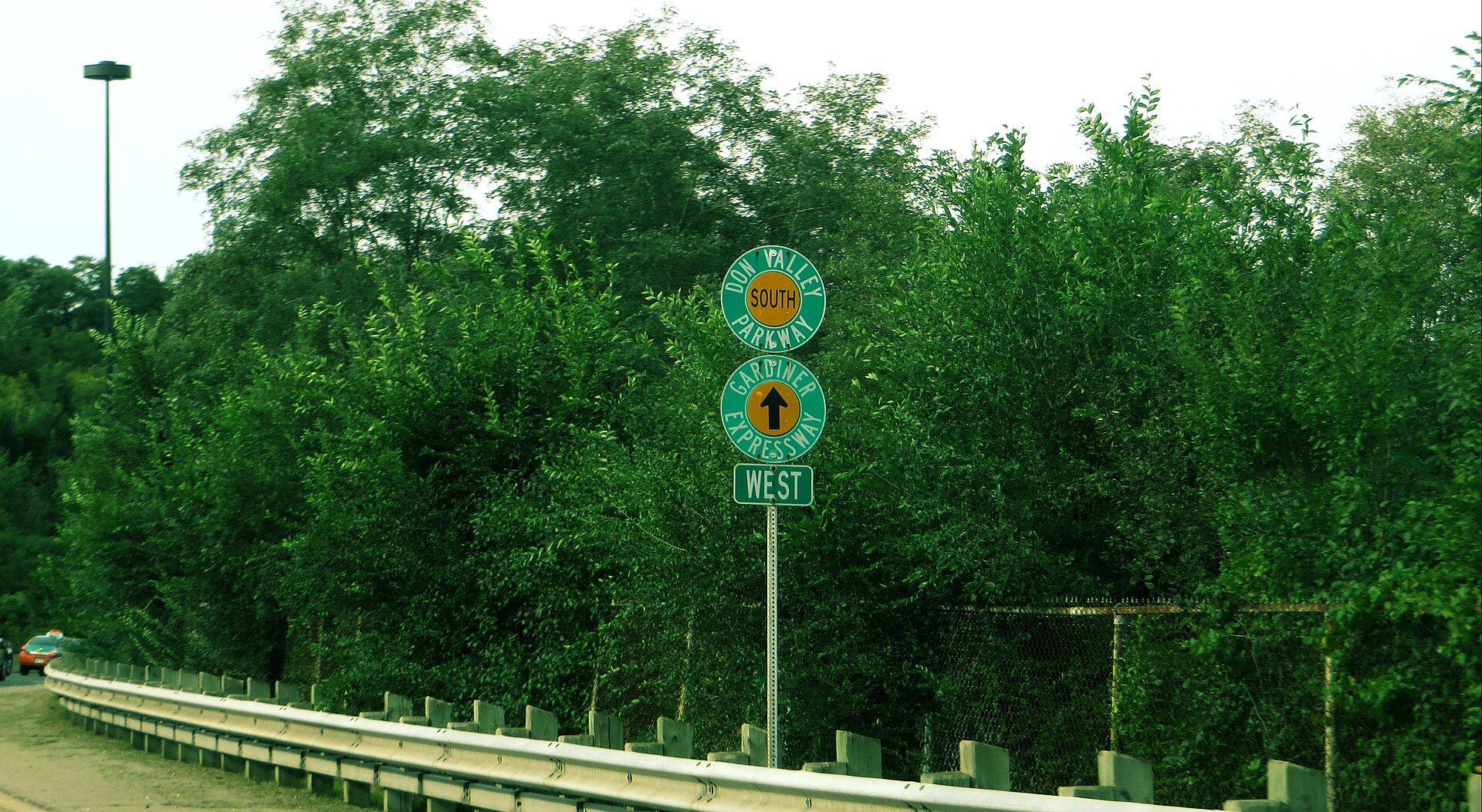
Toronto’s road network funnels into downtown from three directions, and knowing which funnel you are in explains most of the delays you will sit through.
The Gardiner Expressway
The elevated highway along the waterfront, running from the western city limit (where it continues as the Queen Elizabeth Way towards Niagara) to the Don Valley in the east. It is the main route in from Pearson’s direction if you come down Highway 427, and from Niagara and Hamilton. It is also the city’s most famous traffic jam, and has been under long-running rehabilitation work that closes lanes for months at a time. Check the city’s road restrictions map before you set off; a lane closure on the Gardiner can add half an hour to a trip that normally takes fifteen minutes.
The alternative for the last few kilometres is Lake Shore Boulevard, which runs underneath and beside it at street level. It has traffic lights, but when the Gardiner is jammed Lake Shore is often quicker.
The Don Valley Parkway
The DVP runs north from the Gardiner up the Don River valley to Highway 401 and becomes Highway 404 beyond it. Locals call it the Don Valley Parking Lot, and at rush hour the joke writes itself. It is a genuinely pretty drive in autumn when the valley turns orange, and it is the obvious route from the northeast suburbs, but it has no alternatives for long stretches — once you are in the valley, you are committed.
Highway 401
The 401 crosses the top of the city east–west and is one of the busiest highways in North America, with express and collector lanes running side by side through much of Toronto. It is not a downtown road at all, but you will use it to reach the zoo, Scarborough, Pearson or anywhere further afield. Do not try to cross it at rush hour if you have any choice in the matter.
Highway 407 ETR — the toll road
North of the 401 runs the 407 ETR, a privately operated toll highway that is usually far emptier. There are no toll booths: cameras read your plate or a transponder, and a bill follows. That matters enormously in a rental car, because the rental company receives the bill and passes it on to you with an administration fee of its own. Ask at the counter how they handle 407 charges, and if you do not want to pay them, set your navigation app to avoid tolls before you leave the lot.
When not to drive
- Weekday rush hours, roughly 7–9:30am inbound and 3:30–6:30pm outbound. Toronto’s afternoon peak starts earlier and runs longer than most visitors expect.
- Friday afternoons in summer, when half the city heads north on Highway 400 to cottage country. The return trip on Sunday evening is just as bad. If you are going to Muskoka, leave on a Thursday or before lunch.
- Game nights downtown. A Leafs or Raptors game at Scotiabank Arena, or a Blue Jays game at Rogers Centre, fills every garage south of King Street and pushes event rates sharply upward.
- The first snowfall of winter, which reliably produces a day of collisions across the region as everyone relearns braking distances.
Toronto Driving Rules Visitors Get Wrong
Ontario’s rules of the road are broadly similar to the rest of North America, but a handful of them trip up visitors often enough to be worth spelling out. None of these are obscure to local drivers, and police enforce all of them.
Streetcars: stop behind the doors
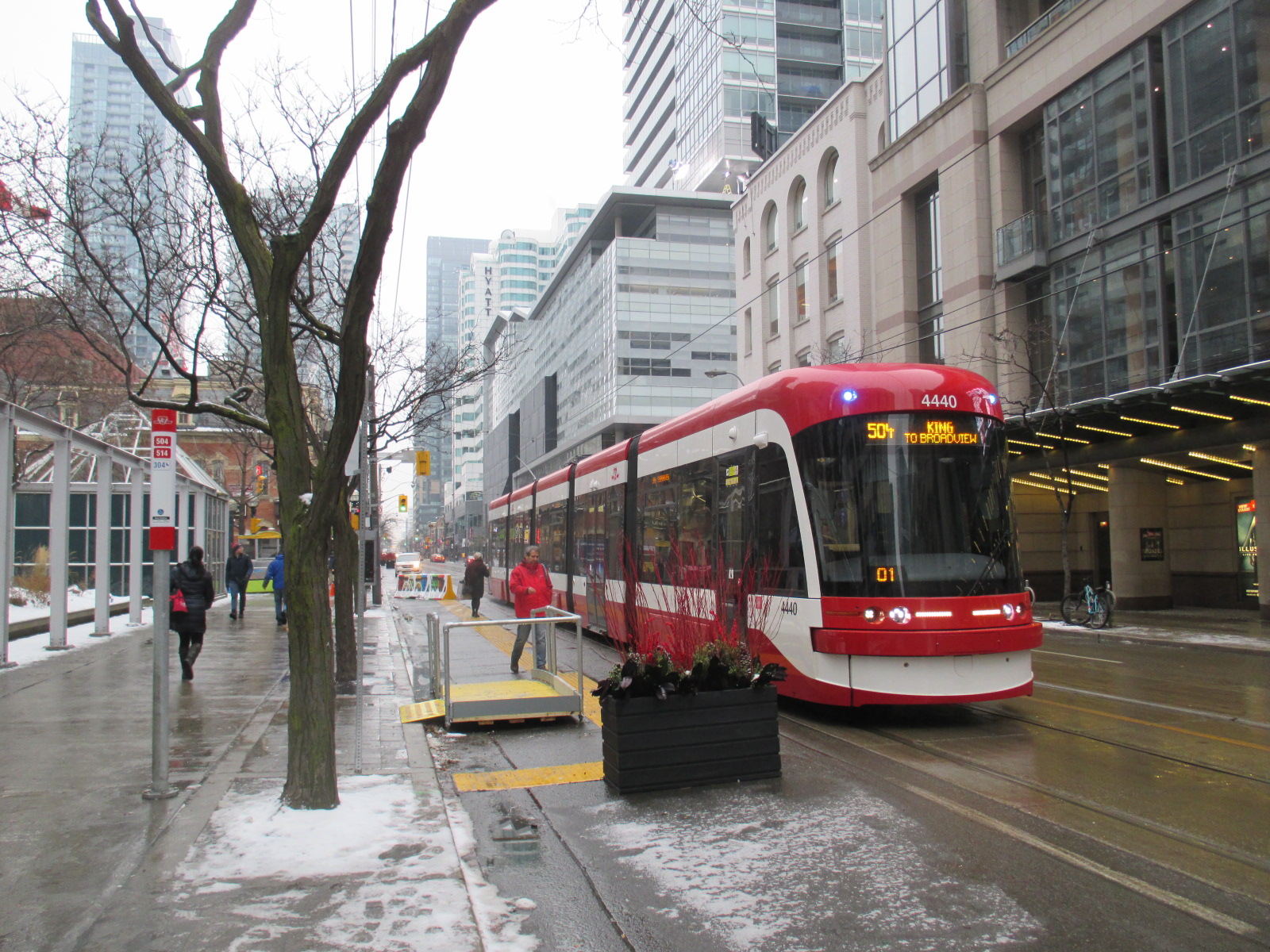
This is the one that matters most. When a streetcar stops and opens its doors, traffic travelling in the same direction must stop at least two metres behind the rear doors and wait until passengers have finished getting on and off and have reached the curb. Many streetcar stops have no island: people walk out of the doors directly into the traffic lane. Passing an open-doored streetcar is dangerous, it is illegal, and it is the single most common way a visiting driver ends up in real trouble in Toronto.
The exception is stops with a raised safety island or boarding platform, where you may pass slowly and with care. When in doubt, stop.
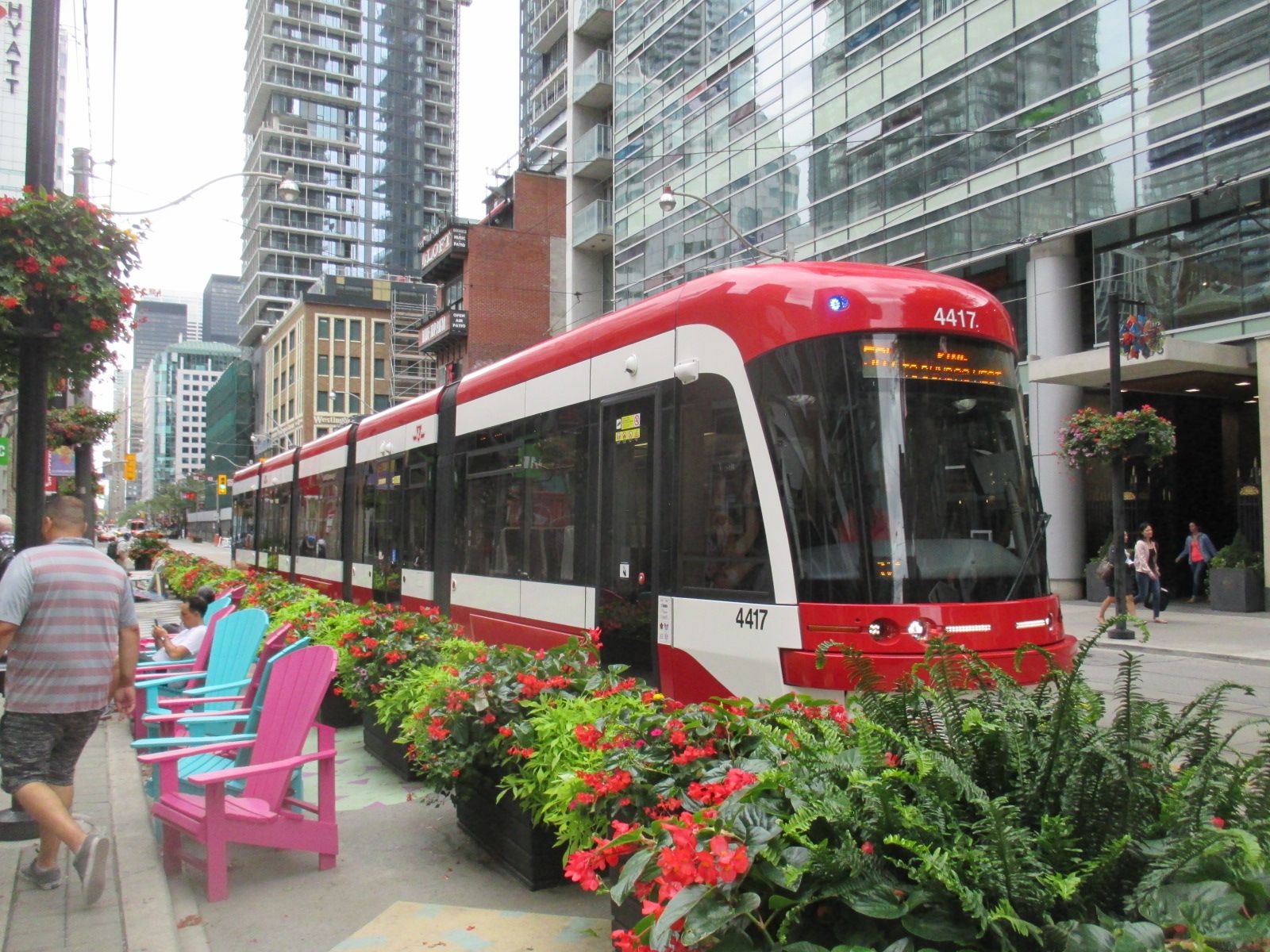
The King Street transit corridor
Through the heart of downtown, King Street is set up to prioritise the 504 streetcar. For much of the stretch between Bathurst and Jarvis, private cars cannot drive straight through the major intersections — you are required to turn right — and left turns are restricted. Navigation apps know this, mostly. Tourists following a hotel’s directions do not. If your hotel is on King, approach it along a parallel street such as Adelaide, Richmond, Wellington or Front and turn in as late as possible.
Turns, lights and crossings
- Right on red is legal across Ontario after a full stop, unless a sign prohibits it. Several downtown intersections do prohibit it.
- Turn restrictions are time-based. A sign reading “No Left Turn 7–10am 4–7pm Mon–Fri” is common. Read the whole sign, including the small print underneath.
- Pedestrian crossovers — the crossings marked with overhead signs and yellow flashing lights, and “X” markings on the road — require you to wait until the pedestrian has completely crossed the road, not just your lane.
- Yonge and Dundas has a pedestrian scramble, where every light turns red and people cross diagonally. Turning cars wait.
- Cyclists use painted and separated bike lanes on Bloor, Richmond, Adelaide, University and elsewhere. Check your mirror and over your shoulder before turning right across one, and look before you open a door. “Dooring” a cyclist is an offence.
Phones, speed and alcohol
- No handheld phones, including at a red light. A first conviction for distracted driving in Ontario carries a fine that can reach $1,000 and demerit points. Mount the phone and set your navigation before you move off.
- Speeds are in kilometres per hour. Unsigned city streets default to 50 km/h, many residential streets are 40 or 30, and the 400-series highways are generally 100 km/h. Fines in community safety zones around schools and parks are increased, and red-light cameras are widespread.
- Alcohol limits bite early. Ontario has penalties — including an immediate roadside licence suspension — for drivers in the 0.05 to 0.08 blood-alcohol “warn range”, below the criminal limit. If you are drinking on a night out, take the subway or a cab and collect the car tomorrow.
Your licence
Visitors can drive in Ontario on a valid licence from their home country for a limited period, and US licences are straightforward. If your licence is not in English or French, carry an International Driving Permit alongside it; rental counters often ask for one. Check the rules for your own licence with the rental company before you travel.
How Parking Works in Toronto

Parking in Toronto comes in three flavours: on-street spaces, municipal Green P lots and garages, and private operators. They are priced and policed differently, and it helps to know which you are in.
Green P: the city’s parking brand
Green P is the Toronto Parking Authority, the city-owned operator that runs on-street meters and a large network of surface lots and garages. Its signs are exactly what you would expect — a large white P on a green circle — and its lots are generally the best-value off-street parking in any given neighbourhood, though not always the closest.
On-street Green P rates run from $1.50 to $6.75 an hour, tax included, depending on where you are. The top band covers the central business district, roughly between Spadina and Jarvis, while neighbourhood main streets further out sit in the lower bands. Green P garages and lots set their own hourly and daily maximums, which are posted at the entrance and vary a great deal between a quiet lot in the Junction and a garage near the arena on a game night.
Paying: the app is easiest
You can pay at the pay-and-display machines on the street (most take credit cards) or through the Green P app, which lets you pay against your licence plate and top up remotely when lunch runs long. The rate is the same either way. The app is the better choice for visitors, for two reasons: you do not need to walk back to the car to extend the session, and you do not need to worry about whether a paper receipt is visible on the dashboard.
Always check the space number or zone number on the machine or the sign before paying in the app. Paying for the wrong zone is the same as not paying at all.
Private lots and garages
Downtown, a large share of the parking is in private garages under office and condo towers, operated by companies such as Impark, Indigo and Precise ParkLink. Rates are posted at the entrance, change by time of day and are often much higher on event nights. Look out for “early bird” flat rates on weekday mornings and evening flat rates after 6pm, which can be surprisingly good. Read the fine print about closing times: some office garages lock at night, and a car left inside stays there until morning.
Residential streets and permit parking
Toronto’s side streets are where visitors get caught, because the rules are not the same as the main road around the corner.
- Three hours is the default. On any city street, you may not park for longer than three hours unless a sign allows it. There does not need to be a sign telling you this — it is the base rule.
- Permit parking. Many residential streets are “Permit Parking” zones, typically overnight. If you park there without a permit you will be ticketed, and it happens fast. The City of Toronto sells temporary permits online for some areas, which is useful if you are staying in a short-term rental in a residential neighbourhood; ask your host which zone you are in.
- Alternate-side and seasonal rules. Some streets alternate which side you can park on by the date. Read the sign in full.
- Driveways and laneways. Parking across a driveway, even your own host’s, even for a minute, is ticketable.
Rush-hour routes: the fastest way to get towed
On major streets downtown and along main arteries, parking and stopping is prohibited during rush hours — typically 7–9am and 4–6pm on weekdays, and sometimes in only one direction. Those curb lanes become live traffic lanes. A car left there at 4:05pm will be ticketed, and there is a good chance it will be towed to clear the lane. Signs are posted, but they are posted once per block and are easy to miss when you spot a gap on Queen Street and dive into it.
The rule of thumb: if a curb lane on a busy street has suspiciously few parked cars in it at 3:45pm, find out why before you pull in.
What a Parking Ticket Costs
Toronto’s parking enforcement officers are numerous and thorough, and the fines are set by the city. The ones a visitor is most likely to meet:
| Infraction | Set fine |
|---|---|
| Parking where prohibited (“No Parking”) | $60 |
| Stopping where prohibited (“No Stopping”, including rush-hour routes) | $150 |
| Parking within three metres of a fire hydrant | $150 |
| Parking in an accessible space without a valid permit | $450 |
| Late payment of a ticket | $32.10 added |
If your car is towed as well, the towing and storage charges come on top of the ticket and mount daily, and you will have to get yourself out to the pound to retrieve it. That is the real cost — an afternoon, a cab ride and a fee — not the fine itself.
If you get a ticket in a rental car
Pay it. Tickets follow the licence plate to the registered owner, which is the rental company, and the company will pay it for you and then charge your card along with an administration fee that is often larger than the fine. Toronto parking tickets can be paid online through the City of Toronto’s website using the number on the ticket. If you think a ticket was issued wrongly — a broken meter, a missing sign — you can request a review online, but do it promptly, and photograph the scene before you move the car.
Parking at the Big Attractions
This is where planning pays off, because the right answer is often not the closest garage.
CN Tower, Ripley’s Aquarium and Rogers Centre
There is plenty of garage parking around the base of the tower, but on a Blue Jays game day it fills and rates rise. If you are visiting the tower or the aquarium on a game day, go in the morning, or park further north around Richmond and Adelaide and walk ten minutes. For a game itself, drive only if you have to: the TTC to Union and the walkway along Bremner Boulevard is quicker than leaving a garage with forty thousand other people. Our guide to hotels near Scotiabank Arena and Rogers Centre is worth a look if you are coming in for a game and would rather not drive at all that evening.
Toronto Islands
You cannot take a visitor’s car onto the islands. The ferries from Jack Layton Ferry Terminal at the foot of Bay Street carry people and bikes only. Parking around the terminal is priced for a downtown waterfront location, so it is usually better to park further out and take the subway to Union, then walk south. The Toronto Islands guide covers the ferry itself.
High Park
High Park has 276 parking spaces, and cars are only allowed into the park on weekdays. At weekends, on statutory holidays and at peak cherry blossom season the park is car-free, and the side streets around it fill up quickly. Take Line 2 to High Park or Keele station instead. The High Park guide has the entrances and the bus and streetcar routes.
Scarborough Bluffs
The Bluffer’s Park lot at the bottom of the cliffs is small and fills on warm weekends, with a queue of cars waiting on Brimley Road. The smarter move is to park free at Kennedy station and take the seasonal 201 Bluffer’s Park bus, which drops you inside the park and runs roughly from early May to early October. Details in our Scarborough Bluffs guide.
Exhibition Place
For the CNE, the Royal Winter Fair, BMO Field and the Coca-Cola Coliseum, Exhibition Place runs large surface lots and an indoor garage. For the 2026 Royal Agricultural Winter Fair, surface parking is $18 by day and $15 after 6pm, with a $3 surcharge in the Enercare garage on peak days. On a Toronto FC or Argonauts match day, the GO train to Exhibition station or the 509 and 511 streetcars will get you home long before the lots empty.
Park-and-ride from the edge of the city
If you are driving in from outside Toronto for the day, the best trick is not to drive downtown at all. The TTC has commuter parking lots at several outer subway stations, some of them free, and GO Transit station lots are free for GO riders. Park at the end of the line, ride in for $3.30, and spend the difference on lunch.
Parking at Your Hotel or Rental
Downtown hotels almost never include parking in the room rate. Most offer valet or self-park in the building or a neighbouring garage, charged per night, and in the core that charge can add a large percentage to a mid-range room. Ask for the exact nightly rate, whether in-and-out privileges are included, and whether there is a height limit if you are driving an SUV or a van with a roof box. Hotels near the airport and in the suburbs are much more likely to have free or cheap surface parking, which is one reason people with a car often stay out there. Our where to stay in Toronto guide weighs the neighbourhoods against each other.
For short-term rentals, confirm in writing that a parking space is included, where it is and how you get in. “Street parking available” in a listing usually means a permit zone, and it is the guest, not the host, who gets the ticket.
Driving in Winter
Toronto winters are milder than Montréal’s or Ottawa’s but still bring several heavy snowfalls a season, freezing rain, and roads glazed by overnight refreezes. A few points for anyone driving between December and March:
- Winter tires are not legally required in Ontario, and rental cars may or may not have them. They make a very large difference. Ask for them specifically. If you are driving on into Québec, note that winter tires are mandatory there from 1 December to 15 March.
- Snow routes. During a declared major snowstorm, parking is banned on designated snow routes so that ploughs can clear them. Cars left there are ticketed and may be towed. Signs mark these streets.
- Clear the whole car. Snow and ice flying off a roof onto the car behind is an offence, and a dangerous one.
- Salt and slush make windscreens filthy within minutes. Fill the washer reservoir with winter fluid rated for well below zero before you leave the lot.
- Leave twice the time. The first real snow of the season can turn a 30-minute drive into a two-hour one.
For everything else about visiting in the cold months, see our Toronto in winter guide.
Driving From Pearson Airport
The drive from Pearson to downtown is around 25 kilometres, via Highway 427 and the Gardiner. At quiet times it takes around half an hour; at rush hour it can easily take an hour or longer. That is the key comparison, because the UP Express train does the same trip to Union Station in about 25 minutes, every 15 minutes, whatever the traffic is doing — and costs $12.35 one way, or $9.25 with PRESTO or a tapped card.
So the honest recommendation is this: if you are staying downtown, take the train in, and rent a car later only for the day trips. If you are driving onwards to Niagara, Muskoka or elsewhere straight from landing, picking up at the airport makes complete sense. The Pearson to downtown guide compares every option, including taxis and rideshare, which have their own designated pick-up areas at the terminals.
Day Trips by Car
This is where the car earns its keep. A few route notes for the common ones:
- Niagara Falls is about 130 km via the QEW, roughly 90 minutes without traffic, and much longer on a summer Friday. Parking in the falls district is expensive and aggressively marketed; the park-and-ride lots and the WEGO shuttle are usually better value. Note that on summer weekends the GO train is a genuinely easy alternative — a $10 weekend day pass covers the trip. See our Niagara Falls day trip guide.
- Niagara-on-the-Lake and the wineries are much easier by car, but someone in the group has to not drink. Ontario’s warn-range penalties apply at 0.05.
- Prince Edward County is about two and a half hours east along the 401 and is essentially impossible to explore without a car.
- Muskoka and Blue Mountain sit two hours north. Avoid Friday afternoons and Sunday evenings in summer and ski season alike.
More ideas, with drive times, in our day trips from Toronto guide.
Frequently Asked Questions
How much is parking in downtown Toronto?
On-street Green P parking runs from $1.50 to $6.75 an hour in 2026, with the highest rates in the downtown core between roughly Spadina and Jarvis. Garages set their own rates and are more expensive on game and event nights; look for weekday early-bird and evening flat rates.
Is there free parking in Toronto?
Some. Outside metered areas, city streets allow free parking for up to three hours unless signs say otherwise, though many residential streets are permit-only overnight. Several TTC commuter lots at outer subway stations, including Kennedy, are free, as are GO station lots for GO riders. Downtown, assume you will pay.
How do I pay for Green P parking?
Either at the pay-and-display machine, which takes cards, or through the Green P app using your licence plate and the zone number posted nearby. The rate is the same; the app lets you extend your session without walking back to the car.
Can you turn right on a red light in Toronto?
Yes, after coming to a complete stop and yielding to pedestrians and traffic, unless a sign at the intersection prohibits it. Several downtown intersections do.
What happens if I pass a streetcar with its doors open?
You will be breaking the law and putting people at real risk, since passengers often step straight into the traffic lane. You must stop at least two metres behind the rear doors and wait until they have finished boarding and exiting.
Do I need winter tires to drive in Toronto?
They are not legally required in Ontario but are strongly recommended between December and March. They are mandatory in Québec from 1 December to 15 March, which matters if you are driving on to Montréal.
Is it worth renting a car for a trip to Toronto?
Not for a downtown-only visit — the subway, streetcars and your feet will serve you better and cheaper. It is worth it for day trips out of the city, for families with lots of gear, or if you are staying in the suburbs.
Related Toronto Guides
- Getting Around Toronto — every mode of transport, compared.
- Renting a Car in Toronto — where to pick up, insurance and the 407 question.
- Pearson Airport to Downtown — UP Express, taxi, rideshare or drive.
- Toronto TTC Guide — the subway and streetcars that make a car unnecessary downtown.
- Toronto in Winter — what to expect from December to March.
- Day Trips From Toronto — the places a rental car is actually for.
- Bike Share Toronto — the other way to skip the traffic.
Photo Credits
Eastbound traffic on the Gardiner Expressway at Humber Bay: Approaching the Queensway-Humber Bay, Gardiner Expressway, Toronto, Ontario (29358643793) by Ken Lund from Reno, Nevada, USA, CC BY-SA 2.0, via Wikimedia Commons.
Don Valley Parkway and Gardiner Expressway route signs: Don Valley Parkway (DVP), Toronto, Ontario (29376275873) by Ken Lund from Reno, Nevada, USA, CC BY-SA 2.0, via Wikimedia Commons.
504 King streetcar at a platform stop in winter: 504 temporary far-side stop at John St EB by TheTrolleyPole, CC BY-SA 4.0, via Wikimedia Commons.
Streetcar and planters on King Street West: King Street Pilot Project – Planters & furniture near Charlotte St by TheTrolleyPole, CC BY-SA 4.0, via Wikimedia Commons.