The departures board at Pearson says your connection leaves at 9:40pm, it’s 11:15 in the morning, and the gate area already feels like a waiting room you could grow old in. Here’s the good news: Toronto is one of the easier big cities to escape to on a layover. A dedicated airport train runs every fifteen minutes to Union Station, right at the foot of downtown, in under half an hour. Within ten minutes’ walk of where it drops you are the CN Tower, the lake, St Lawrence Market and a dozen places for a proper lunch. A Toronto layover of six hours or more can genuinely become a short visit to the city, provided you do the maths honestly and don’t cut the return too fine.
This guide works through that maths: whether you’re allowed to leave the airport, how long the round trip really takes, and what’s realistic with four, eight or twelve hours. It includes step-by-step plans for each, what to do if you’d rather stay put, and how to handle bags, winter weather and US-bound connections. Fares and train times were checked in September 2026. Entry rules change and depend on your passport, so confirm your own situation with the Government of Canada before you travel. Prices are in Canadian dollars.
Toronto Layover at a Glance
| Layover length | Leave the airport? | What’s realistic |
|---|---|---|
| Under 5 hours | No | Eat, rest, a lounge, a walk between terminals |
| 5–7 hours | Only if you’re allowed in, travel light and don’t need US preclearance | A quick loop: Union Station, the CN Tower from outside, the waterfront, lunch |
| 8–10 hours | Yes, if you’re allowed in | The CN Tower or aquarium, the waterfront, St Lawrence Market |
| 12 hours or more | Yes | A proper day: the Toronto Islands, a museum, a neighbourhood and dinner |
| Overnight | Depends on arrival time | An airport hotel, or a downtown hotel and an evening out |
| UP Express essentials | 2026 |
|---|---|
| Route | Pearson Terminal 1 ↔ Union Station, with a few stops in between, including Weston and Bloor |
| Journey time | About 25–28 minutes |
| Frequency | Every 15 minutes, seven days a week |
| First and last train to Union (Mon–Fri) | 5:27am and 12:57am |
| Adult fare | $12.35 one way, $24.70 return; $9.25 one way tapping PRESTO or a credit or debit card |
| Seniors and children | Seniors $6.20 one way; children 12 and under free |
First: Can You Actually Leave the Airport?
Before you plan anything, check two things. Getting this wrong is the only way a layover plan goes seriously wrong.
Your right to enter Canada
Leaving the airport means formally entering Canada, going through customs and immigration, and coming back through security for your next flight. Whether you can do that depends on your passport. Canadian citizens and permanent residents can, of course. US citizens can enter with a valid passport. Many other visa-exempt travellers arriving by air need an Electronic Travel Authorization (eTA) to board a flight to Canada in the first place, and travellers from visa-required countries generally need a visa to leave the airport, even for a few hours. The rules have exceptions and they change, so check your own situation on the Government of Canada’s immigration website well before you fly, not at the airport.
If you’re transiting without the right documents, don’t try to leave. Some international-to-international connections at Pearson allow you to stay airside without entering Canada at all, and that’s the right plan if you’re not eligible.
Your bags and your ticket
If both flights are on one ticket, your checked bag is normally checked through to your final destination and you don’t need to collect it. If you’re on separate tickets, or arriving from an international flight where the rules require you to reclaim and recheck your bag, you’ll have to deal with it before you can go anywhere. Ask your airline at check-in how your bag is routed. Wandering around downtown Toronto with a large suitcase isn’t a plan anyone enjoys.
How Long the Round Trip Really Takes
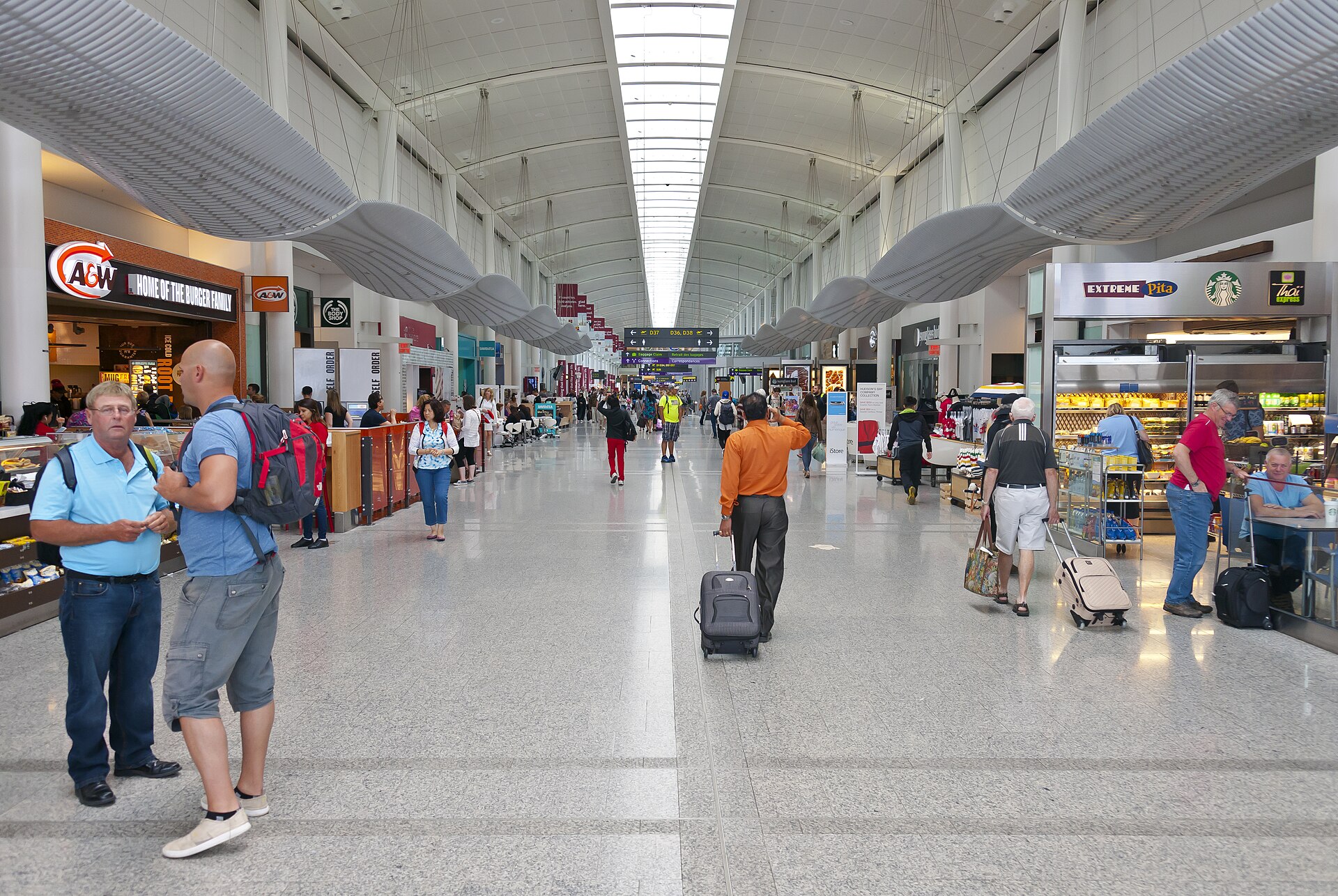
People underestimate this every time, so here’s an honest breakdown for an international arrival going downtown and back.
Getting out: 45 to 90 minutes. Deplaning, walking to customs, clearing immigration and customs, and walking to the train can take anything from 30 minutes on a quiet morning to well over an hour when several long-haul flights land together. If you arrive at Terminal 3, add the ride on the free Terminal Link train to Terminal 1, where the UP Express station is.
The train: about 30 to 45 minutes each way. The ride itself is 25 to 28 minutes, and trains leave every 15 minutes, so allow for waiting on the platform too.
Getting back through the airport: at least 2 hours before departure. You need time to check in if necessary, clear security, and walk to your gate. For flights to the United States, allow more, because you’ll also clear US preclearance at Pearson before boarding (more on that below). For international flights, and for anything at a busy time of day, give yourself three hours.
Add it up. For a typical international layover, the airport-and-train part of the trip takes somewhere around four hours of your total, before you’ve seen anything. That’s why five hours isn’t really enough to leave, eight hours gives you a useful three to four hours in the city, and twelve hours gives you a proper day.
Getting Downtown: The UP Express
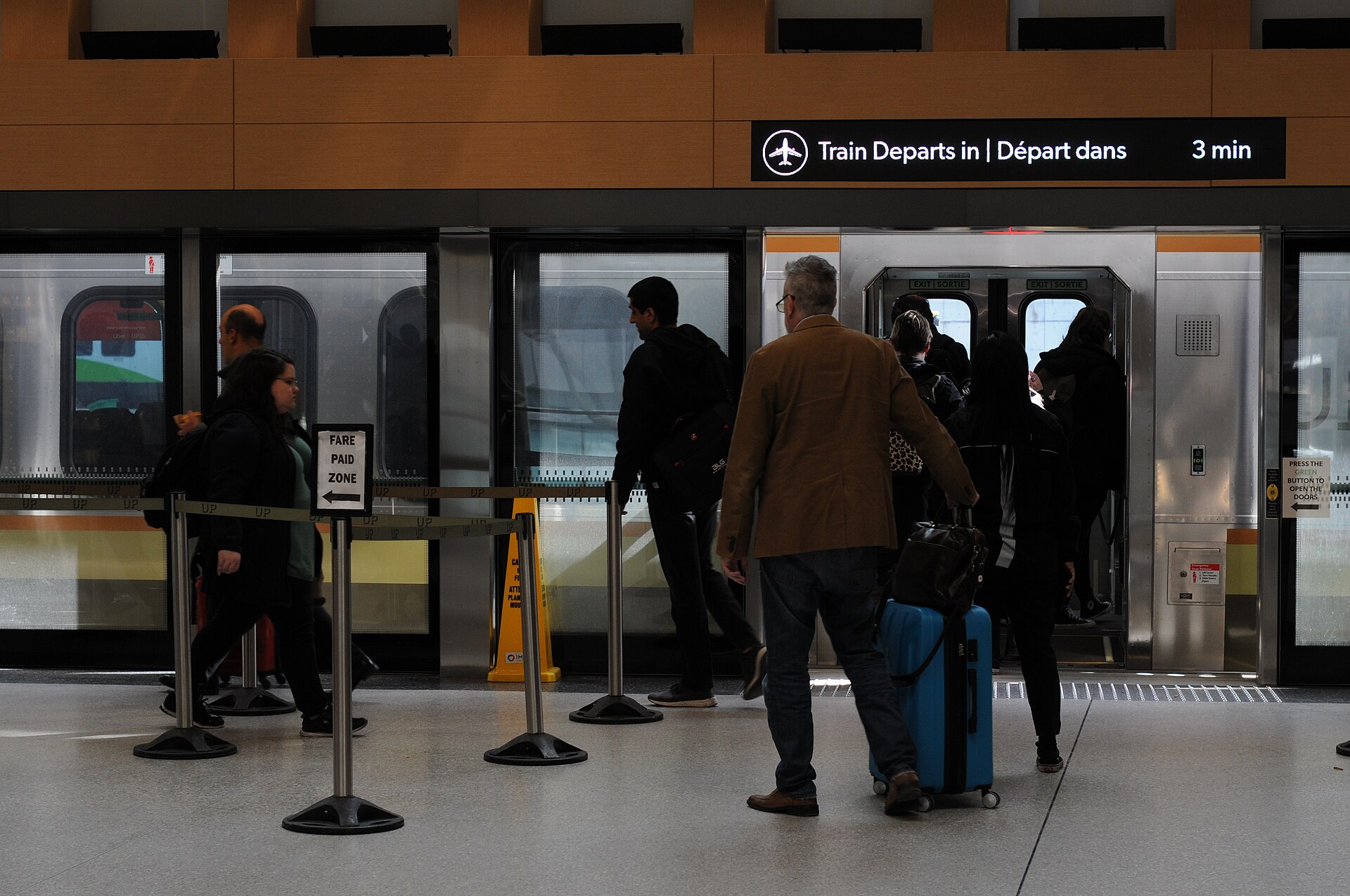
The Union Pearson Express, known as the UP Express, is the obvious choice for a layover. It runs from Terminal 1 to Union Station downtown, with a few intermediate stops including Weston and Bloor, every 15 minutes, seven days a week, taking about 25 to 28 minutes. On weekdays the first train to Union leaves at 5:27am and the last at 12:57am.
An adult one-way ticket costs $12.35, or $24.70 return. If you have a PRESTO card, or tap a contactless credit or debit card, the adult one-way fare drops to $9.25, so tapping in and tapping out each way is cheaper than a paper return. Seniors pay $6.20 one way, and children 12 and under ride free. Groups of three to five can buy a group pass online, which works out cheaper than individual tickets. Our UP Express guide covers stations and fares in more detail, and the airport to downtown guide compares the train with taxis and the TTC.
Why not a taxi? A taxi or rideshare can be quicker door to door when traffic is light, but Highway 427 and the Gardiner Expressway are unpredictable, and a jam on the way back is the last thing you want. The train’s timing is reliable, and on a layover, reliability is everything.
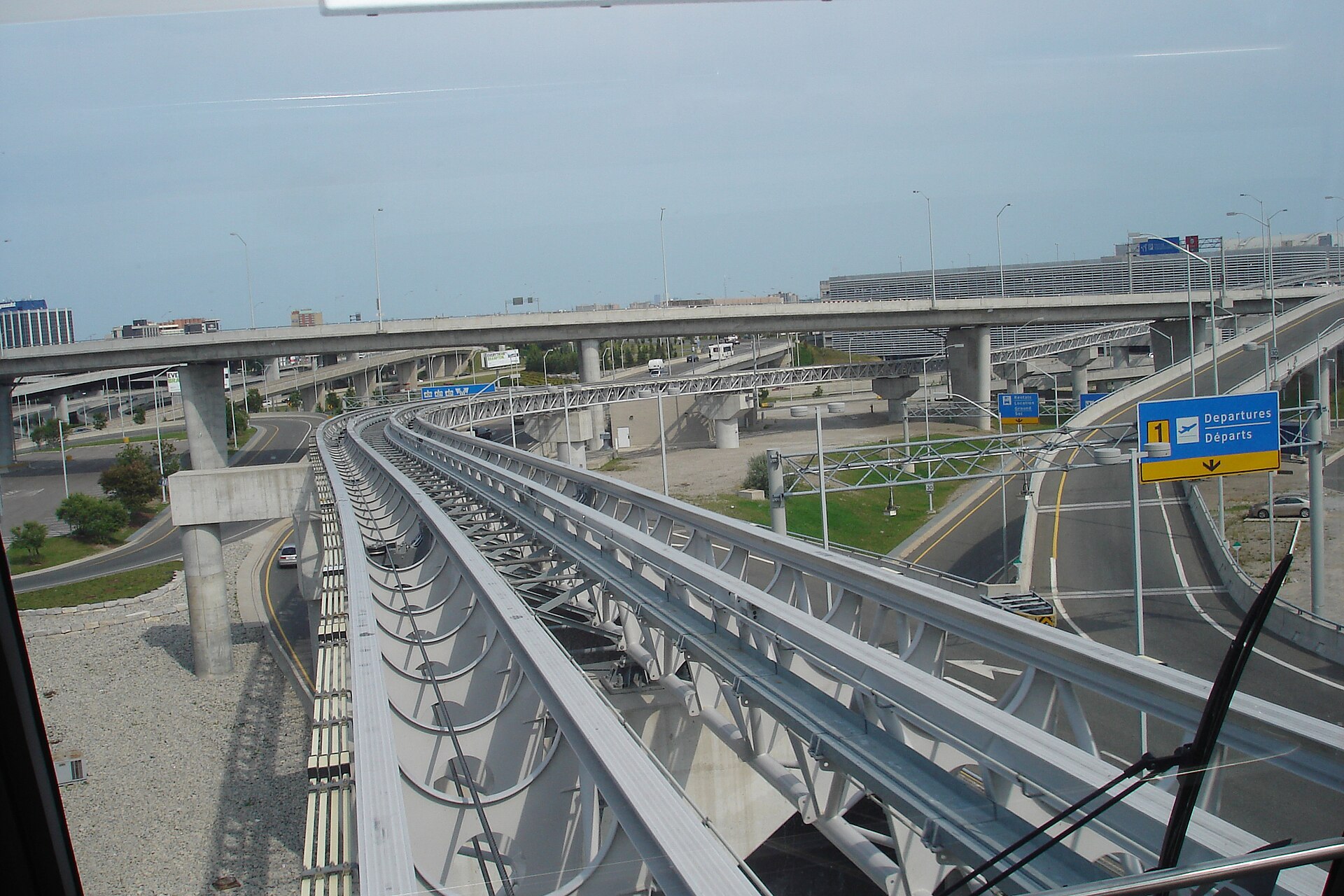
Transferring between terminals. Pearson has two passenger terminals, 1 and 3, connected by the free Terminal Link train, which runs every few minutes and takes a few minutes. The UP Express station is at Terminal 1, so if you arrive at Terminal 3, ride the Terminal Link first.
A Layover of 4 to 5 Hours: Stay at the Airport
With four or five hours between flights, don’t leave. Once you subtract customs, the train in each direction and the return through security, you’d have perhaps half an hour in the city, and a single delay would put your flight at risk. It’s not worth the stress.
Instead, make the airport work for you. Pearson’s terminals have a good range of restaurants, cafés and bars, including some local Toronto names alongside the international chains. Lounges are available in both terminals, some of which sell day passes or accept lounge-membership programmes, and a shower and a quiet seat can transform a long travel day. If you just need to stretch your legs, walk the length of a terminal, or ride the Terminal Link train between terminals and back for a few minutes’ view over the airfield.
Charge everything, drink water, eat a real meal rather than snacks, and set an alarm if you plan to doze. Our Pearson airport guide covers the terminals, facilities and getting around the airport.
A Layover of 6 to 8 Hours: A Taste of Downtown
This is the length where going into the city starts to make sense, as long as you’re allowed in, your bags are checked through, and you’re disciplined about the time. Here’s a plan built around the area closest to Union Station, so you’re never far from the train.
Hour 0 to 1:30 — get out and get downtown. Clear customs, head to the UP Express at Terminal 1, and ride to Union.
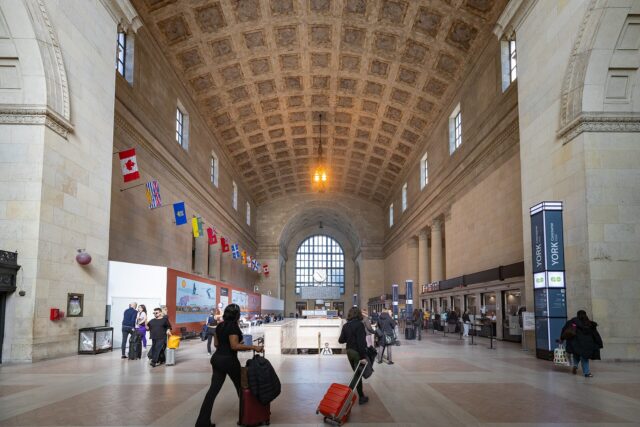
Next 30 minutes — Union Station and the CN Tower. Walk through Union Station‘s grand Great Hall, then follow the covered SkyWalk towards the CN Tower, about ten minutes. You don’t need to go up to be impressed; standing at the base of the tower and looking up is a good start.
Next 1 to 1.5 hours — the waterfront and lunch. Walk south to Queens Quay and along the lakefront, with views of the Toronto Islands and the boats. Grab lunch along the way.
Next 30 minutes — back to Union. Walk back and catch the UP Express, leaving plenty of margin.
Return to the airport at least two hours before your flight, or three for the US or at busy times.
If you’re at the longer end of this range and it’s a clear day, you might have time to go up the CN Tower, but only if you book a timed ticket in advance and check the queue situation. Otherwise, save it for a longer visit. The CN Tower guide explains tickets and timings.
A Layover of 8 to 12 Hours: Toronto’s Highlights
With eight hours or more, you have time for two or three of the city’s best experiences near Union Station. Pick from these depending on the weather and your interests.
The CN Tower
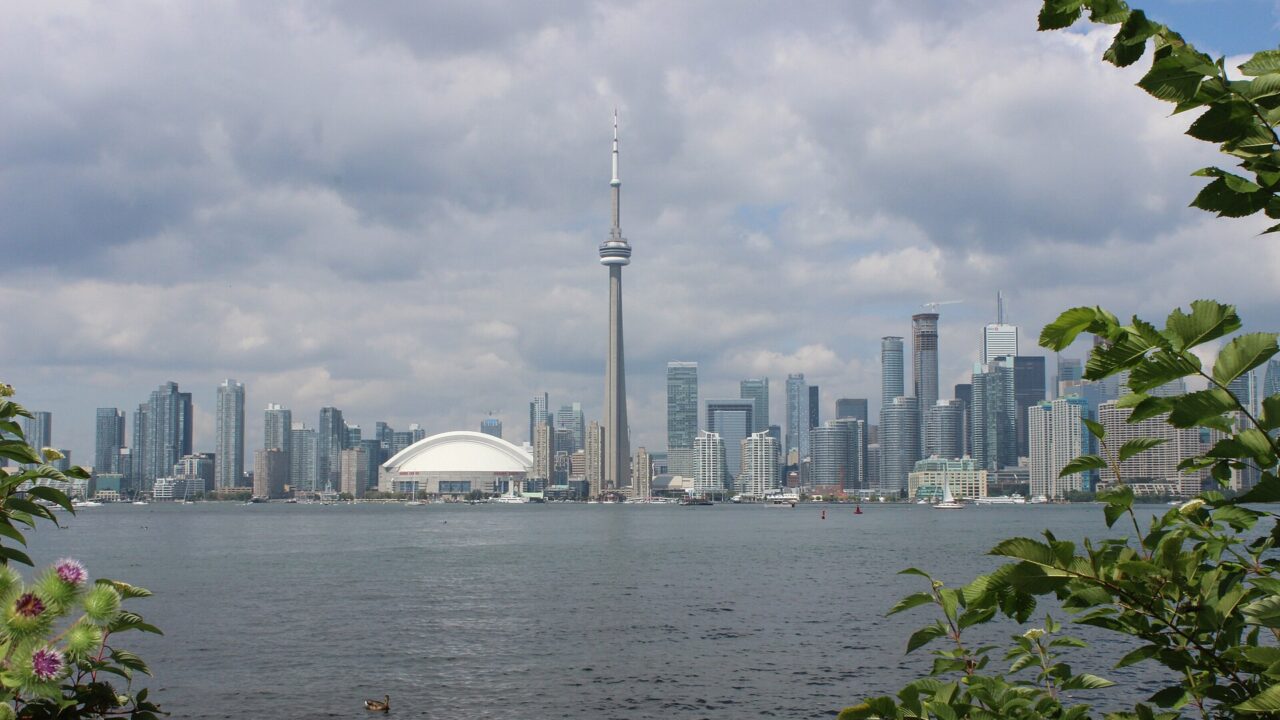
Toronto’s most famous landmark is a ten-minute walk from Union. Go up for the view over the lake and the city, and step onto the glass floor if you’re brave. Book a timed ticket online to avoid queues, and go early in your layover if the weather is clear, since cloud can roll in.
Ripley’s Aquarium of Canada
Right beside the CN Tower, Ripley’s Aquarium is a good choice if the weather is bad or you’re travelling with children. The underwater tunnel with sharks gliding overhead is the highlight.
St Lawrence Market
About a 15-minute walk east of Union, St Lawrence Market is the best lunch stop in the city for a layover. Get a peameal bacon sandwich, Toronto’s signature, and browse the food stalls. Note that the market is closed on Mondays.
The Hockey Hall of Fame
A few minutes’ walk from Union, in a grand old bank building on Front Street, the Hockey Hall of Fame is a must for sports fans and home to the Stanley Cup.
The Toronto Islands
In good weather with ten hours or more, take the ferry from Jack Layton Ferry Terminal, a short walk from Union, to the Toronto Islands for the best skyline view in the city and a walk by the water. Check ferry times carefully and give yourself a generous buffer for the return, as queues for the ferry back can be long on summer weekends.
A suggested 10-hour layover
- Arrive and ride the UP Express downtown (about 1.5 hours including customs).
- CN Tower with a pre-booked ticket (1.5 hours).
- Walk the waterfront to the Jack Layton Ferry Terminal area (30 minutes).
- Lunch at St Lawrence Market (1 hour).
- Back to Union and the UP Express (45 minutes).
- Arrive at the airport with two to three hours to spare.
That leaves a small cushion for delays. If anything runs long, drop the last stop rather than cutting into the return.
A Layover of 12 Hours or More: A Full Day
Twelve hours gives you a genuine day in Toronto. You can combine the waterfront highlights above with one of the city’s neighbourhoods or museums, reachable by subway or streetcar from Union.
- Kensington Market and Chinatown — bohemian streets, vintage shops and food from around the world, a short streetcar ride from Union.
- The Royal Ontario Museum — Canada’s largest museum, a short ride north on the University side of Line 1 from Union to Museum station.
- The Art Gallery of Ontario — a major art museum, a short walk from St Patrick station or the Dundas streetcar.
- The Distillery District — cobbled pedestrian streets, galleries and cafés in restored Victorian industrial buildings, a streetcar ride east.
For a ready-made plan, adapt our one day in Toronto itinerary, leaving out anything that takes you far from Line 1 or Union Station in the final few hours. Use a PRESTO card or tap a credit card on the TTC; our PRESTO card guide explains how.
An Overnight Layover
If your connection is the next morning, you have two choices.
Stay near the airport if you arrive late, leave early, or just want to sleep. Several hotels are close to Pearson, including the Sheraton Gateway, which is connected directly to Terminal 3, and others a short shuttle ride away. It’s the least stressful option for an early flight.
Stay downtown if you arrive in the afternoon or early evening and leave mid-morning or later. You get an evening out in Toronto — dinner, a walk along the waterfront, maybe a drink with a view — and a quick UP Express ride back in the morning. The first weekday train to Union runs at 5:27am, and trains run in both directions from early morning, so check the first train from Union to Pearson for your date. Hotels around Union Station are the most convenient; see our guide to hotels near the CN Tower.
Flying On to the United States
If your next flight is to the US, there’s an important extra step. Pearson has US preclearance, which means you clear US immigration and customs in Toronto before you board, and arrive in the US as a domestic passenger. It’s convenient on the other end, but it adds a queue and time on the Toronto end, and it can be slow at peak times.
For a US-bound connection, be back at the airport earlier than you would for other flights, and don’t cut a layover trip fine. If your layover is on the shorter side, US preclearance is a good reason to stay airside.
Weather and Time of Year
Toronto’s weather can make or break a layover trip. In summer and early autumn, walking the waterfront and taking the ferry to the islands is a joy. In winter, from December to March, it can be very cold, windy and snowy, and snowstorms can delay flights and slow roads. The good news is that much of downtown near Union Station is connected by the PATH, an underground network of walkways, shops and food courts, so you can still get around in bad weather. Indoor options like the CN Tower, the aquarium, the Hockey Hall of Fame and St Lawrence Market all work well in winter.
Check the forecast before you leave the airport, and dress for it. Our Toronto weather guide explains what to expect each month.
Layover Tips
- Check entry requirements before you fly, not at the airport.
- Confirm your bags are checked through.
- Set alarms for when you must head back to Union Station, not when you must be at the gate.
- Carry your boarding pass and passport at all times.
- Keep a charged phone. Download offline maps and your airline’s app for gate changes.
- Tap a credit card on the UP Express and TTC instead of buying paper tickets.
- Stay close to Union Station in the last couple of hours before you head back.
- Build in a buffer. If in doubt, go back early. The airport has good food; a missed flight doesn’t.
Frequently Asked Questions
Can I leave Toronto Pearson Airport during a layover?
Yes, if you’re eligible to enter Canada, which depends on your passport. Many visa-exempt travellers need an eTA, and travellers from visa-required countries generally need a visa to leave the airport. Check the Government of Canada’s immigration website before you travel.
How long of a layover do I need to leave the airport in Toronto?
Realistically at least six to eight hours. Customs, the UP Express in both directions and getting back through security take around four hours of any layover, leaving little time in the city on anything shorter.
How do I get from Pearson to downtown Toronto quickly?
Take the UP Express from Terminal 1 to Union Station. Trains run every 15 minutes and take about 25 to 28 minutes. An adult one-way fare is $12.35, or $9.25 tapping PRESTO or a credit or debit card.
What can I do in Toronto with an 8-hour layover?
Ride the UP Express to Union Station, visit the CN Tower or the waterfront, have lunch at St Lawrence Market, and head back to the airport with at least two hours to spare.
Is there US preclearance at Toronto Pearson?
Yes. Passengers flying to the United States clear US immigration and customs at Pearson before boarding, so allow extra time if your onward flight is US-bound.
How do I get between Terminal 1 and Terminal 3 at Pearson?
Use the free Terminal Link train, which runs frequently between the two terminals. The UP Express station is at Terminal 1.
What should I do with a short layover at Pearson?
With under five hours, stay at the airport: eat a proper meal, use a lounge if you have access, charge your devices and rest.
Related Toronto Guides
- Toronto Pearson Airport Guide — terminals, facilities and getting around.
- UP Express Guide — the airport train in detail.
- Getting Around Toronto — the TTC, streetcars and more.
- CN Tower Guide — tickets and timing for the city’s landmark.
- One Day in Toronto — if your layover turns into a full day.
- Toronto Waterfront Guide — the lakefront near Union Station.
Photo Credits
The CN Tower and skyline from Centre Island: CN Tower from Centre Island by Pkvan, CC BY-SA 4.0, via Wikimedia Commons.
Terminal 1 at Toronto Pearson: Interior of Toronto Pearson International Airport Terminal 1 wider view by Daniel Case, CC BY-SA 3.0, via Wikimedia Commons.
Boarding the UP Express: Toronto ON Union-Pearson-Express Nippon-Sharyo-DMU 2019-04-01 by Milan Suvajac, CC BY-SA 4.0, via Wikimedia Commons.
The Terminal Link train at Pearson: LINK Train 3924461873 by photo_dude2008, CC BY 2.0, via Wikimedia Commons.