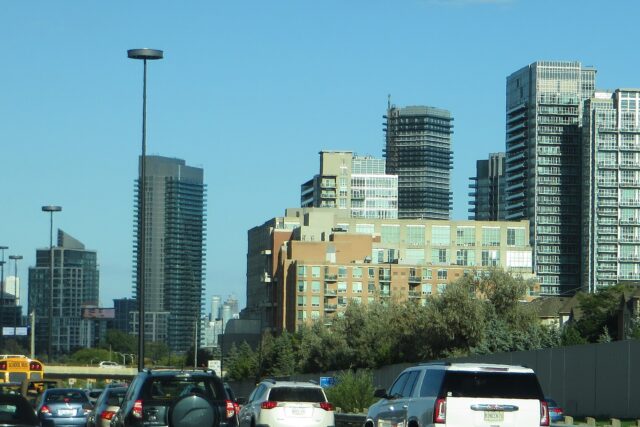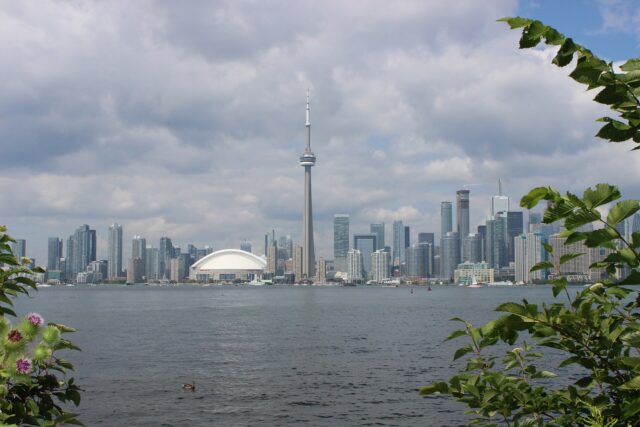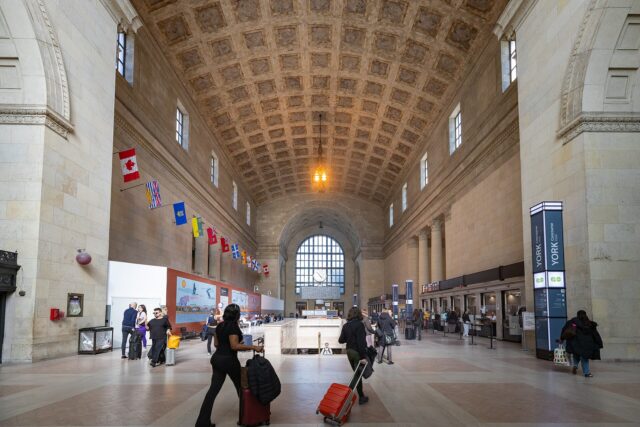
The Toronto TTC guide every visitor needs starts with one fact: the TTC (Toronto Transit Commission) is the easiest, most affordable way to get around Toronto. Its three subway lines (Lines 1, 2 and 4), two light-rail lines (Lines 5 and 6), 11 streetcar routes and extensive bus network reach many of Toronto’s major attractions and neighbourhoods, at $3.30 per adult fare with PRESTO or a contactless card, two-hour transfer included. The rest of this guide is built around the decisions a visitor actually makes: which way to pay (PRESTO card, paper ticket, or just tapping your credit card), whether the day pass is worth it, how to read the subway map and the streetcar grid, which routes get you to the sights, and how accessible the system is. The TTC handles most days in the city on its own, but for the airport runs, ferries and everything in between, our guide to getting around Toronto fills in the gaps.
For the official TTC fares and route information, see the official TTC fares and passes page.
Toronto TTC Guide: How Much Does the TTC Cost?
Single Fares (2026)
Adult Single Fare: $3.30 with PRESTO or a contactless debit or credit card; a PRESTO one-ride ticket costs $3.35. Either way, the fare includes a 2-hour transfer for unlimited TTC rides in any direction.
Youth (13–19) Single Fare: $2.35 with a youth PRESTO card or $2.40 cash. Tapping a contactless bank card charges the $3.30 adult fare.
Senior (65+) Single Fare: $2.25 on a senior PRESTO card, $2.30 in cash. A contactless card is charged the adult $3.30.
Children 12 and Under: Free at all times.
Cash Fare: $3.35 cash on buses and streetcars (slightly higher than PRESTO; no transfers issued automatically).
Day Pass
The TTC day pass at $13.50 (sold as a PRESTO Ticket) pays off from your fifth separately charged fare of the day: four $3.30 fares come to $13.20, and rides within a two-hour transfer window don’t count as new fares. Valid for unlimited TTC rides for one full day. Each pass covers one person, so a second adult needs a pass or fare of their own; children 12 and under ride free anyway.
Monthly Pass
Adult, youth, senior and Fair Pass monthly passes ended on August 31, 2026, and monthly fare capping (below) took their place. Adult 12-month passes and post-secondary monthly passes are still available.
Convention Pass
The TTC offers a Convention Pass for qualifying conference and convention groups. If you are in Toronto for an event, ask the organisers whether your group qualifies.
Toronto TTC Guide: How to Pay
PRESTO Card
The PRESTO card is the most convenient way to pay TTC fares. $4 reloadable card with funds you tap on subway gates, streetcars, and buses. See our complete getting a Presto card.
Tap-to-Pay (Contactless Credit Card)
The TTC accepts contactless tap-to-pay credit cards (Visa, Mastercard, Amex) and mobile wallets (Apple Pay, Google Pay) at all subway gates, streetcar readers, and bus readers. Charged the standard $3.30 adult fare with two-hour transfer included.
PRESTO Ticket (Day Pass & Single Fare Tickets)
PRESTO Tickets are paper-based fare media. Available at Fare Vending Machines in subway stations and at all Shoppers Drug Mart locations. Best for visitors who want a TTC day pass.
Cash
$3.35 cash on buses, streetcars and the surface platforms of Lines 5 and 6. No transfers automatically issued; ask the driver for a paper transfer. Cash is not accepted at subway gates — you need PRESTO, a ticket, or tap-to-pay.
Mobile PRESTO
Digital PRESTO cards work in Apple Wallet and Google Wallet. Free to set up; same fare structure as physical card.
Toronto TTC Guide: The Subway System
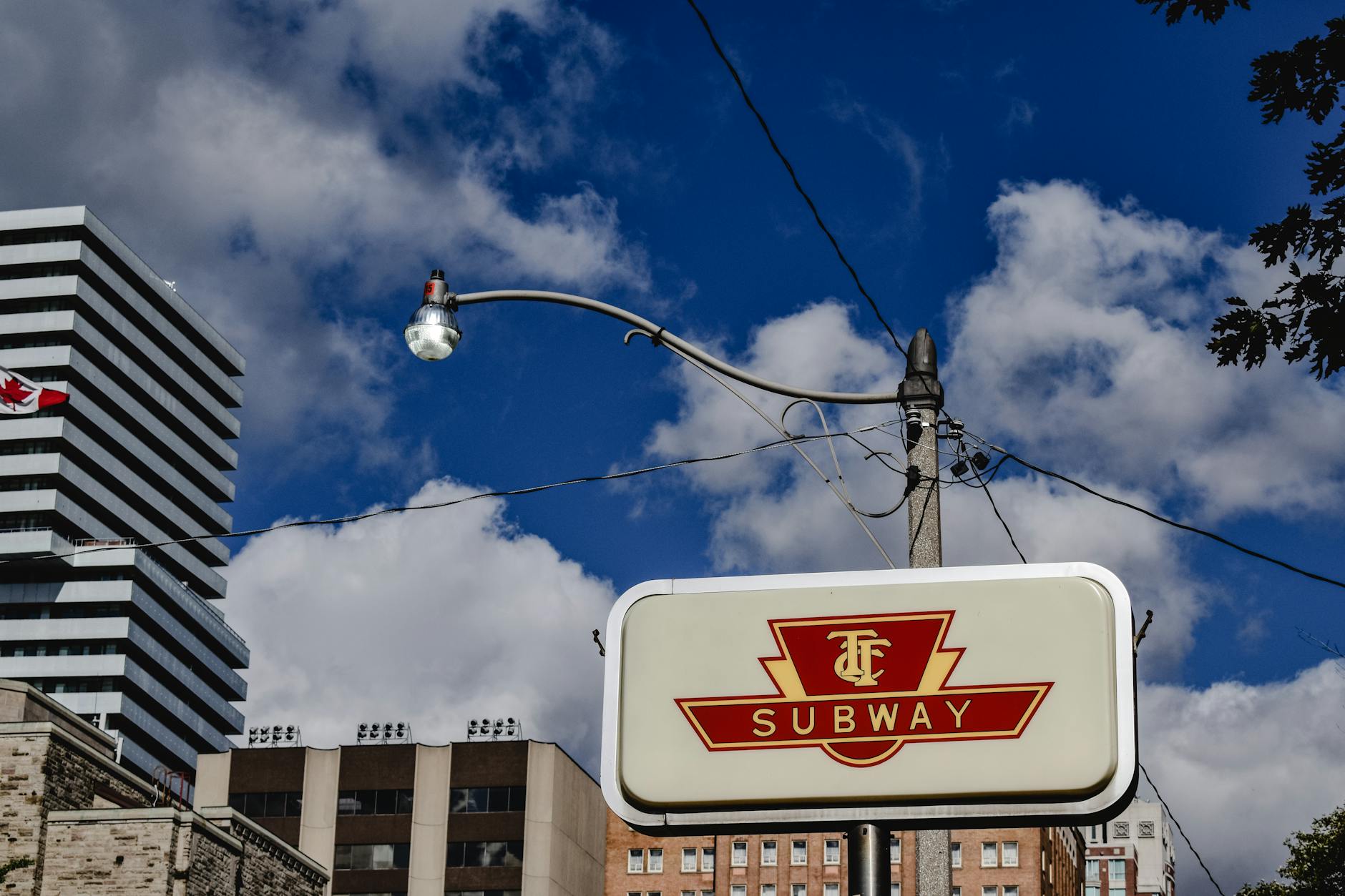
Toronto’s subway has three heavy-rail lines (Lines 1, 2 and 4) connecting most major visitor destinations, with two light-rail lines, Lines 5 and 6, alongside them.
Line 1: Yonge-University (Yellow)
The U-shaped main line connecting Vaughan Metropolitan Centre (north) through Yorkville, Bloor-Yonge, Yonge-Dundas Square, Union Station, and back up to Finch Station (north). Hits most major visitor destinations: ROM (Museum Station), Casa Loma (Dupont Station), Eaton Centre (Queen or Dundas), CN Tower (Union Station), and Yorkville (Bloor-Yonge, or Bay on Line 2).
Line 2: Bloor-Danforth (Green)
The east-west line running along Bloor Street through The Annex, Yorkville, the Danforth (Greektown), and out to Kipling (west) and Kennedy (east). Connects Casa Loma (transfer at Spadina), the AGO (transfer at St. Patrick), Greektown, and the Toronto Zoo (via 86A bus from Kennedy).
Line 4 (North York)
Short east-west line in North York. Less useful for tourists.
Line 5: Eglinton Crosstown (Light Rail Transit)
The LRT line along Eglinton Avenue, which began phased service on February 8, 2026. Less useful for downtown tourists but expanding access to mid-Toronto.
Subway Hours
Subway service runs approximately 6 a.m. to 1:30 a.m. Monday to Saturday and 8 a.m. to 1:30 a.m. on Sundays; first and last trains vary by station.
Toronto TTC Guide: Streetcars (the City’s Iconic Mode)
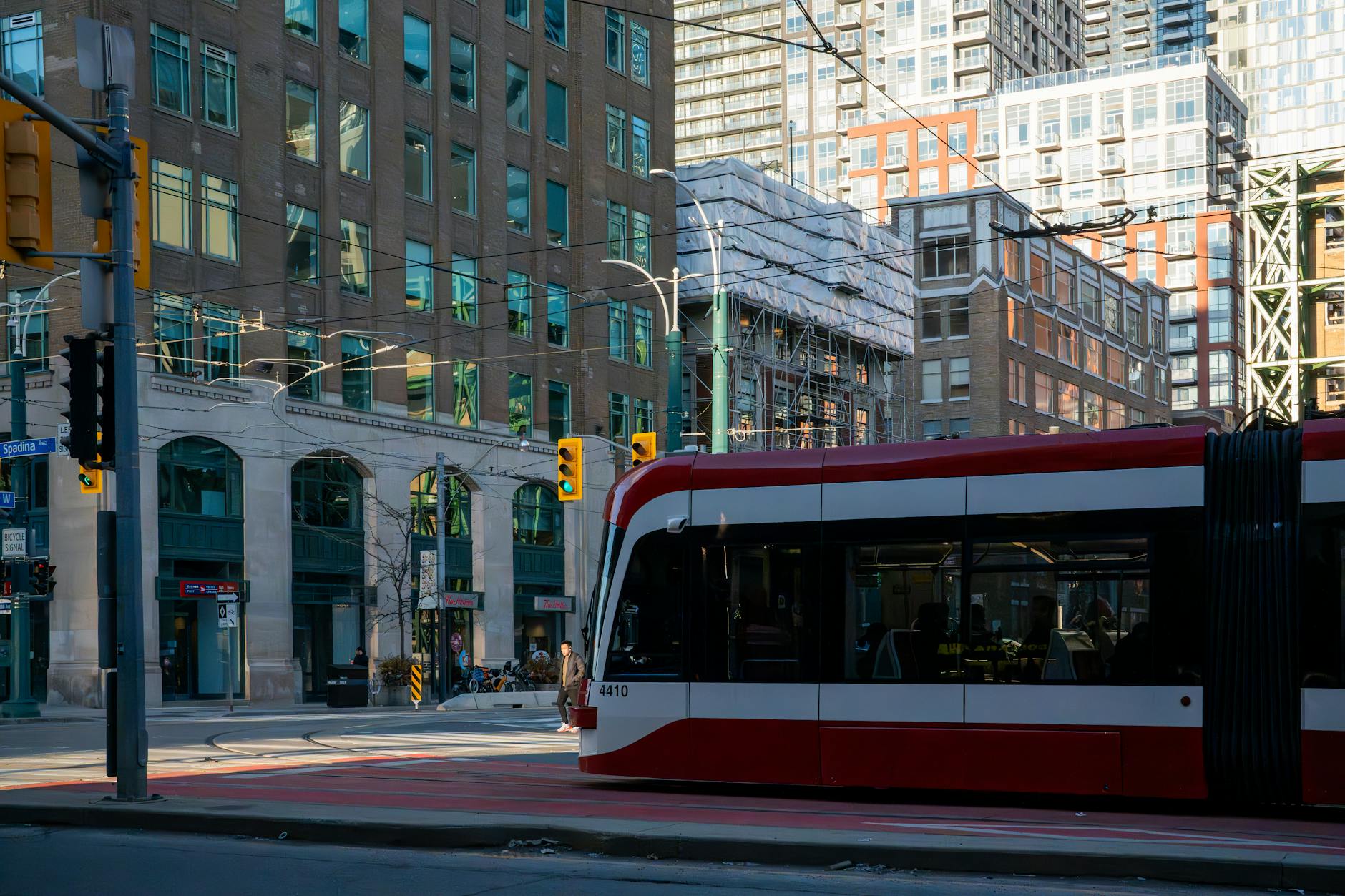
Toronto’s streetcar network runs 11 daytime routes, concentrated downtown and near the waterfront. Construction can divert a route or swap in replacement buses, so check the route’s page on ttc.ca before you ride.
Most Useful Streetcars for Tourists
504 King: Runs along King Street through King West and Liberty Village. From November 1, 2026, streetcars run between Dundas West and Broadview stations, and 504C buses cover the Distillery District. Connects directly to most major Entertainment District and Old Town attractions.
501 Queen: Runs along Queen Street, the spine of Queen West and downtown.
510 Spadina: Runs north-south along Spadina Avenue through Chinatown, Kensington Market, and the AGO area. Connects to Bloor (Spadina Station) and the waterfront.
506 Carlton: Runs along College and Carlton streets, through Little Italy.
509 Harbourfront: Connects Union Station to the Toronto waterfront and Exhibition Place.
505 Dundas: Runs along Dundas Street, handy for the AGO.
Streetcar Hours
Overnight, streetcar service passes to the Blue Night network, whose routes carry their own 300-series numbers.
Toronto TTC Guide: Buses
The TTC bus network connects most Toronto destinations not served by subway or streetcar. Useful tourist routes include:
86A Scarborough: From Kennedy Station to the Toronto Zoo, every day in summer and on weekdays only once Labour Day has passed.
129 McCowan North: Various north Scarborough connections.
Most useful TTC bus routes parallel subway and streetcar service. Tourists rarely need buses for major attractions.
Toronto TTC Guide: Useful Routes for Tourists
CN Tower & Entertainment District
Subway Line 1 to Union Station. Walk south through SkyWalk to the CN Tower, Ripley’s Aquarium, and Rogers Centre.
ROM & Yorkville
Subway Line 1 to Museum Station (ROM directly above), or Line 2 to Bay Station (Yorkville).
Casa Loma
Subway Line 1 to Dupont Station, walk north on Spadina, climb the Baldwin Steps.
Distillery District & St. Lawrence Market
Subway Line 1 to King Station, then the 504 King streetcar east; the 504A branch runs to Distillery Loop. From November 1, 2026, 504C replacement buses take over between Sunnyside Loop and the Distillery District, while 504 streetcars run between Dundas West and Broadview stations.
Toronto Islands Ferry
Subway Line 1 to Union Station, then head south along Bay Street to Jack Layton Ferry Terminal; the ferry crossing to the islands takes about 15 minutes.
Kensington Market & Chinatown
Take the 510 Spadina streetcar along Spadina Avenue.
High Park & Toronto Zoo
Subway Line 2 to High Park Station for the park. For Toronto Zoo: subway Line 2 to Kennedy Station, then the 86A Scarborough bus, which runs daily in summer but only Monday to Friday after Labour Day; for an autumn or winter weekend, check the Zoo’s transit page for alternatives.
The Beaches
The Beaches sit at the east end of Queen Street, and the 501 Queen is the streetcar route along it; look up its current routing before you go, since construction can change it.
Pearson Airport
UP Express train from Union Station (28 minutes to Pearson Terminal 1; $12.35 adult one-way, or $9.25 with PRESTO). See our UP Express train.
Toronto TTC Guide: Accessibility
The TTC is increasingly accessible. All streetcars are now low-floor with ramps and priority seating. Most subway stations are wheelchair-accessible: the TTC counted 64 of its 70 stations, about 91%, in April 2026, and its station-accessibility list shows which ones before you travel. All buses are low-floor accessible.
The Wheel-Trans paratransit service serves customers with disabilities who cannot use conventional transit. Visitors who already qualify for specialized transit at home can arrange temporary Wheel-Trans access for up to 30 days through their home service and Wheel-Trans: send the eligibility details at least five days before arrival, and book each ride at least 48 hours ahead.
Toronto TTC Guide: Tips for Tourists
Buy a PRESTO card or PRESTO Ticket on arrival. The PRESTO card is $4 plus loaded fare. Available at any subway station or Shoppers Drug Mart.
Use tap-to-pay if you have a contactless credit card. No card to buy; standard $3.30 adult fare. Easiest option for short visits.
Get a day pass for tourist days. $13.50 buys one person unlimited rides, and kids 12 and under travel free without one.
The 2-hour transfer. A single PRESTO or tap-to-pay fare gives you 2 hours of unlimited TTC rides. Includes returns and changes of direction.
Download the TTC app. Real-time arrival information, route planning, and service alerts.
Avoid rush hour if possible. Weekday morning and evening commutes pack the trains, so plan sightseeing hops around them.
Streetcars take longer than subways. The streetcar network is iconic but slower than the subway. Plan accordingly.
Children 12 and under ride free. Only riders 13 and over pay a fare.
Save your transfer. Even with PRESTO and tap-to-pay, you can ask the driver for a paper transfer if you switch to cash on a different vehicle.
Keep your card or app accessible. The TTC uses proof-of-payment on streetcars; transit officers may ask to see your fare.
Toronto TTC Guide: Safety
The TTC is safe for tourists. Standard urban precautions apply: stay aware of your surroundings, keep belongings secure, and avoid empty subway cars late at night. TTC Customer Service answers daily from 7 a.m. to 10 p.m., except statutory holidays, at 416-393-3030 and @TTCHelps on X. Designated Waiting Areas (well-lit, near security cameras) are marked at every subway platform for late-night travelers.
Toronto TTC Guide: PRESTO Card vs. Day Pass vs. Tap-to-Pay
When PRESTO Card Wins
If you’re visiting Toronto for 4+ days and making 1–3 trips per day, a PRESTO card with loaded value is the most flexible option. Costs $4 for the card plus your loaded fare.
When Day Pass Wins
If you’ll be charged five or more separate fares in a single day, the $13.50 day pass beats PRESTO; four fares cost $13.20, and rides inside a two-hour transfer count as one. The pass covers one person, though children 12 and under ride free, which keeps family days cheap.
When Tap-to-Pay Wins
If you’re visiting for 1–2 days and just need a few rides, tap-to-pay with your contactless credit card is the simplest option — no card to buy or load.
Longer Stays
For visits of 3–7 days with heavy daily transit use, compare the TTC’s day pass with tapping each ride, and check the fare-capping rules on ttc.ca. The Convention Pass is for qualifying conference groups, not individual visitors.

Toronto TTC Guide: After the Subway Closes
The Toronto subway stops running at about 1:30 a.m., and last-train times differ from station to station, so check yours before a late night out. Two options for late-night transit:
Blue Night Network: The 24-hour bus and streetcar routes covering main subway corridors. The 300-series buses run every 30 minutes overnight. Queen and King keep overnight service as the 301 Queen and 304 King, separate routes from the daytime 501 and 504, so check their routing and schedules before you rely on them.
Ride-Share or Taxi: Uber, Lyft and Toronto taxis cover the trips the Blue Night routes don’t.
Toronto TTC Guide: Major Changes Coming
Fare Capping (September 2026)
Since September 1, 2026, the TTC has capped monthly fares for adults, youths, seniors, and Fair Pass customers. After 47 paid trips in a calendar month on the same card or device, the rest of that month’s rides are free. Capping replaced the adult, youth, senior and Fair Pass monthly passes.
Eglinton Crosstown LRT Expansion
Line 5 Eglinton began phased service on February 8, 2026, bringing light rail along Eglinton Avenue and better transit access to mid-Toronto.
Frequently Asked Questions: Toronto TTC Guide
How much is the TTC?
Single adult fare is $3.30 with PRESTO or tap-to-pay, or $3.35 on a PRESTO one-ride ticket; both include a 2-hour transfer. Cash is $3.35. Day pass is $13.50. Children 12 and under ride free.
Can I use my credit card on the TTC?
Yes — the TTC accepts contactless tap-to-pay credit cards (Visa, Mastercard, Amex) and mobile wallets (Apple Pay, Google Pay) at all subway gates, streetcar readers, and bus readers. Charged at the standard $3.30 adult fare.
What is a PRESTO card?
PRESTO is the TTC’s reloadable fare card. $4 to buy, then load with funds. Tap on subway gates, streetcars, and buses to pay. See our PRESTO card guide.
Is the TTC day pass worth it?
Only if you would pay at least five separate fares that day. Four $3.30 fares cost $13.20, less than the $13.50 pass, and anything within a two-hour transfer window counts as one fare. Each pass is for one person; children 12 and under travel free without one.
How do I get from Pearson Airport using the TTC?
Pearson is connected via TTC bus 900 Airport Express to Kipling subway station. The UP Express train (separate fare from the TTC) runs from Terminal 1 to Union Station in 28 minutes, for $12.35 one-way or $9.25 with PRESTO. See our airport to downtown guide.
Can I transfer between subway and streetcar with one fare?
Yes — a single TTC fare with PRESTO, ticket, or tap-to-pay includes a 2-hour transfer for unlimited rides on subway, streetcar, and bus in any direction.
When does the Toronto subway run?
Trains run from about 6 a.m. (8 a.m. on Sundays) until about 1:30 a.m., with exact times varying by station. After 1:30 a.m., use the Blue Night bus and streetcar network.
How do I get to the Toronto Zoo on the TTC?
Subway Line 2 (Bloor-Danforth) east to Kennedy Station, then 86A Scarborough bus to the Toronto Zoo. The 86A runs every day in summer, but after Labour Day only on weekdays, so plan a weekend visit outside summer accordingly.
Are TTC stations wheelchair-accessible?
Most are: in April 2026 the TTC reported 64 of 70 subway stations accessible, about 91%. All streetcars and buses are low-floor accessible.
Is the TTC safe?
Yes — the TTC is safe for tourists with standard urban precautions. Designated Waiting Areas are marked at every subway platform. For help, call TTC Customer Service on 416-393-3030, staffed 7 a.m. to 10 p.m. daily except statutory holidays.
Plan Your Toronto TTC Use
The Toronto TTC guide is straightforward for visitors: choose between PRESTO card (best for 4+ days), day pass (best when you’ll pay five or more separate fares in a day), or tap-to-pay credit card (simplest for short visits). An adult fare is $3.30 with PRESTO or a contactless card, and it includes a 2-hour transfer. Combined with the iconic streetcar network and three-line subway, the TTC reaches many major Toronto attractions at a fraction of the cost of taxis or ride-shares.
For the bigger picture, our overview of getting around Toronto sets the TTC alongside every other way to move. The PRESTO card guide covers the fare card in detail, while the UP Express guide and our Pearson-to-downtown breakdown handle the trip in from the airport.