Walk in from the Bloor Street gate on an ordinary Tuesday in June and within four minutes the city is gone. Not muffled — gone. The path drops into a wooded ravine, the traffic noise stops, and you are standing in an oak woodland with a red-tailed hawk somewhere above you and no visible building in any direction. Then, ten minutes later, you round a corner and there is a bison. High Park Toronto is about 160 hectares of genuinely strange and genuinely wonderful public land in the middle of the west end, and it contains a zoo, a rare savannah, a pond with its own wetland designation, a 1837 cottage, a Shakespeare amphitheatre and the most photographed cherry trees in Canada.
This guide covers all of it: what to see, when the blossoms actually bloom and what the access rules are, how the car-free days work, whether the zoo is worth it, and what to do with children for a full day. Details were checked in September 2026 and prices are in Canadian dollars.
At a Glance
| Detail | What to know |
|---|---|
| Size | Toronto’s largest urban park; about two-thirds is in a natural state |
| Cost | Free, including the zoo |
| Nearest subway | High Park station on Line 2; Keele is also walkable |
| Cars | Monday to Friday only — the park is car-free at weekends |
| Parking | 276 spaces on site, plus Green P and street parking nearby |
| Cherry blossoms | Late April to early May; peak lasts 4–10 days |
| Zoo | Bison, llamas, peacocks, reindeer, highland cattle — free |
| Shakespeare | Dream in High Park, 12 July – 6 September 2026 |
| Time needed | Two hours to walk it; a full day with children |
What High Park Actually Is
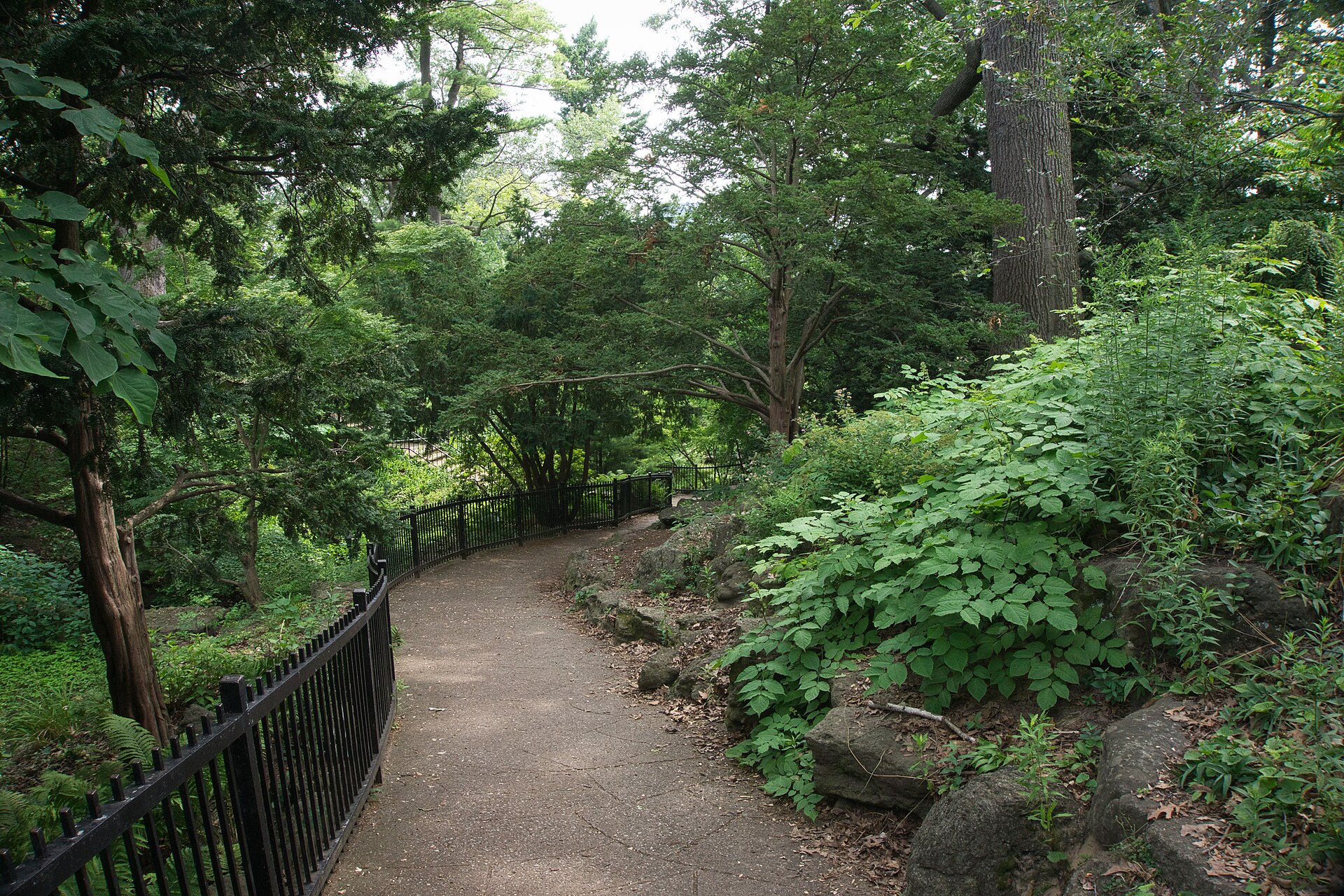
The park exists because of one man’s will. John George Howard, an English-born architect and Toronto’s first city surveyor, built a cottage on the land in 1837 and eventually deeded the property to the city on the condition that it remain public parkland — free to the people, in perpetuity. The city has honoured that: High Park has never charged admission, and neither does anything inside it.
What sets it apart from Toronto’s other large parks is that most of it was never landscaped. Roughly two-thirds remains in a natural state, and a substantial portion of that is black oak savannah — an open woodland of widely spaced oaks over a grassland understorey, a globally rare ecosystem of which High Park holds one of the largest remaining fragments anywhere. The city manages it with controlled burns in spring, which is why you will occasionally find sections of the park roped off and smelling of woodsmoke in April. That is not damage; that is maintenance.
The practical consequence for a visitor is that High Park does not feel like Trinity Bellwoods or the Toronto Islands. It feels like countryside that a city grew around, and the further west and south you walk from the Bloor Street entrance, the more true that becomes.
The Cherry Blossoms
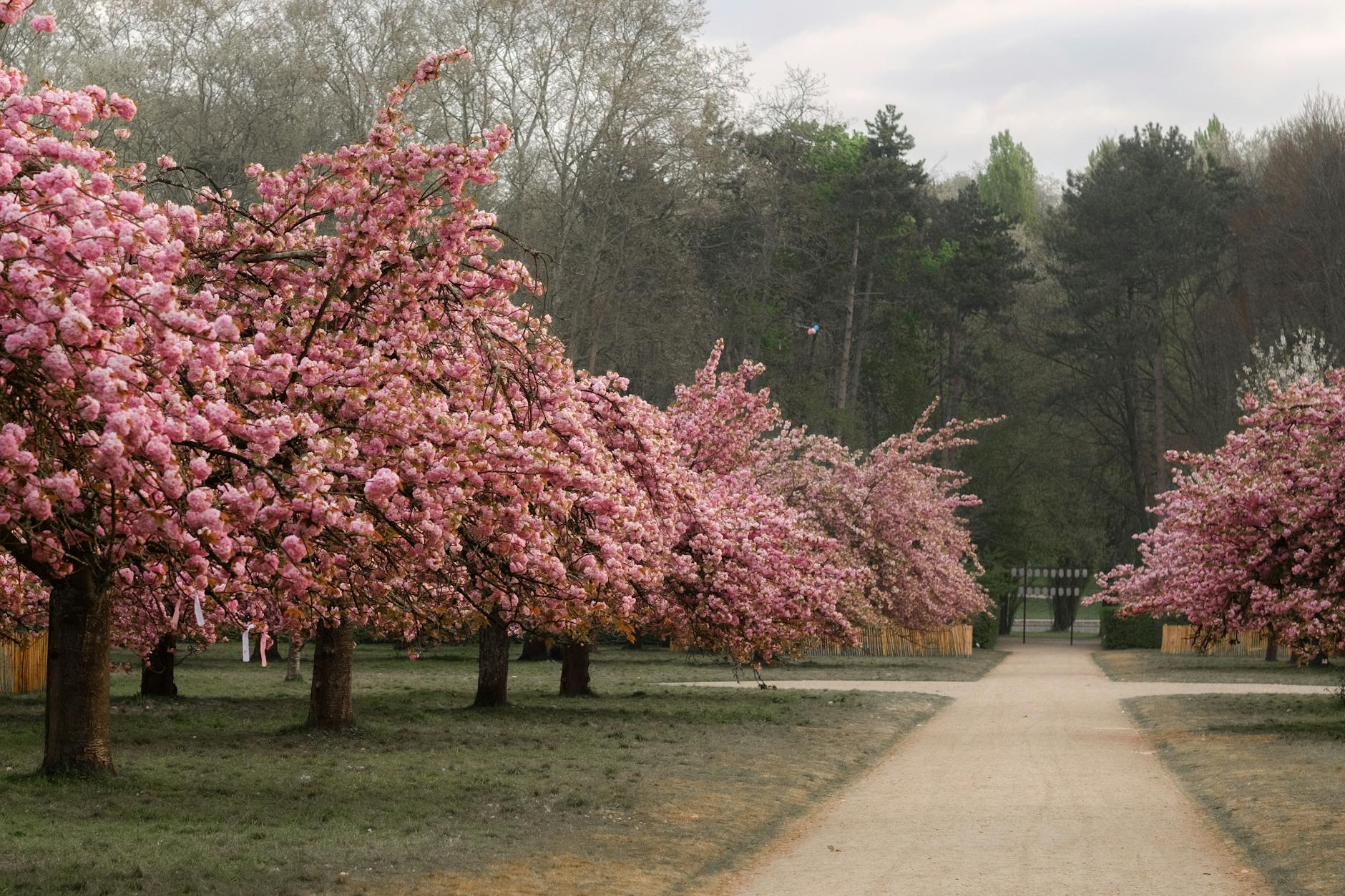
The Sakura grove at High Park is the single most photographed thing in Toronto in spring, and the most misunderstood. Here is what you actually need to know.
When
Peak bloom is typically late April into early May, and the blossoms last between four and ten days depending on the weather. A warm spell brings them forward and a cold snap holds them back, so a date fixed in advance is a gamble. The city and local watchers track the buds through the spring and publish daily updates; check those in the fortnight before you go rather than booking a flight around a guess.
The access rules
This is the part older articles get wrong. During peak bloom, vehicle access to the park is restricted — the normal weekday car access is suspended, and in some years the city has gone further, managing crowds around the grove directly. Assume you are walking or taking transit, assume the grove will be busy, and check the city’s own page in the days before you go, because the arrangements have changed more than once in recent years.
What to expect
Honestly: crowds. Several thousand people on a sunny weekend afternoon at peak, queues for the best photo positions, and a general atmosphere closer to a festival than a walk in a park. It is still worth seeing, but go at 7am on a weekday if you want the version in the photographs, and be prepared for the possibility that you arrive two days late and are looking at green leaves.
And a note worth making: the trees were a gift, and they are treated as one. Climbing them, pulling branches down for a photograph or shaking petals loose is both destructive and, in the current management regime, likely to get you moved on. Our Toronto cherry blossom guide covers the other groves around the city, several of which are far less crowded.
High Park Zoo
Free, open daily, and considerably more charming than a free municipal animal display has any right to be. It has been here since 1893, which makes it Canada’s oldest animal attraction, and the residents include bison, llamas, peacocks, reindeer and highland cattle, along with sheep, emus, yaks and capybaras depending on the year.
Set expectations correctly and you will enjoy it. This is not the Toronto Zoo — there are no elephants, no big cats and no conservation programme of international note. It is a row of paddocks along a valley path with animals you can see from a couple of metres away, it takes thirty minutes, it costs nothing, and small children love it unreservedly. The bison in particular are genuinely arresting; there is something faintly absurd about a plains bison standing in a paddock in west-end Toronto.
It runs on donations and a volunteer support group. There are collection boxes; use them.
Grenadier Pond
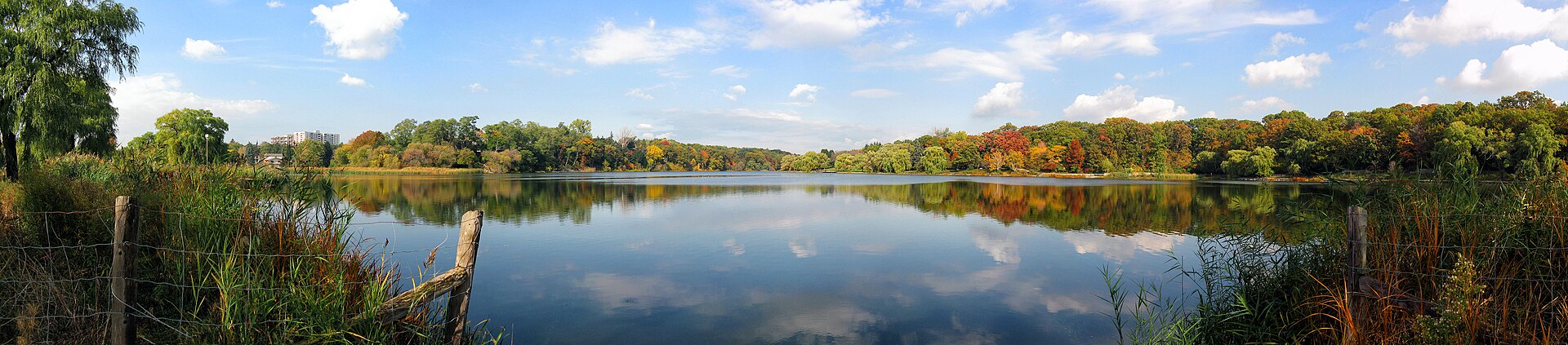
The largest body of water in the park and the reason it has an ecological designation rather than merely a pretty view. Grenadier Pond was designated a Provincially Significant Wetland Complex in 2022, and it supports a genuinely diverse population of birds, fish, amphibians and plants. Fishing is permitted in designated sections.
Practically, the pond is the park’s best walk. A path runs around most of its edge, the west side is quieter than the east, and the view back across the water toward the city is the photograph most people miss because they are looking at the cherry trees instead. Early morning is best: mist on the water, herons, and almost nobody.
The name is unresolved. The popular story involves grenadiers from the Fort York garrison falling through the ice, which is a good story and probably not a true one. Nobody has produced better evidence for anything else.
In winter the pond freezes, and every year the city puts up signs telling people not to walk on it, and every year some people do. It is not a maintained skating surface — for that, see our ice skating guide.
Colborne Lodge
John and Jemima Howard’s house, built in 1837 in the Regency picturesque style, sits at the southern end of the park and is now a City of Toronto museum. It is small, it takes forty minutes, and it is the best surviving example of its kind in the city — the Howards designed it themselves, and it retains an unusual amount of original material including some of the earliest indoor plumbing in Upper Canada.
Cottage and garden tours run through the year along with workshops and seasonal events; the Christmas programming in particular is well done. Hours are seasonal and narrower in winter, so check before making a special trip.
The Trails and the Savannah
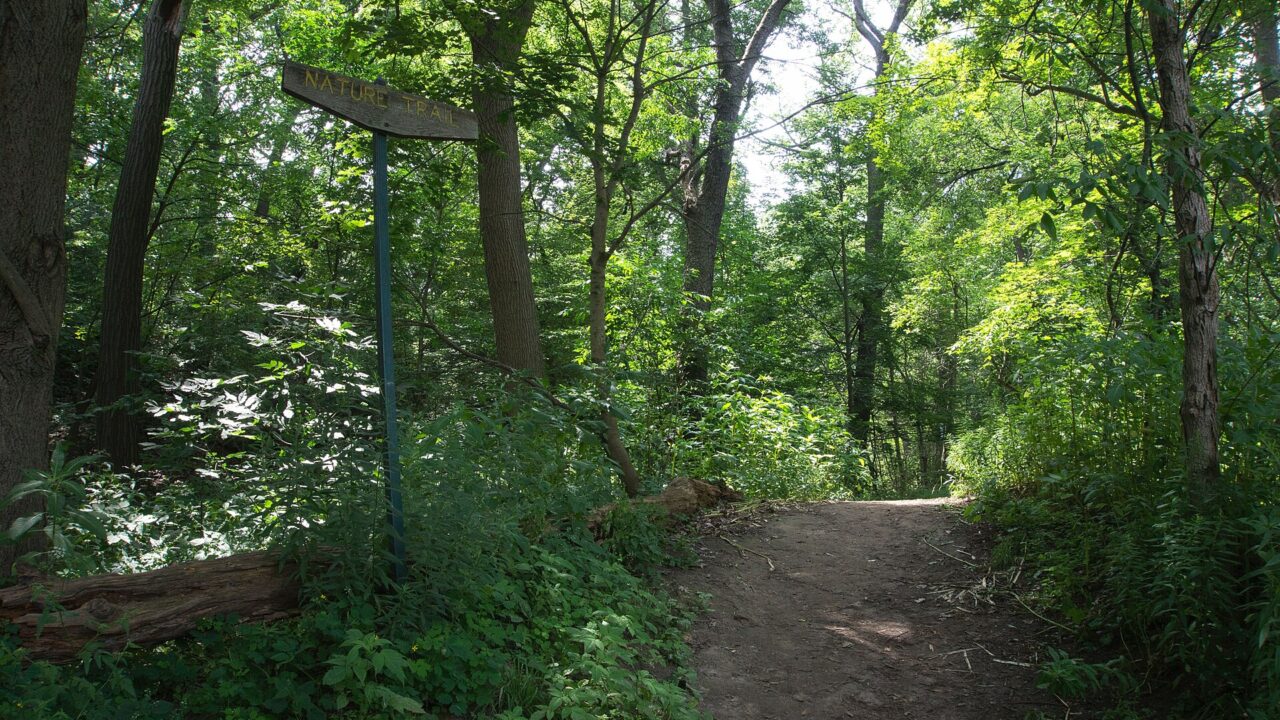
High Park’s paths are a mix of paved main roads, gravel park paths and narrow dirt trails through the wooded ravines. There is no single circuit, and the pleasure of the place is in wandering rather than following a route.
- The ravine trails in the north-east of the park are the quietest and the most genuinely wooded. Enter near the Bloor Street gate and drop down; you can be entirely alone within five minutes on a weekday.
- The savannah occupies the higher ground on the west side. Look for widely spaced black oaks over open grass — it looks scruffy and unmanaged to an eye trained on English parkland, and that is exactly what it should look like.
- The pond circuit is the most obvious walk, roughly forty-five minutes at an amble.
- The full perimeter is about two hours if you are covering ground rather than stopping.
The terrain is hillier than people expect, with real elevation changes between the ravines and the tableland. Sensible shoes; the dirt trails are muddy for weeks after the thaw. Our hiking trails guide covers the city’s other ravine systems.
Wildlife
The savannah and the wetland together make High Park one of the better urban birding sites in Ontario. Spring migration in early May brings warblers through in numbers, the pond holds herons, wood ducks and a great deal else, and red-tailed hawks nest in the park most years. Local naturalists run walks and are, without exception, delighted to have someone ask them what they are looking at.
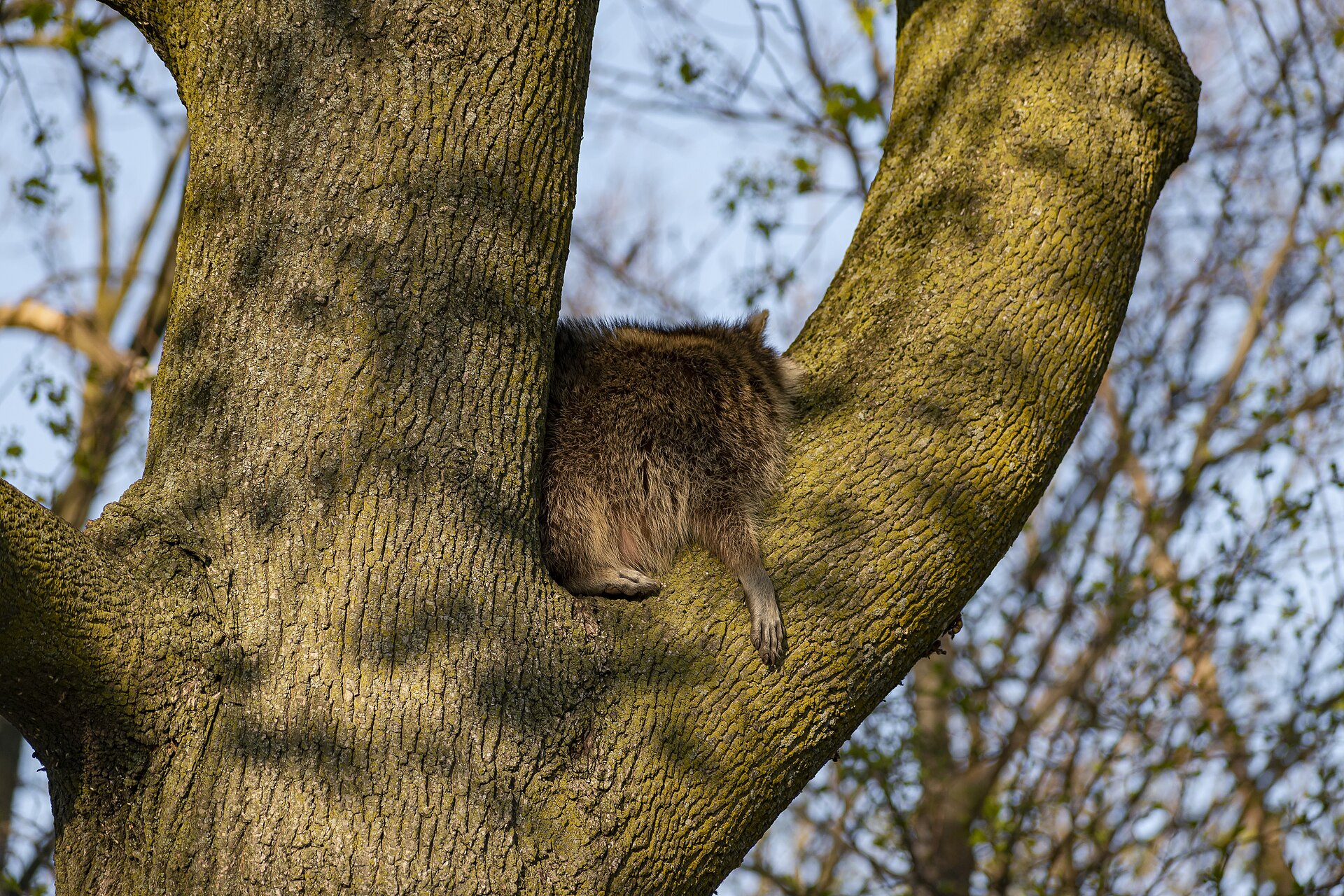
On the ground: squirrels in industrial quantities, chipmunks, the occasional coyote at dawn, and raccoons — a great many raccoons, most of them asleep in tree forks in exactly the manner shown above. Toronto’s relationship with its raccoons is a whole cultural phenomenon. Do not feed them, do not approach them, and do enjoy them from a distance.
Dream in High Park
Canadian Stage has been staging outdoor theatre in the park’s amphitheatre for over four decades, and it is one of the genuinely great Toronto summer experiences. The 2026 season is the 43rd, running 12 July to 6 September with a production of Twelfth Night. Performances are Tuesday to Saturday at 8pm and Sundays at 7pm.
Tickets are $35, with $20 rush tickets available at the gate only from thirty minutes before each performance — that rush price is the best theatre value in the city by a distance. The 2026 run also includes themed evenings: Zoo Night on 17 July, Queer Night on 24 July, Dog Night on 29 July and Date Night on 30 July.
Practicalities: the amphitheatre is a grass hillside, so bring something to sit on and a jumper for after sunset. It goes ahead in light rain and is cancelled for serious weather. Arrive an hour early for a good spot on a Saturday. Our Toronto theatre guide covers what is on indoors.
With Children
High Park is arguably the best full day out with children in Toronto that costs nothing.
- Jamie Bell Adventure Playground, by the Duck Pond — a large wooden castle-style structure with turrets, ropes, ladders, swings and slides. Genuinely excellent, and busy on any warm weekend.
- The zoo — thirty minutes, free, bison.
- The trackless train that loops the park in the warmer months, which is a small paid ride and completely irresistible to anyone under seven.
- The Duck Pond and the Grenadier Pond edges for feeding-adjacent activities, although please do not feed the waterfowl bread.
- The High Park Nature Centre, which runs programmes for children through the year.
Practical notes: the park is hilly and large, so a pushchair is worth having for under-fives and you will feel the inclines. Washrooms exist but are spread out. Our playgrounds and splash pads guide and Toronto with kids guide have the rest of the city’s options.
Getting There and Parking
By TTC
High Park station on Line 2 puts you at the north-east corner of the park; Keele station is a slightly longer walk to the same side. The 506 Carlton streetcar runs along the park’s eastern edge, and the seasonal 203 High Park bus serves the park from the Bloor-Danforth subway. A single fare is $3.30 with a tapped card — see our TTC guide.
Transit is comfortably the best option, and on weekends it is effectively the only sensible one.
By car — and the rule that catches people out
Cars are permitted in High Park Monday to Friday only, and not on statutory holidays or during peak cherry blossom season. At weekends the park roads are closed to vehicles entirely. This is a deliberate and, frankly, excellent policy: the park is dramatically better without cars in it.
On weekdays there are 276 parking spaces inside the park, plus Green P lots and street parking in the surrounding streets. The main vehicle entrance is at Parkside Drive and High Park Boulevard, with the exit at Bloor Street West and High Park Avenue. The 276 spaces go early on any pleasant day.
By bike
The park connects to the West Toronto Railpath and the Martin Goodman Trail along the lakeshore, and cycling within the park is permitted on the roads. On a car-free weekend it is one of the nicest places to ride in the city. Our bike share guide covers where the docks are.
Season by Season
| Season | What’s on | Verdict |
|---|---|---|
| March–April | Controlled burns, muddy trails, buds watched obsessively | Quiet, but check for closures |
| Late April–early May | Cherry blossom peak, vehicle restrictions, crowds | Spectacular and chaotic |
| June | Everything green, zoo busy, no crowds yet | The underrated month |
| July–August | Dream in High Park, trackless train, playground packed | The full experience |
| September–October | Autumn colour around Grenadier Pond, migration | Arguably the best time |
| November–March | Bare, quiet, frozen pond, excellent walking | Genuinely lovely and empty |
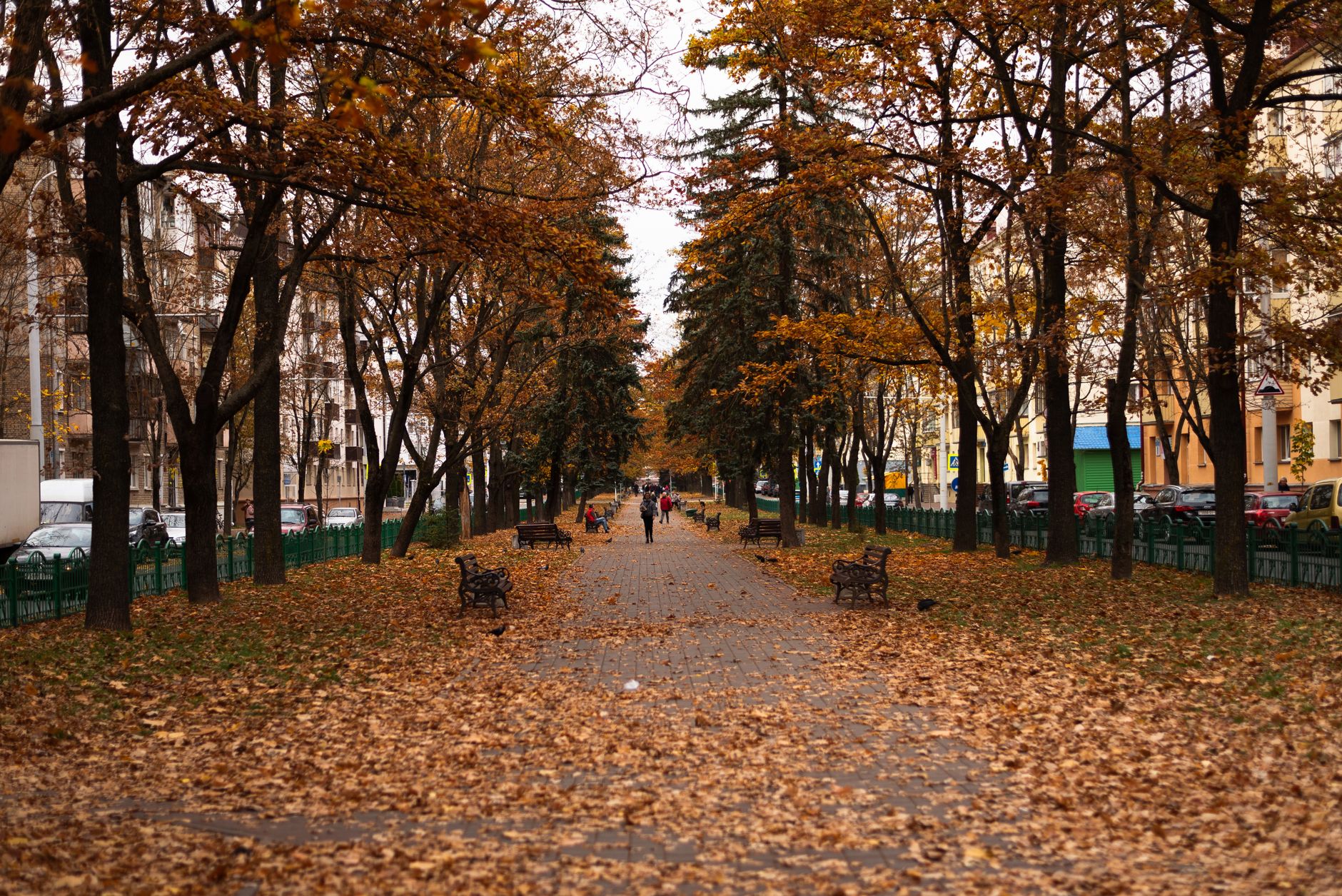
The city’s attention is entirely on the ten days of cherry blossom, which means the other fifty-one weeks are comparatively empty. If you have a choice, come in late September or October — the oaks and maples around the pond are as good as the blossom and there is nobody there. Our Toronto in fall and Toronto in spring guides cover the seasons across the city.
Eating
Inside the park there is a café near the Grenadier restaurant building and seasonal concession stands, which are fine and no more than that. The better plan is to bring a picnic — the park is built for it — or to walk out of the eastern side into Roncesvalles, a Polish-rooted high street five minutes from the park gate that has become one of the city’s most pleasant places to eat. Bakeries, brunch, good coffee and a couple of genuinely excellent restaurants. Our best brunch guide has several of them.
To the north, Bloor West Village offers a similar proposition with a slightly older-fashioned character. Either beats a park concession.
A Half Day, and a Full One
Two hours, adults only
- Enter at High Park station and walk south into the ravine rather than along the main road.
- Cut west through the wooded trails to the top of Grenadier Pond, about twenty minutes.
- Walk the pond anti-clockwise down the quiet western shore, forty-five minutes.
- Colborne Lodge at the southern end if it is open, or straight out the south gate.
- Out onto Roncesvalles for coffee, or south under the rail line to the Sunnyside boardwalk and the lake.
A full day with children
- 10:00 — In at the Bloor Street gate, straight to the zoo. Bison first; everything else is a bonus.
- 11:00 — Jamie Bell Adventure Playground by the Duck Pond. Allow more time than you think.
- 12:30 — Picnic on the slopes, or walk out to Roncesvalles for lunch and come back.
- 14:00 — The trackless train loop if it is running, then the nature trails on the east side.
- 15:30 — Grenadier Pond for ducks, herons and stone-throwing.
- 17:00 — Out the south gate and down to the lake at Sunnyside for the last hour of sun.
Beyond the Park Gates
High Park sits at the junction of four west-end neighbourhoods, and the walk out of any of its gates is part of the appeal.
- Roncesvalles, off the eastern side — a Polish-rooted high street that has become one of Toronto’s most liveable, with bakeries, brunch spots, independent shops and a good bookshop. Five minutes from the gate.
- Bloor West Village, to the north — older-fashioned, less self-conscious, strong on delis and European food shops.
- Swansea, to the west across Grenadier Pond — a quiet residential pocket that most Torontonians have never walked through, with some of the best 1920s housing stock in the city.
- Sunnyside and the lakeshore, to the south under the rail line and the Gardiner — a boardwalk, a 1922 bathing pavilion and a stretch of beach. Our waterfront guide covers the whole shoreline.
The combination of park, high street and lake within a twenty-minute radius is the best argument for spending a whole day out here rather than an hour, and it is why the area is a genuine alternative to the downtown-only trip most visitors take. Our neighbourhoods guide has the wider map.
What Is Not Worth It
- Driving on a weekend. You cannot. The park roads close to vehicles Saturday and Sunday.
- Booking a trip around the cherry blossoms. The peak lasts four to ten days and moves with the weather. Come for Toronto and treat the blossom as a bonus.
- Visiting the grove at 2pm on a sunny weekend at peak. Go at dawn on a weekday or accept that you are attending an event, not taking a walk.
- Expecting a proper zoo. It is a free municipal animal display with bison in it. Enjoy it for what it is.
- Walking on Grenadier Pond in winter. The ice is not monitored and is not safe.
- Feeding the animals — any of them. The waterfowl, the raccoons, the squirrels. All of it does harm and some of it is prohibited.
- Trying to see everything in an hour. The park is large and hilly. Two hours minimum, and a full day if children are involved.
Practical Tips
- Enter from the south if you want quiet and from Bloor Street if you want the zoo and the playground first.
- Download a park map before you go. Signage inside is patchy and the paths are not intuitive.
- Sensible shoes. The ravine trails are dirt and the elevation change is real.
- Washrooms are seasonal in places. The ones near the playground and the zoo are the most reliable.
- It is free, all of it — one of the best entries in our free things to do in Toronto guide.
- Dogs are welcome, with an off-leash area, but not everywhere; watch for the signage around the savannah restoration zones.
- Combine it with Roncesvalles and the lakeshore. Park in the morning, high street for lunch, Sunnyside boardwalk in the afternoon — an excellent west-end day.
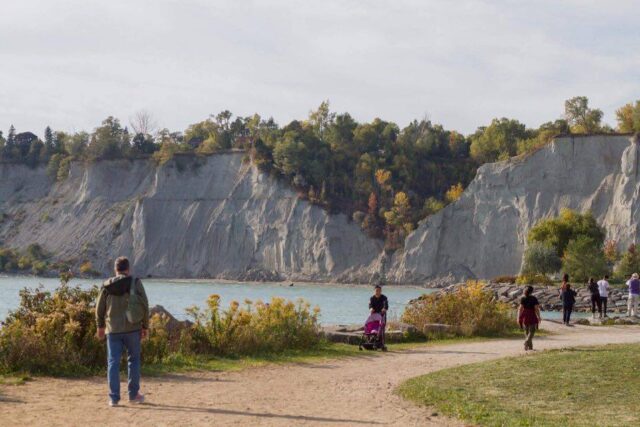
- If you like this, go to the Bluffs. Our Scarborough Bluffs guide covers the east end’s equivalent surprise.
Frequently Asked Questions
Is High Park free?
Yes — the park, the zoo and the trails all cost nothing. Colborne Lodge charges museum admission, the trackless train is a small paid ride, and Dream in High Park is separately ticketed.
When do the cherry blossoms bloom in High Park?
Typically late April into early May, with peak bloom lasting four to ten days depending on the weather. Vehicle access to the park is restricted during peak bloom. Check the city’s updates in the fortnight beforehand rather than fixing a date months in advance.
Can you drive into High Park?
On weekdays only. Cars are permitted Monday to Friday, but not on statutory holidays or during peak cherry blossom season, and the park roads are closed to vehicles at weekends. There are 276 parking spaces inside, entering at Parkside Drive and High Park Boulevard.
What animals are at High Park Zoo?
Bison, llamas, peacocks, reindeer and highland cattle among others, in a free municipal animal display that has been running since 1893. It takes about half an hour and is excellent with young children.
How do you get to High Park by TTC?
High Park station on Line 2 is at the north-east corner; Keele station is also within walking distance. The 506 Carlton streetcar runs along the eastern edge and the seasonal 203 bus serves the park from the Bloor-Danforth subway.
How long do you need at High Park?
Two hours to walk the main paths and the pond. A full day if you are combining the zoo, the playground, a picnic and Colborne Lodge with children.
What is Dream in High Park?
Canadian Stage’s outdoor Shakespeare season at the park amphitheatre, now in its 43rd year. The 2026 production is Twelfth Night, running 12 July to 6 September, Tuesday to Saturday at 8pm and Sundays at 7pm. Tickets are $35, with $20 rush tickets at the gate from 30 minutes before.
Can you swim in Grenadier Pond?
No. It is a protected wetland, not a swimming area, and the ice is not safe in winter either. For swimming, see our Toronto beaches guide.
Is High Park good for a picnic?
One of the best places in the city for it. Bring your own — the concessions inside are unremarkable — and pick a spot on the slopes above Grenadier Pond or in the open savannah areas.
Is it dog friendly?
Yes, with a designated off-leash area, but restrictions apply in the ecologically sensitive savannah and wetland zones. Read the signs; the restoration areas are genuinely fragile.
What is the best time of year to visit?
Late September and October, for the autumn colour around Grenadier Pond without the crowds that the cherry blossom draws. June is the underrated second choice — everything is green and the summer programming has not started.
A warning for anyone planning to drive: the park only lets cars in on weekdays, the 276 spaces go early on a sunny morning, and the residential streets around it are a patchwork of permit zones and three-hour limits that ticket visitors with real efficiency. Our guide to parking in Toronto explains the street rules, what a ticket costs and why the subway is usually the better bet.
Related Toronto Guides
- Toronto Outdoor Activities — the pillar guide to getting outside here.
- Best Parks in Toronto — how High Park compares with the rest.
- Toronto Cherry Blossom Guide — every grove in the city, including the quieter ones.
- Hiking Trails in Toronto — the ravines beyond High Park.
- Playgrounds & Splash Pads — where else to take small children.
- Scarborough Bluffs Guide — the east end’s equivalent surprise.
- Toronto with Kids — a full itinerary’s worth of options.
- Toronto in Spring — the blossom season in context.
Photo Credits
The Nature Trail: Nature Trail in High Park, Toronto 2026 by Chicken4War, CC BY-SA 4.0, via Wikimedia Commons.
A path through the woods in High Park: Pathways in High Park, Toronto 2026 (05) by Chicken4War, CC BY-SA 4.0, via Wikimedia Commons.
Grenadier Pond in autumn: (PANORAMA) Grenadier Pond – High Park (5833354768) by Diego Torres Silvestre from Sao Paulo, Brazil, CC BY 2.0, via Wikimedia Commons.
A raccoon in an oak: Raccoon in High Park 01 by Fabian Roudra Baroi, CC BY-SA 4.0, via Wikimedia Commons.