Toronto in winter is honestly cold — the downtown January normal high is −0.3°C, the coldest wind chill ever recorded downtown is −37, and a deep-freeze stretch shows up most years — but the city has built a real culture around it. The PATH keeps 200,000 commuters underground and warm, more than 50 outdoor City rink locations open from late November to March with every drop-in session free, and the Distillery District turns into a Christmas market people queue for. This guide covers Toronto in winter month by month, plus the climate numbers that matter, the skating rules, the underground network, the parking ban that costs $500, and what to put on your feet.
Toronto in winter: month-by-month overview
| Month | Avg high °C / °F | Highlights |
|---|---|---|
| December | 2.6 / 36.7 | Christmas markets, holiday lights, ice skating opens |
| January | -0.3 / 31.5 | Coldest month, Winterlicious, polar vortex risk |
| February | 0.6 / 33.1 | Family Day weekend, days lengthening, shoulder season |
Plan for four months, not three. November is functionally winter here — normal high 8.1°C, 8.3 cm of snow — and the clocks go back on 1 November 2026, dropping sunset from 6:11 p.m. to 5:10 p.m. overnight. Visitors under-pack for November more than any other month; the fall guide covers it.
The Toronto winter climate, in real numbers
Two weather stations matter and they disagree. Environment and Climate Change Canada’s downtown station (The Annex) reflects what a visitor near Yonge Street experiences; Pearson, 25 km inland, runs 1.5 to 2°C colder overnight, because downtown gets the lake plus the urban heat island. Both sets below are the 1991–2020 Climate Normals.
| Downtown (The Annex) | Nov | Dec | Jan | Feb |
|---|---|---|---|---|
| Mean daily max °C (°F) | 8.1 (46.6) | 2.6 (36.7) | −0.3 (31.5) | 0.6 (33.1) |
| Daily mean °C (°F) | 5.2 (41.4) | −0.1 (31.8) | −3.5 (25.7) | −2.7 (27.1) |
| Mean daily min °C (°F) | 2.3 (36.1) | −2.7 (27.1) | −6.7 (19.9) | −6.0 (21.2) |
| Record low °C (°F) | −20.6 (−5.1) | −30.0 (−22.0) | −32.8 (−27.0) | −31.7 (−25.1) |
| Record low wind chill | −17 | −34 | −37 | −34 |
| Precipitation (mm) | 70.8 | 57.8 | 64.6 | 53.9 |
| Snowfall cm (in) | 8.3 (3.3) | 24.1 (9.5) | 37.2 (14.6) | 27.0 (10.6) |
| Snowy days ≥0.2 cm | 3.1 | 8.4 | 12.0 | 8.7 |
| Sunshine hours (month) | 88.9 | 78.1 | 85.9 | 111.3 |
| Sunshine hours (per day) | 3.0 | 2.5 | 2.8 | 3.9 |
| Daylight, mid-month | 9h 42m | 8h 56m | 9h 17m | 10h 30m |
| Pearson (YYZ) | Nov | Dec | Jan | Feb |
|---|---|---|---|---|
| Mean daily max °C (°F) | 7.9 (46.2) | 1.9 (35.4) | −1.2 (29.8) | −0.3 (31.5) |
| Mean daily min °C (°F) | 0.2 (32.4) | −5.0 (23.0) | −8.9 (16.0) | −8.5 (16.7) |
| Snowfall cm (in) | 9.3 (3.7) | 24.1 (9.5) | 31.5 (12.4) | 27.7 (10.9) |
| Snowy days | 3.6 | 9.2 | 12.7 | 9.7 |
Downtown collects 121.5 cm (47.8 in) a year across 40.9 snowy days — snow falls often, rarely in bulk. Most events are 2 to 8 cm and cleared within a day. Note that many weather apps default to the Pearson reading, which is about two degrees colder than the sidewalk outside your downtown hotel; on the coldest nights of an average January, Pearson drops near −20°C. Our weather guide runs the full calendar.
The darkness is the real shock, not the cold
Sunset in Toronto falls before 5 p.m. from 1 November to roughly 12 January — ten straight weeks. The earliest sunset is about 4:41 p.m. on 8 December, two weeks before the solstice. The solstice on 21 December has the least daylight at 8 hours 56 minutes, but by then sunset has already crept back to 4:43 p.m. The latest sunrise, around 7:51 a.m., lands near New Year’s.
The sunshine figure explains how December actually feels: 78.1 hours in the whole month, 2.5 hours a day, 28% of what is possible. The sun is above the horizon for nine hours and shining for under three.
Plan around it. Put anything view-dependent — the CN Tower, the Islands, a ravine walk — between 11 a.m. and 3 p.m., and save museums, the PATH and floodlit skating for the dark half. Nathan Phillips Square at 6 p.m. in December beats noon, because the illuminated arches are the whole point. February is the payoff: it gains about 2 hours 10 minutes of daylight, the fastest change of the year, with sunset at 6:04 p.m. by the 28th.
December: holiday season
Weather
Downtown normals are a high of 2.6°C and a low of −2.7°C, with 24.1 cm of snow over about eight snowy days. Peak darkness — sunset 4:41 p.m. on the 8th, 4:43 p.m. at the solstice.
December activities and events
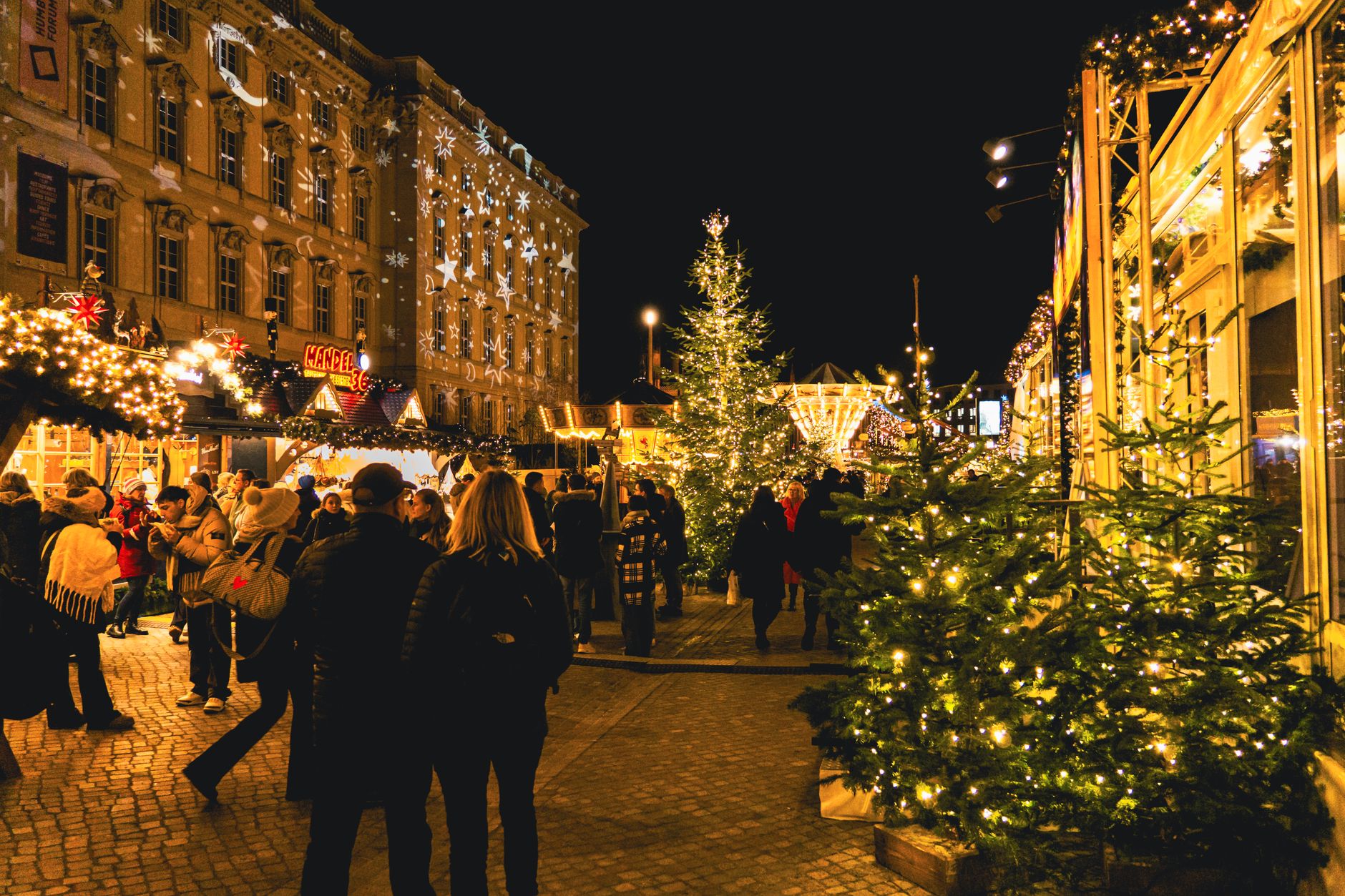
Toronto Christmas Market at the Distillery — The Distillery District at 55 Mill St. becomes a European-style market, opening mid-November and running to just before Christmas. Weekdays have recently been free with paid timed tickets on weekends, but 2026 dates, hours and pricing were not published as of late summer, so confirm before planning a weekend around it. Go on a weekday evening; the cobblestones are shoulder-to-shoulder on Saturdays. See our Distillery Christmas Market guide.
Cavalcade of Lights — Confirmed for 2026. Opening night at Nathan Phillips Square brings the official tree lighting, live performances and fireworks, on the final weekend of November; the exact date had not been posted. After that, 300,000+ LED lights stay on nightly to around 11 p.m. through the holidays, and the square hosts free Saturday skating parties, a tradition since 2002.
Toronto Christmas Pavilion at the CNE Grounds — Holiday programming and family events at Exhibition Place; dates shift yearly. The Christmas Tradition at Casa Loma decorates the castle at 1 Austin Terrace with themed evening programming — Dupont or St. Clair West stations, and more in our Casa Loma guide. The Toronto Symphony’s Messiah runs at Roy Thomson Hall, 60 Simcoe St., which connects to the PATH — useful on a −15 night in a dress coat.
Boxing Day (26 December) — Toronto’s biggest shopping day. The Toronto Eaton Centre, outlet malls and the Hudson’s Bay flagship are mob scenes. Arrive before 9 a.m. or skip it.
New Year’s Eve at Nathan Phillips Square — Free City celebration with music and fireworks. Running times, and whether the TTC offers free late service, were not confirmed for 2026-27.
Niagara Winter Festival of Lights — 14 November 2026 to 10 January 2027, free, across Queen Victoria Park, the Niagara Parkway, Dufferin Islands and Clifton Hill. The strongest winter day trip out of the city.
January: deep cold
Weather
The coldest month: normal high −0.3°C, normal low −6.7°C, 37.2 cm of snow across 12 snowy days — the snowiest month of the year. Polar vortex intrusions push the city well below normal for several days most winters. Environment and Climate Change Canada issues an Extreme Cold Warning when temperature or wind chill is forecast to hit −30 for two hours or more; frostbite risk starts around −10 wind chill and becomes a minutes-not-hours problem at −28. Sunset passes 5 p.m. around 12 January and reaches 5:26 p.m. by the 31st.
January activities and events
Winterlicious — Confirmed for 2027, with more than 200 restaurants running three-course prix-fixe menus. The City had not published 2027 dates or price tiers; historically it runs late January into early February, and reservations for the good rooms go fast. See our Winterlicious guide.
Niagara Icewine Festival — Three weekends in Niagara-on-the-Lake in mid-to-late January, with street galas and winery tastings. Lunar New Year falls on 6 February 2027, Year of the Goat, with free programming building through the preceding week at the Eaton Centre, in Chinatown, at Pacific Mall in Markham and in community centres citywide. The Toronto International Boat Show traditionally takes the Enercare Centre in mid-January; 2027 dates were not posted at time of writing.
January warming activities
Ice skating — Nathan Phillips Square, Harbourfront’s Natrel Rink, the Bentway, plus free park rinks citywide. Details below and in our ice skating Toronto guide.
Indoor museum days — The ROM, the AGO, the Bata Shoe Museum and the Aga Khan Museum are the standard rotation. The ROM and the Bata face each other at Bloor and Queen’s Park, the easy pair on a day you want under five minutes outside at a stretch.
Tobogganing — The City’s designated hills peak now: Riverdale Park East, Christie Pits, Withrow Park, Earl Bales. Nobody rents sleds; buy a plastic toboggan at a hardware store for under $20.
Cross-country skiing — Earl Bales, High Park and Tommy Thompson Park see tracks when snow depth allows, but city cover is unreliable. For guaranteed grooming, leave town.
Hot food and drink culture
Hot chocolate is close to a competitive sport here. SOMA Chocolatemaker is the benchmark — the original at 32 Tank House Lane in the Distillery, and a second counter inside Brookfield Place at 181 Bay St., which means you can reach it through the PATH without a coat. Order the Mayan, which is small, thick and spiked with chilli, rather than a mug-sized one. Warming cocktails turn up on almost every serious bar list from December onward; the cocktail rooms do them properly, the pubs generally do not.
February: lengthening days
Weather
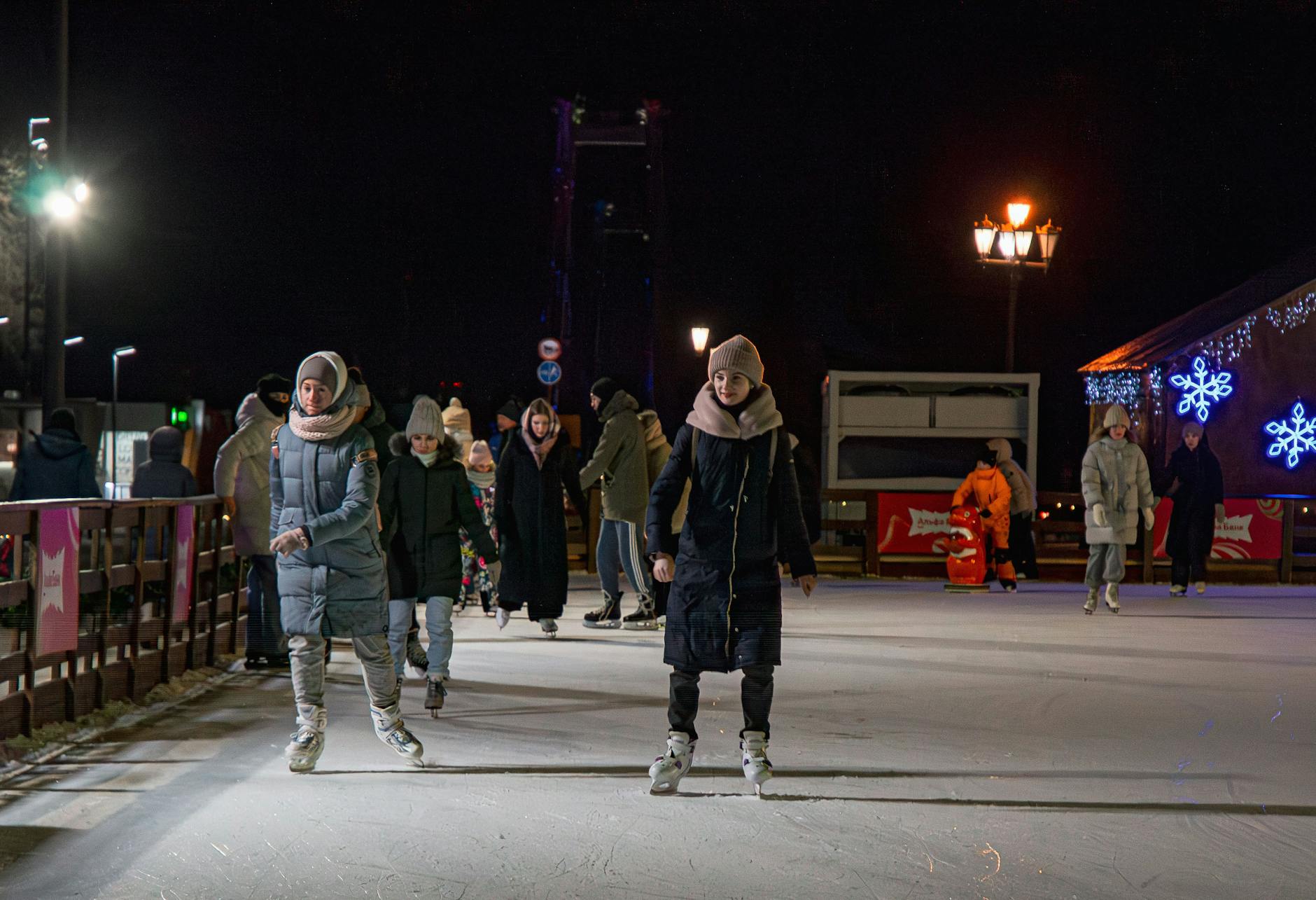
Normals of 0.6°C high and −6.0°C low, with 27.0 cm of snow. Milder than January on paper and usually not in practice: February is the windiest month of the Toronto winter, and the coldest week of the season lands here about as often as in January. But sunset reaches 5:47 p.m. by mid-month and sunshine jumps to 111.3 hours.
February activities and events
Family Day, Monday 15 February 2027 — An Ontario statutory holiday and the busiest domestic-travel weekend of the winter. Museums, Casa Loma and the Ontario Science Centre run special programming; book restaurants and timed-entry attractions ahead.
Winter Stations at Woodbine Beach — Outdoor art installed around the lifeguard stands on a frozen beach. Free, historically opening on the Family Day weekend, though the 2027 dates and theme had not been announced. Worth checking: a snowy Woodbine Beach with sculpture on it is the most distinctive thing Toronto does in February.
Black History Month — Free programming all month at Harbourfront Centre, Yonge-Dundas Square and neighbourhood venues, alongside the Toronto African International Film Festival in late February. Winterlicious usually continues into the first days of the month.
Last winter activities
February is when Toronto in winter starts hinting at spring. The first 10°C day gets treated like a public holiday, a few patio tables appear on a Saturday afternoon, and everyone overdresses for a week afterward out of habit. What follows is in the spring guide.
Ice skating: how it actually works
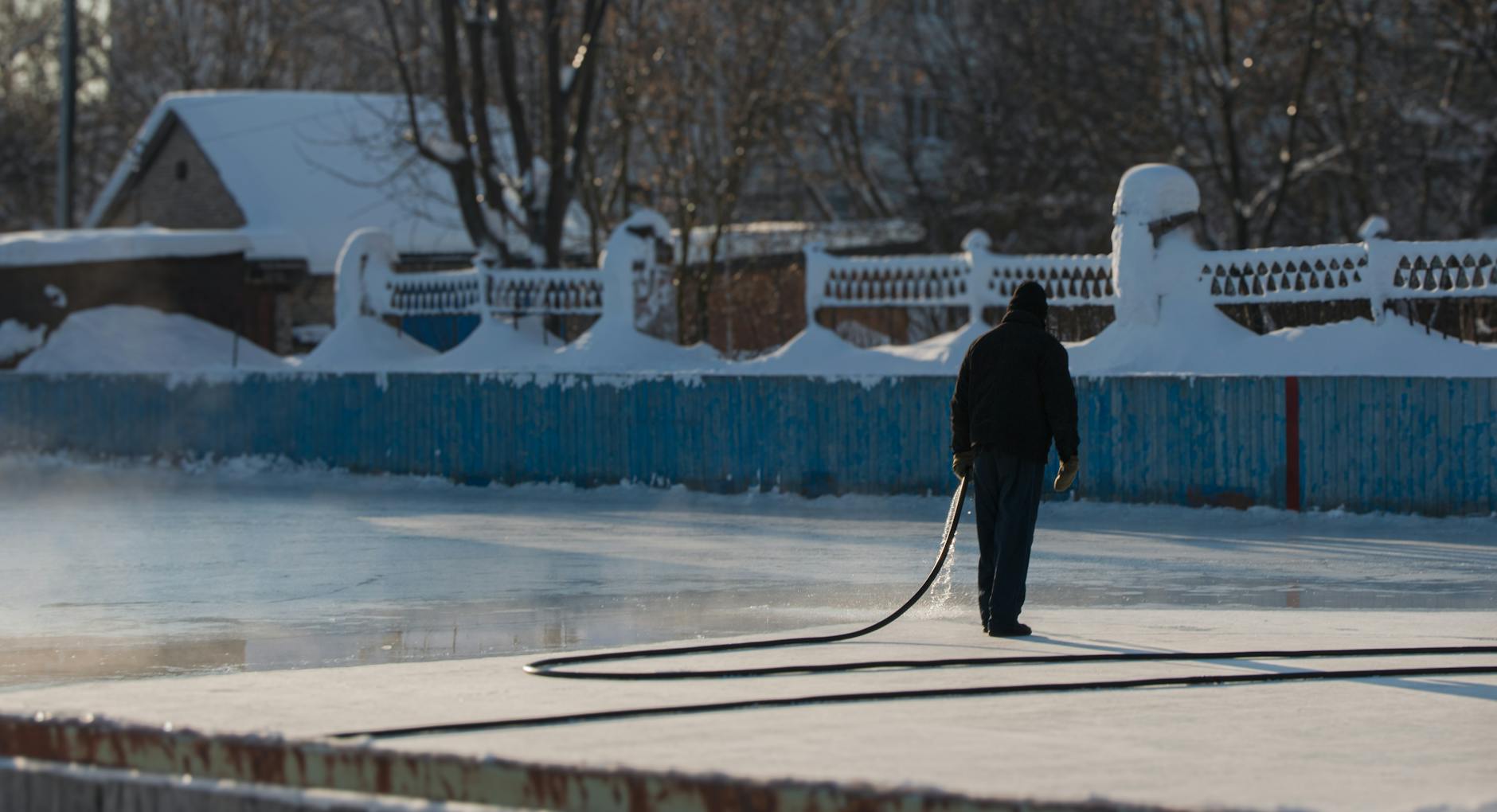
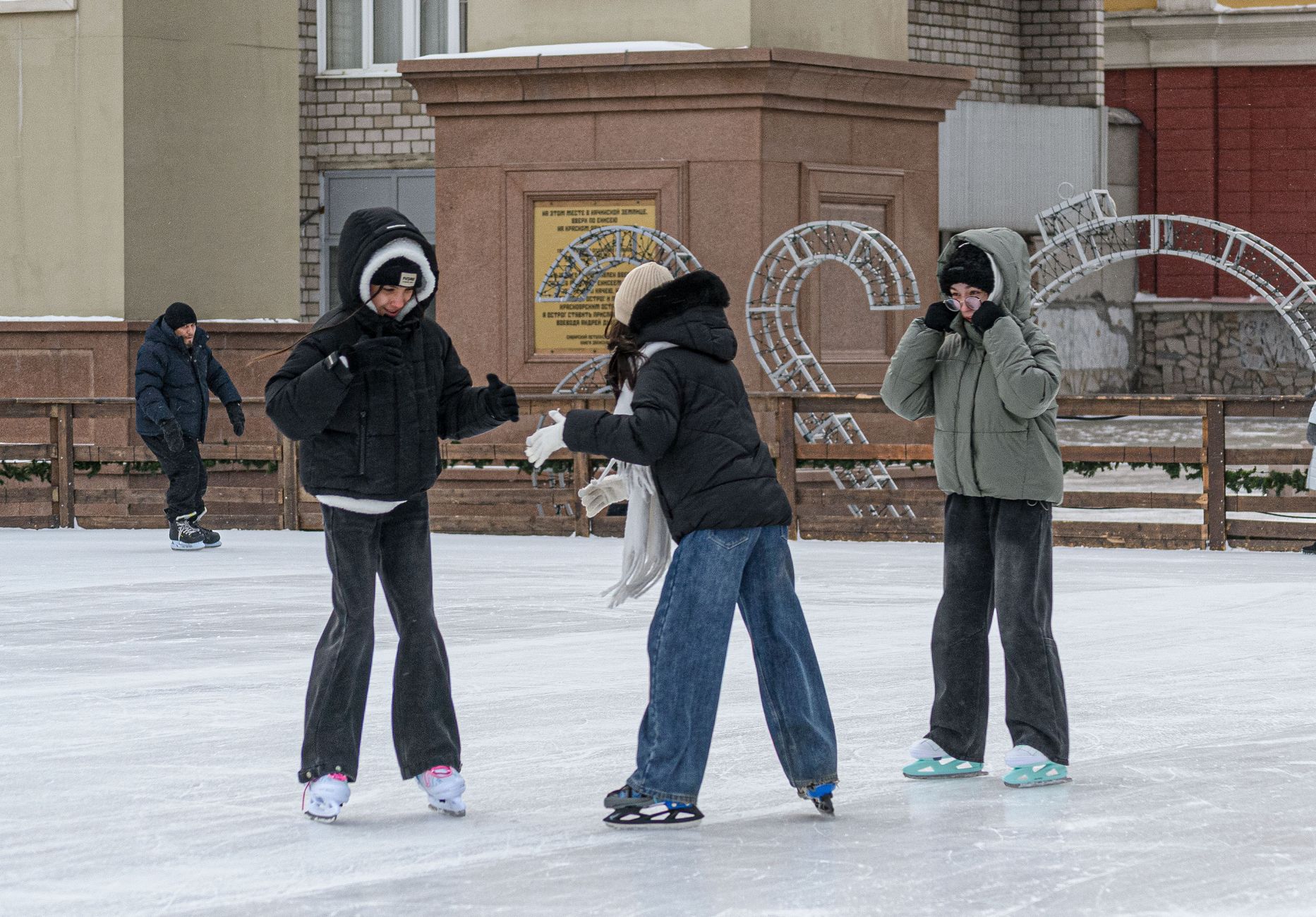
The City runs more than 50 outdoor rink locations in a typical season. Outdoor artificial-ice rinks generally open in late November and close in March; indoor arenas run into late March or April. Three rules change how you plan:
- All City drop-in skating is free. Indoor and outdoor, every location, no ticket and no reservation. Most sites have change rooms and lockers.
- Skate rentals are available at Nathan Phillips Square only — city-wide, not just downtown. Every other City rink expects your own skates. The 2026-27 rental price was not published; pay on site.
- The free Skate Lending Library, run with Desjardins at select locations, lends skates, helmets and skating aids at no charge without a reservation. If you are travelling with kids, this is the answer.
Everyone on the ice must wear skates. Helmets are required for figure and leisure skating for ages six and under, and with a cage or visor for shinny under 18 and ringette. Shinny rules are strict: no goalies, no body contact, no slap shots, one puck, own gear. The City also programs a 2SLGBTQ+ skate and a family skate for participants with disabilities, with aids and sledges available.
Rinks close after heavy snowfall for clearing and on warm days when the ice softens, so check the City’s leisure skating page or call 311 before crossing town. Skating is not permitted on Grenadier Pond, the Islands lagoons or the inner harbour, however solid they look.
The rinks worth crossing town for
Nathan Phillips Square, 100 Queen St W — the famous one, under the arches, a block from Queen station, and the only City rink with rentals.
The Bentway Skate Trail, 250 Fort York Blvd — a 220-metre figure-eight trail under the Gardiner on Fort York National Historic Site land, with a new commissioned art installation each winter. Confirmed converting to ice for 2026-27; dates and rental pricing not yet posted. TTC 511 Bathurst or 509 Harbourfront.
Harbourfront Centre Natrel Rink, 235 Queens Quay W — skyline and lake on two sides, DJ nights on weekends. Venue pages were offline when we checked, so dates and admission could not be confirmed; call 416-973-4000, Wednesday to Sunday, noon to 6 p.m.
Neighbourhood rinks — Trinity Bellwoods, Greenwood Park, Riverdale Park East, Barbara Ann Scott at College Park. Free, empty on a weekday afternoon, and a truer picture of how the city uses winter.
The PATH: 30 km of downtown without a coat
The Toronto PATH underground is more than 30 kilometres of mostly-underground walkway, free and public: 3.7 million square feet of retail, roughly 1,200 restaurants, shops and services, about $1.7 billion in annual sales, 4,600 jobs. More than 75 buildings connect, including six subway stations, three department stores, nine hotels and Union Station. Around 200,000 people use it on a business day.
It runs from Waterpark Place on Queens Quay north to Atrium on Bay at Dundas, and from the Entertainment District across to Yonge Street, linking the Hockey Hall of Fame, Roy Thomson Hall, Scotiabank Arena, the Eaton Centre, City Hall and Metro Hall. The CN Tower, Ripley’s Aquarium and Rogers Centre connect by the SkyWalk from Union — indoors, but not the PATH proper.
Here is the fact nobody tells visitors: the PATH is not centrally operated. Each segment belongs to the building it runs through, and roughly 35 corporations own pieces of it. That is why hours are inconsistent, why signage changes when you cross a property line, and above all why large sections shut on evenings and weekends. A route that works at 1 p.m. on a Wednesday can be a locked door at 8 p.m. on a Sunday.
One correction: the 1987 colour-coded compass system — red south, orange west, blue north, yellow east — is gone, replaced by landmark-and-neighbourhood signage rolled out by 2024. Older guidebooks still say to follow the coloured letters. Follow building and neighbourhood names instead, and download the map first; signal is patchy down there.
What to wear during Toronto in winter
Toronto’s cold is a wind-chill cold, not a still, dry cold, and February winds average in the low 30s km/h. That reorders the priorities: the windproof shell matters more than the thickness of what is under it.
Three layers below −5: a merino or synthetic base (never cotton), a fleece or down mid-layer, and a windproof, waterproof shell reaching at least mid-thigh. A jacket that ends at the waist exposes your lower back every time you sit on a streetcar seat.
Footwear is where trips get ruined. Waterproof boots with a lugged rubber sole, ideally rated to −25 or −32. Suede and leather sneakers are destroyed by road salt within a week and give you nothing on refrozen slush. During a freeze-thaw stretch — common in December and February — slip-on ice cleats fold into a pocket and are the best $25 you will spend here.
Accessories that do real work: a toque, a neck gaiter or balaclava, insulated mittens rather than gloves, wool socks, and hand warmers for long stretches outdoors.
The under-covered problem is overheating indoors. The subway, the PATH and most restaurants run hot, and a single enormous parka you cannot partly remove will make a museum day miserable. Layers that come off in ten seconds beat one heavy coat. Full checklist in our season-by-season packing list.
Winter safety, snow clearing and the $500 parking ban
Black ice and streetcar tracks
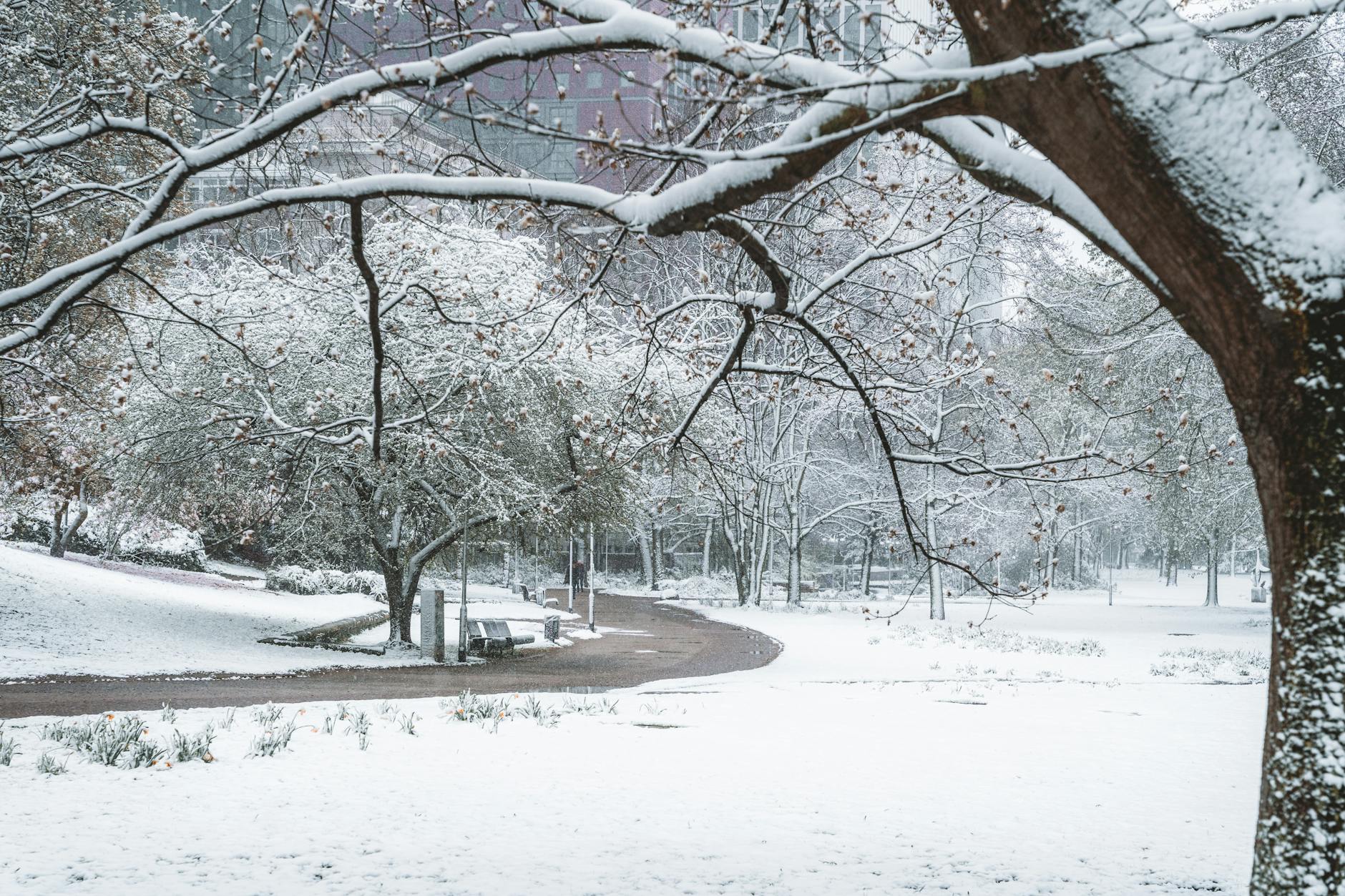
The City’s winter safety guidance is short. On black ice or hydroplaning, do not brake — ease off the accelerator and steer smoothly in the direction you want to go.
Streetcar tracks get flagged specifically: they ice over even when the surrounding pavement is clear, because embedded steel holds cold and sheds salt. Cyclists should walk bikes across or cross at a right angle, and pedestrians in smooth soles should do the same. Queen, King, Dundas, College and Spadina are all track-heavy, and the intersection crossings are where people go down.
How fast Toronto clears snow
| Surface | Plowing triggered at | Max plow operating time |
|---|---|---|
| Expressways (DVP, Gardiner) | 2.5 cm | 2 hours |
| Major roads, transit routes, hills | 5 cm | 6 hours |
| Collector roads | 8 cm | 8 hours |
| Local and residential streets | 8 cm | 14 hours |
| Sidewalks, bus stops, crossovers | 2 cm | 12 hours |
| Cycling infrastructure | 2 cm | 8 hours |
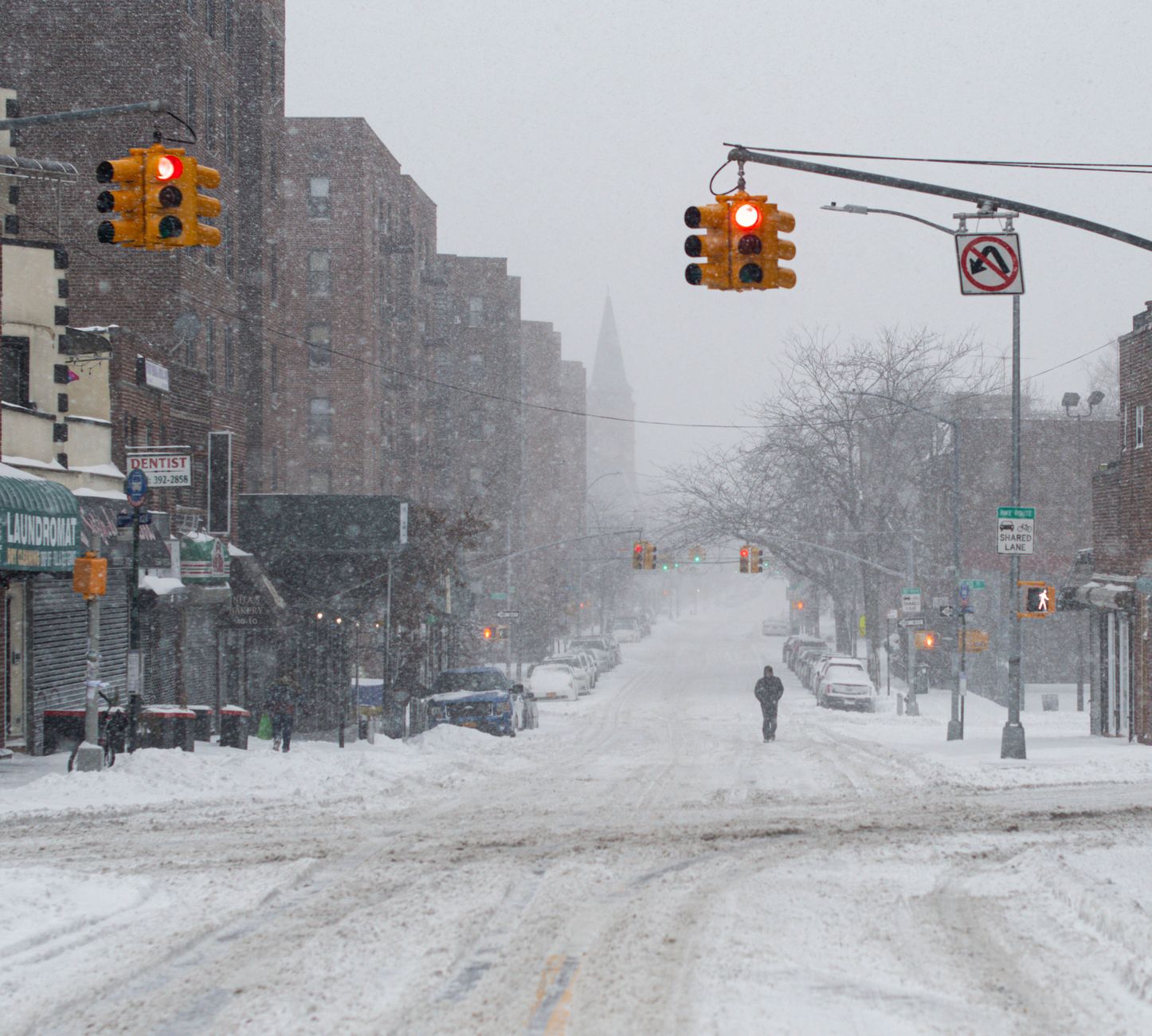
Under 2 cm, the adjacent resident or business clears the sidewalk within 12 hours. At 2 cm or more, City crews take over all public sidewalks — about 12 hours per pass, continuing up to 72 hours after a severe storm — and roughly 98% are now cleared mechanically. A Tuesday storm is a Tuesday problem and mostly a Wednesday memory.
The Major Snow Storm Condition parking ban
If you have a rental car, remember this paragraph. When the City declares a Major Snow Storm Condition, parking is banned on designated snow routes — mostly downtown, and including every streetcar route. The fine runs up to $500 and obstructing vehicles are towed, so you pay the ticket, find the pound and pay the tow. It is the most expensive mistake a visitor can make in a Toronto winter. Pushing snow onto a sidewalk, road or bike lane carries a separate $500 fine plus a $110 victim surcharge.
Ontario does not mandate winter tires the way Quebec does; the City’s wording is “consider using snow tires,” and most rental fleets run all-seasons. Between the ban, the tires and year-round parking costs, our advice matches our guide to renting a car in Toronto: for a downtown winter trip, don’t. Use the TTC.
Warming centres
The City opens warming centres when the forecast hits −5°C or colder, or on any winter weather warning — not −15, as is often reported. They open around 5 p.m., run 24 hours, are pet-friendly and walk-in, at five fixed sites: 81 Elizabeth St., 349 George St., 885 Scarborough Golf Club Rd., 12 Holmes Ave. and 136 Spadina Rd. Surge sites at Cecil Community Centre and Jimmie Simpson Recreation Centre open at −15°C.
Skiing, tubing and cross-country near Toronto
Toronto is flat, so downhill means driving. Almost no 2026-27 day-ticket prices had been published as of late summer 2026 — buy online the night before, which usually beats the window rate anyway.
Glen Eden (Milton) — the closest hill, at Kelso Conservation Area, 5234 Kelso Rd. Six lifts, 17 slopes and a terrain park; the 2025-26 season ran 94 days and closed 21 March. Weekend courtesy shuttle. Best for a half-day or a first-timer.
Blue Mountain (Collingwood) — about two hours north, the biggest resort in reach, an Alterra property and Ikon partner. 2026-27 season passes were listed at $389 for the adult 5×7 (weekdays 9 a.m.–9 p.m., weekends after 3:30 p.m.) and $699 for the 5×7 XL; single-day pricing was not posted. See our Blue Mountain day trip guide.
Horseshoe Resort (Barrie) — just over an hour north, with 28 alpine runs, 30 km of groomed Nordic trails, snow tubing, fat biking and snowshoeing. The best pick if your group is split between downhill and cross-country. Hockley Valley and Dagmar are smaller and quieter alternatives for intermediates dodging Blue Mountain’s weekend lift lines. Mansfield, Craigleith and Osler Bluff turn up in searches but are private clubs with no public day tickets.
Cross-country and snowshoeing
Albion Hills (TRCA, 16500 Regional Rd 50, Caledon) is the best value near the city and the only one with confirmed 2026 pricing. Trail fees plus HST: $19.70 adult 14–64, $16.00 senior 65+ or student, $11.70 child 4–13, free under 4, $51.25 family. Rentals $23.95 adult, $16.00 child. The 2026 season ran 2 January to 22 March, the ski pass covers park entry, and winter fat biking is Black Trail only.
Scenic Caves (Collingwood) runs a Nordic Centre December through March: 27 km of daily-groomed trails, 10 km of snowshoe trails including the suspension bridge, guided night hikes and rentals. One myth to bust — the ice caves themselves close in winter and spring for safety. Bruce’s Mill and the Kortright Centre (9550 Pine Valley Dr, Woodbridge) rent skis and snowshoes within about 40 minutes of downtown.
Costs and crowds: why winter is the value season
Mid-January through mid-February is the cheapest stretch of the entire Toronto travel year — nothing competes, not November, not March. The holiday spike ends in the first week of January, Family Day has not arrived, no festival draws a crowd, and hotels quoting peak rates in July want your business badly in the last week of January. The exceptions are predictable: Christmas week and New Year’s, Distillery market weekends through December, and the Family Day long weekend.
Budget for the Municipal Accommodation Tax, 6% as of 1 August 2026, down from a temporary 8.5% that ended 31 July 2026, with HST on top. It applies to hotels and short-term rentals booked in blocks of four hours or more. The rest is in our Toronto travel budget guide.
The crowd advantage is real at ticketed attractions. The CN Tower, Ripley’s Aquarium, Casa Loma and the ROM on a Tuesday in late January are a different experience from July — short queues, no timed-entry scramble, staff with time to talk. Our best time to visit Toronto guide weighs that against what you give up.
Where to stay during Toronto in winter
Winter is Toronto’s lowest-cost hotel season by a distance. Christmas week runs higher; the rest is the best value on the calendar. See our where to stay in Toronto guide for the neighbourhood breakdown.
Book a PATH connection
In winter this outranks almost every other criterion. A direct PATH link means reaching Union Station, the Eaton Centre, hundreds of restaurants and six subway stations without a coat. The Sheraton Centre (123 Queen St W, across from Nathan Phillips Square), the Fairmont Royal York (100 Front St W, tunnelled to Union since 1927), the Hilton Toronto (145 Richmond St W) and the Hyatt Regency (370 King St W) are the reliable options.
With the caveat above: those tunnels work best on weekday daytimes. If your plan is late dinners and Sunday wandering, being a short walk from King West, Queen West or Ossington matters more.
Practical tips for Toronto in winter
Salt and slush
The City runs a formal Salt Management Plan — brine pre-treatment, calibrated spreaders, five road weather stations. Good for traction, ruinous for leather. Boots outside, dress shoes in a bag; the white tidemark does not come out easily.
Snow days and daylight
Schedule outdoor sightseeing for 11 a.m. to 3 p.m. from late November to mid-January; the last hour before a 4:41 p.m. sunset is thin grey light, not golden hour. In a storm, above-ground transit slows — Line 2’s outdoor sections, the streetcars and the surface buses all take longer. Add buffer time rather than cancelling, and check service alerts before leaving. Toronto does not shut down for 10 cm.
The Islands still run
Ferries operate year-round from the Jack Layton Ferry Terminal, but the winter schedule — mid-October to mid-April — serves Ward’s Island only. The Centre Island and Hanlan’s Point docks close and Centreville is shut all winter. Snow on the boardwalk with the skyline across the water is among the best free things you can do here; check the schedule and dress for an exposed, windy crossing. More in our Toronto Islands guide.
Toronto in winter: questions visitors ask
Is Toronto in winter too cold to enjoy?
No, if you dress for it. Daytime highs sit around freezing in December and February and just below in January — colder than London, milder than Winnipeg or Montreal. The problem is wind chill on exposed waterfront and financial-district blocks, not ambient temperature. With a windproof shell and proper boots, a full day outside is comfortable.
When does Toronto get the most snow?
January, at 37.2 cm downtown across about 12 snowy days, with December at 24.1 cm and February at 27.0 cm. The annual downtown total is 121.5 cm over 40.9 snowy days — snow falls frequently, rarely in bulk.
Do I need to pay to go ice skating?
No. Every City of Toronto drop-in session is free, indoor and outdoor. Bring your own skates — Nathan Phillips Square is the only City rink with rentals, city-wide — or borrow a pair free from the Skate Lending Library at select locations, no reservation needed.
Is the Christmas market worth it?
Yes, on a weekday. The Distillery in December is the best-looking place in the city and weekend crowds make it hard to see anything. Go Tuesday or Wednesday evening, eat beforehand because the food lines are long, and check the current year’s dates and ticketing, which change.
What is the cheapest time to visit Toronto?
Mid-January to mid-February. Hotel demand collapses after New Year’s and does not recover until the Family Day long weekend. The trade-off is the coldest weather and least daylight of the year, which is precisely why rates are low.
Can I get around downtown without going outside?
Largely, on a weekday. The PATH covers more than 30 km and connects 75-plus buildings, six subway stations and nine hotels. But it is owned by around 35 corporations rather than run centrally, so many segments close evenings and weekends. Treat it as a business-hours system.
Should I rent a car for a winter trip?
Not for a downtown stay. Parking is expensive, rental fleets usually run all-season tires, and a declared Major Snow Storm Condition bans parking on snow routes including every streetcar route, with fines up to $500 and towing. Rent for a ski day, then return it.
How short are the days, exactly?
Sunset falls before 5 p.m. from 1 November to roughly 12 January, earliest at about 4:41 p.m. on 8 December. The shortest day is 21 December at 8 hours 56 minutes. December averages 2.5 hours of actual sunshine a day; February gains about 2 hours 10 minutes of daylight.
December is its own season inside the winter. From the Santa Claus Parade on 22 November to the tree lighting at Cavalcade of Lights on 28 November and the Nutcracker running through to New Year’s Eve, the city spends six weeks dressed up, and then almost entirely shuts down on the 25th. Our Christmas in Toronto guide has the 2026 dates, the free lights walk, and what is actually open on Christmas Day.
If you are driving this season, know that winter tires are not required in Ontario but make an enormous difference, that parking is banned on marked snow routes once a major storm is declared, and that the first real snowfall reliably doubles journey times across the city. Our guide to driving and parking in Toronto covers the winter rules alongside Green P rates and the rush-hour restrictions.
The winter season starts with a party. On New Year’s Eve the city’s free celebration takes over the waterfront, with DJ skating, live music and ten minutes of fireworks over the harbour at midnight, and in recent years the TTC, GO and UP Express have run free through the night. Our New Year’s Eve Toronto guide has the details and the alternatives.
Plan the rest of your Toronto winter
Winter is the cheapest time to come — our best time to visit Toronto guide explains the trade-offs, and you can compare directly with summer and fall. Pair Toronto in winter with the rest of trip planning: ice skating Toronto, Toronto PATH underground, Winterlicious, the full list of Toronto activities, and what to pack for Toronto.
Toronto in winter has its own undeniable beauty — book the holiday-decorated week, embrace the skating rinks, and you’ll see why locals love this season as much as summer.