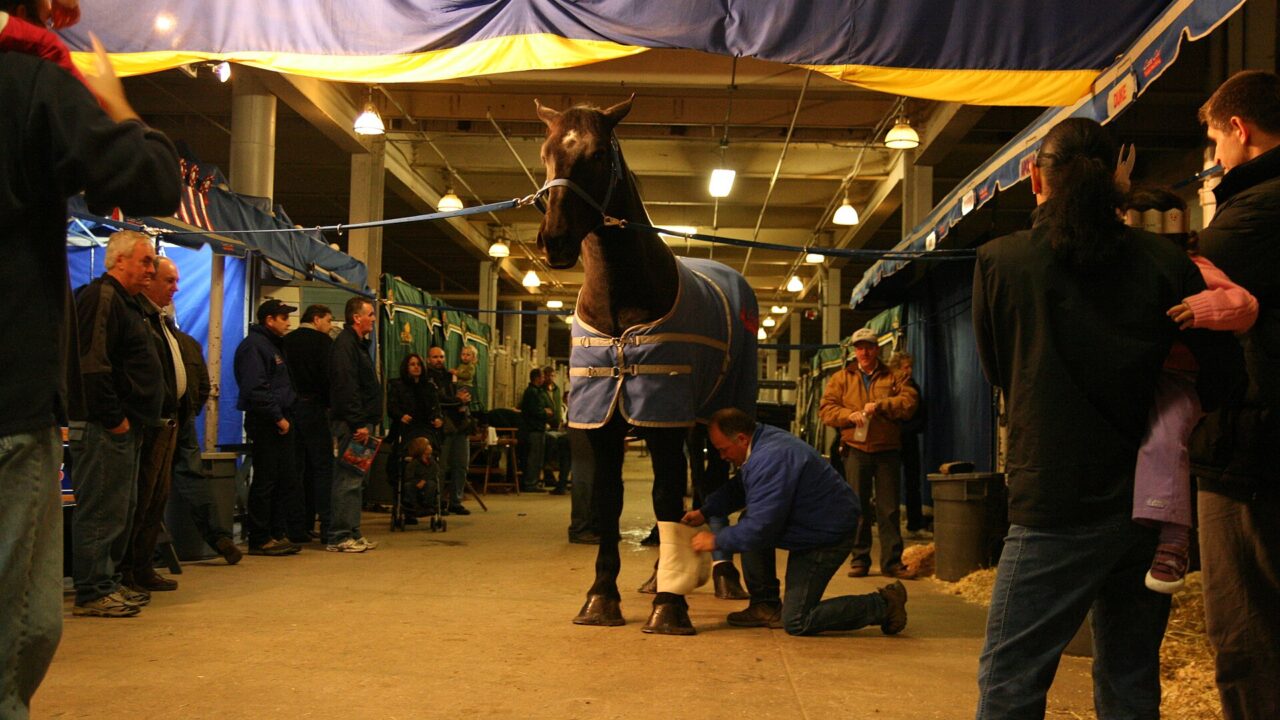
There is a specific smell that hits you about thirty seconds after you come through the doors at Exhibition Place in November — straw, warm animal, sawdust and, faintly, deep-fried something — and it is completely at odds with the fact that you are standing four kilometres from the Financial District. Somewhere in the next hall a Percheron the size of a small car is having its legs bandaged while a family watches from two metres away. This is the Royal Winter Fair Toronto in a sentence: a genuine working agricultural show that happens to take place in the middle of Canada’s largest city, for ten days a year, and then vanishes.
This guide covers the 2026 dates and hours, how to get there and what parking costs, what is actually worth seeing across a very large site, how long to allow, whether it works with children, and the honest verdict on what to skip. Details were checked in September 2026 and prices are in Canadian dollars — the fair reprices annually, so confirm on royalfair.org before you buy.
At a Glance
| Detail | 2026 |
|---|---|
| Dates | 6–15 November 2026 |
| Venue | Exhibition Place, Toronto |
| Hours | Sun and Mon 9am–6pm; Tue–Sat 9am–8pm |
| GO + admission combo | $38 single rider, $90 family of four |
| Parking | $18 surface, $15 after 6pm; indoor garage adds $3 on peak days |
| Payment at the gate | Visa, MasterCard, debit, Visa Debit and cash |
| Horse Show tickets | Sold separately through Ticketmaster |
| Time needed | Four hours minimum; a full day if you have children |
| Founded | 1922 |
What the Royal Actually Is
The Royal Agricultural Winter Fair has run at Exhibition Place since 1922 and bills itself, with reasonable justification, as the largest indoor agricultural fair in the world. It is not a theme park with a farm attached. It is a competitive livestock show — cattle, sheep, goats, pigs, poultry, rabbits, horses — where the animals in front of you are being judged, and where the people leading them around have driven in from farms across Ontario and beyond to win a ribbon that matters commercially.
That distinction is what makes it worth your afternoon. Visitors expecting a petting zoo find something considerably more interesting: a working professional event that has simply decided to let the public in. You will overhear conversations about butterfat percentages you do not understand, watch a judge walk a line of steers for twenty minutes without saying a word, and see a fourteen-year-old in a 4-H jacket handle a nine-hundred-kilogram animal with total calm.
Wrapped around it is the Royal Horse Show, an international-standard equestrian competition running in the evenings in the Coliseum, and a large amount of food, shopping and family programming filling the rest of the halls.
A hundred years of it
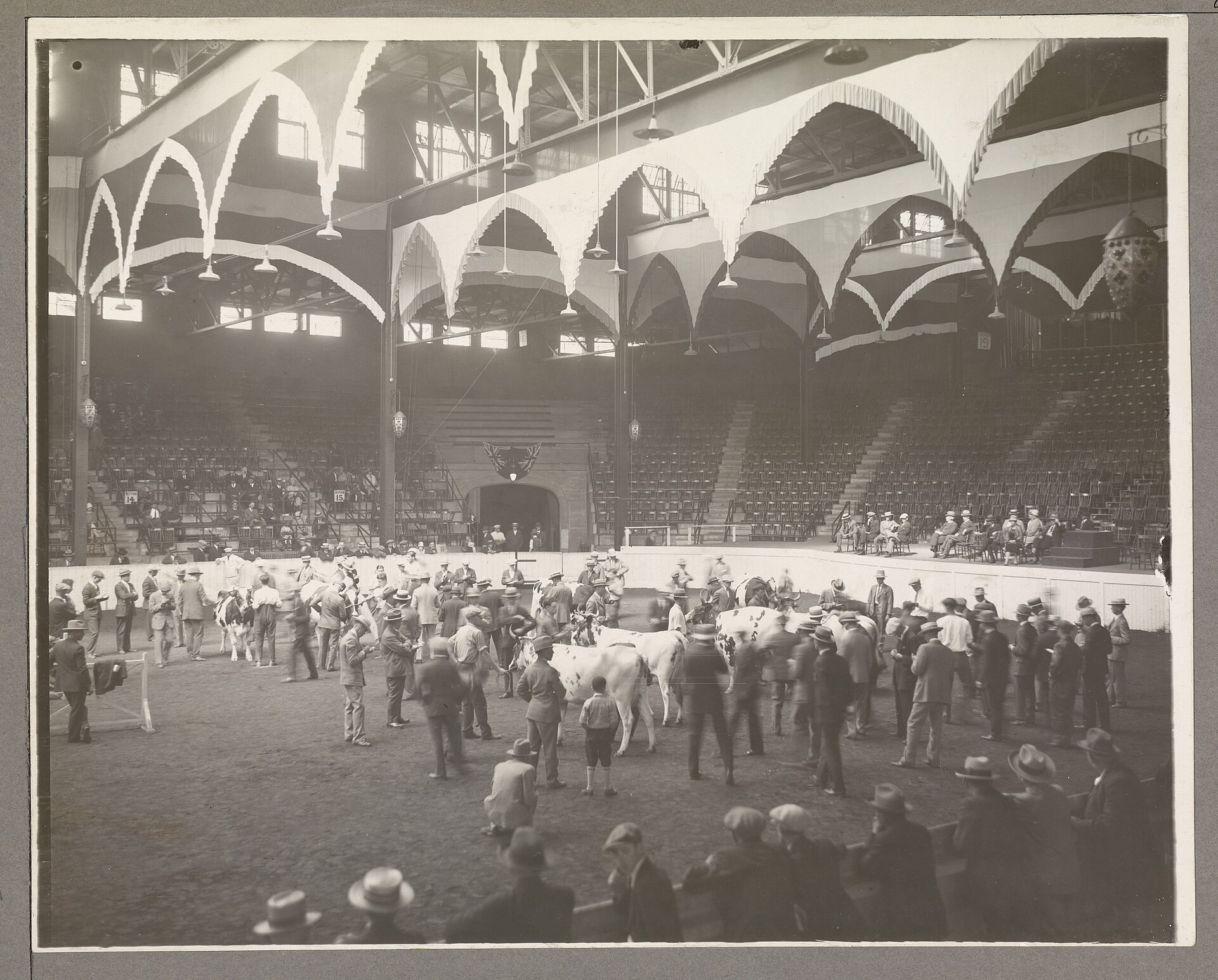
The fair opened in November 1922 in the Coliseum at Exhibition Place, a building designed for exactly this and still in use — it is the same hall the Marlies play hockey in for the rest of the year. It has run almost every November since, interrupted by the Second World War and again in 2020. The archival photographs of steer judging in that arena, spectators in straw hats around the rail, are recognisably the same event you can walk into this November.
That continuity is unusual for Toronto, a city that has demolished or reinvented most of its institutions at least once. The Royal is one of the few things here that would be immediately legible to someone who last visited in 1950.
Getting There
By GO train — and buy the combo
The single best piece of advice in this guide: buy the GO combo pass. It bundles return GO travel with fair admission at $38 for a single rider or $90 for a family of two adults and two children, and it drops you at Exhibition GO Station, immediately beside the grounds. Trains run roughly every thirty minutes and Exhibition is one stop west of Union, about seven minutes.
Because the combo includes admission, it is also the clearest indication of what the fair actually costs, since the fair does not publish a flat rate card on its planning pages. Work backwards from $38 and you will not be far off.
By TTC
Three routes serve the grounds. The 509 Harbourfront streetcar runs from Union Station along Queens Quay to Exhibition Loop. The 511 Bathurst streetcar runs south from Bathurst station on Line 2. The 29 Dufferin bus runs south from Dufferin station, also on Line 2. All three drop you within a few minutes’ walk. A single fare is $3.30 with a tapped card and includes two hours of transfers — see our TTC guide.
By car
Parking on the grounds is $18 in the surface lots, dropping to $15 after 6pm. The indoor garage at the Enercare Centre is the same price with $3 added on peak days. It is straightforward on a weekday and slow on the middle weekend, when the exit onto Lake Shore Boulevard backs up. Given that a GO combo including admission costs $38, driving rarely makes financial sense for one or two people. Our getting around Toronto guide compares the options.
What to See
The site is big and the fair does a poor job of telling first-timers where to start. This is the order that works.
The horse barns
Start here, before anything else. The stabling aisles are open to the public and this is where the fair is at its most human — grooms plaiting manes, horses being washed and rugged, competitors eating sandwiches on tack boxes. The heavy horses are the showstoppers: Clydesdales, Percherons and Belgians standing eighteen hands, entirely calm about being photographed by strangers. It costs nothing extra and most visitors walk straight past it.
The livestock halls and the show rings
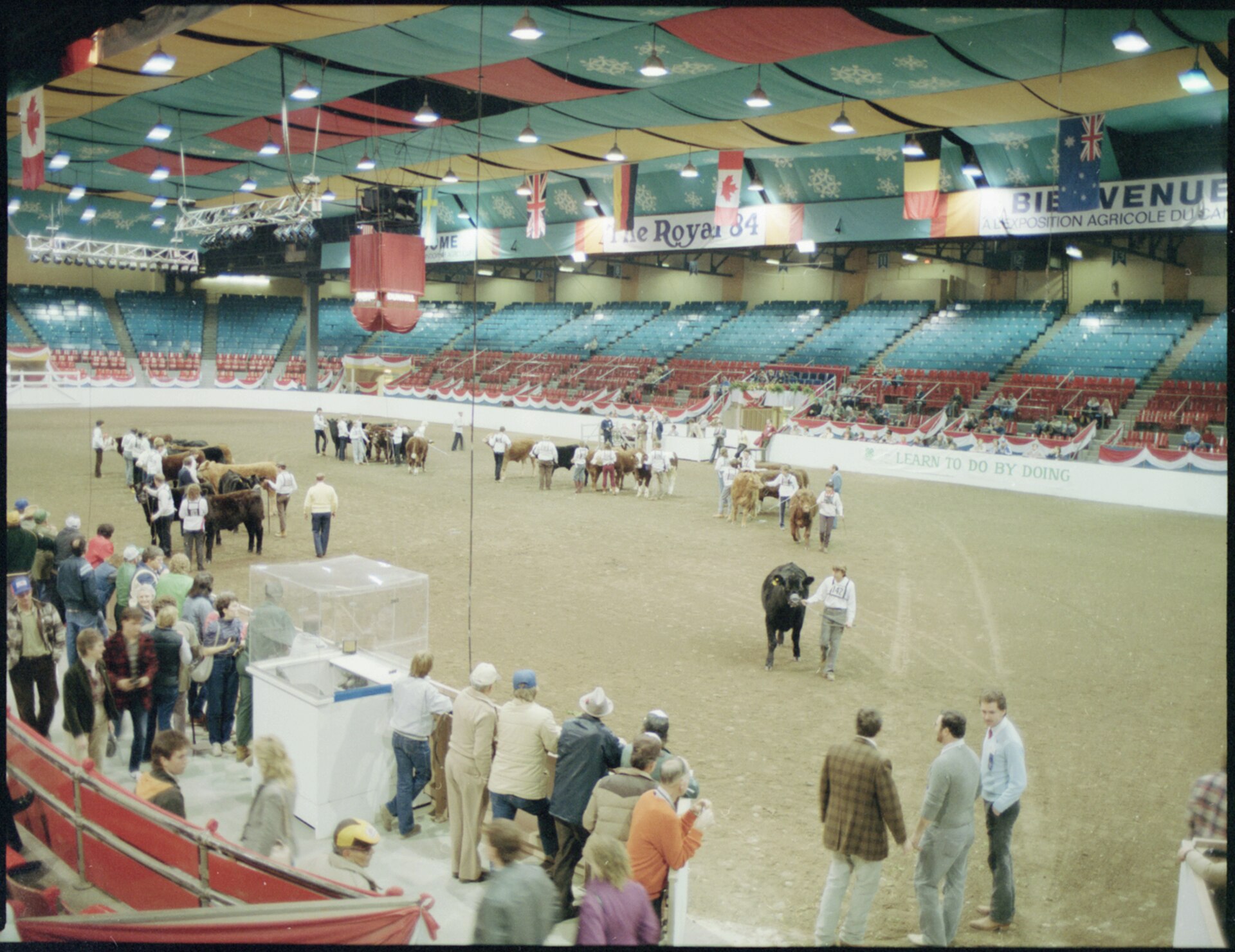
Cattle, sheep, goats, pigs, poultry and rabbits, in competitive classes running all day. Find a ring where judging is in progress and stand there for fifteen minutes even if you understand nothing — a good commentator will explain what the judge is looking for, and once you can see it you cannot unsee it. The Supreme Championships toward the end of the fair are the ones that matter.
The butter sculptures
A genuine Royal tradition and much better than it sounds: full-size sculptures carved from blocks of butter, in a refrigerated case, produced live during the fair. Five minutes, and a reliable hit with children and adults alike.
The education zones
The Farm to Table Discovery Zone, the Dairy Education Centre and the Pig Education Centre are aimed squarely at urban children who have never seen a cow, and they are done seriously rather than condescendingly. Expect to watch a milking demonstration and to learn more than you meant to.
The Animal Theatre and the Royal Rodeo
Scheduled shows through the day — dog agility, sheep, livestock demonstrations — plus rodeo events on some evenings. Check the daily schedule on arrival; the programme changes day to day and the good ones fill.
The Royal Horse Show
The event that draws the international crowd, and it is genuinely world class: show jumping at the top level in the Coliseum, in the evenings, with the atmosphere of a proper sporting occasion. Tickets are sold separately through Ticketmaster and are not covered by general admission. If you have any interest in horses, this is the reason to come in the evening rather than the afternoon.
The shopping and the food

Two categories, and they are very different. There is standard fair food — the deep-fried, the doughnuts — and there is the far more interesting hall of Ontario producers selling cheese, cured meat, preserves, honey, cider and maple. The second is where to spend your money. Bring a bag; people leave with considerably more than they intended.
Why It Is Worth a Visitor’s Time
A fair question, if you have three days in Toronto and a list that already includes the CN Tower: why spend half of one of them looking at cattle?
The answer is that the Royal is the only occasion on which Toronto’s relationship with the province around it becomes visible. Ontario is an enormous agricultural region and Toronto is a city that has spent a century pretending otherwise. For ten days in November, several thousand farming families drive in, park their trucks at Exhibition Place, and occupy the middle of the city — and the result is one of the very few events here that is not designed for tourists at all. You are a guest at somebody else’s professional gathering, which is a much more interesting position to be in than the one an attraction usually offers you.
It is also, practically, the best indoor thing on in Toronto in early November. The patios have closed, the Christmas programming has not started, the weather is grey and the days are short. A warm hall full of animals and cheese is a considerably better use of a Tuesday than another museum. Our events and festivals guide shows how thin that fortnight otherwise is.
And if you have children, the case makes itself. There is no other point in the year when a city child can stand a metre from a Clydesdale, watch a cow being milked and eat an ice cream made from the result, all indoors, all in one afternoon.
Making a Day of It
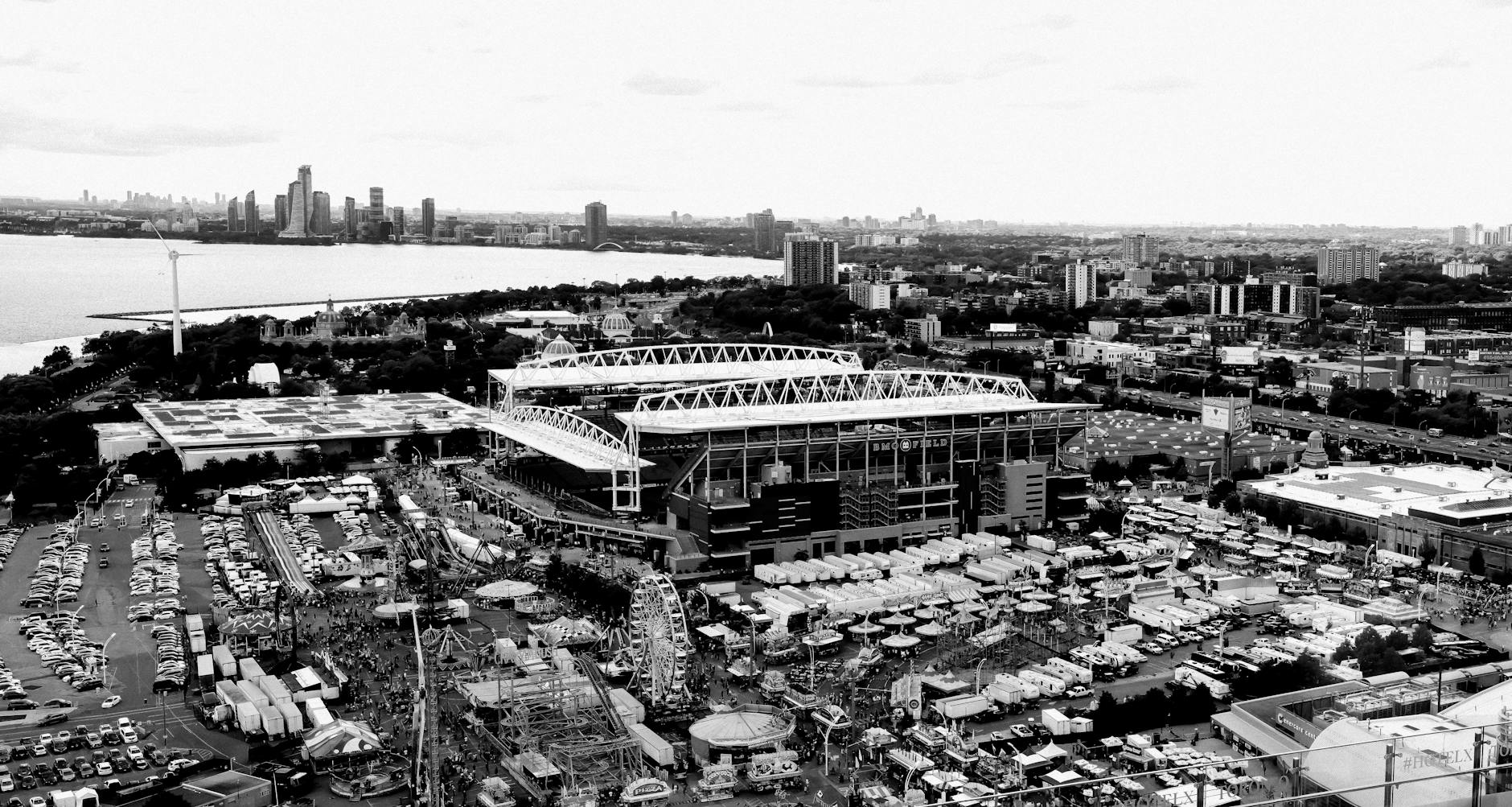
Exhibition Place is a fifteen-minute walk from Liberty Village and about twenty from King West, which solves the question of what to do afterwards — the grounds themselves have essentially nothing once the fair closes.
- Lunch or dinner: walk north over the Strachan or Dufferin bridges into Liberty Village, which is full of patios and brewpubs and considerably better value than the fair’s own catering.
- An evening: if the Royal Horse Show is not your thing, BMO Field next door hosts Argonauts fixtures into November, and the Marlies play at the Coca-Cola Coliseum for the rest of the season.
- A walk: the Martin Goodman Trail runs east from the grounds along the lakeshore all the way downtown, about forty-five minutes on foot and considerably nicer than it sounds even in November. See our waterfront guide.
- An early start: the fair opens at 9am and the first two hours are the calmest of the day, which pairs well with a coffee in Liberty Village beforehand.
How Long to Allow
| Visitor | Time needed | Plan |
|---|---|---|
| Curious adult | 3–4 hours | Horse barns, one judging class, butter, producers’ hall |
| Family with young children | Full day | Add the education zones and two scheduled shows |
| Horse person | Full day plus evening | Barns and warm-up rings by day, Horse Show at night |
| Food-focused | 2–3 hours | Producers’ hall and a Chef’s Table booking |
With Children
This is one of the better family days out in Toronto in November, when the outdoor options have largely closed. It is warm, entirely indoors, and full of animals a child can get close to without a fence between them.
Practical notes: the site is large and the walking adds up, so a pushchair is sensible for anyone under about five. The floors in the livestock areas are exactly what you would expect, so wear shoes you do not mind. Hand-washing stations are provided and it is worth using them — this is a real barn, not an exhibit. And the noise in the show rings can be a lot for smaller children; the horse barns are calmer. Our Toronto with kids guide has the alternatives if the fair is not on while you are here.
What Is Not Worth It
- Going on the middle Saturday. It is the busiest day by a distance, the parking backs up and the good rings are three deep. A weekday is a completely different, much better fair.
- Skipping the horse barns because they look like they might be staff-only. They are not, and they are the best part.
- Assuming general admission includes the Horse Show. It does not — that is a separate Ticketmaster purchase.
- Driving for one or two people. $18 parking plus admission against a $38 combo that includes the train makes the arithmetic obvious.
- Eating the deep-fried thing when the cheese and cider hall is one building over.
- Arriving at 4pm on a short day. Sunday and Monday close at 6pm, and two hours is not enough to see the site.
Practical Tips
- Go on a weekday morning if you possibly can. Judging is under way, the halls are quiet and you can get to the rail.
- Pick up the daily schedule at the entrance. The programme changes day to day and the good demonstrations are not signposted in advance.
- Dress in layers. The halls are warm, the walk between them is not, and November on the lakeshore is cold.
- Wear practical shoes. You will cover several kilometres of concrete and some of it will be strewn with straw.
- Bring a bag for purchases. The producers’ hall is a trap in the best sense.
- Cash is accepted but not needed — the gate takes cards, debit and contactless.
- Combine it with the season. Early November is when Toronto’s Christmas programming starts appearing; our Christmas market guide and Toronto in winter cover what follows.
- If you enjoy this, the CNE is its summer cousin — same grounds, completely different event. See our CNE guide.
Frequently Asked Questions
When is the Royal Winter Fair in 2026?
6 to 15 November 2026 at Exhibition Place in Toronto. Hours are 9am to 6pm on Sundays and Mondays, and 9am to 8pm from Tuesday to Saturday.
How much does it cost?
The fair does not publish a flat admission rate card in its planning pages, so the clearest benchmark is the GO combo pass, which bundles return train travel with admission at $38 for a single rider or $90 for a family of two adults and two children. Buy directly through royalfair.org for current gate pricing.
How do you get to the Royal Winter Fair?
GO train to Exhibition Station, one stop west of Union, is the easiest option and the combo pass includes admission. The 509 Harbourfront streetcar from Union, the 511 Bathurst streetcar and the 29 Dufferin bus all serve the grounds. Parking on site is $18, or $15 after 6pm.
Is the Royal Horse Show included in admission?
No. The Royal Horse Show is ticketed separately through Ticketmaster and runs in the Coliseum, mostly in the evenings. General fair admission gets you the halls, the barns and the daytime programming.
How long do you need at the Royal?
Three to four hours for an adult who wants to see the barns, a judging class and the producers’ hall. A full day with children, once you add the education zones and the scheduled shows.
Is it good for children?
Very. It is indoors, warm, full of animals at close range, and the education centres are genuinely well done. Bring a pushchair for under-fives, wear practical shoes and use the hand-washing stations.
What is the best day to go?
A weekday, ideally in the morning. The middle Saturday is the busiest day of the fair by a wide margin.
Can you see the animals up close?
Yes — the stabling and livestock aisles are open to the public, which is the fair’s great charm. Ask before touching anything and stay out of the way of anyone working.
Is there parking at Exhibition Place?
Yes: $18 in the surface lots and $15 after 6pm, with the Enercare Centre indoor garage priced the same plus $3 on peak days. It fills on the middle weekend.
What else is on at Exhibition Place in November?
Very little — which is the good news, because the grounds are otherwise quiet and the fair has the run of them. In summer the same site hosts the CNE and the Honda Indy, and BMO Field is right next door for Toronto FC and Argonauts fixtures.
The Royal closes on 15 November, and the city barely pauses before switching into Christmas. The Distillery Winter Village opens three days earlier, the Santa Claus Parade follows on 22 November, and the official tree at City Hall lights up the Saturday after. If your trip runs on past the fair, our Christmas in Toronto guide covers what comes next.
Related Toronto Guides
- Toronto Events & Festivals — the whole year, month by month.
- CNE Guide — the summer fair on the same grounds.
- Toronto with Kids — where else to take them in November.
- Toronto in Fall — what the city does as the season turns.
- Toronto Christmas Market Guide — what starts as the Royal finishes.
- BMO Field Guide — the stadium next door.
- Liberty Village & King West — where to eat afterwards.
Photo Credits
Horse barns at the fair: Royal Agricultural Winter Fair by Matt MacGillivray from Toronto, Canada, CC BY 2.0, via Wikimedia Commons.
A 4-H judging class in the Coliseum, 1984: 4H Queens Guineas competition at the Royal Agricultural Winter Fair (I0004594), OGL-ON, via Wikimedia Commons.
Archival steer judging in the Coliseum: Royal Winter Fair – Stock Judging – Steers (I0033477), OGL-ON, via Wikimedia Commons.