Home to more than 120,000 works of art — the largest collection in Canada — the Art Gallery of Ontario (AGO) sits at the corner of Dundas Street West and McCaul, behind the iconic Frank Gehry-designed glass-and-Douglas-fir facade that transformed the museum in 2008. The AGO holds the world’s largest collection of works by sculptor Henry Moore, the largest African art collection in Canada, the most comprehensive holdings of the Group of Seven anywhere on earth, and major international exhibitions of European, contemporary, photographic, and Indigenous art. This guide walks through tickets and hours, the galleries worth prioritising, the story behind the Frank Gehry rebuild, how to get there, where to eat, and what families should know before they go. The AGO is a cornerstone of Toronto’s arts, culture and museum scene, and a logical place to start exploring it.
For up-to-date official information, see the Art Gallery of Ontario’s official visitor information.
Art Gallery of Ontario Quick Facts
The AGO is located at 317 Dundas Street West, Toronto. It is one of North America’s largest museums by gallery space, with more than 580,000 square feet of public exhibition area, and welcomes more than one million visitors annually. The current building is the result of a $300 million transformation completed in 2008 by Toronto-born architect Frank Gehry — a project Gehry himself described as a “love letter to my hometown.”
The collection ranges from medieval European altarpieces to a flagship Inuit art collection, the world’s most comprehensive Henry Moore holdings, the Thomson Collection of Canadian and European art (donated by media mogul Ken Thomson in 2002 along with $300 million toward the Gehry redevelopment), and a continuously growing collection of contemporary and photographic work.
AGO Hours & Tickets in 2026
Hours of Operation
The Art Gallery of Ontario is open Tuesday through Sunday and is closed on Mondays. Standard hours are 10:30 a.m. to 5 p.m. Tuesday through Sunday, with extended hours until 9 p.m. on Wednesdays for the popular Free Wednesday Night program. Last entry is approximately 60 minutes before closing. Confirm current hours at ago.ca before your visit, as special events occasionally affect the schedule.
Ticket Prices & Annual Pass
General admission for adults is approximately $30 CAD when purchased online (slightly higher at the door). Children 17 and under enter free at all times. Annual passes — the AGO’s flagship pricing model — cost approximately $35 for adults and provide unlimited admission for one full year, including special exhibitions. The annual pass pays for itself after roughly 1.5 visits, making it one of the best cultural deals in Canada for anyone who plans to visit twice or more.
Visitors aged 14–25 receive a free annual pass — one of the AGO’s most generous youth programs and a major reason the museum draws such a young audience. Visitors aged 25 and under who are residents of Ontario receive substantially discounted day rates.
Free Admission Programs
The AGO offers genuinely valuable free programs:
Free Wednesday Nights: The first Wednesday of each month from 6 p.m. to 9 p.m., admission is free for everyone, including all permanent collection galleries and most special exhibitions. Advance online booking is required for free Wednesday tickets — they release roughly two weeks ahead and can sell out within hours.
Free for Visitors 17 and Under: Children and youth 17 and under always enter free, every day the museum is open. Family memberships ($35–$65) extend free admission for accompanying adults.
Free 14–25 Annual Pass: All visitors aged 14–25 are eligible for a free annual pass providing unlimited admission. Sign up online or at the front desk with valid ID.
How to Get to the AGO
The Art Gallery of Ontario is centrally located in downtown Toronto and is one of the easiest major attractions to reach by transit.
By Subway
Take the Yonge-University (Line 1) subway to St. Patrick Station, then walk five minutes west on Dundas Street. The Osgoode Station on the same line is a slightly longer walk (approximately eight minutes) but passes through the Chinatown neighbourhood, which makes for a more interesting approach.
By Streetcar
The 505 Dundas streetcar stops directly in front of the AGO — arguably the most convenient transit option. The 506 Carlton streetcar stops at College and McCaul, a five-minute walk north.
By Car
Multiple paid parking garages serve the area: the AGO’s own underground lot is accessed from Dundas Street ($15–$25 for a full visit), and the Village by the Grange and Chinatown Centre garages are alternatives within a five-minute walk. Public transit is generally easier than driving in this area.
By Bike or Walk
Bike Share Toronto stations are at every major intersection in the area. The walk from St. Andrew’s Subway Station, the Eaton Centre, or Queen Street West takes 10 to 15 minutes through the heart of downtown.
What to See at the AGO: Must-See Galleries
With more than 90 galleries spread across four floors and totalling over 120,000 works, the AGO is impossible to see in one visit. Most visitors plan around three to five must-see anchor galleries and use whatever time remains to wander. These are the highlights every first-time visitor should prioritize.
Galleria Italia
The 137-metre Galleria Italia — a soaring wood-and-glass nave that runs along the AGO’s northern Dundas Street facade — is the most architecturally distinctive interior in any Canadian museum. Frank Gehry designed the space to evoke the “skin” of the museum, with curving Douglas fir ribs visible from inside and out. It functions as a sculpture gallery during the day and an event space in the evenings, and the views over Dundas Street make it one of the city’s most photographed museum spaces.
The Thomson Collection of European Art
The Thomson Collection — donated by media mogul Ken Thomson in 2002 with $300 million toward the museum’s redevelopment — is the AGO’s flagship gallery and one of the great private collections of European art now in public hands. Highlights include Bernardo Bellotto’s vast view paintings of European cities, intricate medieval ivories, Rembrandt etchings, the famous “Massacre of the Innocents” by Peter Paul Rubens, and an extraordinary collection of Northern Renaissance miniature wood sculptures. The Thomson Collection is housed in dedicated galleries connected to the original heritage building and is reached via a ground-floor sequence of jewel-like display rooms.
The Group of Seven & Canadian Art
The AGO holds the world’s most comprehensive collection of Group of Seven landscape paintings — the early-20th-century Canadian art movement led by Lawren Harris, A.Y. Jackson, Tom Thomson, J.E.H. MacDonald, and others. The Tom Thomson collection alone includes more than 80 paintings, including the famous “The West Wind” and “The Jack Pine.” The Group of Seven galleries are on Level 2 and are one of the most visited Canadian art destinations in the country.
The broader Canadian collection includes major works by Emily Carr, David Milne, the Painters Eleven (Toronto’s mid-century abstract movement), and contemporary Canadian art across multiple decades.
Henry Moore Sculpture Centre
The AGO holds the world’s largest public collection of works by British sculptor Henry Moore (1898–1986), with more than 900 pieces donated by the artist himself in 1974 after he developed a strong relationship with Toronto. The Henry Moore Sculpture Centre on Level 2 is dedicated to displaying these monumental bronze and plaster forms, with several large works permanently installed in courtyards and outdoor terraces. The collection is unique — no other museum in the world has comparable holdings — and the gallery itself is one of the AGO’s quietest, most contemplative spaces.
The J.S. McLean Centre for Indigenous and Canadian Art
One of the most important developments in Canadian museum practice in recent years, the J.S. McLean Centre presents Indigenous and settler-Canadian art together as a single ongoing conversation rather than in separate silos. The galleries include works by Norval Morrisseau, Daphne Odjig, Carl Beam, Kent Monkman, and contemporary Indigenous artists from across Canada, displayed in dialogue with Group of Seven, Painters Eleven, and contemporary Canadian works. The presentation reflects significant Indigenous community consultation and represents one of the most thoughtful approaches to Canadian art history in any major museum.
The African and Caribbean Collections
The AGO holds the largest African art collection in Canada — with sculptures, ceremonial objects, and contemporary works from across the continent — and significant holdings of Caribbean-Canadian art. The galleries are arranged geographically and chronologically and include works by Yinka Shonibare, El Anatsui, and major Canadian artists of African and Caribbean descent.
Photography Galleries
The AGO’s photography collection is one of the most significant in Canada, with rotating exhibitions drawn from holdings of more than 60,000 photographs. The Edward Burtynsky retrospectives, the Diane Arbus prints, and the historic Canadian photography collection all rotate through the dedicated photography galleries on Level 4.
Special Exhibitions
The AGO hosts two to four major special exhibitions per year, ranging from blockbuster international touring shows to focused single-artist studies. Recent highlights have included Frank Gehry: Art + Architecture (in dialogue with the museum’s own Gehry-designed building), Faith Ringgold: American People, and major retrospectives of Yayoi Kusama’s Infinity Mirror Rooms (which sold out months in advance). Special exhibitions occasionally require a separate ticket on top of general admission.
The Frank Gehry Transformation
The AGO’s current form is the result of a $300 million transformation completed in 2008 by Toronto-born architect Frank Gehry. Gehry, who grew up in the Junction neighbourhood and visited the original AGO as a child, described the project as a “love letter to my hometown.”
The transformation added more than 47,000 square feet of new gallery space and reimagined the visitor experience. Hallmarks of Gehry’s AGO design include:
The Galleria Italia: The 137-metre wood-and-glass nave running the length of the Dundas Street facade. The structure’s curving Douglas fir ribs are both structural and decorative, evoking a wooden boat hull.
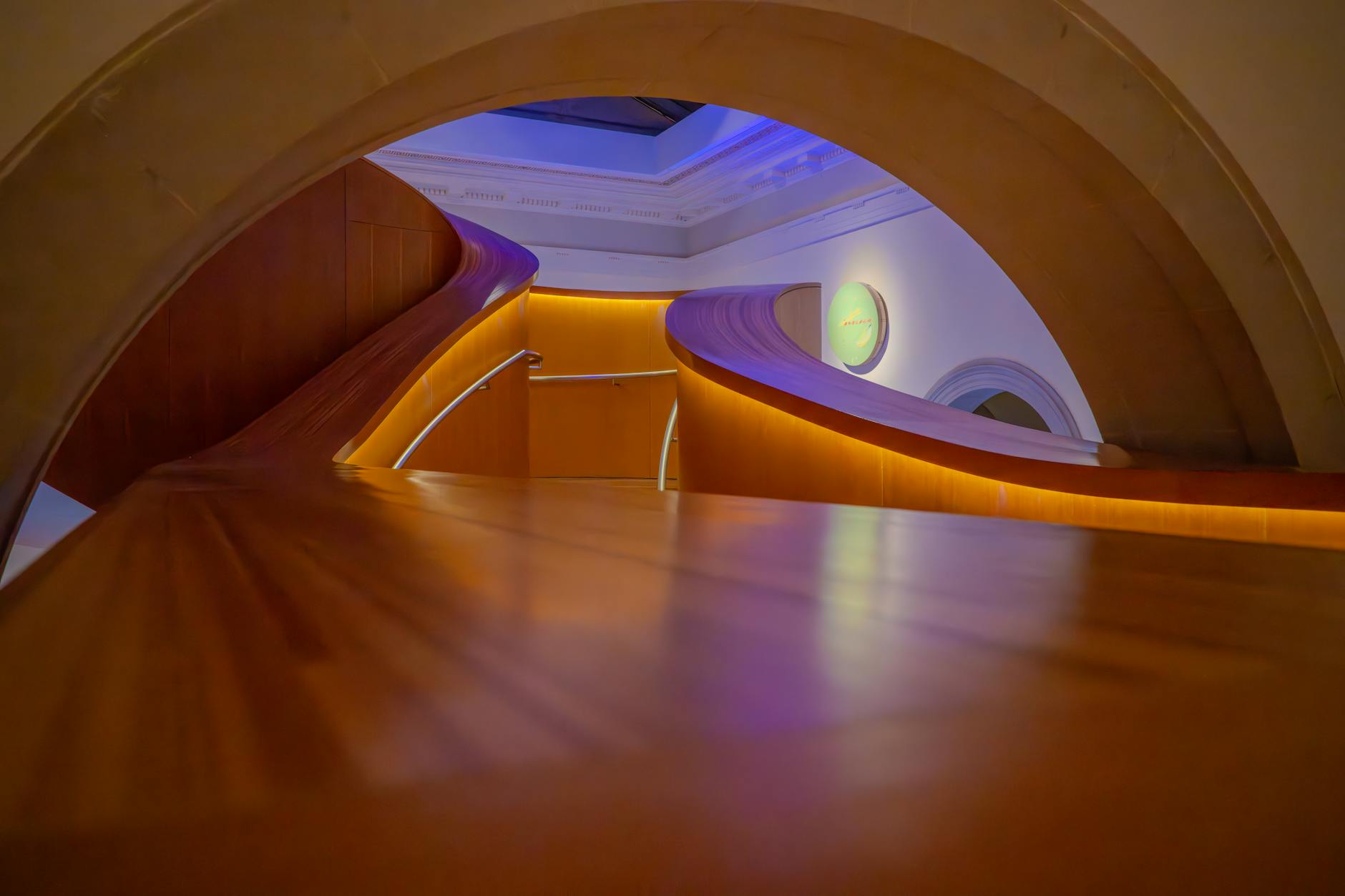
The Spiral Staircase: A dramatic free-floating wood staircase ascending from the second floor to the fourth, lit naturally from above. One of the most photographed interior staircases in the country.
Extensive Use of Glass: Throughout the building, large windows allow natural light into galleries that historically blocked it out. The result is a museum that feels connected to the city around it rather than walled off.
Douglas Fir Throughout: The use of unfinished Douglas fir warm-up the modernist concrete-and-glass envelope and gives the entire museum a distinctive Pacific Northwest character.
The transformation is widely regarded as one of Gehry’s most successful museum commissions and helped establish the AGO as one of the major art destinations in North America.
Best Time to Visit the AGO
Best Time of Day
Tuesday and Wednesday mornings (10:30 a.m. to noon) are reliably the quietest times. The Free Wednesday Night program from 6 p.m. to 9 p.m. is the busiest standard time slot — expect dense crowds in the major galleries. Visitors who want a quieter Wednesday-night visit should target the 8 p.m. hour, when the early Free Wednesday crowd has thinned.
Best Day of the Week
Tuesday is consistently the quietest day of the week. Wednesday afternoons are quiet before the free evening crowd arrives. Saturday and Sunday afternoons are the busiest, particularly during marquee special exhibitions.
Best Time of Year
September through October and February through April hit the sweet spot of fewer tourists and stable weather. Summer (July–August) brings the heaviest tourist crowds; major Toronto event weekends (TIFF, Pride, Caribana) draw extra visitors. The shoulder months are when the AGO feels most like a quiet, locals’ museum.
AGO with Kids: Family Tips
The AGO is one of Toronto’s most family-friendly art museums, in large part because admission is free for visitors 17 and under. The dedicated Anne Tanenbaum Gallery School on Level 1 offers hands-on art-making activities for children ages 4 and up, with materials provided and changing themes throughout the year. The Hands-On Centre on Level 5 has interactive exhibits designed for children. Kid-friendly audio tours, family-focused gallery talks on weekends, and the family pass program (free for accompanying adults of paying members) make the AGO a real value for families.
Practical family logistics: strollers are welcomed throughout the museum, the entire building is wheelchair and stroller accessible via elevators, baby-changing rooms are available on every floor, and free coat-check is available year-round. The on-site cafe and family-friendly seating in the central atrium make resting between galleries easy.
Travelling with children, our guide to Toronto with kids maps out the rest of a family-friendly itinerary.
Where to Eat at the AGO
On-Site Dining
FRANK Restaurant: The AGO’s flagship restaurant on Level 1 is named after Frank Gehry and serves modern Canadian cuisine in a sculpted Douglas-fir-clad dining room. The lunch menu is reasonable; dinner is more elevated. Reservations recommended, especially for Wednesday nights.
Café AGO: The casual on-site cafe near the main entrance offers espresso, sandwiches, salads, and pastries throughout the day. Convenient for a mid-tour break.
The espresso bar in the central atrium: A quick-service stand for visitors who want a quick coffee without leaving the building.
Nearby Restaurants
The AGO sits at the edge of three of Toronto’s most distinctive neighbourhoods: Chinatown, Kensington Market, and Queen Street West. Within a 10-minute walk, you can choose from Cantonese dim sum on Spadina, Vietnamese pho on Dundas, vegan and vegetarian cafes in Kensington, and the Queen West gallery and design district. Highlights include Pizzeria Libretto on Queen West, Lai Wah Heen for fine-dining dim sum at the Metropolitan Hotel, and Cafe Polonez five minutes north in the Junction-adjacent neighbourhood. For full Toronto dining context, see our complete Toronto food guide.
Photography at the AGO
Personal photography is permitted in most permanent collection galleries without flash, tripods, or selfie sticks. Some special exhibitions and individual loaned works prohibit photography — signage is posted at gallery entrances, and the AGO is conservative about enforcing photography rules around contemporary works on loan from international institutions.
Best Photo Spots
The Galleria Italia’s curving Douglas fir ribs photographed against the glass facade is the iconic AGO shot. The free-floating spiral staircase at the centre of the building is one of the most photographed interior architectural elements in Canada. The Henry Moore Sculpture Centre on Level 2 offers dramatic interplay between the monumental sculptures and natural light. The Thomson Collection’s jewel-like display rooms are exquisite for slow, careful shots.
Phone Settings
Disable flash (it’s prohibited and damages light-sensitive works). Use your phone’s “portrait” mode for paintings and sculptures to maintain background separation. Press the lens directly against display glass when photographing through cases.
Accessibility at the AGO
The Art Gallery of Ontario is fully wheelchair accessible. All galleries are step-free via elevators, accessible washrooms exist on every floor, and the museum offers free wheelchair loans on a first-come basis. Service animals are welcome throughout. Adult companions of guests with disabilities can request a complimentary admission ticket through the museum’s access programs — details on ago.ca/accessibility.
Touch-friendly tours, ASL/LSQ-interpreted programs, and audio descriptions are available on selected dates throughout the year. Sensory-friendly hours — with reduced lighting effects and quiet rooms — are scheduled monthly for visitors on the autism spectrum or with sensory sensitivities.
AGO Membership: Is It Worth It?
For Toronto residents, an AGO Annual Pass at approximately $35 is one of the best cultural deals in the city. The pass includes unlimited admission for one year (covering both permanent collections and most special exhibitions), members-only previews of new exhibitions, discounts at FRANK restaurant and the museum shop, and early access to ticketed events.
The Annual Pass pays for itself after roughly 1.5 visits, making it accessible enough that many casual visitors join after one paid admission. The free 14–25 annual pass is genuinely free with no application fee — one of the most generous youth cultural programs in any major city.

What to See Near the AGO
Chinatown & Kensington Market
The AGO sits at the eastern edge of Spadina’s Chinatown and just a few blocks from Kensington Market. Combine your visit with dim sum on Spadina or a wander through Kensington’s vintage shops, vegan cafes, and outdoor murals — Kensington itself turns up in our roundup of Toronto spots locals love.
Queen Street West
Five minutes south of the AGO, Queen Street West between University and Trinity Bellwoods is Toronto’s flagship gallery, design, and independent retail strip. Pair an afternoon at the AGO with an evening on Queen West for a complete Toronto cultural day.
University of Toronto
The U of T St. George campus is a 10-minute walk north from the AGO and offers one of North America’s most beautiful urban university campuses with King’s College Circle, Convocation Hall, and the Robarts Library.
OCAD University
Directly across McCaul Street from the AGO, OCAD University’s Sharp Centre for Design (the iconic black-and-white building on stilts designed by Will Alsop) is one of Toronto’s most distinctive contemporary buildings and houses Canada’s top art and design university.
Royal Ontario Museum
Twenty minutes north by subway, the ROM offers a complementary experience — natural history and world cultures rather than visual art. See our complete guide to the Royal Ontario Museum.
Frequently Asked Questions About the AGO
How much does the Art Gallery of Ontario cost?
Adult admission is approximately $30 online. Children 17 and under enter free at all times. The AGO Annual Pass at approximately $35 provides unlimited admission for a year. Visitors aged 14–25 receive a free annual pass with valid ID.
Is the AGO free on Wednesdays?
The AGO is free on the first Wednesday evening of each month from 6 p.m. to 9 p.m. Free admission requires advance online booking, with tickets typically released two weeks ahead and selling out quickly.
How long does an AGO visit take?
Plan 2 to 4 hours for a focused first visit covering the major must-see galleries. A full-day visit (5–6 hours including lunch) lets you see most of the highlights without rushing. Frequent visitors with the annual pass typically come for shorter focused visits to specific galleries or special exhibitions.
What’s the difference between the AGO and the ROM?
The Art Gallery of Ontario (AGO) covers visual art — painting, sculpture, photography, contemporary art. The Royal Ontario Museum (ROM) covers natural history, world cultures, and ancient civilizations — dinosaurs, mummies, world cultures. Both are first-rate but cover different territory.
Is the AGO worth visiting?
Yes — particularly for visitors interested in art, architecture, or Canadian history. The combination of standout collections (Henry Moore, Thomson Collection, Group of Seven), the Frank Gehry building itself, and one of the most generous youth-pricing programs in any major museum makes the AGO a defining Toronto cultural experience.
Can you take photos at the AGO?
Yes, in most permanent collection galleries without flash, tripod, or selfie stick. Some special exhibitions and individual loaned works prohibit photography — signage is posted at gallery entrances.
Does the AGO have a coat check?
Yes — complimentary coat check is available year-round near the main entrance. Strollers and large bags can also be checked.
Is there parking at the AGO?
Yes, the AGO has its own underground parking lot accessed from Dundas Street ($15–$25 for a full visit). Multiple alternative paid garages exist within a five-minute walk. Public transit via St. Patrick subway station or the 505 Dundas streetcar is generally easier than driving.
When is the AGO closed?
The AGO is closed every Monday year-round. The museum is also closed on December 25 (Christmas Day) and January 1 (New Year’s Day) and may close for installation work between major exhibitions. Confirm current hours at ago.ca before your visit.
What special exhibitions are at the AGO right now?
The AGO runs two to four major special exhibitions at any given time. Check ago.ca/exhibitions for current and upcoming shows. Many special exhibitions are included with general admission, though some marquee international touring exhibitions may require a separate ticket.
Plan Your AGO Visit
The Art Gallery of Ontario rewards both first-time visitors who want a single anchor cultural experience and repeat visitors who use the annual pass to explore the collection systematically. Book online for the best price and to avoid lineups; target Tuesday or Wednesday mornings for the quietest experience; prioritise the Galleria Italia, the Thomson Collection, and the Group of Seven galleries; and budget at least 2 hours. For Toronto residents and visitors aged 14–25, the free annual pass is one of the most genuinely valuable cultural offers in any North American city.
To keep the cultural trail going, our overview of Toronto arts, culture and museums and the broader guide to Toronto attractions cover where to head next.