Named one of the world’s great food markets by National Geographic, the St. Lawrence Market has been the beating culinary heart of Toronto since 1803 — making it older than Canada itself. The market complex spans three buildings at the corner of Front and Jarvis in the historic Old Town district and houses 120+ specialty vendors selling everything from peameal bacon sandwiches and Portuguese custard tarts to Quebec cheeses, fresh oysters, hand-pulled noodles, and Saturday-morning farm produce trucked in from across Ontario. What follows is a working visitor’s map: opening hours for each building, the foods worth queuing for, how the Saturday Farmers’ Market and Sunday Antique Market differ, the easiest way to get here, and the specific vendors regulars actually name. The market is the obvious first stop in any wider tour of where to eat in Toronto.
For up-to-date official information, see the official St. Lawrence Market website.
St. Lawrence Market Quick Facts
The St. Lawrence Market is located at 93 Front Street East at the corner of Jarvis Street, in the middle of Toronto’s historic Old Town district. The market complex consists of three buildings: the South Market (the main building, dating to 1845), the North Market (rebuilt in 2024 after a redevelopment), and St. Lawrence Hall (a 1850 ceremonial event space across Front Street).
The South Market houses 120+ specialty food vendors operating Tuesday through Sunday year-round. The North Market hosts the long-running Saturday Farmers’ Market and the Sunday Antique Market. Both buildings were designated National Historic Sites of Canada in 2012, and National Geographic named the complex the world’s best food market in 2012.
St. Lawrence Market Hours in 2026
Knowing when each part of the complex is open is key to planning a successful visit.
South Market Hours
The South Market — the main vendor building — operates Tuesday through Sunday and is closed Mondays. Standard hours are:
Tuesday to Friday: 9 a.m. to 7 p.m.
Saturday: 7 a.m. to 5 p.m.
Sunday: 10 a.m. to 5 p.m.
Monday: Closed
Individual vendors set their own opening times within those windows, so on weekday mornings before 9 a.m. some vendors are already pouring coffee while others are still setting up. By 10 a.m. on any operating day, the entire market is fully open.
North Market Hours
The North Market hosts two distinct weekend markets:
Saturday Farmers’ Market: 5 a.m. to 3 p.m. The earliest market in the city, drawing serious cooks who arrive at sunrise for the best produce.
Sunday Antique Market: 5 a.m. to 5 p.m. (typically Easter through December). One of Canada’s longest-running antique markets, with 80+ dealers.
The North Market is generally closed weekdays.
Best Time to Visit
Saturday from 9 to 11 a.m. is the iconic St. Lawrence Market experience — the South Market and the Saturday Farmers’ Market are both at full intensity, and the Old Town district is at its weekend liveliest. Tuesday and Wednesday mornings are the quietest stretches if you prefer fewer crowds. Sunday afternoons combine the South Market with the Antique Market and tend to be more relaxed than Saturdays.
How to Get to St. Lawrence Market
By Subway
Take the Yonge-University (Line 1) subway to Union Station and walk seven minutes east on Front Street to the market. Alternatively, take Line 1 to King Station and walk five minutes south on Jarvis. Both routes are flat and well-signposted.
By Streetcar
The 504 King and 503 Kingston Road streetcars stop at King and Jarvis, two blocks north of the market. The 514 Cherry Street streetcar stops directly at the market.
By Bike or Walk
The market sits on the Bay Cycle Track and is reachable by bike from anywhere downtown in 15 minutes. Bike Share Toronto stations are immediately adjacent. Walking from the Distillery District takes 10 minutes east; from the Financial District, 10 minutes south; from the Eaton Centre, 15 minutes south.
By Car
Multiple paid parking garages serve the area, including the St. Lawrence Market garage on Jarvis Street ($15–$25 for a full visit) and the Toronto Parking Authority lots on The Esplanade. Public transit is generally easier than driving downtown, especially on weekends.
Must-Try Foods at St. Lawrence Market
The market has 120+ vendors, but a focused list of must-try foods will define your first visit.
The Peameal Bacon Sandwich at Carousel Bakery
The unofficial signature dish of Toronto: thick-cut peameal bacon (cured pork loin rolled in cornmeal — a Toronto invention) griddled and served on a fresh kaiser roll with mustard at Carousel Bakery on the upper level. The peameal bacon sandwich at Carousel has been featured on countless food shows and travel guides. Around $10. The line moves fast; the sandwich takes about 90 seconds to assemble. The most quintessential Toronto bite you can buy.
European Delight at Mustachio
Mustachio’s veal sandwich on the lower level is the second-most-recommended sandwich in the market. Breaded veal cutlet, hot peppers, and provolone on a crusty roll — massive portion for $11. Locals are split on whether it edges out the peameal bacon or sits behind it; you should arguably try both.
Pingue Prosciutto & Cured Meats
The Pingue family runs one of Canada’s most respected cured-meat businesses, and their stall in the South Market sells Pingue prosciutto, salami, capicola, and bresaola by the slice or the pound. Free tastings are common; the prosciutto in particular is as good as any in the country.
Kozlik’s Mustard
The Kozlik family has been making Canadian mustard at the market since 1948. Their Triple Crunch (with whole, half-cracked, and ground mustard seeds) is the signature; the maple mustard, sweet onion, and Dijon-style options are all worth tasting. Free samples; small jars start around $7.
Future Bakery, Stonemill Bakehouse & Carousel
The market’s bread game is exceptional. Future Bakery (Ukrainian-Canadian poppy-seed bread, rye, and pierogi pastries), Stonemill Bakehouse (organic sourdoughs and seeded loaves), and Carousel (sandwich rolls and morning pastries) are all worth visiting for different reasons.
Chris’ Cheesemongers
The dedicated cheese counter near the southwest corner stocks 100+ Canadian and European cheeses. The Quebec selection — including the famously unpasteurised Migneron de Charlevoix and the soft-ripened Le Riopelle — is the strongest in the city.
Buster’s Sea Cove
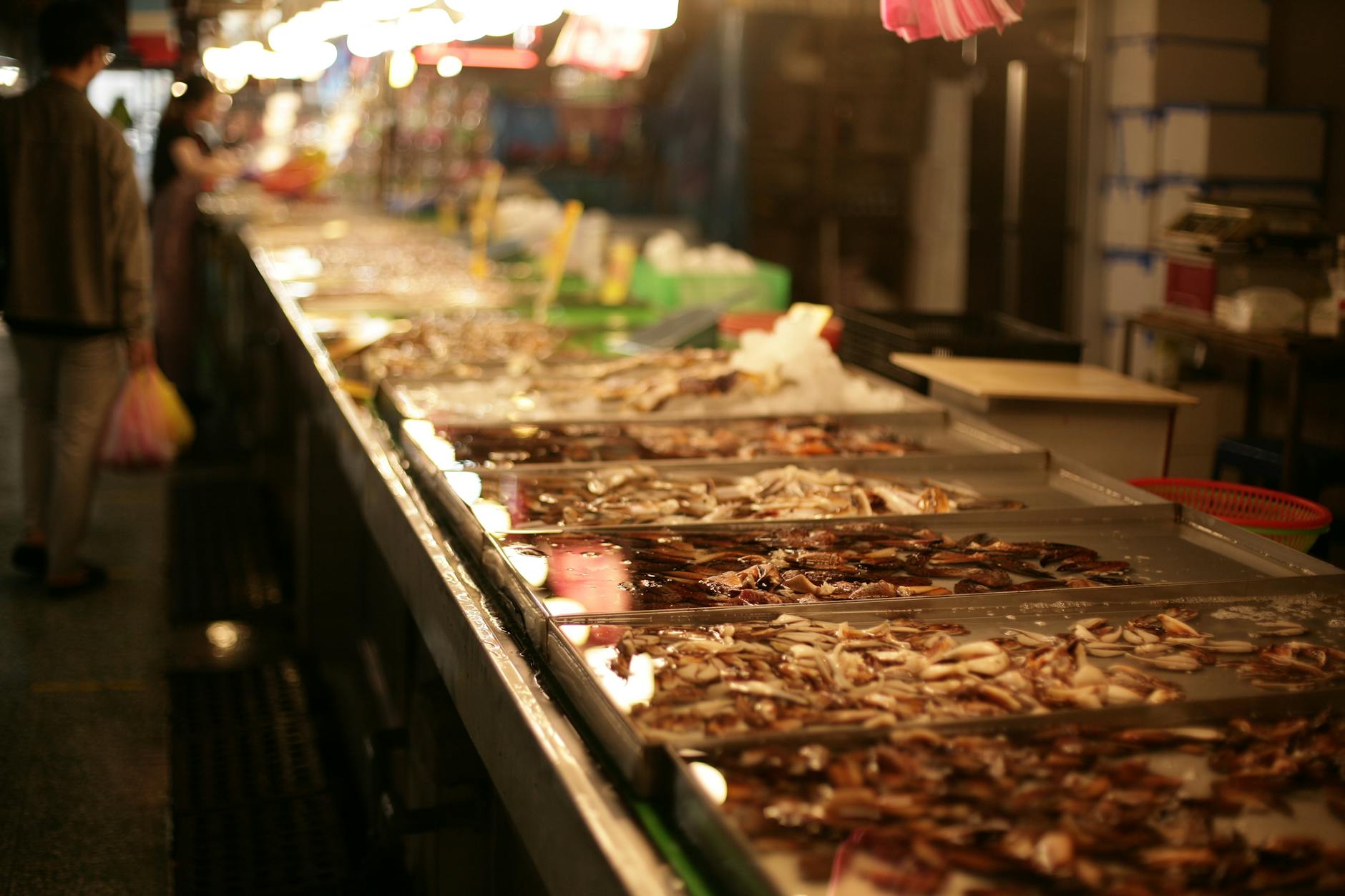
The market’s most famous fish-and-chips counter is also a working seafood vendor selling oysters, lobster rolls, and fresh East Coast fish. Order the lobster roll if it’s a special-occasion lunch; the standard fish and chips are reliably outstanding.
Uno Mustachio & Italian Specialties
Beyond Mustachio’s sandwich, the market has a deep Italian-import bench. Domenic’s Italian Bakery, Olympic Cheese Mart, and Scheffler’s Deli all offer fresh pasta, imported olive oils, sun-dried tomatoes, and classic Italian charcuterie.
Sausage King & Whitehouse Meats
For visitors planning to cook, Sausage King makes 60+ varieties of fresh sausage in-house and Whitehouse Meats (open since 1932) is one of the most respected old-school butchers in Toronto.
Sweets: Everyday Gourmet, Pawel’s, Anton Kozlik’s Sweet Shop
Save room for dessert. Everyday Gourmet specialises in baklava and Mediterranean sweets; Pawel’s Bakery for Polish almond rings and poppy-seed rolls; Anton Kozlik’s mustard family also operates a small confectioner stall with maple-mustard truffles you didn’t know you needed.
The Saturday Farmers’ Market
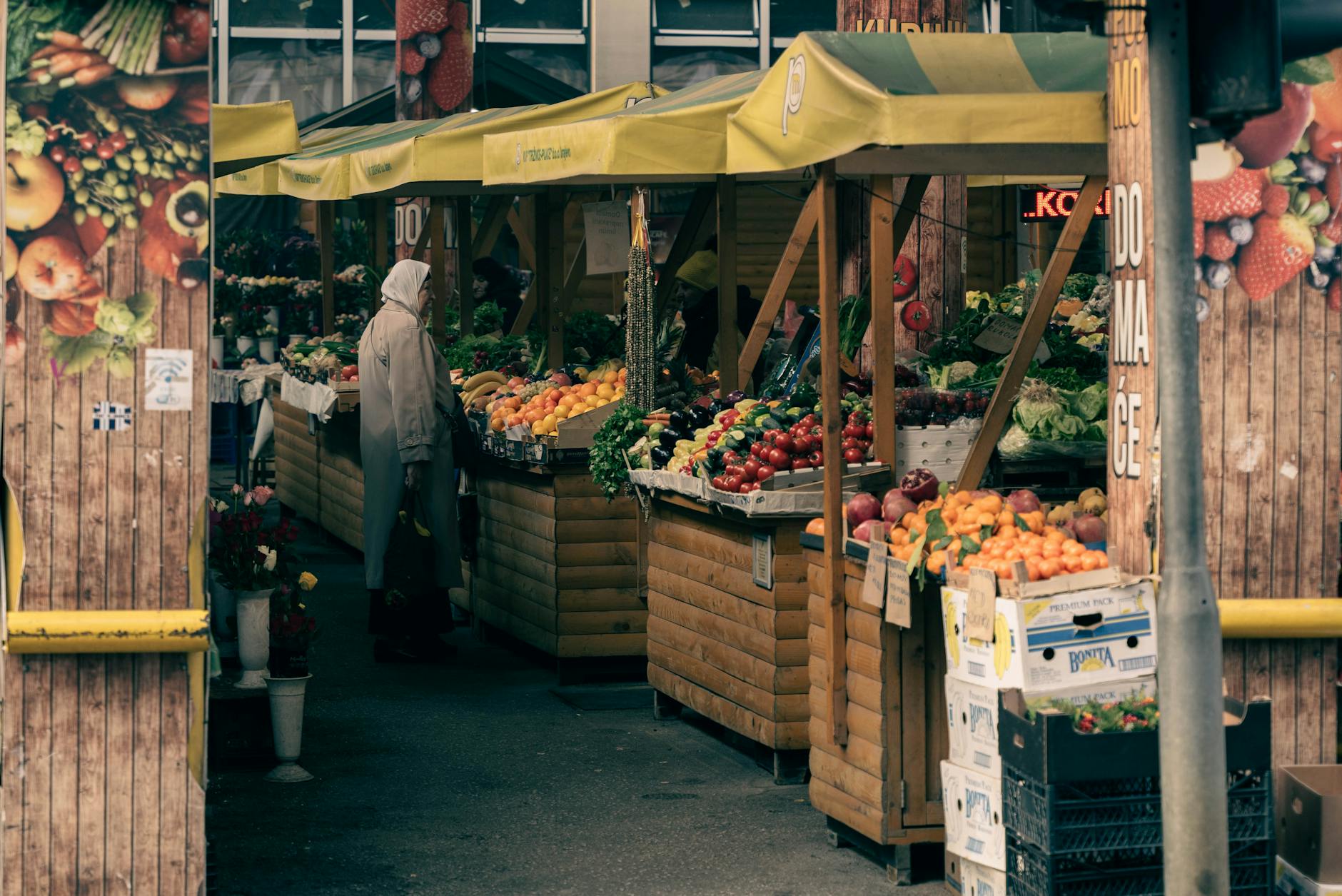
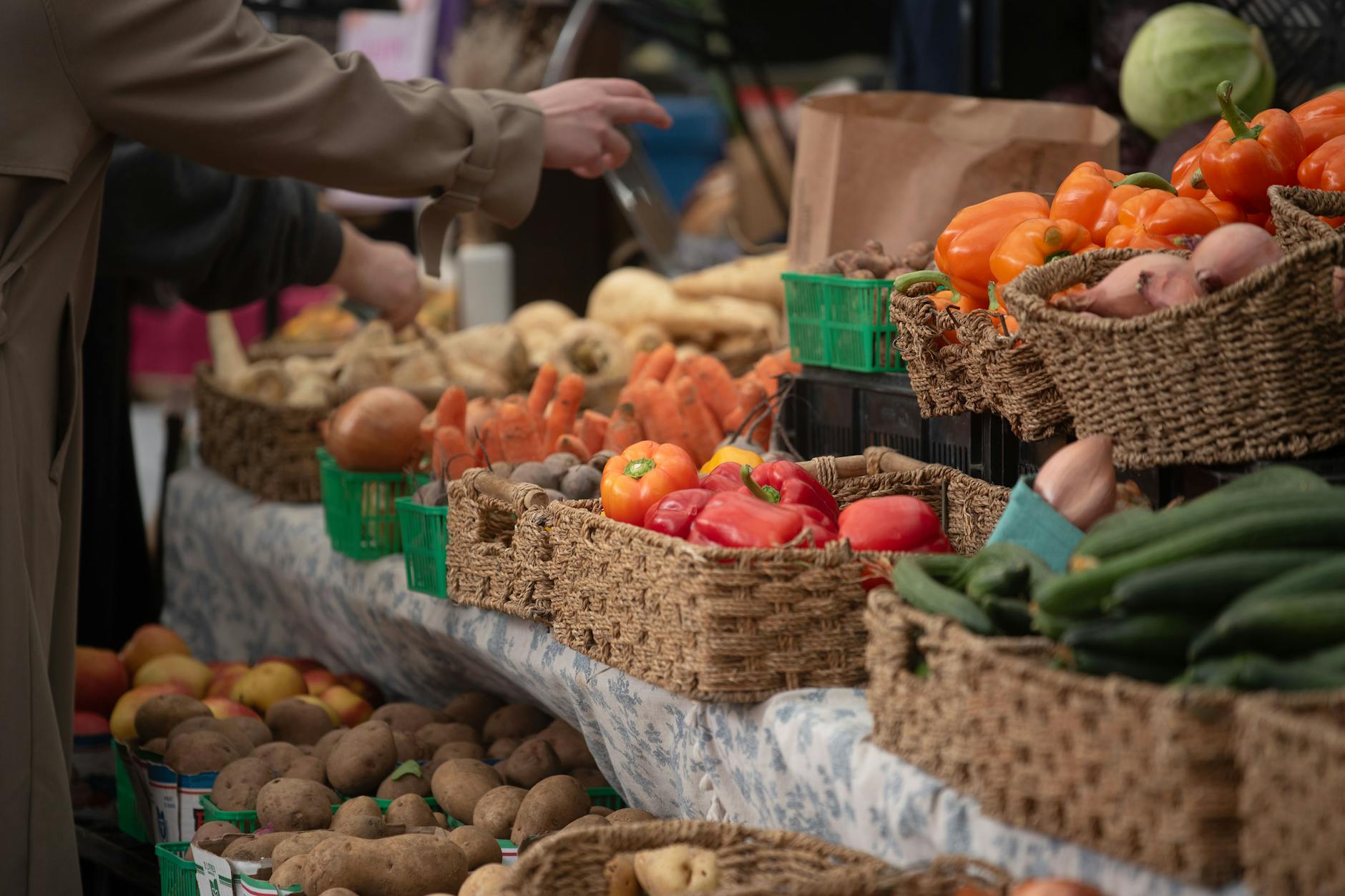
The Saturday Farmers’ Market in the North Market is one of Toronto’s great weekend rituals. From 5 a.m. to 3 p.m. every Saturday, 60+ Ontario farmers, bakers, and prepared-food producers fill the building with produce trucked in that morning, just-baked breads, organic dairy, ethically raised meats, fresh-cut flowers, jams, honey, and maple syrup from across the province.
Arrive by 9 a.m. for the best selection — the dedicated cooks who supply restaurants and committed home chefs are there at sunrise and clean out the most prized items quickly. By 1 p.m. things start winding down. The market is cash-friendly but most vendors now accept tap and Interac.
The Saturday market is one of the few places in Toronto where you can buy directly from the farmer, and the conversations are part of the experience — ask about the apple variety, the egg breed, the bee hive location. You’ll get a more interesting answer than any grocery store.
The Sunday Antique Market
From Easter through December, the same North Market building hosts the Sunday Antique Market — one of Canada’s longest-running antique fairs. 80+ dealers offer Victorian silver, Mid-Century Modern furniture, vintage records, sterling jewellery, military memorabilia, art deco glassware, and the kind of obscure ephemera collectors travel for. Hours are 5 a.m. to 5 p.m. (early arrival is rewarded), and the dealer rotation changes weekly — regulars come back month after month and almost always find something new.
Cash is preferred but not required; bargaining is welcomed; and most dealers will ship items home for buyers from out of town.
St. Lawrence Market History
The St. Lawrence Market traces its origins to 1803, when the Town of York (Toronto’s original name) designated the block bounded by Jarvis, Front, Church, and King Streets as a public market. The original wooden market house was rebuilt in stone and brick in 1831, and again on a grand Italianate scale in 1845 by William Thomas (the architect of St. Lawrence Hall across the street). The 1845 South Market building, with its distinctive arched windows and yellow-brick facade, is essentially the same building you visit today.
Throughout the 19th and early 20th centuries, the market served as Toronto’s primary food hub — farmers from across southern Ontario brought produce by horse-cart, by rail, and eventually by truck. The original second-floor City Hall (where Toronto’s first city council met from 1845 to 1899) is preserved as a small museum on the upper level of the South Market today.
The market complex declined in the mid-20th century as supermarkets gained ground, but a major civic restoration in the 1970s revitalised the space. The North Market was rebuilt in 2024 after a multi-year redevelopment that added contemporary architecture above retained historic walls. Today the complex sees over a million visitors annually and remains the most beloved food market in Canada.
Food Tours & Cooking Classes at the Market
St. Lawrence Market Food Tours
Several reputable food-tour companies run small-group walking tours of the market and the surrounding Old Town district. Standard tours run 2 to 3 hours and include 6 to 10 tasting stops, history of the market and the Old Town, and recommendations from a knowledgeable local guide. Tickets typically range $60–$120 per person.
Tours are a particularly good option for first-time visitors who want context, or for visitors with food allergies or dietary restrictions who appreciate guided expertise.
Cooking Classes
The market hosts occasional cooking classes through the upstairs market kitchen. Classes typically focus on classic Canadian and Italian techniques, last 2 to 3 hours, and end with a meal you’ve helped prepare. Check stlawrencemarket.com for the current calendar.
St. Lawrence Market with Kids: Family Tips
The market is one of Toronto’s most kid-friendly food experiences. Children typically gravitate to the bakery counters (free cookie samples are standard), the cheese vendors (free tastings on request), the fishmongers (live lobsters in tanks are reliable kid-bait), and the fresh fruit vendors. Many vendors are happy to answer kid questions about how cheese is made, where the fish came from, or what makes peameal bacon different from regular bacon.
Practical family logistics: strollers fit comfortably in the main aisles but tight at peak Saturday hours; the South Market is fully wheelchair and stroller accessible via ramps and elevators; family washrooms with baby-changing stations are available on the lower level. Most vendors take cards but a few cash-only stalls exist — bring some bills.
Families working out the rest of a visit will find more in our guide to Toronto with kids.
What to See Near St. Lawrence Market
The Distillery District
A 12-minute walk east of the market, the Distillery District is Toronto’s 13-acre Victorian whiskey complex turned pedestrian art-and-dining district. Pair a Saturday morning at the market with an afternoon at the Distillery for a complete Old Town day.
St. Lawrence Hall
Across Front Street from the South Market, St. Lawrence Hall (1850) is the ornate Italianate event space where Toronto held public meetings, anti-slavery rallies, and Sir John A. Macdonald’s wedding reception. The building is now used for private events but is open to public viewing during certain heritage tours.
The Esplanade & the Berczy Park Dog Fountain
One block south of the market, the Esplanade is a pedestrian-friendly historic street. Two blocks west, Berczy Park features the famous Dog Fountain — a public art piece featuring 27 cast-iron dogs, all looking up at a single bone on top of a stack of multi-tiered fountain levels. One of Toronto’s most photographed small parks.
Hockey Hall of Fame & CN Tower
Both attractions are within a 10-minute walk west of the market. A morning at the market with lunch from one of the food stalls is a perfect prelude to an afternoon at the CN Tower or Hockey Hall of Fame. See our guides to the CN Tower and the Toronto’s Hockey Hall of Fame.
The Flatiron Building & Berczy Park
Toronto’s Gooderham Building (also called the Flatiron Building, predating New York’s by 10 years) sits two blocks west of the market. The mural on its back wall is one of the city’s most photographed.
Practical Tips for a Great Market Visit
Bring cash and a card. Most vendors accept cards, but a few prefer cash; small bills help with quick purchases.
Come hungry but pace yourself. Three small purchases stretched over 90 minutes deliver a much better experience than one big rushed lunch.
Saturday is iconic; Tuesday is calm. Saturdays have the full energy and the Farmers’ Market; weekdays offer the most relaxed shopping.
Ask vendors questions. Many of the South Market vendors are second- or third-generation family operators who love to talk about their products.
Bring a reusable bag or two. If you’re shopping for ingredients to take home, you’ll need them. Several vendors sell their own market totes if you forget.
Try the upstairs. Many first-time visitors miss the upper level entirely. Carousel Bakery, the Market Kitchen, and the small market history museum are all upstairs.
Plan around your transit. If you’re leaving via Union Station with heavy bags, the seven-minute walk back is doable with reusable bags but tough with arms full of loose items. Bring proper bags.
Frequently Asked Questions About St. Lawrence Market
Is St. Lawrence Market open on Mondays?
No — the South Market is closed every Monday. The North Market hosts the Saturday Farmers’ Market and the Sunday Antique Market only, so it’s also closed Mondays. Plan your visit Tuesday through Sunday.
Is St. Lawrence Market free?
Yes — admission is free. You only pay for what you buy. Many vendors offer free tastings and samples on request.
What’s the most famous food at St. Lawrence Market?
The peameal bacon sandwich at Carousel Bakery on the upper level. The market is also famous for its veal sandwiches at Mustachio, Pingue prosciutto, Kozlik’s mustard, fresh seafood at Buster’s, and the Saturday Farmers’ Market produce.
When is St. Lawrence Market least crowded?
Tuesday and Wednesday mornings (9 to 11 a.m.) are the quietest stretches. Saturday between 11 a.m. and 2 p.m. is the busiest period of the week. Sunday afternoons are moderately busy with both the South Market and the Antique Market drawing visitors.
Can you eat inside St. Lawrence Market?
Yes — the upper level of the South Market has communal seating where visitors can eat purchases. Picnic-friendly tables exist outside the building. Many South Market vendors will also serve sandwiches and prepared foods directly to eat in.
Does St. Lawrence Market have parking?
Yes — the St. Lawrence Market garage is on the south side of the building, accessed from The Esplanade ($15–$25 for a full visit). Multiple Toronto Parking Authority lots are within a five-minute walk.
Is St. Lawrence Market accessible?
Yes. The South Market is fully wheelchair accessible via ramps and elevators between levels. Accessible washrooms are on the lower level. Service animals are welcome throughout.
How long should I spend at St. Lawrence Market?
Plan 60 to 90 minutes for a casual first visit covering the South Market and a sandwich lunch. Add 30 to 60 minutes for the Saturday Farmers’ Market or the Sunday Antique Market in the North Market. Serious food shoppers and history buffs can easily spend a half day in the complex.
Can you visit the original Toronto City Hall at St. Lawrence Market?
Yes — the original 1845 council chamber, where Toronto’s first city council met until 1899, is preserved on the upper level of the South Market and is open to public viewing during regular market hours. Free.
Is St. Lawrence Market dog-friendly?
Service animals are welcome throughout. Other dogs are not permitted inside the South Market for food-safety reasons but are welcome on the surrounding sidewalks and in nearby Berczy Park (with its famous Dog Fountain).
The peameal bacon sandwich at Carousel Bakery is more than a good lunch: in 2016 it was declared Toronto’s official signature dish, a nod to the city’s nineteenth-century days as “Hogtown”. If you want to know what else belongs on a list of local classics — and which “Canadian” dishes on tourist menus actually come from somewhere else — see our guide to what food Toronto is known for.
Plan Your St. Lawrence Market Visit
St. Lawrence Market rewards visitors who plan two strategic moves. First, time your visit — Saturday from 9 to 11 a.m. for the iconic full-energy experience including the Farmers’ Market, or Tuesday morning for the calmest version of the same vendors. Second, arrive hungry but pace yourself: a peameal bacon sandwich for breakfast, cheese and prosciutto samples mid-morning, and a coffee with pastry from one of the bakeries leaves you with a complete sense of why the market has been Toronto’s culinary anchor for more than two centuries. When you’ve eaten your way through the stalls, the wider Toronto food guide points to the rest of the city’s tables, and the roundup of Toronto attractions covers what to see between meals.