The Aga Khan Museum Toronto is the only museum in North America dedicated to Islamic art, Iranian art and Muslim cultures — a gift from the late His Highness the Aga Khan IV that opened on 18 September 2014 in a Fumihiko Maki building set inside a 17-acre park shared with the Ismaili Centre Toronto. The collection runs to more than 1,200 objects spanning the 9th to the 21st century, from the Iberian Peninsula through the Middle East to South Asia and China: illuminated Shahnameh folios, Mughal miniatures, Iznik ceramics, a silver-inlaid astrolabe from medieval Spain. It is also the rare major Toronto attraction where a large share of visitors pay nothing — everyone 25 and under gets in free. Here is what to see, what it costs, how to get there on Line 5, and what is on through 2027.

Aga Khan Museum Toronto: at a glance
| Detail | Information |
|---|---|
| Address | 77 Wynford Dr, Toronto ON M3C 1K1 (North York) |
| Phone | 416-646-4677 |
| Hours | Tue 10am-5:30pm, Wed 10am-8pm, Thu-Sun 10am-5:30pm, closed Mondays |
| Statutory holidays | Open 10am-5:30pm, including Mondays. Closed December 25 only |
| Adult admission | $20 |
| Anyone 25 and under | Free |
| Free evening | BMO Free Wednesdays, 4-8pm, in person only |
| Closest transit | Aga Khan Park & Museum Station, TTC Line 5 Eglinton |
| Parking | Paid — $10 flat all day, $5 for 30 minutes or less |
| Aga Khan Park | Free, open daily dawn until 10pm |
| Ticket-free zones | Atrium, Courtyard, Bellerive Room, Museum Shop |
Admission, free entry and what a visit actually costs
One ticket covers everything past the admission desk — the permanent galleries and every temporary exhibition running that day, with no surcharge. That matters here, because there are usually three or four shows on at once.
| Ticket | Full price | Group (10+) | Friends / Patrons |
|---|---|---|---|
| Adult | $20 | $15 | Free |
| Youth, 25 and under | Free | Free | Free |
| Senior (65+) | $15 | $12 | Free |
| Student (with ID) | $12 | $10 | Free |
| Support person for a visitor with a disability | Free | Free | Free |
There is no child or family ticket because there is no need for one — the Youth Free Access programme, presented with GreenShield, covers everyone 25 and under outright. Two parents with three kids pay $40 total, as of 2026. Bring ID for any discounted tier; staff do ask.
Four ways into the Aga Khan Museum Toronto for nothing
- Be 25 or under. No conditions, no advance booking — show ID at the Farida & Ally Esmail & Family Guest Services Centre.
- BMO Free Wednesdays. Free general admission every Wednesday from 4pm to the 8pm close. Tickets are released in person only at Guest Services, so arriving at 5:30 mid-exhibition is a gamble. Get there closer to 4.
- The tpl:map pass. A Toronto Public Library card covers free general admission during regular hours — up to two adults including the cardholder, plus up to four children aged 17 and under, not valid for ticketed events. Passes release the first Wednesday of each month at 2pm through tplmap.tpl.ca and the popular ones go within minutes.
- Skip the galleries. The Atrium, Courtyard, Bellerive Room and Museum Shop are ticket-free, and so is the park. One of the better entries on our list of free things to do in Toronto.
A PRESTO card also gets you 20% off admission and 10% in the Shop — that takes an adult ticket to $16, worth knowing even if you are driving.
Membership, if you are local
Individual membership is $80, Senior $55, and a $50 Long Distance tier covers anyone more than 100 km away. Family/Dual is $120 for two cards; Contributing at $160 adds free entry for two accompanying adults; Sustaining at $300 adds ROAM reciprocal entry at 200+ North American museums. All tiers include free admission, 50% off parking and 10% off the Shop.
The architecture: Fumihiko Maki’s masterpiece
Fumihiko Maki, the Japanese Pritzker laureate, was handed an unusual brief: design around light. Everything else follows from it.
The granite envelope
The exterior is clad entirely in Brazilian granite, finished so the surface shifts through the day — pale under flat winter cloud, warm and shadowed in late-afternoon sun. The footprint is 81 metres by 54, low and horizontal on a site that could have carried something far louder. Maki folded and angled the volumes rather than decorating them, so the geometry reads as planes catching light instead of applied pattern.
The Courtyard and the Atrium
At the centre sits an open-roofed courtyard, glass-walled and rectangular, pulling daylight into the heart of the plan and throwing patterned shadow across the floor as the sun moves. It is the room people photograph. The Atrium beside it is the free social space, home to the Courtyard Café and the pop-up performances. The building also holds two exhibition galleries, the 350-seat Nanji Family Foundation Auditorium, two classrooms, the Bellerive Room and the deep-blue Lapis Staircase.
Aga Khan Park and the chahar bagh
The 17-acre Aga Khan Park opened in 2015, designed by Lebanese landscape architect Vladimir Djurovic. Its organising idea is the chahar bagh — the four-part Persian and Mughal garden divided by water channels — reinterpreted in granite, clipped planting and open lawn rather than historical pastiche. Five granite-lined pools run between the museum and the Ismaili Centre, mirroring the Centre’s frosted-glass dome, the highest point on the 6.8-hectare site.
The park is free and open daily from dawn until 10pm, which makes it a destination on its own — come in May for the blossom, or late September when the light drops and the pools go copper. It belongs alongside the entries in our guide to the best parks in Toronto.
The permanent collection
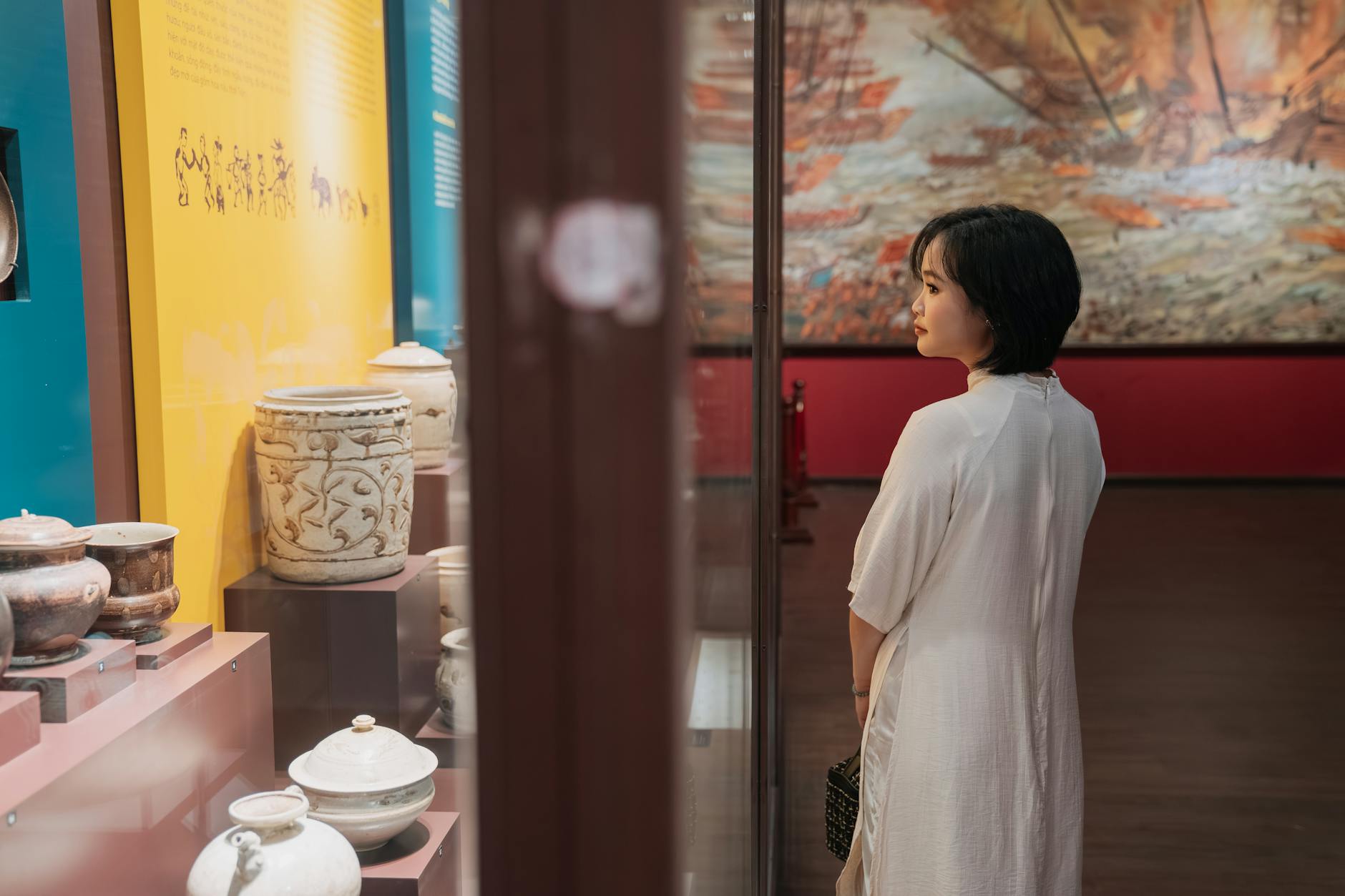
More than 1,200 masterpieces — manuscripts, paintings, ceramics, textiles, metalwork — covering the 9th through 21st centuries, from Spain and North Africa through the Middle East to South Asia and China. The core was assembled by Prince Sadruddin Aga Khan (1933-2003), who began buying in the 1950s as a student at Harvard, with his wife Princess Catherine Aga Khan. It is a collector’s collection, weighted toward exceptional individual objects rather than encyclopedic coverage.
Persian and Iranian art
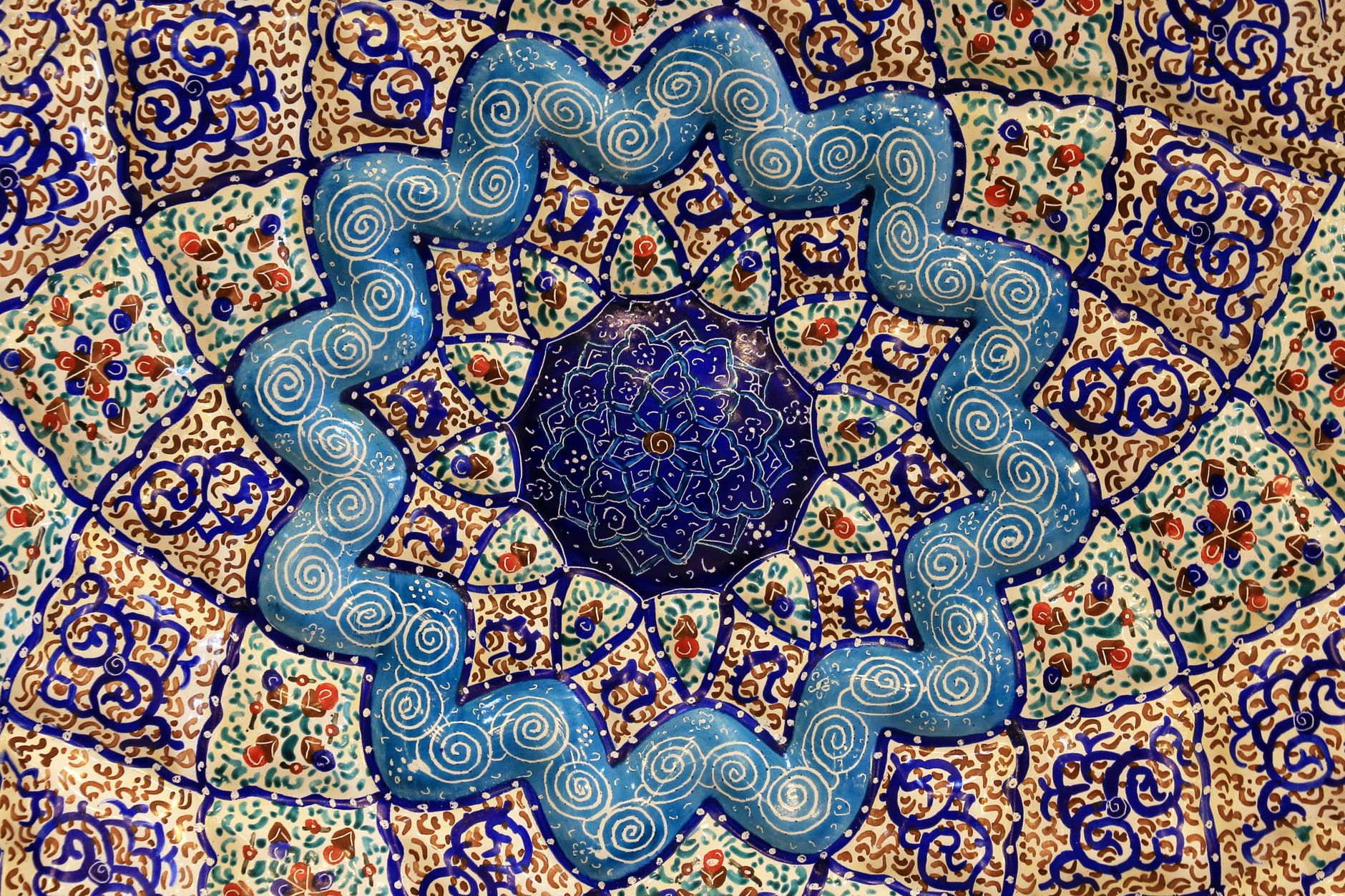
Illuminated Shahnameh (Book of Kings) manuscripts, Persian carpets, Safavid ceramics, and a remarkable copy of Avicenna’s Canon of Medicine — one of the most consequential medical texts ever written. These holdings are the spine of the collection.
Arab world
Early Qur’anic manuscripts, Mamluk metalwork and glass, Andalusian objects from Islamic Spain, North African textiles. The Syrian ceramics are unusually strong.
Indian subcontinent
Mughal miniature paintings of a quality you would otherwise travel to London or Delhi for, Indo-Islamic architectural drawings, and Mughal court jewellery.
Turkish and Central Asian
Iznik ceramics from the Ottoman workshops’ best decades, Ottoman calligraphy, Central Asian textiles, Timurid miniatures.
Calligraphy
Among the finest anywhere — Qur’anic, decorative, secular and contemporary. If you have one hour, spend a third of it here and read the labels; they are unusually good at explaining what separates one hand from another.
Eight objects to find by name
The permanent galleries rotate, so nothing is guaranteed to be out. Ask Guest Services about these on arrival:
- Planispheric Astrolabe (AKM611), Spain, probably Toledo, 14th century — engraved bronze inlaid with silver, 13.5 cm. A working computer from 700 years ago.
- Ivory Horn, or Oliphant (AKM809), probably Southern Italy, 11th to late 12th century, with English silver mounts added around 1620 — 64 by 34 cm, 500 years between its two halves.
- Bowl with a Fantastical Elephant-Headed Creature (AKM556), Iran, early 13th century — lustre-painted fritware, 15.2 cm. Small, weird, wonderful.
- Pharmacy Jars (Albarelli) (AKM567 and AKM568), Syria, 15th century — underglaze-painted fritware, 49.4 cm across.
- Kashkul (Begging Bowl) (AKM612), Iran, late 16th century — brass, 61 cm. A dervish’s alms vessel, and a corrective to the idea that Islamic art means courtly luxury.
- Iznik Dish (AKM687), Turkey, 1570-80 — underglaze-painted fritware, 34.3 cm across, from the peak of the Iznik potteries.
- Isfandiyar Kills the Simurgh (AKM103), attributed to Siyavush, Qazvin, Iran, 1576-77 — a Shahnameh folio, 40.4 by 29.8 cm, and one of the best paintings in Canada.
- Shell with Inscriptions (AKM665), India, 18th century — incised mother-of-pearl, 14.5 cm.
Download the free Bloomberg Connects app before you arrive — it is the museum’s digital guide and carries commentary the wall labels do not. There is no paid audio guide to rent.
Exhibitions at the Aga Khan Museum Toronto
Three to four major shows run at once, often co-curated with international partners, all covered by standard admission. The calendar as of August 2026:
| Exhibition | Dates |
|---|---|
| Hassan Hajjaj: La Salle de Gym des Femmes Arabes | Sep 13, 2025 – Sep 7, 2026 |
| Hayv Kahraman: Nabog (installation) | Mar 10, 2026 – Feb 2027 |
| Game On! | Apr 3 – Sep 7, 2026 |
| Kamrooz Aram: Lapis Intervention | Jul 14, 2026 – Jul 11, 2027 |
| Spotlight: Spanish Holbein Carpet | Jul 21, 2026 – Feb 21, 2027 |
| Toronto Biennial of Art at the Aga Khan Museum | Jul 23, 2026 – Apr 11, 2027 |
| Saks Afridi: SpaceMosque | Oct 24, 2026 – Mar 7, 2027 |
Game On! is the summer headliner and closes September 7, 2026. Curated by Bita Pourvash, it gathers over 100 works around play and games — including one of the world’s earliest surviving Persian chess sets and Esmaa Mohamoud’s Glorious Bones (2019), built from repurposed football helmets, wax print fabrics and recycled tires.
Saks Afridi: SpaceMosque takes over from October 24, 2026 to March 7, 2027. Curated by Marianne Fenton, it is the first major outing here for Afridi — born in Peshawar in 1975, based in New York, inventor of a self-declared genre he calls Sci-Fi Sufism.
The long runs are worth planning around: Kamrooz Aram’s staircase intervention holds to July 2027, the Toronto Biennial installation to April 2027, the Spanish Holbein Carpet spotlight to February 2027 — so any visit before next spring catches at least four things at once. Past shows including The World of the Fatimids remain viewable as free 3D tours online.
Guided tours and what they cost
Tour fees are charged in addition to admission, which catches people out. Both public tours run daily except Monday, last an hour, and are first-come first-served — turn up at Guest Services ten minutes early.
| Tour | When | Price (on top of admission) |
|---|---|---|
| Museum Highlights Public Tour | Tue-Sun, 11am, 1 hour | $10 adult / $5 senior 65+ / $5 students and children |
| Special Exhibitions Public Tour | Tue-Sun, 2pm, 1 hour | $10 adult / $5 senior 65+ / $5 students and children |
| Private group tour | By arrangement, max 15 per guide | $150 adult group / $120 senior or student group |
Private tours come in more flavours than people realise: Collections, Special Exhibition, Architecture, a Combined tour of about 90 minutes, a Park Tour, an Ismaili Centre Tour, and a Curator Tour needing 14 days’ notice. For ten or more the private rate beats the public tour per head. Book the Architecture tour if the building is what brought you.
Programming and events
Family Sundays
Free hands-on family activities run every Sunday, 12pm to 4pm, in the Education Centre. The workshops cost nothing, but adults still need admission unless one of the free routes applies. It is the busiest family window of the week; see also our guide to Toronto with kids.
TD Pop-Up Performances
Short live sets in the Atrium with a rotating weekly roster, running through 2026 on Wednesdays at 5, 6 and 7pm and weekends at 12, 1 and 3pm. The Atrium is ticket-free, making this one of the easier free music encounters in the city — check the listing before travelling for it.
The auditorium programme
The 350-seat Nanji Family Foundation Auditorium carries the performance and talks programme. Confirmed for the rest of 2026: Ali Sethi, ‘Harmonium: A Roots Residency’, August 28-30; Satyajit Ray’s Shatranj Ke Khilari, billed as The Board and the Empire, September 5 at 2pm; and the Couchiching Annual Conference on October 7. Ticketed events book separately from admission.
Duende International Flamenco Festival
The autumn festival runs November 18-22, 2026 — five days of flamenco, fitting for a collection that reaches back to Islamic Spain. Book early; it is the busiest week of the year here.
Wednesday evenings
Wednesday is the only late night: open to 8pm, free from 4pm, pop-up performances at 5, 6 and 7pm, Patrons’ Lounge 4:30-7:30pm for members. The most atmospheric time to be in the building, and the most crowded. Children’s summer camps run through the school break, 10% off for Family members.
Eating at the museum: what is open in 2026
Diwan Restaurant is temporarily closed. The museum describes it as closed “as we work with our new vendor to refresh and reimagine the space” — The Food Dudes have been named the incoming food services provider for Diwan, the Courtyard Café and catering. No reopening date has been announced as of August 2026. Do not plan a trip around Diwan’s brunch.
What is open is the Courtyard Café in the Atrium — lunch items, sweets and drinks, hours mirroring the museum’s, in the ticket-free zone so no admission is needed. The Rupani Family Patrons’ Lounge opens to members Wednesdays 4:30-7:30pm and weekends 11am-3pm.
For a proper meal, plan it off-site. The museum sits in Flemingdon Park, minutes from the Thorncliffe Park stretch of Overlea Boulevard, where the South Asian and Middle Eastern restaurants are excellent and cheap — an easy extension of our guide to eating around the world in Toronto.
The Museum Shop
Better than most museum shops and free to enter. Ceramics, jewellery, scarves, stationery, fragrances, books, plus an exclusive Aga Khan Museum × JUMA Studio collection you will not find elsewhere. In-store pickup Tuesday to Sunday, 10am to 5pm; members and PRESTO holders get 10% off. The art-history selection is the strongest of any museum shop in the city.
The Ismaili Centre Toronto
Across the pools stands the Ismaili Centre Toronto, by the Indian architect Charles Correa, completed alongside the museum. Its crystalline frosted-glass dome is the highest point on the 6.8-hectare site and is doubled in the five granite-lined pools — neither building makes full sense without the other.
The Centre is the religious and social centre for Toronto’s Ismaili Muslim community, not a gallery, and not a drop-in attraction. The reliable way inside is the Ismaili Centre Tour, booked in advance. Everyone else can walk the grounds from dawn until 10pm — the dome at dusk, lit and reflected, is the best view on the property.
How to get to the Aga Khan Museum Toronto
By TTC
This used to be the hard part and no longer is. TTC Line 5 Eglinton serves Aga Khan Park & Museum Station — the museum has its own station, a short signposted walk through the park from the exit. From downtown, take Line 1 or Line 2 to an Eglinton interchange and transfer to Line 5. Our TTC guide covers transfers and fares.
By bus
Buses still serve the site directly: routes 100A, 25B or 925 from Broadview Station, and the 925 southbound on Don Mills Road from the north. Pape Station also connects.
By car
About 20 minutes from downtown outside rush hour via the Don Valley Parkway. Exit at Don Mills Road; Wynford Drive is one traffic light north of Eglinton and well signposted. Whether a car is worth it at all here is a separate question — see renting a car in Toronto.
Parking
There are underground and surface lots, and parking is paid — the detail older guides get wrong. Pay by QR code through HonkMobile or HonkTAP, no app download needed.
| Parking | Rate | Friends / Patrons |
|---|---|---|
| Full day flat rate (7am-12am) | $10 | $5 / free for Patrons |
| Short term, 30 minutes or less | $5 | $2.50 / free for Patrons |
Fees apply daily 7am to midnight, with no overnight parking. At $10 flat it is among the cheapest parking at any major Toronto cultural institution.
By bike and rideshare
Free bike parking on site and a Bike Share Toronto dock on Wynford Drive; the approach through the Don Valley trails is one of the better rides to a museum in the city. A rideshare from downtown runs roughly $20-$30 each way.
Accessibility
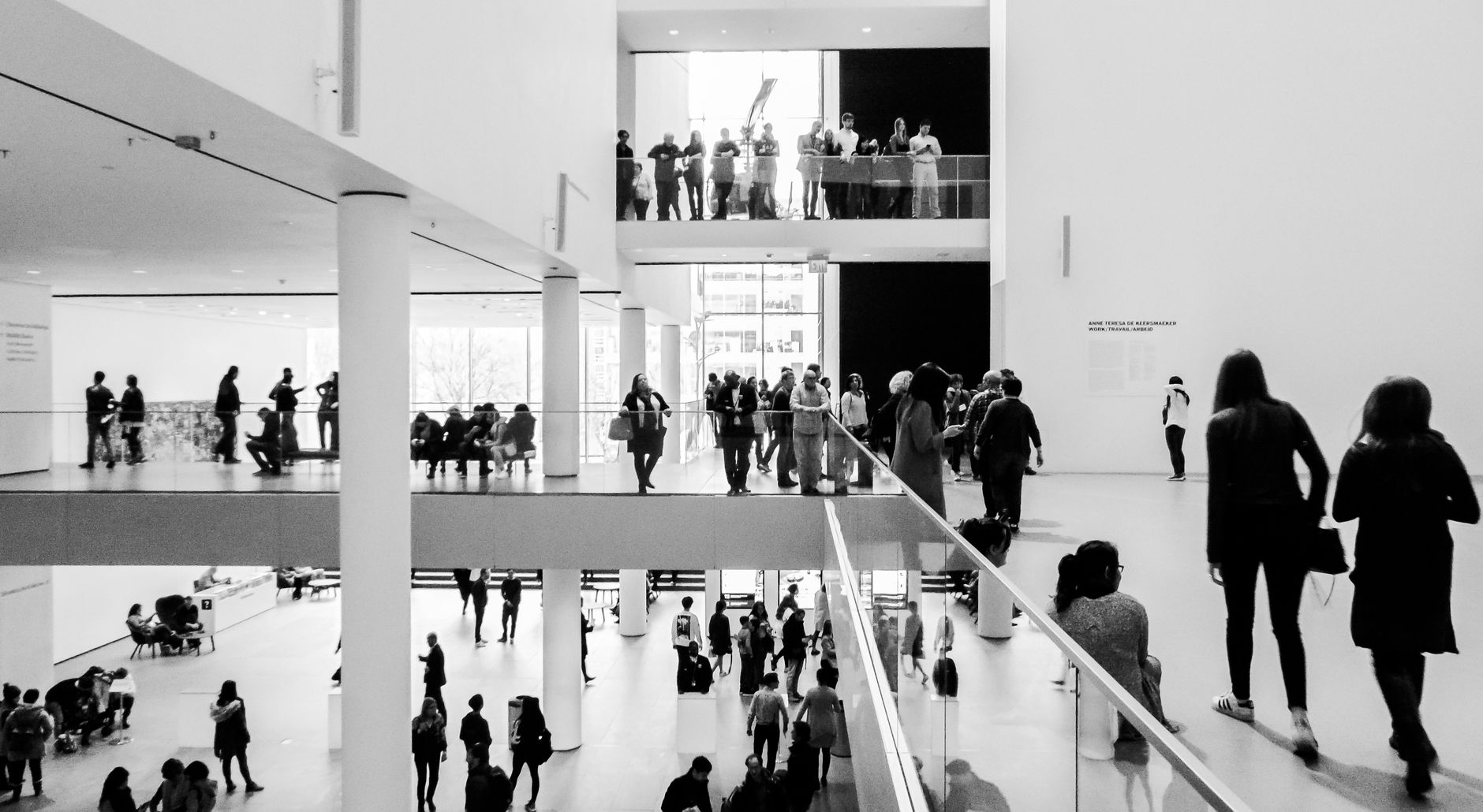
The building is wheelchair accessible throughout, with a street-level drop-off, and wheelchairs are loaned free at Guest Services, first-come first-served. The one exception is the main Courtyard, the only non-accessible area — staff can arrange access, so ask rather than assume.
Sensory backpacks are free to borrow at Guest Services for neurodivergent visitors. Guide dogs and service animals are welcome, and a support person accompanying a visitor with a disability is admitted free. A limited coat check is free; there are no lockers.
Bag policy. Bulky coats, bags larger than 30 by 40 inches (76 by 102 cm), briefcases, backpacks, umbrellas, selfie sticks and tripods are prohibited in the galleries. Strollers and soft front-facing baby carriers are permitted.
Combining the Aga Khan Museum Toronto with other attractions
Ontario Science Centre
Do not plan a walk between the two. The Ontario Science Centre no longer operates from its Don Mills building; it has moved downtown to Harbourfront Centre at 235 Queens Quay West while a new building goes up at Ontario Place. The two institutions do run a programming partnership, so science-themed family events sometimes appear on the museum’s own calendar — worth checking if you are travelling with a wide age spread.
Edwards Gardens
Roughly 10 minutes north by car, Edwards Gardens is a completely different register from Djurovic’s austere granite geometry. Both feature in our best parks in Toronto guide.
Don Valley hiking
The Don Valley ravine system runs past the site — a forested river valley within walking distance of an LRT station. Our hiking trails Toronto guide has the routes worth doing.
A two-museum day with the Gardiner
Both the Aga Khan and the Gardiner Museum run free Wednesday evenings — the Aga Khan 4 to 8pm, the Gardiner from 4pm to its 9pm close. They are 9 km apart on different lines, so doing both is tight but possible. The easier version: Gardiner and the ROM at Queen’s Park in the morning, Aga Khan in the afternoon.
Practical tips
Photography
Permitted for personal use, with no flash and no selfie sticks or tripods. The second-floor gallery is sometimes restricted. Pencil sketching is explicitly welcome, which is rarer than it should be. No food or drink in the galleries or auditorium.
Best time to visit
Weekday mornings from 10am are the quietest hours, and Tuesday beats Thursday or Friday. The predictable crowds: Wednesday 4-8pm for free admission, Sunday 12-4pm for Family Sundays, the pop-up performance slots, and the 11am and 2pm tours. Monday is closed unless it is a statutory holiday.
Wet weather
Everything but the Courtyard is indoors, making this a reliable pick among rainy-day options in Toronto.
Aga Khan Museum Toronto FAQ
Is the Aga Khan Museum free?
For anyone 25 and under, yes — free every day, just show ID. For everyone else it is free every Wednesday from 4pm to 8pm under BMO Free Wednesdays, tickets released in person only. A Toronto Public Library tpl:map pass also covers free entry during regular hours. The Atrium, Courtyard, Museum Shop and the 17-acre park are always free.
Is Diwan Restaurant open?
No. Diwan is temporarily closed while the museum works with its incoming food services provider, The Food Dudes, and no reopening date has been announced as of August 2026. The Courtyard Café in the Atrium is open during museum hours and needs no admission ticket.
What is the closest subway station?
Aga Khan Park & Museum Station on TTC Line 5 Eglinton, named for the site and connected by a short signposted walk through the park. Buses 100A, 25B and 925 from Broadview Station also serve the museum directly.
Is parking free at the Aga Khan Museum?
No. Underground and surface parking is paid by QR code through HonkMobile or HonkTAP — $10 flat for the full day, or $5 for 30 minutes or less. Charges apply daily 7am to midnight, no overnight parking. Members pay half and Patrons park free.
Do I need to book tickets in advance?
Not for general admission; tickets are sold at Guest Services and cover every gallery including all temporary exhibitions. The exceptions are BMO Free Wednesdays, where in-person-only ticketing makes arriving early matter, and ticketed auditorium events.
Can you visit the Ismaili Centre next door?
Not as a walk-in. It is an active religious and community centre, and public access runs through the museum’s Ismaili Centre Tour, booked in advance. The grounds and exterior — including Correa’s dome mirrored in the five pools — are open to everyone from dawn until 10pm.
Is the museum good for children?
Better than its reputation suggests. Everyone 25 and under is free, strollers and front-facing carriers are allowed in the galleries, Family Sundays run free from 12 to 4pm, and there are summer camps. Sensory backpacks are free at Guest Services.
What should I see if I only get one visit?
The 14th-century Spanish astrolabe, the Siyavush Shahnameh folio Isfandiyar Kills the Simurgh, the calligraphy gallery, whichever temporary exhibition closes soonest, and ten minutes standing still in the Courtyard. Then walk the chahar bagh and look back at the granite.
More Toronto museums worth your time
The Aga Khan is one of the standouts in our guide to Toronto arts, culture and museums. Pair the Aga Khan Museum Toronto with the rest of cultural Toronto: ROM, AGO, Bata Shoe Museum, Gardiner Museum, Ontario Science Centre, the independent spaces and murals in our Toronto art galleries and street art guide, Indigenous experiences Toronto, and things to do in Toronto.
Go on a Wednesday if you want the building at its best — free after 4pm, music in the Atrium, and the park still open for two hours after the galleries close.