The Gardiner Museum Toronto is Canada’s only museum dedicated entirely to ceramic art — more than 5,000 objects made between 3500 BC and the present day, from earthenware shaped without a potter’s wheel in ancient Mexico to 18th-century European porcelain to contemporary work by leading Canadian artists. It sits at 111 Queen’s Park, directly across from the Royal Ontario Museum, and it is one of the city’s most rewarding cultural visits — a frequent surprise hit even for people who arrived thinking they did not care about pots. It opens seven days a week, which almost no other major Toronto museum can say. It is free every Wednesday after 4 pm, and free all the time for anyone 18 or under, any student with valid ID, and Indigenous Peoples.

Gardiner Museum Toronto: at a glance
| Detail | Information |
|---|---|
| Address | 111 Queen’s Park, Toronto ON M5S 2C7 — across Queen’s Park from the ROM |
| Hours | Mon-Tue 10am-6pm, Wed 10am-9pm, Thu-Fri 10am-6pm, Sat-Sun 10am-5pm |
| Holiday hours | 10am-5pm |
| Weekly closure | None — open seven days |
| Adult admission | $18 (as of 2026) |
| Seniors 65+ | $14 |
| 18 and under / students with ID / Indigenous Peoples | Free |
| Free evening | Wednesdays after 4pm, until the 9pm close |
| Special exhibitions | Included in general admission |
| Timed entry | None — a ticket is valid all day |
| Phone | 416.586.8080 |
Two rows there change how you plan. Toronto’s museums overwhelmingly go dark on Mondays, so a Monday afternoon in the museum district belongs to the Gardiner by default. And Wednesday’s 9 pm close is the only late night of the week — the older habit of a Friday late night no longer applies here.
Admission: how many people get in free
The pricing is unusually generous, and a large share of visitors never pay anything. Admission covers the permanent collection and every special exhibition running at the time, there is no timed entry, and a ticket bought online is good for the whole day — leave, eat somewhere on Bloor, come back.
| Visitor | Price (CAD, 2026) | Notes |
|---|---|---|
| Adult | $18.00 | Includes special exhibitions |
| Senior (65+) | $14.00 | Includes special exhibitions |
| 18 and under | Free | Under 12 must be with an adult |
| Student with valid ID | Free | Any institution, any age |
| Indigenous Peoples (First Nations, Inuit, Métis) | Free | Every day |
| Anyone, Wednesday after 4pm | Free | No advance registration |
| Gardiner Friends and Annual Pass holders | Free | Unlimited, every day |
| Support person | Free | Accompanying a visitor who needs one |
| Groups of 10+ | Special rate | Must pre-register |
Add those rows up and the paying visitor is a narrow group: adults over 18 who are not students, not visiting on a Wednesday evening, and not members. Carry a student card of any kind and the museum costs nothing on any day it opens. A family with teenagers pays for two adults and nothing else.
Toronto Public Library cardholders have a fourth way in. The tpl:map pass covers the cardholder plus a maximum of two adults and three children aged 13 and under, free during regular hours. Passes release on the first Wednesday of each month at 2 pm and go quickly — one of the better entries in our roundup of free things to do in Toronto.
Is a membership worth it?
The $30 Annual Pass pays for itself on the second visit: unlimited admission including special exhibitions and Pottery on the Plaza, but no discounts elsewhere. The $100 Friend tier is the one that matters if you intend to touch clay — 15% off Clay Restaurant, 15% off classes and camps for up to four children, 10% off the shop, two Signature Lecture tickets, and advance registration for sessional classes before they open to the public. Given how fast the studio fills, that early window is worth more than the discount. Above it, $150 Friends & Family adds a second cardholder and $250+ Enthusiast adds ROAM reciprocal access to other Ontario museums. The $360 Next Generation tier is at capacity and closed to new members.
The Gardiner Museum Toronto collection
George Gardiner built the founding collection deliberately narrow rather than encyclopedic, going deep on two families of material: earthenware — Ancestral Abiayala, Italian Renaissance maiolica, English delftware — and porcelain, meaning 18th-century Europe, with specialised holdings of Commedia dell’Arte figures and scent bottles. That focus is why a museum this size holds its own against institutions many times larger. Later curators widened it with creamware, French faïence, 19th-century Minton and wares made for the Canadian market, and Asian, modern and contemporary work.
Ancestral Abiayala
Formerly labelled “Ancient Americas” and renamed to use an Indigenous name for the continent, this is the foremost collection of its kind in Canada: 47 separate cultures across the American Southwest, Mexico, and Central and South America, spanning 3500 BC to AD 1550.
The detail that reframes the room is that all of it is low-fired earthenware made without the potter’s wheel. Every vessel, every figure, every whistling jar was coiled, pinched, moulded or paddled by hand. Once you know that, the technical control stops reading as pottery and starts reading as sculpture. If Indigenous history is what brings you here, it pairs with the sites in our guide to Indigenous experiences in Toronto.
Italian maiolica
The tin-glazed earthenware of the 15th and 16th centuries here is among the finest anywhere. The istoriato pieces are where people stop: narrative scenes from mythology and scripture painted edge to edge across a dish, which is to say Renaissance paintings that happen to be on plates. Watch how the painters handled foreshortening on a curved surface — no easel painter ever had to solve that.
English delftware
Delftware is the quieter half of the earthenware story and the one most visitors walk straight past. Slow down. That blue-and-white palette is a direct response to Chinese porcelain arriving in European ports, made by potters who could not yet produce porcelain and improvised something cruder and more inventive.
18th-century European porcelain
These galleries cover the century when Europe finally cracked the formula and then lost its head over it — Meissen, Sèvres, Chelsea, Doccia. Two sub-collections justify the trip on their own. The Commedia dell’Arte figures are a full cast of Harlequin, Columbine and Pantalone modelled in porcelain, frozen mid-gesture in a joke nobody has told for 250 years. The scent bottles are the opposite scale: tiny, gilded, absurd objects made for people with too much money and a real problem with smells.
Japanese ceramics and the Courtois Gallery
The Joan Courtois Gallery is an architectural oddity in the best way — it runs up the stairwell across three levels, so the display is something you climb through rather than walk past. It has been carrying Edo-period (1603-1868) Japanese porcelain themed on nature, leisure and global trade. Take the stairs at least once.
Modern, contemporary and the Raphael Yu Centre
The contemporary holdings run from postwar to the present, with an emphasis on leading Canadian artists including figures such as Léopold Foulem and Steven Heinemann. The Raphael Yu Centre of Canadian Ceramics, founded on Yu’s gift of contemporary Canadian work, is the engine behind it — collecting, research, publication, exhibitions and a symposium at the International Ceramic Art Fair.
The library and the Makerspace
Two spaces most visitors never find: the Gail Brooker Ceramic Research Library, a public reference library on ceramics that is genuinely open to the public, and the Makerspace, the newer hands-on room that hosts Sunday Family Day. Ask at the front desk about either.
Rotating exhibitions
Special exhibitions are included in admission — no surcharge, which is not true everywhere on this stretch of Bloor. There are usually two running alongside the permanent collection.
On now (as of August 2026)
Highways of Harlan House — May 8 to September 13, 2026. Early wall sculptures by the Canadian studio potter, made in response to environmental distress and shown for the first time in over 50 years. If you are reading this in early September, that one has a deadline.
In Search of Imperfection: The Macdonald Collection of Japanese and Japanese-Inspired Ceramics — July 10, 2025 to December 31, 2026. The first showing of the collection in its entirety, and the reason the Courtois stairwell currently rewards the climb.
Coming up
Magnus Hara: The Light of Day — September 18 to November 8, 2026.
After the Island: Caribbean Canadian Ceramics — October 9, 2026 to April 25, 2027, a partnership between the Gardiner, Black Artists’ Networks in Dialogue (BAND) and the Museum of the African Diaspora in San Francisco. This is the long run of the season and the one to plan a winter visit around.
Annual and biennial fixtures
- Sheridan College graduate show — every April. Emerging Ontario ceramicists, and the show where you can still afford the work.
- International Ceramic Art Fair — recurring rather than strictly annual, and the format changes each time; the 2026 edition ran May 28 to August 16, a twelve-week platform rather than a weekend fair.
- 12 Trees — the museum’s historic holiday exhibition, which has appeared intermittently.
Past shows have ranged from contemporary sculpture surveys to True Nordic: How Scandinavia Influenced Design in Canada, co-curated with the Vancouver Art Gallery. Check gardinermuseum.on.ca before you go — occasional early closures for private events are posted as a banner there.
Clay Studio: hands-on programming
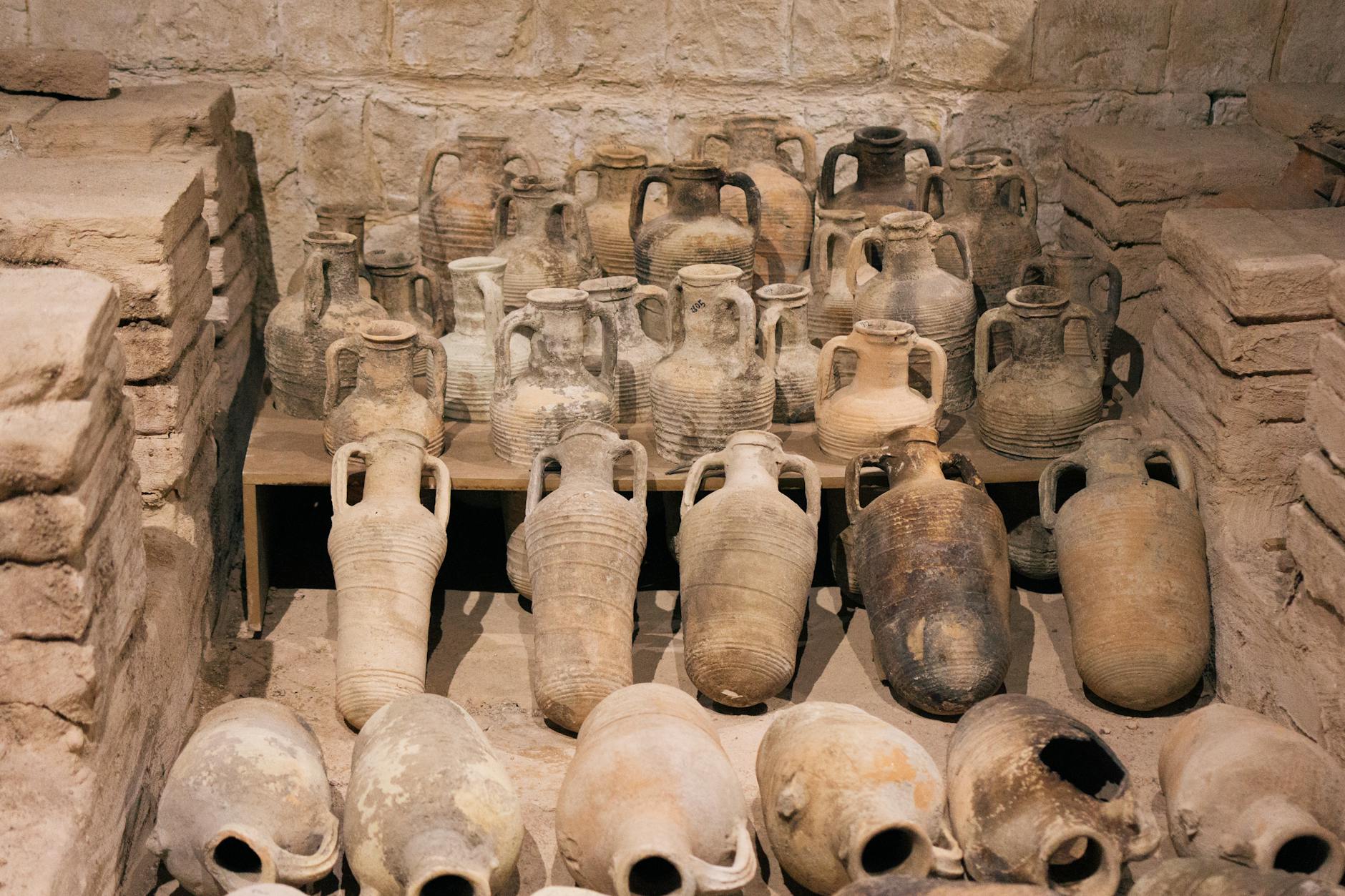
This is the real distinction. Most museums interpret their collection; this one runs working clay studios and calls itself a leader in clay and art education. Adult classes run year-round, families have a Sunday slot, and in summer the whole thing spills onto the plaza.
Sessional adult classes
The backbone of the programme: 3-hour sessions over 4 to 8 weeks, in three slots — morning 10 am-1 pm, afternoon 1:30-4:30 pm, or evening 5:30-8:30 pm. The catalogue goes deeper than most community studios manage:
- Intro to Wheel Throwing: Stoneware
- Wheel Throwing — Beginner, All Levels and Intermediate streams
- Hand Building (Beginner), and a Hand Building and Wheel Throwing Combo
- Sculptural Pottery, Throwing Intensive, Creative Cups
- Wheel Throwing and Surface Decoration — sgraffito and water etching
- Wheel Throwing: Gardiner Collections — earthenware made in direct response to wheel-thrown works upstairs in the galleries
That last one is the argument for learning here rather than at a studio down the street: look at a 16th-century thrown form on one floor, then go and try to make it on another.
Single Classes at the Gardiner Museum Toronto, and the 15th-of-the-month rule
Visitors who cannot commit to eight weeks want the Single Classes — standalone two-hour sessions, all levels, no experience assumed. Write this down: tickets release at 10:00 am on the 15th of each month for the following month, and they sell out. Visiting in October means booking on September 15th at 10 am. Miss it and you are on a waitlist. Friends get 15% off; Annual Pass holders do not. There is also Single Class: For Families, adults and children hand-building side by side, Saturdays at 2 pm through summer 2026.
Family Day, every Sunday
Weekly Family Day runs Sundays at 11 am in the Makerspace — the low-commitment way in with kids, and the busiest thing in the building on a Sunday morning, so arrive at opening rather than at 11:05. It slots into a weekend built from our Toronto with kids guide.
Pottery on the Plaza
In summer the clay moves outdoors. Pottery on the Plaza is self-guided, open-air experimentation in front of the building, all ages, free for kids, and included with the $30 Annual Pass. It ran Thursdays and Fridays at 11 am through August 2026. No wheel, no kiln queue, no pressure.
Mindfulness sessions, camps and community programming
A quieter strand deserves attention: single evening clay sessions at 6 pm led by a Zen Buddhist practitioner and registered art therapist, under titles like Clayming Love and Re-claym Re-connect Re-member. These are not technique classes. Alongside them run school-break camps, school groups, private and corporate bookings, and Community Arts Space, active since 2016, which hands gallery and studio space to community-led projects.
Free Wednesday evenings at the Gardiner Museum Toronto
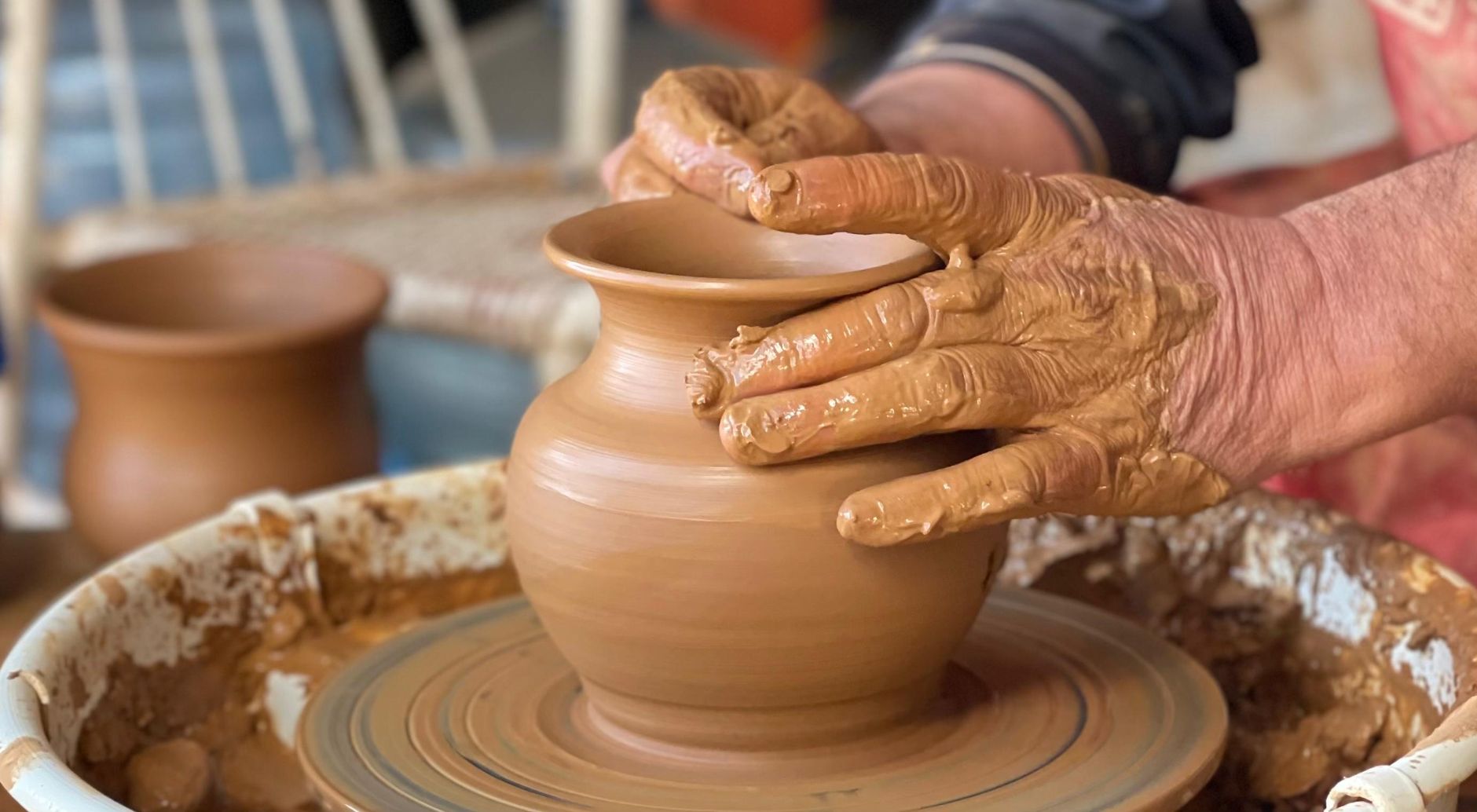
The best-value cultural evening in the museum district costs nothing. Every Wednesday, admission is free from 4 pm until the 9 pm close — the only late night of the week. No advance registration, no timed ticket, no system to game. Walk in.
It covers the whole building, special exhibitions included, which is the part people underestimate. And because it is a five-hour window rather than a two-hour block, it never develops the crush that shorter free periods do. Come after 6 pm if you want it quiet; 4 to 6 pm catches the after-work arrivals. Clay Restaurant closes at 3 pm, so eat before or head to Bloor Street afterwards.
The Aga Khan Museum runs a free Wednesday evening too. Doing both in one day is possible but they sit about 9 km apart on different transit lines, so pick one and do it properly.
Clay Restaurant
Clay Restaurant is the museum’s dining room — tables overlooking Queen’s Park, an interior designed to echo the ceramic focus of the building, and seasonal local menus from chef Bianca Azupardo.
Hours matter here more than usual: Monday to Friday 11 am to 3 pm, Sunday 10 am to 3 pm, and Saturday it is CLOSED. Read that twice if you were planning a Saturday museum lunch, because it is the most common way visitors get caught out — the museum is open on Saturday and the restaurant is not. Sunday opens an hour earlier than the rest of the week, which makes brunch-then-Family-Day straightforward.
Reservations online or on 416.586.8086; Friends get 15% off every day. If you do land on a Saturday, Bloor Street and Yorkville are minutes east with alternatives from our Toronto restaurants guide.
The Gardiner Shop
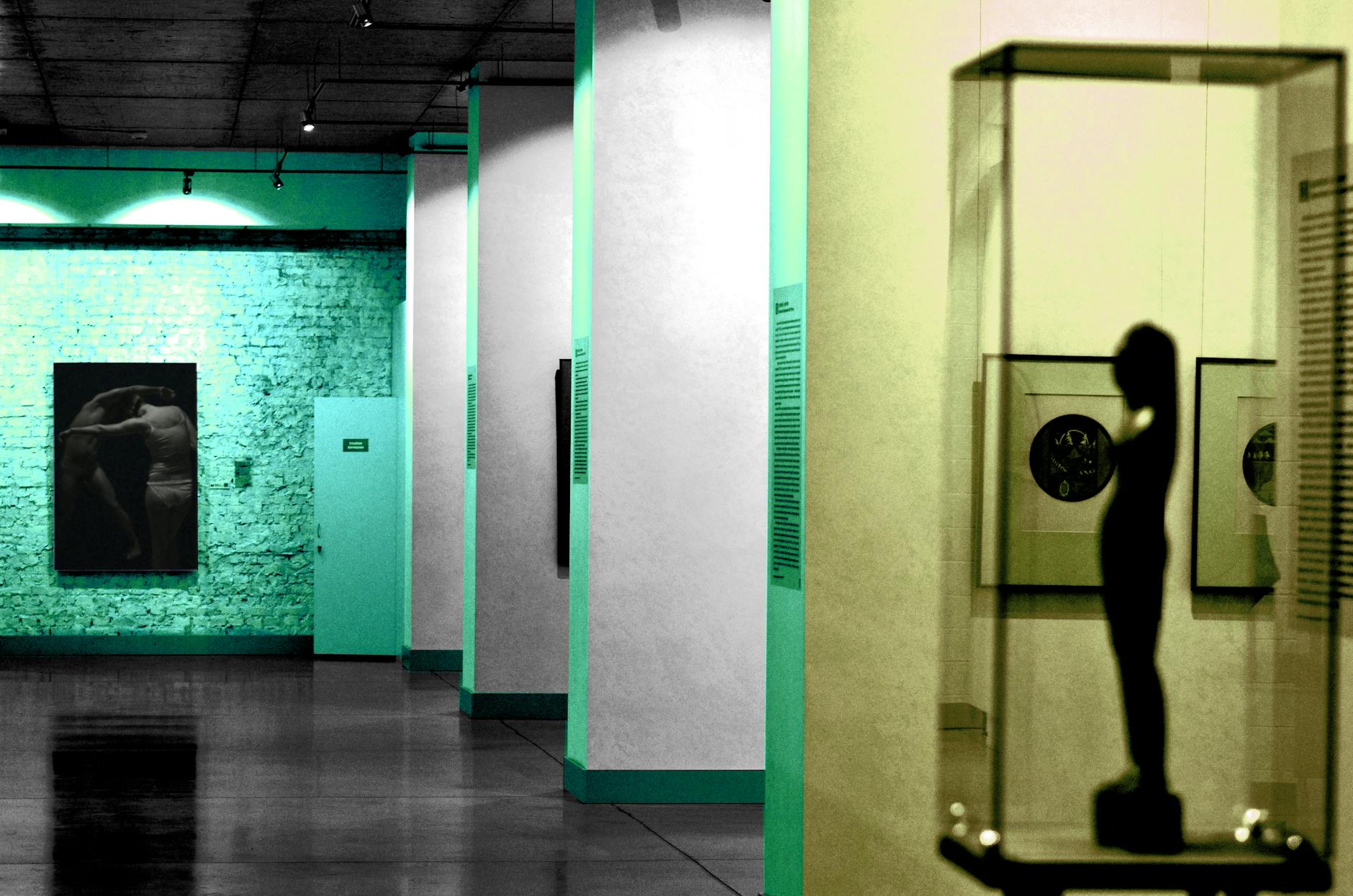
One of the better museum shops in the city, and the rare one that works as a gallery of contemporary craft rather than a rack of branded tote bags — ceramics, jewellery, glass, books, wood and home goods from local and international makers. The useful quirk is that stock is browsable by artist, so if a name in a temporary exhibition catches you, you can check whether that maker’s work is for sale downstairs. Friends get 10% off daily, rising to 20% through the holiday season. Shop line: 416.408.5066. For something to take home that was not made in a factory, this beats the airport — see also our Toronto souvenirs guide.
Talks, lectures and special events
Collection in Focus and object handling
Short, specific, and often the best hour in the building. Upcoming: Collection in Focus: 19th Century Canadian Ceramics on September 9, 2026 at 6 pm, and Blue Willow in the Clouds, online, on September 17, 2026 at 12 pm. Some sessions include object handling — exactly what it sounds like, and not something museums often allow.
Signature Lectures and SMASH
The flagship talks programme runs four to six times a year, with two tickets bundled into the $100 Friend membership. SMASH is the museum’s fundraiser and its most enjoyable evening, the ticket carrying a stated benefit value of at least $160.
A short history of the museum
It opened in 1984, founded by George R. Gardiner (1917-1997) and Helen E. Gardiner (d. 2008), both later appointed to the Order of Canada.
George Gardiner was not a curator by training. He founded his own Toronto stock-brokerage firm in 1946, chaired the Toronto Stock Exchange from 1962 to 1964, and helped establish York University’s business school. He began collecting ceramics in 1976, initially just to decorate his house — eight years from first purchase to founding a national museum. He chaired the board until 1994.
The middle chapter is less often told. From 1987 to 1996 the Gardiner was managed by the Royal Ontario Museum across the road. An endowment from George Gardiner restored its independence, and over the following seven years attendance, membership and programme participation all more than doubled. The museum you visit is a product of that second start, not the first.
It closed in the mid-2000s for a major expansion and reopened in 2006, designed by Kuwabara Payne McKenna Blumberg (KPMB). The work added 14,000 square feet — new galleries, far larger education and studio space, the shop, the café and an events space — funded by the Government of Canada, the Province of Ontario, an anonymous lead donor, and Helen Gardiner. The clean stone banding is a deliberate counterpoint to the Michael Lee-Chin Crystal that went up on the ROM at almost exactly the same moment: two very different answers to the same question, twenty metres apart.
How to get there
111 Queen’s Park, in the Bloor-Yorkville and University of Toronto museum district, directly across Queen’s Park from the Royal Ontario Museum. That is the landmark to navigate by — if you can see the ROM’s angular glass Crystal, the Gardiner is the low stone building facing it. It stands steps from the subway on Queen’s Park, a few minutes’ walk from the Bloor Street shops; our TTC guide covers fares if you are new to the network.
This is central Toronto beside a university campus, so street parking is scarce and metered and lot parking is priced accordingly. If you are weighing whether to drive here at all, our guide to renting a car in Toronto makes the case for leaving it parked. Cycling in is easy, and the Bike Share and cycling guide covers the routes.
Accessibility
The Gardiner is fully accessible and unusually clear about it: ramps at the main entrance, elevators to all floors, wide gallery pathways, a wheelchair-accessible ramp at the south end of the Museum Plaza, vision strips, and posted floor plans.
- Manual wheelchairs are available on site, personal assistive devices are welcome, and staff are trained to assist.
- Seating in every gallery — chairs with arms as well as benches, plus seating in the restaurant. A small detail that makes a large difference on a long visit.
- Washrooms on multiple floors, including gender-neutral restrooms on the 3rd floor, with baby-changing stations in select restrooms.
- Service animals are welcome and support persons enter free.
- Exhibitions using sound, lighting or video carry accessibility notes online and outside the gallery door, so you can check before walking in.
The museum complies with the AODA (Ontario Regulation 191/11) and works to the Canadian Museum Association’s Move to Action standards alongside its UNDRIP commitments — the framework behind both the renaming of the Ancestral Abiayala collection and free admission for Indigenous Peoples.
Combining the Gardiner with other attractions
The ROM
The Royal Ontario Museum is directly across the street, and the pairing is so obvious the two buildings function as one destination. The ROM is enormous and encyclopedic; the Gardiner is focused and finishable. Do the Gardiner first while you still have attention to spend on small objects — the reverse order tends to end with someone speed-walking past the maiolica.
Bata, the AGO and the Aga Khan
The Bata Shoe Museum is about ten minutes west along Bloor, and the Gardiner-ROM-Bata circuit is the classic museum-district day. Further out, the Art Gallery of Ontario on Dundas West is a separate day rather than an add-on, and the Aga Khan Museum sits in North York. All appear in the wider Toronto art galleries and street art guide.
U of T, the Annex and Yorkville
The museum stands at the edge of the University of Toronto’s St. George campus; a self-guided loop takes in Robarts Library, Convocation Hall and Hart House before flowing into the Annex. Five minutes east instead puts you in Yorkville and the Mink Mile, where most Gardiner visits end up whether or not that was the plan.
Practical tips
Photography
Permitted for personal use, with restrictions. Live-streaming and tripods are restricted, and individual exhibitions may set their own rules, posted at the gallery entrance.
Best time to visit
Weekday mornings from the 10 am opening are the quietest hours of the week. Wednesday evening is the predictable peak because it is free, and Sunday at 11 am fills the Makerspace with families. The earliest close is Saturday and Sunday at 5 pm, so a late Saturday arrival leaves very little time. Seasonal context is in our best time to visit Toronto guide.
Rainy days
The Gardiner-to-ROM crossing takes under two minutes, which makes this pairing one of the more weatherproof afternoons downtown — the wider list is in things to do in Toronto when it rains.
Gardiner Museum Toronto FAQ
How long should I spend at the Gardiner Museum Toronto?
It is a single mid-size building of roughly three levels holding about 5,000 objects, with the permanent collection and every special exhibition covered by one ticket and no timed entry. Most people find it finishable in one visit without rushing — far less demanding than the ROM across the road. Your ticket is valid all day, so you can also split it around lunch.
Is the museum open on Mondays?
Yes — 10 am to 6 pm, with no weekly closure day at all. Seven-day opening is genuinely unusual in Toronto, where most major museums close on Mondays, and it makes the Gardiner the obvious pick for a Monday cultural afternoon. Holiday hours are 10 am to 5 pm.
When is admission free?
Every Wednesday from 4 pm to the 9 pm close, for everyone, with no advance registration. Beyond that, entry is always free for anyone 18 and under, any student with valid ID, Indigenous Peoples, and Friends and Annual Pass holders. Support persons accompanying a visitor also enter free.
Can I take a pottery class as a visitor?
Yes — look for the Single Class, a standalone two-hour session for all levels. The catch is timing: tickets release at 10 am on the 15th of each month for the following month, and they sell out. Book that morning. Sunday Family Day at 11 am and summer’s Pottery on the Plaza are drop-in-friendly alternatives.
Do I need a separate ticket for special exhibitions?
No. General admission covers the permanent collection and all special exhibitions running at the time, with no surcharge and no timed entry. A ticket bought online is valid the whole day, and tickets are also sold at the front desk if you would rather just turn up.
Is Clay Restaurant open on weekends?
Sunday yes, Saturday no. It runs Monday to Friday 11 am to 3 pm and Sunday 10 am to 3 pm, and closes all day Saturday even though the museum itself is open. Visiting on a Saturday means eating on Bloor Street or in Yorkville, both a few minutes’ walk away.
Is it good for kids?
Better than the subject matter suggests. Everyone under 18 is free, Family Day runs every Sunday at 11 am in the Makerspace, Pottery on the Plaza is free for children in summer, and camps run through school breaks. Children under 12 must be with an adult. The clay programming is what makes it work — small children engage far more with making a pot than looking at one.
Gardiner or ROM, if I can only do one?
The ROM is broader — natural history, world cultures, dinosaurs — and better if you want range. Choose the Gardiner if you want something you can finish, if you would rather look closely at fewer objects, or if you want to make something yourself. With a full day, do both; they are twenty metres apart and ticketed independently.
More museums in the same neighbourhood
The Gardiner sits across from the ROM in the museum district mapped in our Toronto museums guide. Pair it with the rest of cultural Toronto: ROM, AGO, Bata Shoe Museum, the Aga Khan Museum guide, Yorkville guide, luxury shopping Toronto, things to do in Toronto, and art galleries Toronto.
Go on a Wednesday evening when it costs nothing, climb the Courtois stairwell, spend ten minutes in front of a maiolica dish, browse the studio ceramics in the shop, and you will understand why a museum about pots became one of the most loved institutions in the city.