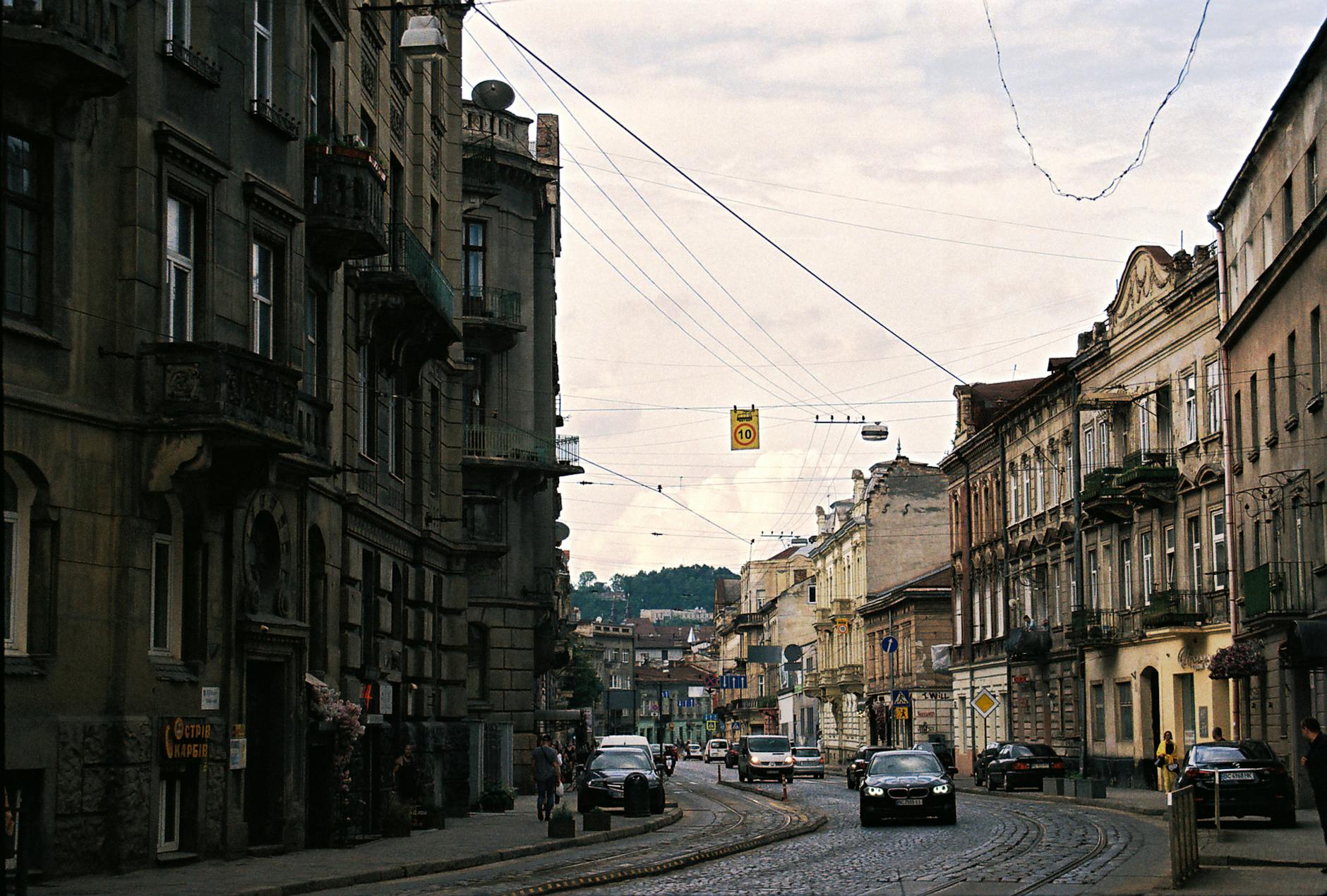
Art galleries Toronto splits into four scenes: the big institutions around Dundas Street West and the waterfront, a commercial dealer belt that has quietly migrated west to St Helens Avenue and Dupont, a stack of free artist-run centres — ten of them inside one heritage building at 401 Richmond — and more than 3,000 city-supported murals. Most of it is free. Below are 25 spots that are genuinely open in 2026, with addresses, hours and admission, plus Graffiti Alley, Underpass Park and the routes that link them.
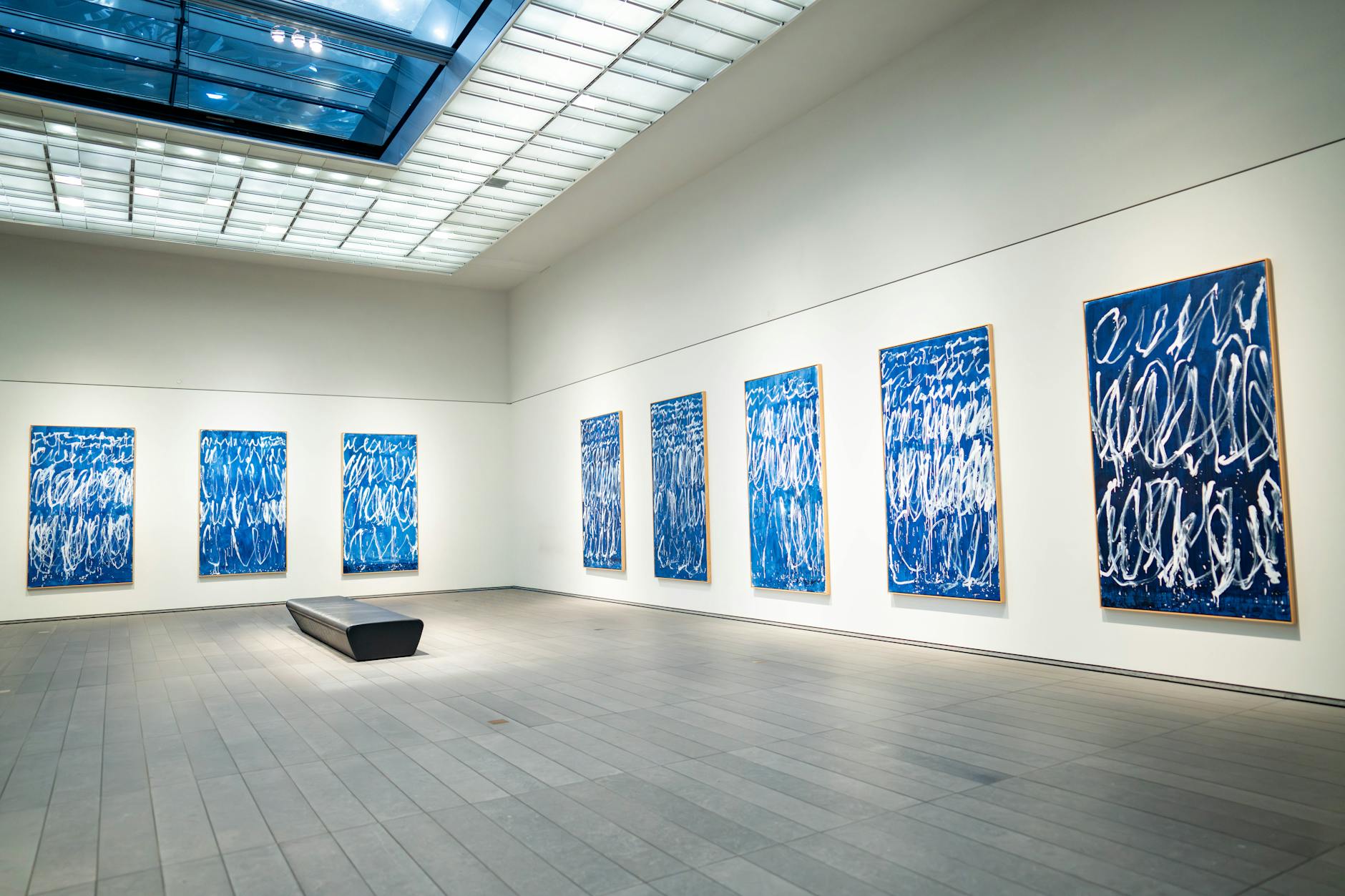
Major institutional art galleries Toronto
1. Art Gallery of Ontario (AGO)
317 Dundas St W. Canada’s most-visited art museum: Frank Gehry’s Galleria Italia staircase, the J.S. McLean Centre for Indigenous and Canadian Art, and Yayoi Kusama’s Infinity Mirrored Room — Let’s Survive Forever. Adult admission is $30 before tax, but the Annual Pass is $40 — ten dollars more for unlimited visits for a year. Ontarians under 25 go free with ID, as do under-10s and Indigenous visitors.
Free admission runs the first Wednesday night of each month only, 6–9pm — not every Wednesday, which is the most-repeated error about this building. Book ahead on the AGO’s free Wednesday nights page. Closed Monday; Tuesday and Thursday 10.30am–5pm; Wednesday and Friday to 9pm; weekends to 5.30pm. St Patrick station, or the 505 streetcar. The Bistro is shut during the Shop renovation, so eat in Chinatown three minutes away. Allow 2.5 hours; more in our AGO guide.
2. The Power Plant Contemporary Art Gallery
231 Queens Quay W, inside Harbourfront Centre. A kunsthalle with no permanent collection — five rotating spaces, one with lake views. Free every day, all year. Wednesday to Sunday 11am–6pm, Friday to 8pm. Take the 509 or 510 from Union. Lift access to both levels, and unusually, photography is allowed unless a sign says otherwise.
3. Museum of Contemporary Art Toronto (MOCA)
158 Sterling Rd, in a restored 1919 industrial building. MOCA is closed for installation and reopens 4 October 2026 — if you are here before then, it is off the board. Delcy Morelos’s Ombligo and Bharti Kher’s Bones then run to 14 February 2027.
Admission is $14 adult, $10 seniors and students, free under 19 and free for Indigenous visitors. Floor 1 is always free, as is the first Sunday of every month. Wednesday to Sunday 11am–5pm, Friday noon–9pm. Ten minutes’ walk from Lansdowne, Dundas West or the Bloor UP Express platform. No flash, tripods or selfie sticks.
4. Textile Museum of Canada
55 Centre Ave, one block from St Patrick station and five minutes from the AGO — the most underrated institution here. It reopened after renovation in October 2025 and is marking 50 years with Made By Many, alongside Always In Fashion, contemporary Indigenous couturiers curated by Amber-Dawn Bear Robe. Adult $15, seniors $13, students and youth $8, under-5s free; First Nations, Inuit and Métis visitors free, no ID required. Wednesday to Sunday noon–5pm, all floors elevator-accessible.
5. Onsite Gallery (OCAD University)
199 Richmond St W, free, and reliably good on Indigenous and emerging Canadian work. From 2 September 2026 it shows Returning to Ourselves, a retrospective of Cree Métis siblings Rebecca Baird and Kenny Alvin Baird, plus Michael Massie: now and then, both to 30 January 2027. Wednesday noon–7pm, Thursday to Saturday noon–5pm.
6. The Image Centre
33 Gould St, on the TMU campus, and the strongest photography programme in the city. The galleries reopen 9 September 2026 with Richard Avedon Immortal: Portraits of Aging, 1951–2004 to 5 December. Tuesday to Friday 11am–6pm, Wednesday to 8pm, weekends noon–5pm.
7. Art Museum at the University of Toronto
Two galleries at Hart House Circle — the Justina M. Barnicke Gallery at number 7 and the U of T Art Centre at 15 King’s College Circle. Admission is always free. Both closed for installation over summer 2026 and reopen in September; Museum station is two minutes away.
8. Royal Ontario Museum art galleries
The ROM is a natural-history museum with a serious art holding attached, strongest on Indigenous, East Asian and European decorative arts. Allow 60 minutes for the art floors. It faces the Gardiner Museum, which is free after 4pm every Wednesday and open to 9pm.
Admission and free nights at a glance
| Institution | Adult admission (2026) | Free access | Closed |
|---|---|---|---|
| Art Gallery of Ontario | $30 (annual pass $40) | First Wednesday of the month, 6–9pm; under-25 Ontarians | Monday |
| The Power Plant | Free | Always | Mon, Tue |
| MOCA Toronto | $14 (reopens 4 Oct) | Floor 1 always; first Sunday of the month | Mon, Tue |
| Textile Museum of Canada | $15 | Indigenous visitors | Mon, Tue |
| Onsite Gallery | Free | Always | Sun, Mon, Tue |
| Art Museum at U of T | Free | Always | Sun, Mon |
| Gardiner Museum | Ticketed | Free after 4pm every Wednesday | Open daily |
| Aga Khan Museum | Ticketed | BMO Free Wednesdays, 4–8pm | Monday |
Two of those free windows fall on the same evening, so pick one: the Gardiner from 4pm, or the Aga Khan Museum in Don Mills, 4–8pm. Toronto Public Library’s Museum + Arts Pass and the Canoo app work at the AGO, MOCA and the Textile Museum.
West Queen West and the St Helens Avenue gallery district
Be honest about this one. The historic Queen West Art + Design District has thinned badly — Division, Georgia Scherman, Zalucky, Narwhal and Erin Stump have all closed, and Arsenal Contemporary now lists only Montreal and New York. The densest commercial cluster has moved a kilometre northwest to St Helens Avenue and Dundas West, where three serious galleries share one short block. All are free.
9. Stephen Bulger Gallery
1356 Dundas St W. Toronto’s most respected photography dealer, with secondary-market prints through FFOTO. Tuesday to Saturday 11am–6pm.
10. MKG127
1445 Dundas St W, seven minutes west of Bulger. Conceptual, text-based and sculptural work, and consistently the wittiest programme in the city. Wednesday to Saturday noon–6pm.
11. Daniel Faria Gallery
188 St Helens Ave. Blue-chip Canadian contemporary in a converted industrial space — Kapwani Kiwanga, Brian Jungen, Iris Häussler. Tuesday to Friday 11am–6pm, Saturday from 10am; closed 25 August to 5 September 2026.
12. Clint Roenisch Gallery
190 St Helens Ave — not the old Dundas West address, still wrong on most listings. Founded 2003; photography, sculpture, painting and installation. Wednesday to Saturday noon–5pm; Heather Goodchild’s Left At Etruria runs 10 September to 17 October 2026. Next door to Daniel Faria.
13. Gallery TPW
170 St Helens Ave, two minutes south of Roenisch — which makes three galleries in 90 seconds of walking. A non-profit rather than a dealer, focused on lens-based work. Wednesday to Saturday 11am–5pm.
14. Paul Petro Contemporary Art
980 Queen St W, one of the last true Queen West holdouts. Wednesday to Saturday 11am–5pm. Fall opens with Carol Wainio and Natalie Wood, 4 September to 3 October 2026, reception Friday 4 September.
15. Susan Hobbs Gallery
137 Tecumseth St, south of Queen; represents Robert Houle, Janet Werner and Reece Terris. Wednesday to Saturday 11am–6pm, though it runs appointment-only stretches in summer, so email first.
Two more nearby: Propeller Art Gallery, 30 Abell St, an artist-run co-operative and one of very few Toronto galleries open Sundays (noon–4pm); and General Hardware Contemporary, 1520 Queen St W in Parkdale. This is the corridor to combine with Queen Street West lunch.
Junction Triangle, Dupont and Morrow Avenue
16. Patel Brown
21 Wade Ave, six minutes from MOCA. Bilingual, with a Montreal sister space and one of the sharpest emerging rosters in the country. Tuesday to Saturday 10am–6pm — the most generous hours in this section.
17. Cooper Cole
1134 and 1136 Dupont St, two adjacent storefronts — note that this is Dupont, not Dundas. Emerging and mid-career artists, local and international. Thursday to Saturday noon–5pm only. Use coopercolegallery.com; the old .ca domain has lapsed.
18. Franz Kaka
1485 Dupont St, Suite 208, but enter at 300 Campbell Ave — this catches out everyone the first time. Founded 2016, now showing at Art Basel and Frieze. Thursday to Saturday noon–5pm.
19. Olga Korper Gallery
17 Morrow Ave, a dead-end street near Roncesvalles. A Toronto institution in dealer form, representing Joanne Tod, John Brown and Kelly Mark. Tuesday to Saturday 10am–5pm. The room itself — high, white, top-lit — is half the reason to go.
20. Christopher Cutts Gallery
21 Morrow Ave, four doors along. Modernist and contemporary, including the estates of five Painters Eleven members plus Michael Snow and Eldon Garnet. If you care about postwar Canadian abstraction, this is the room.
Distillery District galleries
The Distillery District is the easiest gallery stop in the city — pedestrian-only, open 364 days a year, and the only cluster that reliably trades on Sundays. Galleries currently on site: Arta, Corkin, Thompson Landry, Dish Gallery + Studio, Iris Galerie, The Sport Gallery and Craft Ontario.
21. Corkin Gallery
7 Tank House Lane. Contemporary and historical photography plus painting, in the best-proportioned room in the complex. Monday to Friday 10am–6pm; Saturdays by appointment, which catches people out, since Saturday is when the Distillery is busiest.
22. Thompson Landry Gallery
32 Distillery Lane, in the Stone Distillery building. Specialises in Quebec artists, shown against raw brick and heavy timber. Its 20th Anniversary Group Exhibition #2 runs 17 September to 18 October 2026.
One correction worth knowing: Sandra Ainsley Gallery has moved out of the Distillery. North America’s leading contemporary glass dealer, with 60-plus artists including Dale Chihuly, is now at 100 Sunrise Ave, Unit 150, near Eglinton and Victoria Park, Tuesday to Saturday 11am–5pm — still a destination, just a 25-minute drive rather than a Distillery stroll.
Other major commercial galleries
23. Bau-Xi Gallery (Dundas)
340 Dundas St W, directly across from the AGO, which makes it the easiest gallery to bolt onto a museum day. Founded 1965 and Canada’s oldest continuously operating contemporary dealer. Tuesday to Saturday 10am–5.30pm.
24. Mira Godard Gallery and the Hazelton Avenue block
22 Hazelton Ave, established 1962 — David Milne, A.J. Casson, Christopher Pratt. What makes it a stop rather than one gallery is the block: Hazelton between Yorkville Ave and Scollard St holds four galleries within 100 metres — Gallery Gevik at 12, Miriam Shiell Fine Art at 14A (Jack Bush, Motherwell, Avery), Loch Gallery at 16 and Godard at 22. Several trade normally while their websites sit dead, so ring the bell rather than trusting the internet. Odon Wagner is eight minutes west at 196 Davenport Rd. Bay station is closest; the Yorkville guide covers the rest.
Two more downtown dealers deserve naming. Nicholas Metivier Gallery is at 190 Richmond St E — an address that has changed and is wrong on many listings — showing Tony Scherman and Jinny Yu from 19 September 2026. Feheley Fine Arts, 65 George St, is one of the last galleries anywhere devoted exclusively to Inuit and Canadian Arctic art, and the obvious pairing with our Indigenous experiences guide. Roberts Gallery, 631 Dupont St, founded 1842, is Canada’s oldest commercial gallery outright.
Artist-run centres and non-profits
25. 401 Richmond Street West
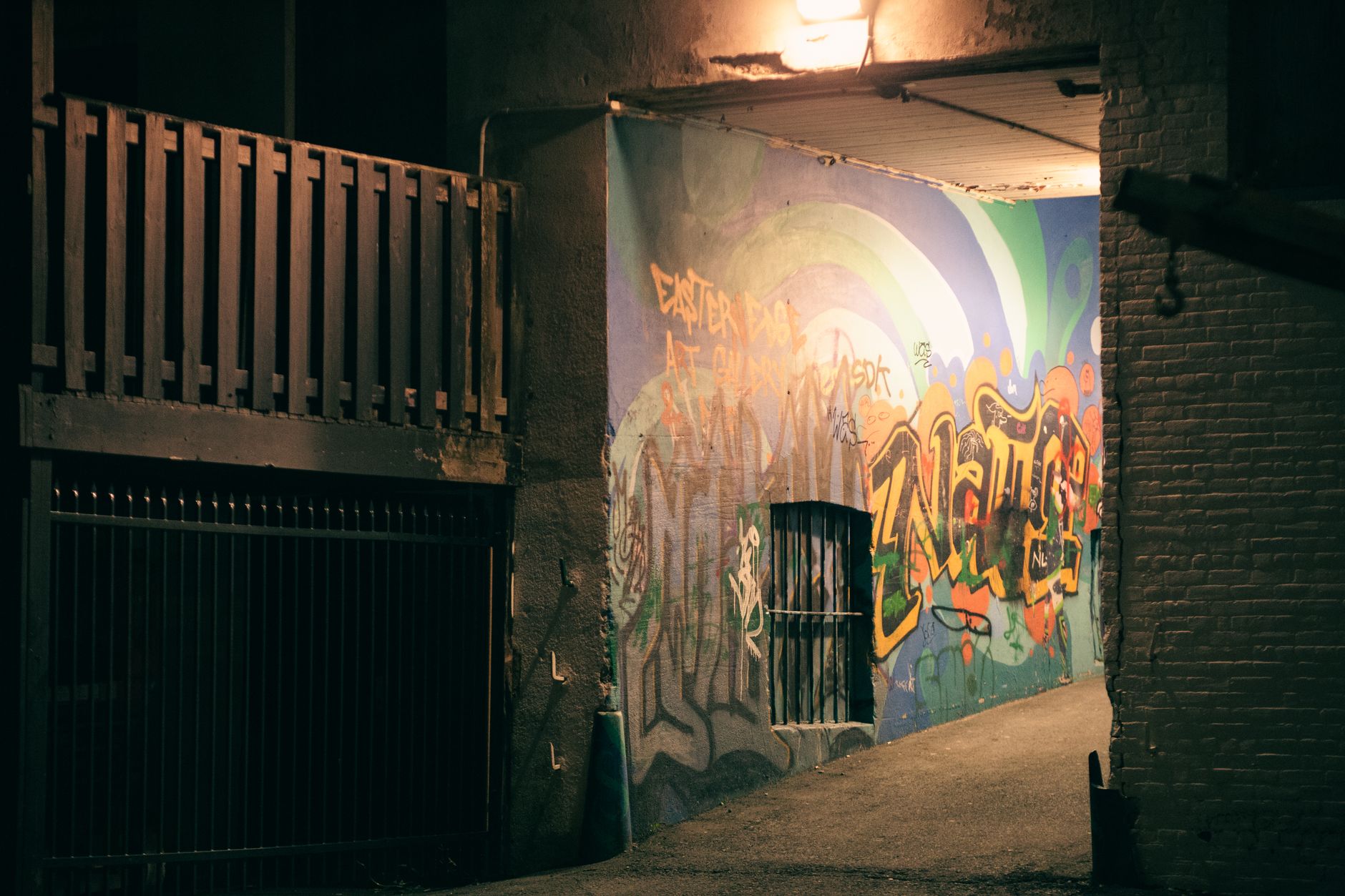
If you have two hours, spend them here: a heritage-designated tin factory converted into an arts hub of roughly 140 galleries, non-profits and studios, with rooftop gardens and a greenhouse. Every tenant gallery is free. Monday to Saturday 10am–6pm, and closed Sundays, which removes ten galleries from a Sunday plan at a stroke. Take the 510 Spadina or walk ten minutes from Osgoode; there is no visitor parking.
- A Space Gallery (Suite 110) — running since 1971, equity-focused. Tuesday to Friday 11am–5pm, Saturday noon–5pm.
- Gallery 44 Centre for Contemporary Photography (120) — darkrooms and residencies alongside the shows, same hours.
- YYZ Artists’ Outlet (140) — artist-led and experimental, Wednesday to Saturday noon–5pm when a show is up.
- Open Studio (104) — printmaking since 1970, with a shop and free studio tours.
- Prefix Institute of Contemporary Art (124) — three galleries, including an audio art gallery and a 10-metre glass surround gallery.
- The Red Head Gallery (115), Trinity Square Video (121) and Critical Distance Centre for Curators (122, relocated here from 180 Shaw).
Mercer Union, Xpace, Koffler and Whippersnapper
Mercer Union, 1286 Bloor St W, is Toronto’s longest-running artist-run centre and sits at Lansdowne station; Tuesday to Saturday 11am–6pm, free. Xpace, 303 Lansdowne Ave, shows emerging and student artists, Wednesday to Saturday noon–6pm, with a street-facing window space visible even when it is shut. Koffler Arts, 180 Shaw St, sits inside a converted 1914 schoolhouse now called Youngplace — free hallway galleries daily 9am–5pm, and Koffler itself opens Wednesday to Sunday 12.30–5pm, one of the rare Sunday options. Whippersnapper, 594B Dundas St W, programmes artists with under seven years of exhibiting history and keeps hours by exhibition.
Toronto street art scene
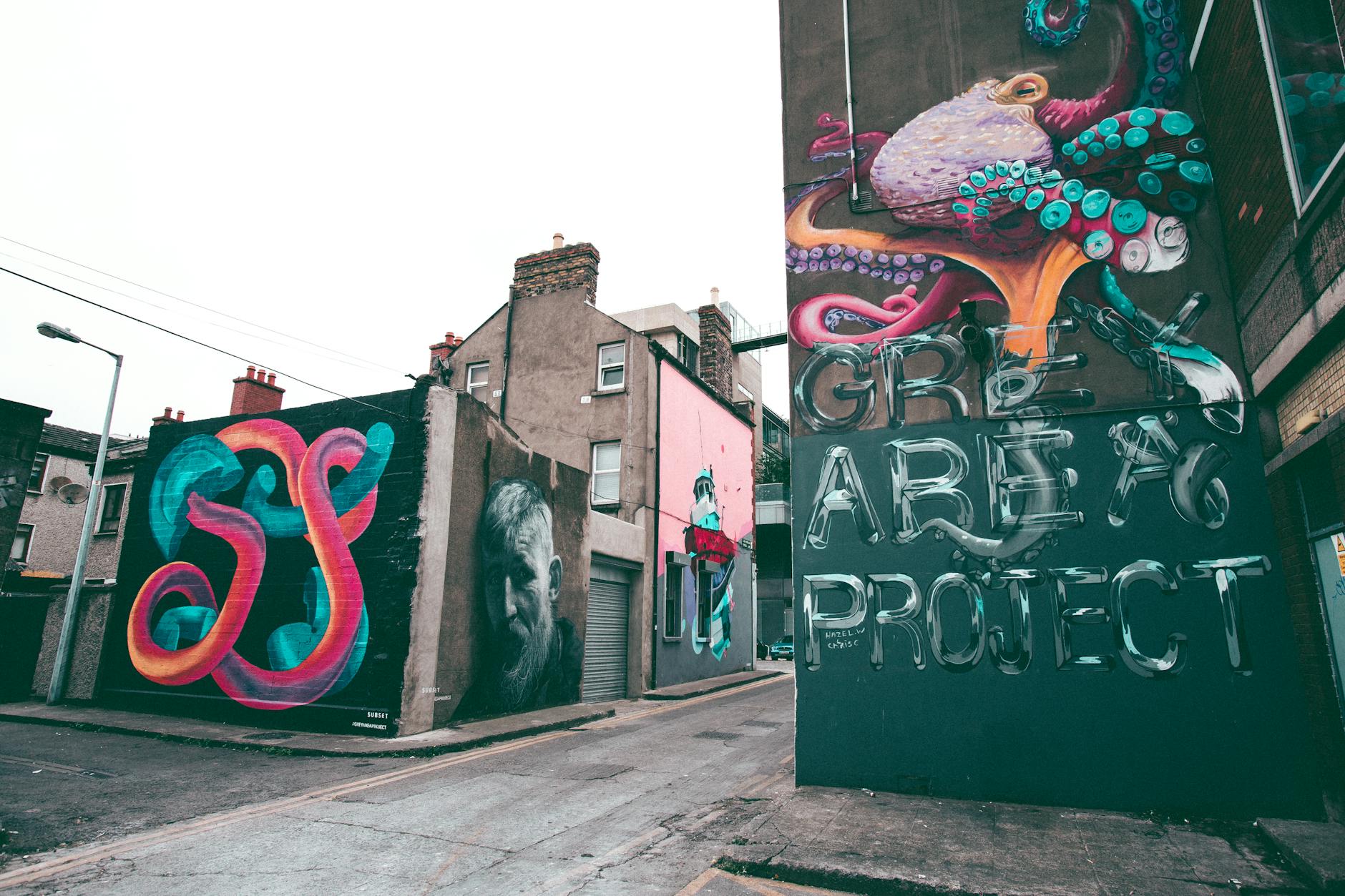
StreetARToronto — StART — launched in 2012 under the City’s Graffiti Management Plan and is run, oddly, by Transportation Services. A March 2026 staff report puts it at over 3,000 murals since 2012, including 428 between May 2024 and December 2025, with a target of roughly 250 a year. Its public map catalogues 1,926 works by artist, year and coordinates — 583 painted traffic signal boxes, 434 concrete barriers, 321 laneway works, 55 underpass transformations — and is the best free planning tool in the city. The most-represented artist is Elicser, with 23 works.
Graffiti Alley: boundaries, access and what is actually legal
Three definitions circulate and none conflict. The formal designation, adopted by City Council on 12 July 2011, covers the laneway south of Queen St W from John Street to Bathurst Street. The tourist core — the stretch everyone photographs, and Rick Mercer’s old Rant backdrop — runs between Queen and Richmond, from Spadina to Portland. Overall it is a three-block, one-kilometre alley in the Fashion District, and its real name is Rush Lane.
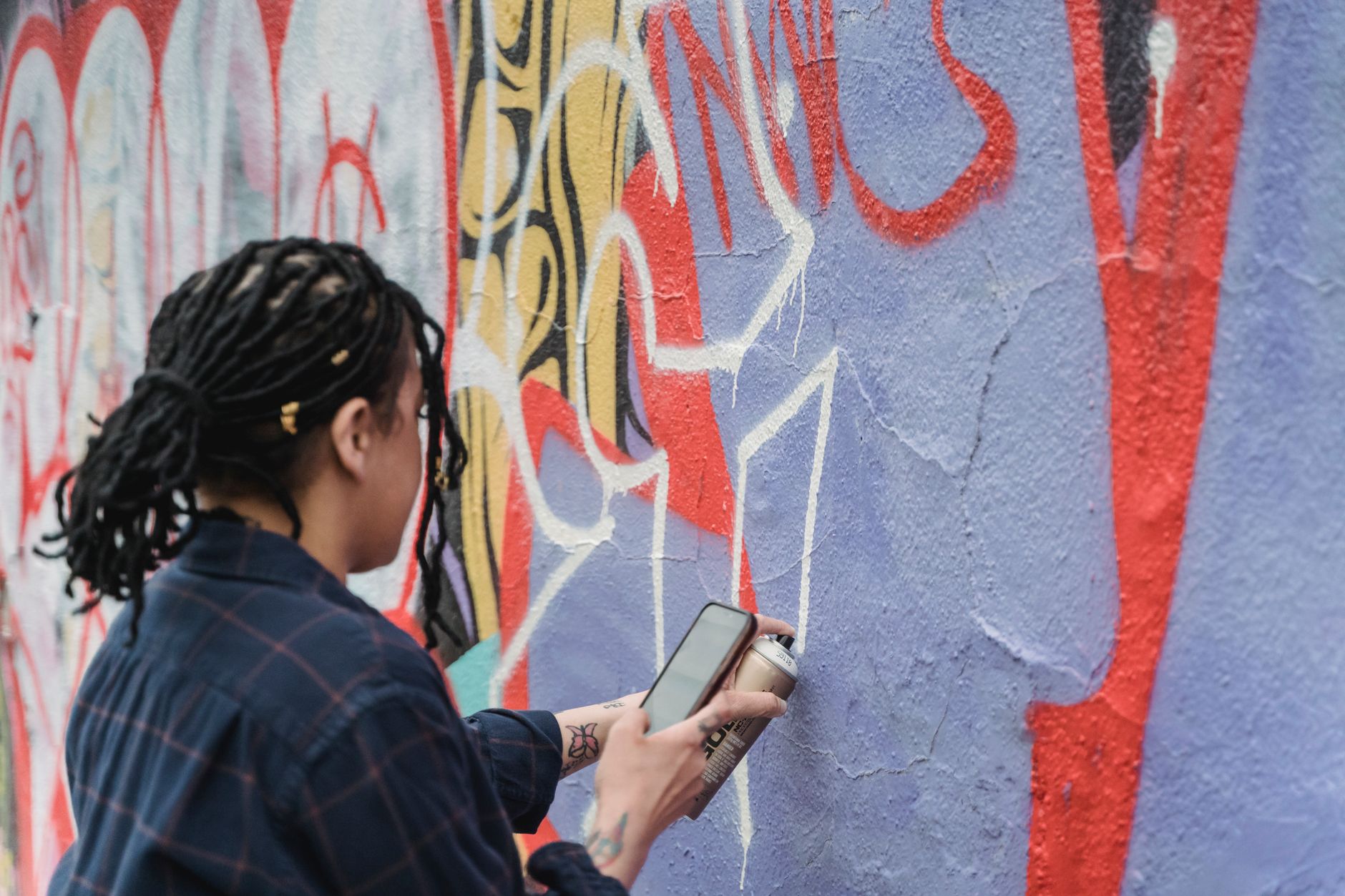
It is not a legal wall. The 2011 designation exempts property owners from receiving notices of violation; it does not legalise painting. The walls are private property and artists still need the owner’s permission. Turning up with a can is vandalism, not participation.
Access has changed. Ontario Line construction at Queen and Spadina has disrupted the usual approach, and the official advice is now to enter via McDougall Lane, off Richmond or Queen. Otherwise take the 501 Queen to Spadina, or the subway to Spadina station and the 510 south. Start at Rush Lane and Portland and walk east, and go early — before 8am if you want it without parked cars, because this is a working service lane. No stairs, but the surface is bumpy.
Work worth finding: Toronto Tribute by Uber5000 at 169 Rush Lane, painted in summer 2017 — Gord Downie in a Jaws t-shirt, the CN Tower, raccoons and Rob Ford on one wall. The Truth Phone, a model phone booth in the four Medicine Wheel colours, addresses the uncovering of burials at former residential school sites. QUE ROCK painted two 2020 Front Line Heroes murals here incorporating Anishinaabe teachings, and Elicser, SKAM and Emmanuel Jarus all have catalogued work inside the box. The art rotates constantly; tour operators say no two tours are the same, and they are not exaggerating.
Underpass Park
In Corktown, under the Eastern Avenue and Richmond/Adelaide overpasses between Cherry Street and Bayview Avenue — not the Don Valley Parkway, as is often written. Enter from River Street, south of King. It opened on 2 August 2012, expanded in 2015, and Waterfront Toronto calls it the most extensive park ever built under an overpass in Canada: 1.05 hectares and 54 trees, designed by PFS Studio with The Planning Partnership.
The permanent work is Mirage by Paul Raff Studios, which bounces daylight through the space. The column murals are substantial: Multiplicity (2017) covers 13 pillars by Runt, GAWD and Aura; Troy Lovegates and Labrona painted nine pillars facing Lower River St in 2016; and a 2017 commission by Odinamaad, Chief Lady Bird, Dave Monday Oguorie and Philip Cote addresses Tkaronto as a meeting place. Add a playground, two basketball half-courts and a skatepark, all under cover — one of the better rainy-day options in the east end.
Landmark murals across the city
- Sean Martindale’s 32-storey phoenix (2013), Wellesley St E at Ontario St — among the tallest murals in the world, on the tower that burned in 2010.
- birdO’s 10-storey deer (2019), 1 St Clair Ave E — the only StART Monumental work on the map. birdO and Uber5000 are different artists, frequently confused.
- Ashbridges Bay Skatepark Graffiti Project (2019) — over 5,000 square feet, the largest of its kind in Canada, by Sight, Elicser, Ness Lee, Trevor Wheatley and a dozen more.
- Rise Above by Shepard Fairey (2014), behind the Gladstone House in Parkdale — the only surviving piece from his Toronto visit.
- Cycling is Elemental — 353 murals on the Richmond Street cycle-track barriers from Parliament to Bathurst, in Earth, Air, Fire and Water zones.
Clusters worth walking: Kensington Market has 28 catalogued works around 283 Augusta Ave and south, and the alley north of Queen between Lansdowne and Macdonnell holds Women Paint TO, including a mother-and-baby piece by Aura and Chief Lady Bird.
The Bentway and subway station art
The Bentway threads free public art through the concrete bents of the Gardiner Expressway. Petal and Stone by Rebecca Munce is a 10,000-square-foot mural of native Ontario flora running through 2027; the building is closed, so view it from the Strachan Avenue bridge walkway. Stanzie Tooth’s A Persistent Crossing wraps the Staging Grounds towers to spring 2027. The skate trail at 250 Fort York Blvd is a 220-metre figure-eight, fully accessible; take the 511 Bathurst.
TTC station art costs nothing beyond a fare and works well in bad weather. College has Charles Pachter’s Hockey Knights in Canada, nine Leafs facing nine Canadiens across the tracks; Union carries Stuart Reid’s 166 glass panels of sketched riders; Museum turns its platform columns into an Osiris figure, a Wuikinuxv house post and a Toltec warrior; Downsview has Panya Clark Espinal’s Spin, with a metal sphere you can actually turn. See our TTC guide for fares.
Street art tours and prices
Tour Guys runs the Graffiti Alley walk: 90 minutes, maximum eight people, Tuesday to Sunday at 2pm, meeting beside MEC at 300 Queen St W. It is sold three ways — from about C$39 direct, C$49 through GetYourGuide, or as a pay-what-you-feel departure where you pay a roughly $6 booking fee and tip the guide $10–$20.
Toronto Street Art Tours is C$42.80 for two hours, ages 6 up, maximum ten — and it does not cover Graffiti Alley. It walks the Dundas West corridor across as many as 30 pieces of wheat paste, yarn bombing and sticker art, which makes it the better choice if you have already done Rush Lane. Cancellation is 48 hours, no exceptions. Heritage Toronto runs 60-plus walks from May to November at $8 per person, though none is street-art specific. Free alternatives: the StART mural map, Jane’s Walk on the first weekend of May, and the Native Canadian Centre of Toronto’s free, fully accessible tour. More in our Toronto walking tours guide.
Toronto art events calendar 2026
Nuit Blanche (3–4 October 2026)
Saturday 3 October, 7pm, through to 7am on Sunday. Free, all night, city-wide, and this is the 20th anniversary edition, themed “Tomorrow’s Memories.” Since 2006 the festival has staged almost 1,800 installations by roughly 6,350 artists. Some projects stay up afterwards. Planning detail in our Nuit Blanche guide; official listings on the City of Toronto site.
Toronto Biennial of Art (25 September – 20 December 2026)
Things Fall Apart — twelve weeks of newly commissioned work across venues city-wide, opening 25 September. The strongest single argument for timing an art trip to autumn 2026.
Art Toronto (29 October – 1 November 2026)
Canada’s international fair, at the Metro Toronto Convention Centre North Building, with over 100 galleries plus installations and project spaces. Opening Night on Thursday 29 October benefits the McMichael Canadian Art Collection, and the Arte Sur section brings Latin American dealers. Opening Night sells separately from general days.
CONTACT Photography Festival and Doors Open (May)
CONTACT is annual, and 2026 was its 30th edition — city-wide, heavily public-facing, with large-format billboard installations you encounter without a ticket, plus a year-round gallery at 80 Spadina. Doors Open Toronto, the City’s free architecture weekend, traditionally falls on the last full weekend of May and opens more than 100 buildings, including studios and galleries that are otherwise private. Both dates shift, so check before planning around them. Between them they are the spring equivalent of the autumn stack.
Gallery openings and the September restart
Commercial openings run Thursday and Friday evenings, roughly 6–9pm, free and open to anyone — no invitation, no list. Artist-run centres tend to open Saturday afternoons instead. Because the St Helens and Dupont galleries cluster so tightly, a Thursday in mid-September often puts three or four openings within walking distance. The 2026 fall sequence: Onsite 2 September, Paul Petro 4 September, The Image Centre 9 September, Clint Roenisch 10 September, Thompson Landry 17 September, Nicholas Metivier 19 September, Mercer Union 26 September, MOCA 4 October.
Which art galleries Toronto should you actually visit?
- One afternoon, first visit: the AGO, Bau-Xi across the street, then five minutes to the Textile Museum — three very different collections inside 400 metres.
- One afternoon, no budget: 401 Richmond, then the 510 south to The Power Plant. Ten galleries plus a full institution, free.
- You already know contemporary art: the St Helens block — Daniel Faria, Clint Roenisch, Gallery TPW — then Cooper Cole and Franz Kaka if it is Thursday to Saturday.
- With kids: Underpass Park and The Bentway. Free, outdoors, and nobody has to be quiet.
- Rain: the ROM and Gardiner together at Queen’s Park, or the subway art route, which is entirely underground.
- Photography: Stephen Bulger, Gallery 44 at 401 Richmond, and The Image Centre from 9 September.
On timing: August is the worst month for Toronto galleries, and that is not a generalisation. Across summer 2026, Christie Contemporary, Paul Petro and Susan Hobbs went appointment-only, Daniel Faria closed 25 August to 5 September, Mercer Union and Xpace shut for summer break, Gallery 44 closed 15–31 August, and MOCA, The Image Centre, Onsite and the U of T Art Museum were all closed for installation.
The season restarts hard in September. Late September to early November 2026 is the peak window — fall openings, the Biennial from 25 September, Nuit Blanche on 3 October, MOCA reopening on 4 October and Art Toronto from 29 October all stack inside six weeks. See Toronto in fall for the wider picture.
Practical tips for art galleries Toronto
Hours: the rule that saves a wasted afternoon
Almost every Toronto commercial gallery is closed Sunday and Monday. The reliable window is Wednesday to Saturday, roughly midday to 5 or 6pm; Tuesday is a coin-flip and Saturday is the single best day. The tightest windows belong to Cooper Cole and Franz Kaka, Thursday to Saturday noon–5pm, and both are easy trip-ruiners. Sunday options are thin: Propeller, Koffler, the Distillery galleries, The Power Plant, MOCA once it reopens, the Gardiner and the Aga Khan. Remember that 401 Richmond closes as a building on Sundays.
Free art galleries Toronto: what costs nothing
Every commercial gallery here is free to walk into. They are shops, not museums — browsing carries no obligation and nobody will ask you to buy. YYZ, Prefix, Open Studio, the Art Museum at U of T and The Power Plant all publish “free” as policy. Add Onsite, all street art, all subway art, The Bentway and Underpass Park, and you can spend three days on Toronto art without paying admission once. More in our free things to do in Toronto roundup.
Etiquette in commercial galleries
These are private businesses staffed by one or two people. Say hello — the silence is not hostility, it is a small office. You do not need to explain yourself or pretend to be a buyer. Do not block sightlines while someone photographs a work, and do not treat the room purely as a backdrop for portraits; that is what reliably annoys staff. Price lists sit at the desk and you may ask for one, but do not photograph it and do not wander into the back room. If you want to know about an artist, ask.
Photography and accessibility
Institutions publish their rules and they differ. MOCA prohibits flash, camera supports and selfie sticks. The Power Plant allows photography unless a sign says otherwise. Ticketed exhibitions sometimes ban it outright. In commercial galleries personal photos are generally tolerated, but ask at the desk and never use flash or a tripod. On access: The Power Plant has lift access to both levels, the Textile Museum lends a manual wheelchair free if booked ahead, and the Bentway skate trail is fully accessible. Converted industrial galleries on St Helens and Morrow vary, so call ahead if a step matters.
Combining gallery hopping with food and beer
The Queen West and St Helens corridor sits inside the Queen Street West dining strip, and the Distillery has more than 20 restaurants inside its pedestrian zone. In the west end there is a neat art-to-beer link: MOCA connects to the West Toronto Railpath by a path running past Henderson Brewing — see our craft breweries guide.
Five gallery walking routes with addresses
Route 1 — The St Helens loop (2 hours, 2.5 km)
Start at Dufferin station or the 505 Dundas. Stephen Bulger (1356 Dundas St W) → 7 min west → MKG127 (1445 Dundas St W) → 8 min northwest → Daniel Faria (188 St Helens Ave) → next door → Clint Roenisch (190 St Helens Ave) → 2 min south → Gallery TPW (170 St Helens Ave) → 10 min north → Mercer Union (1286 Bloor St W), finishing at Lansdowne station. Best on a Saturday.
Route 2 — 401 Richmond and downtown (2–3 hours)
Osgoode station, or the 510 Spadina. 401 Richmond St W → 10 min northwest → Bau-Xi (340 Dundas St W) → the AGO across the road → Onsite Gallery (199 Richmond St W) and the Textile Museum (55 Centre Ave) → east on the 504 or 505 to Nicholas Metivier (190 Richmond St E) and the Distillery District. Not on a Sunday: 401 Richmond is shut.
Route 3 — Yorkville blue-chip (1 hour, 1 km, flat)
Bay station, exit to Yorkville Ave. Hazelton Avenue first — Gevik (12), Miriam Shiell (14A), Loch (16), Mira Godard (22), all inside 100 metres → 8 min west → Odon Wagner (196 Davenport Rd). Then 12 minutes south to the Gardiner Museum at 111 Queen’s Park, free after 4pm on Wednesdays, with the ROM opposite.
Route 4 — Junction Triangle (1.5 hours, from 4 October only)
Lansdowne station or UP Express to Bloor. MOCA (158 Sterling Rd) → 6 min → Patel Brown (21 Wade Ave) → 12 min north → Cooper Cole (1134 and 1136 Dupont St) → 8 min west → Franz Kaka (1485 Dupont St, entering at 300 Campbell Ave). Thursday to Saturday afternoons only, because the last two open no other days.
Route 5 — Street art crawl (2 hours)
Osgoode, or the 510 south. Graffiti Alley — start at Rush Lane and Portland, walk east, entering via McDougall Lane during the Ontario Line works → This Is Paradise at 408 Queen St W → Keep Going by Ben Johnston and Trevor Wheatley on the south wall of 101 Spadina Ave → Uniform Measure/STACK, Stephen Cruise’s bronze thimble at Spadina and Richmond → 401 Richmond. Extend west on the 504 to The Bentway, or east to Underpass Park.
Art galleries Toronto FAQ
Is the AGO free on Wednesdays?
Only on the first Wednesday of the month, 6–9pm, and you should book the free ticket online in advance. Every other Wednesday the gallery simply stays open late, to 9pm, at the normal $30 adult price. Ontario residents under 25 get in free any day with ID.
Is MOCA Toronto open in 2026?
Not right now. MOCA is closed for installation and reopens on 4 October 2026 with exhibitions by Delcy Morelos and Bharti Kher running to 14 February 2027. When it is open, Floor 1 is free to everyone and full admission is $14.
Can I paint in Graffiti Alley?
No. The 2011 municipal-significance designation only exempts property owners from receiving violation notices; it does not make the lane a legal wall. The walls are privately owned and artists need the owner’s permission. Painting without it is vandalism under the same bylaw as anywhere else in Toronto.
How much are Toronto street art tours?
Tour Guys’ 90-minute Graffiti Alley walk runs from about C$39 direct or C$49 through GetYourGuide, with pay-what-you-feel departures where you pay a roughly $6 booking fee and tip the guide. Toronto Street Art Tours charges C$42.80 for two hours on the Dundas West corridor. Heritage Toronto’s neighbourhood walks are $8.
What day should I go gallery-hopping?
Saturday. Nearly every commercial gallery and artist-run centre here opens Wednesday to Saturday, and Saturday is the only day they are reliably all open at once. Thursday evening is the alternative if you would rather catch openings than quiet rooms. Avoid Sunday and Monday for commercial galleries entirely.
Are Toronto galleries free?
All commercial galleries are, and so are The Power Plant, Onsite, the Art Museum at U of T and every tenant gallery at 401 Richmond. Only the ticketed institutions charge — the AGO at $30, the Textile Museum at $15, MOCA at $14, plus the ROM, Gardiner and Aga Khan. Street art, subway art, The Bentway and Underpass Park cost nothing.
How many days do I need?
Two full days is comfortable — one downtown for the AGO, Bau-Xi, the Textile Museum, Onsite and 401 Richmond, and one in the west end for St Helens, Dupont and the Sterling Road murals. Add half a day for the street art crawl and Underpass Park, or a third day during the Biennial.
More Toronto art to see
Galleries and murals sit alongside the museums in our Toronto arts and culture guide. From here the natural next stops are the AGO in detail, the Gardiner Museum, the Aga Khan Museum, the Distillery District and Nuit Blanche — or the broader list of things to do in Toronto. Get the day of the week right, walk one of the routes above, and an afternoon will show you more than a week of wandering.