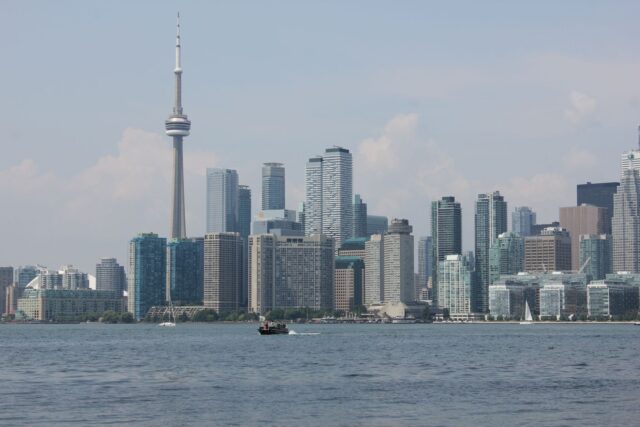
There is a specific moment, about eight minutes after the boat clears the slip at Queens Quay, when the city stops being a series of streets and becomes a single object. The CN Tower stops looming and starts belonging. The condo wall along the waterfront resolves into a skyline. You can see the whole of downtown at once, which you cannot do from anywhere on land except the top of the tower itself, and you are paying rather less for the privilege. That view is the honest case for a Toronto harbour cruise, and it holds up even though the harbour itself is small, industrial at the edges and busier with ferries than with anything romantic.
This guide sorts the options: the hour-long narrated sightseeing boats, the tall ship that has been sailing out of this harbour for decades, the brunch and dinner cruises, the party boats, and the free-ish alternative that gives you eighty per cent of the same view for a fraction of the price. Prices were checked in September 2026 and are in Canadian dollars — treat them as the right order of magnitude, because the dinner-cruise operators in particular reprice by season and by day of the week.
At a Glance: What Each Type of Cruise Costs
| Type | Typical price (adult) | Duration | Season | Best for |
|---|---|---|---|---|
| Narrated sightseeing cruise | $35–$45 | 45–60 min | May–Oct | First visit, short on time |
| Tall Ship Kajama day sail | $42 | 2 hours | May–Sept | Anyone who likes boats |
| Tall Ship Kajama evening sail | $47 | 2 hours | May–Sept | Sunset, couples |
| Brunch or lunch cruise | $70–$110 | 2–2.5 hours | May–Oct | Family occasions |
| Dinner cruise | $120–$190 | 3 hours | May–Oct | Celebrations |
| Party or DJ cruise | $40–$80 | 3–4 hours | Jun–Sept | Groups, late nights |
| Toronto Islands ferry (the alternative) | Single-digit dollars | 15 min each way | Year-round | The view on a budget |
The Kajama figures are exact — they come from the operator’s own schedule page, checked in September 2026. The rest are ranges, because the big operators publish prices per sailing rather than as a rate card, and a Saturday dinner cruise in July costs considerably more than the same boat on a Tuesday in May.
Where the Boats Actually Leave From
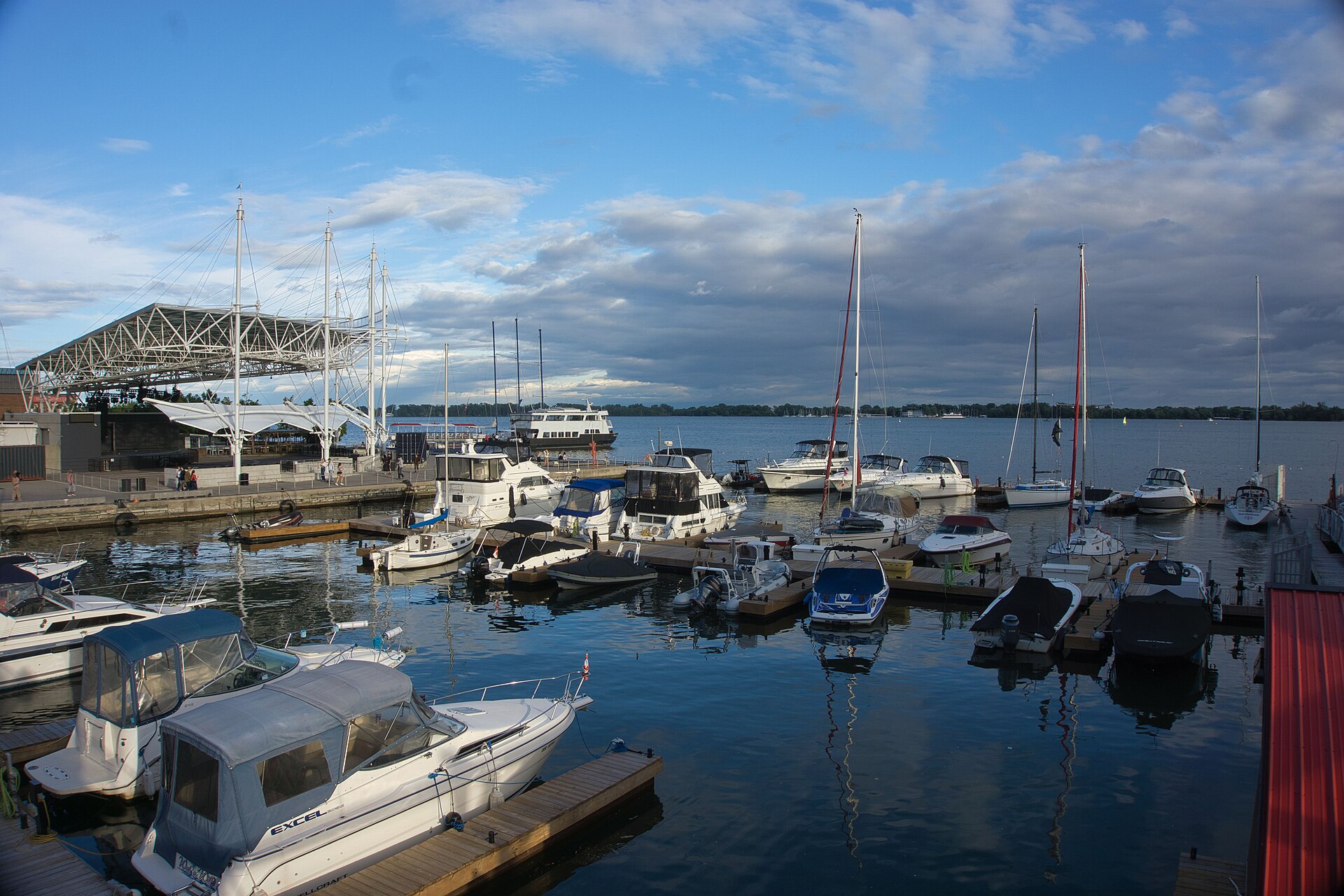
Nearly every commercial boat in Toronto leaves from the strip of Queens Quay West between York Street and Lower Spadina — the Harbourfront Centre stretch. That is a genuine convenience: the 509 and 510 streetcars run along Queens Quay from Union Station, the walk from Union through the PATH and out at the ferry terminal takes about twelve minutes, and if you get your operator’s dock wrong you are rarely more than five minutes from the right one.
Three practical notes. First, the docks look alike, and the ticket you bought online will name a slip number that means nothing until you are standing in front of it — allow twenty minutes’ slack. Second, the Toronto Islands ferry leaves from the Jack Layton Ferry Terminal at the foot of Bay Street, which is not where the cruise boats are and is a different queue entirely. Third, the Billy Bishop airport ferry at the foot of Bathurst is a third thing again; people confuse all three constantly. Our Toronto waterfront guide maps the whole strip if you want your bearings before you arrive.
Parking down here is expensive and the lots fill on summer weekends. Take the streetcar. The TTC guide covers how the waterfront routes connect to the subway at Union.
The Types of Toronto Harbour Cruise
The one-hour narrated sightseeing cruise
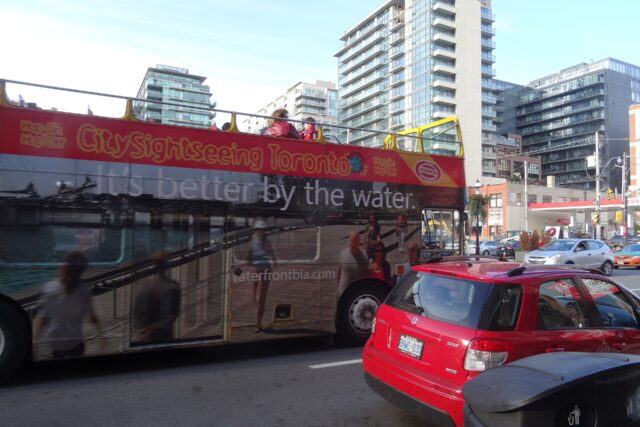
The default product, and the one most visitors book. A covered vessel takes 100 to 400 passengers out through the Western Gap or the Eastern Gap, along the Islands, and back, with a guide narrating over a PA system. It lasts forty-five to sixty minutes, costs $35–$45, and runs several times a day from roughly May to October.
It is fine. The narration ranges from genuinely informative to a recitation of building heights, the top deck is the only place worth sitting, and the boat spends a meaningful fraction of the hour manoeuvring rather than cruising. If you have ninety minutes and want to see the city from the water, book it and enjoy it. If you have half a day, one of the options below is a better use of the money.
The tall ship
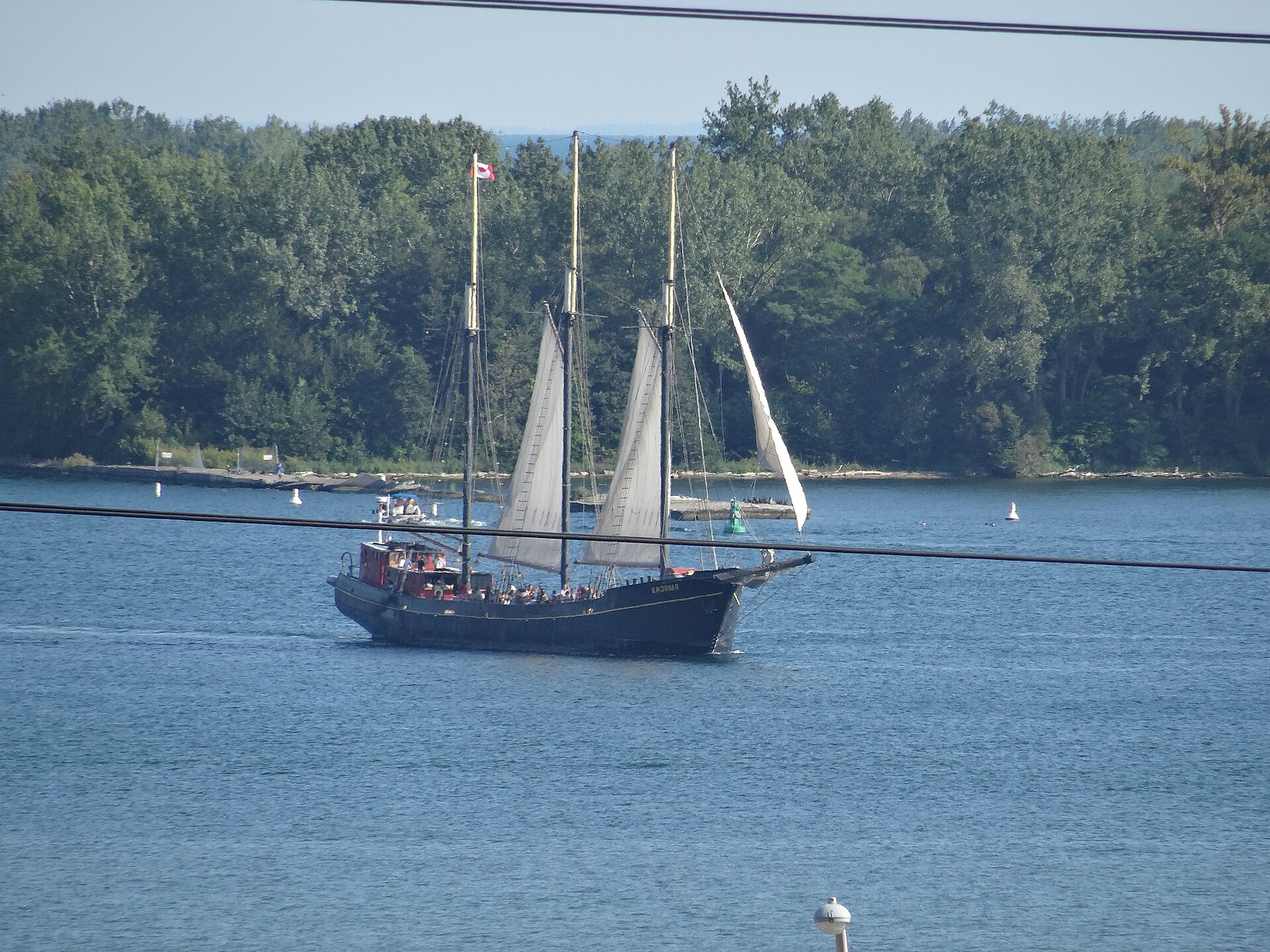
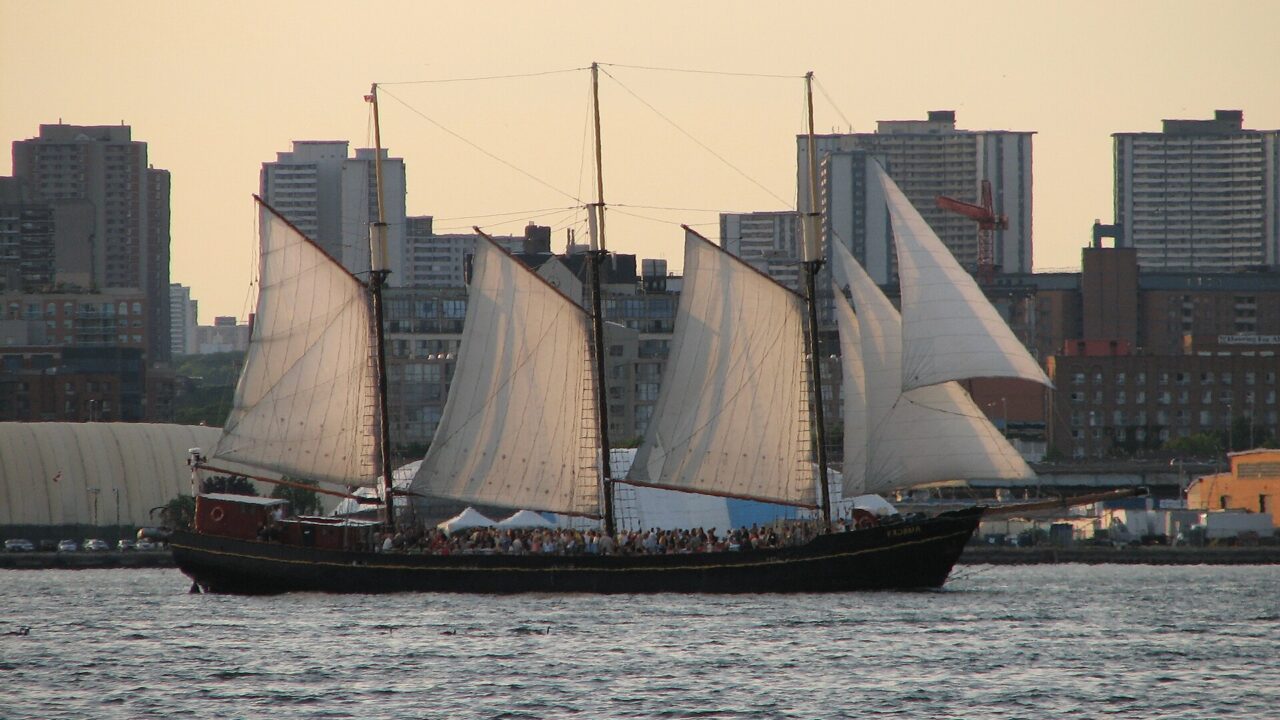
The Kajama is a three-masted schooner built in Germany in the 1930s that has spent decades working Toronto’s harbour, and it is the most distinctive thing on the water here. Day sails cost $42 for adults, $38 for seniors 65 and over, and $30 for children aged five to fifteen. Evening and sunset sails are $47, $43 and $35 respectively. The whole thing runs two hours: thirty minutes of boarding, then ninety minutes under way. The season runs from the beginning of May to the end of September.
What makes it worth the extra over a sightseeing boat is that it is an actual sailing vessel. On a day with wind, the crew set the sails and shut the engine down, and for twenty minutes you are moving across Lake Ontario on canvas with the skyline behind you. Passengers are usually invited to help haul on a line, which children love and which adults pretend not to. There is a licensed bar on board. Seating is bench-and-deck rather than table service, so bring a jumper — the lake is consistently cooler than the city, and a July evening on the water can genuinely be chilly.
The honest caveat: on a still day, the sails stay furled and you are on a very charming diesel boat. Nobody will refund you for the weather, and no operator can promise wind.
Brunch and lunch cruises
Two to two and a half hours, buffet service, table seating, indoor decks with big windows and an outdoor deck up top. Prices typically land between $70 and $110 a head. The food is buffet food on a boat — competently done, rarely memorable, and priced for the setting rather than the kitchen. Where these earn their keep is family occasions: a birthday with grandparents, a group that includes people who cannot stand for an hour, a rainy day when the sightseeing boat’s top deck is closed anyway.
Dinner cruises
Three hours, plated or buffet dinner, usually live music or a DJ, and departure timed so that you are on the water for sunset. Reckon on $120–$190 per person before drinks, and considerably more for a premium sailing on a summer Saturday. This is the format most people mean when they say “dinner cruise”, and it is the one where expectations most often outrun reality: you are eating a hotel-standard meal on a moving platform with a spectacular view, and whether that is worth $160 depends entirely on the occasion.
For an anniversary or a proposal, it works — the sunset over the Western Gap with the skyline lit is genuinely lovely, and our romantic things to do in Toronto guide has it among the shortlist. For an ordinary Tuesday, you can eat much better food at a rooftop restaurant with a comparable view and keep sixty dollars.
Party and DJ cruises
Late-evening sailings, three to four hours, DJ, licensed bar, a crowd in its twenties and thirties. Tickets are cheap ($40–$80) because the operators make their money at the bar. They are exactly as good or as bad as the crowd on the night, they sell out for long weekends, and the queue to board is often longer than the queue for anything else on the waterfront. If this is your thing, our things to do in Toronto at night guide covers the alternatives on shore.
Private charters and small boats
Small operators run six- to twelve-passenger boats — including some genuinely handsome wooden launches — for private hire by the hour. For a group of eight splitting the cost, an hour on a private boat at sunset often lands within range of what you would each pay for a dinner cruise, and it is a far better experience. Book several weeks ahead for summer weekends.
What You Actually See from the Water
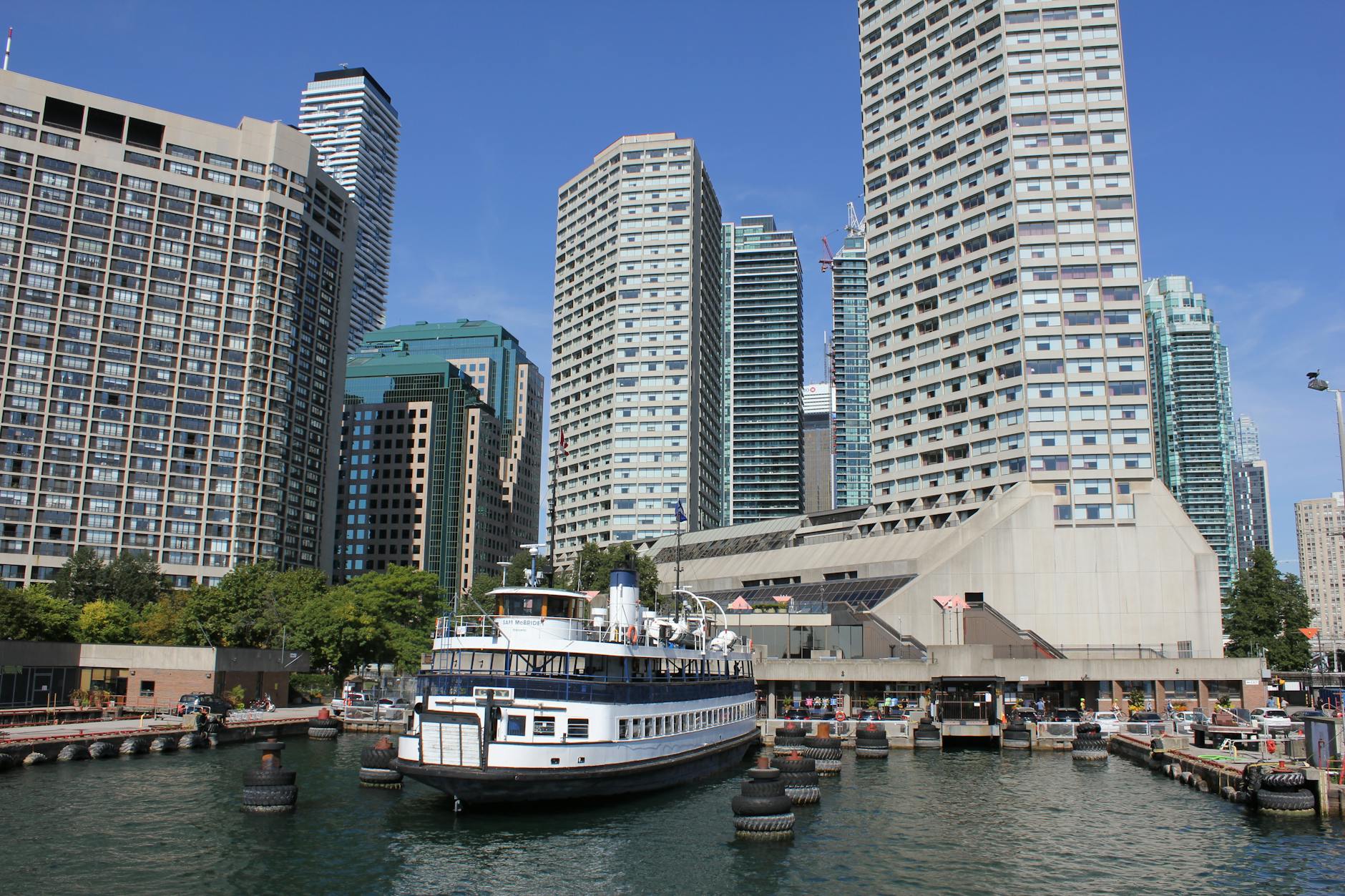
The standard loop takes you out past the Toronto Islands and back, and the highlights are more interesting than the narration usually suggests.
- The skyline itself. Best in the last hour before sunset, when the west-facing glass goes gold. This is the photograph you came for.
- The Islands shoreline — a genuinely wooded, low, sandy edge that looks nothing like a city park and everything like cottage country, which is the surprise for most first-time visitors. Our Toronto Islands guide covers going ashore properly.
- Billy Bishop Toronto City Airport, where turboprops land on a runway that ends at the water. From a boat you get an angle on this that you cannot get anywhere else, and the timing is entertaining.
- The Western and Eastern Gaps, the two channels that make the Islands islands. The Eastern Gap opens onto the working port, which is less pretty and more interesting.
- The Redpath sugar refinery, still operating on the central waterfront, occasionally with a lake freighter alongside unloading raw sugar. It is the last visible piece of Toronto’s industrial harbour and worth a look.
- Ontario Place and the Exhibition grounds to the west, and the old Canada Malting silos, which are the most photogenic ruin in the city.
What you do not see, and should not expect: open water. Toronto’s harbour is enclosed by the Islands, so most of the cruise happens in what is effectively a large sheltered bay. That is good news if you are prone to seasickness and mildly disappointing if you wanted the feel of a Great Lake.
The Cheap Alternative Nobody Mentions
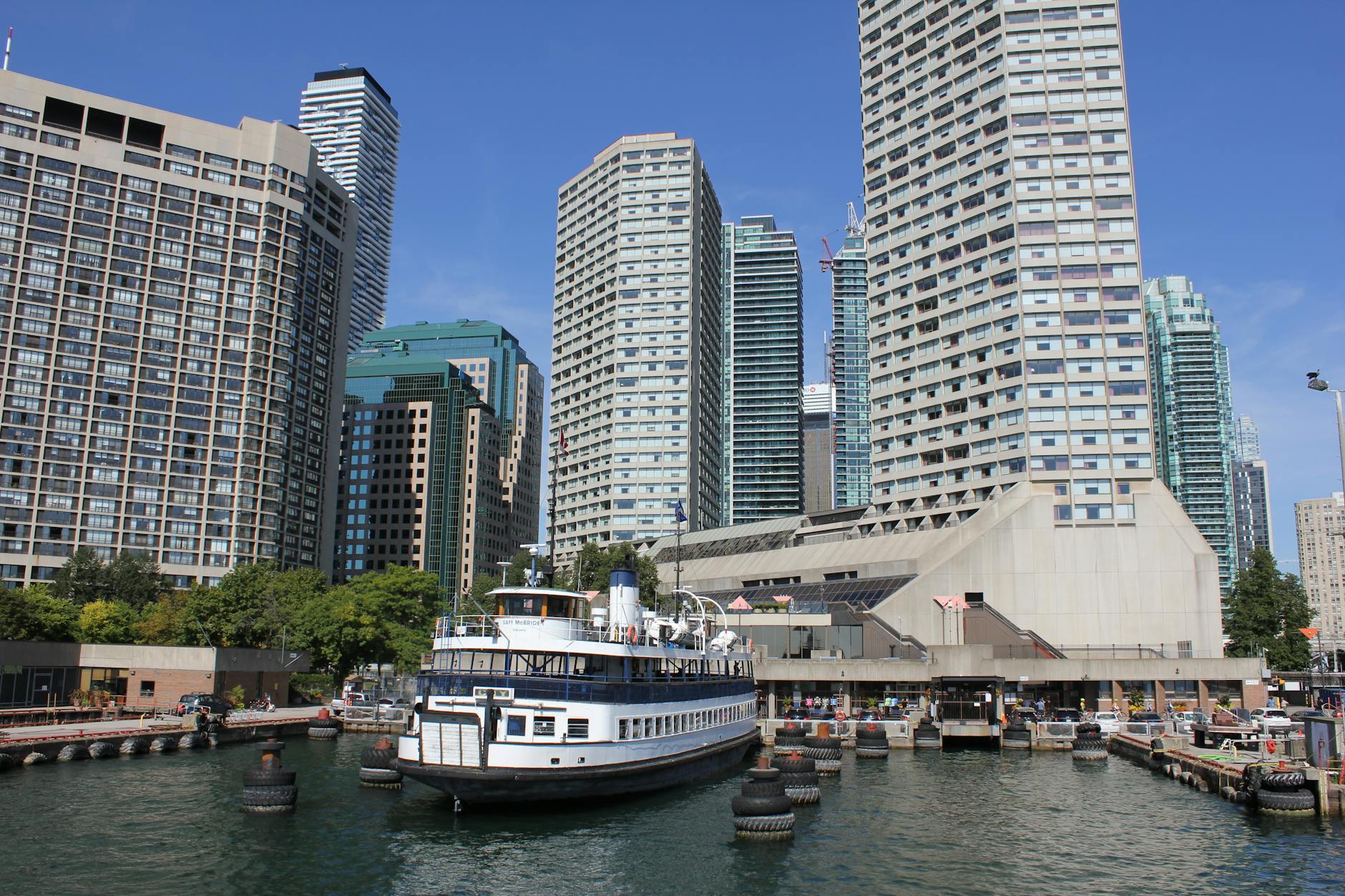
The Toronto Islands ferry costs a few dollars return, runs year-round, takes about fifteen minutes each way, and crosses exactly the stretch of water that produces the postcard skyline view. Stand at the stern on the outbound trip and you get the same photograph that people are paying $40 for on the sightseeing boat.
What you do not get is narration, a bar, a top deck with seats, or a route that goes anywhere except Ward’s Island, Centre Island or Hanlan’s Point. What you do get is a whole afternoon on the Islands attached to it, which is a far better day than an hour on a tour boat. If your budget is tight or your interest in the harbour is really an interest in the view, take the ferry, walk the Islands, and put the saved money into dinner.
The honest version of the recommendation: book a harbour cruise if you specifically want to be on a boat, want the narration, or want the occasion. Take the ferry if you want the view. Both are legitimate; only one of them is sold to you.
Season, Weather and When to Book
| Period | What’s running | Notes |
|---|---|---|
| May | Everything starts; Kajama opens | Cheapest, coldest, least crowded |
| June | Full schedule | Long evenings, best sunset sailings |
| July–August | Peak; multiple daily departures | Book ahead; hot, hazy, busy |
| September | Full schedule to month end | Best light of the year on the water |
| October | Reduced; many operators wind down | Check before travelling for it |
| November–April | Ferries only | The harbour ices in some winters |
September is quietly the best month. The lake is at its warmest, the light is at its most flattering, the school holidays are over and the boats are still running a full schedule. Our Toronto in summer guide covers the waterfront season more broadly, and best time to visit Toronto sets it against the rest of the year.
Weather policy varies by operator and is worth reading before you book. Most sail in rain and cancel only for high wind or lightning, and most offer a reschedule rather than a refund. Fog is the underrated risk: a foggy morning in the harbour will not cancel your cruise but will comprehensively remove the view you paid for.
Which Cruise for Which Traveller
| You are | Book | Why |
|---|---|---|
| On your first visit, one day in town | Islands ferry | Same view, a fraction of the cost, better afternoon |
| Travelling with children | Tall ship day sail | They can help haul a line; two hours is the right length |
| Celebrating something | Dinner cruise or private charter | The occasion is what you’re buying |
| A couple wanting sunset | Kajama evening sail at $47 | Best value romance on the water |
| A group of eight or more | Private charter | Per head it beats a dinner cruise |
| Short on time between meetings | One-hour sightseeing cruise | Departs frequently, ends on time |
| Wanting to be on the water yourself | Kayak or canoe | See our kayaking in Toronto guide |
What Is Not Worth It
- The sightseeing cruise on a grey day. The whole product is a view. If the ceiling is low and the skyline is in cloud, move your booking — most operators will let you.
- Paying extra for “premium seating” on a large vessel. On almost every boat here the best place to be is standing at the rail on the top deck, which is free.
- A dinner cruise booked for the food. Book it for the occasion and the view, and adjust your expectations of the kitchen accordingly.
- Any cruise as a substitute for the Islands. An hour circling the Islands is not the same as an afternoon on them, and the ferry costs less than a coffee.
- Combination tickets that bundle a harbour cruise with attractions you were not going to visit. Do the arithmetic first; our Toronto CityPASS guide explains when bundles actually pay.
- Booking the last sailing in October without checking. Published end-of-season dates move with the weather and the bookings, and a cancelled late-season sailing is a wasted trip down to the water.
Practical Tips
- Dress one layer warmer than the city. Lake Ontario keeps the harbour several degrees cooler, and it is windier out past the Gap than it is on Queens Quay.
- Arrive 30 minutes early for anything with assigned seating, and 20 minutes for anything without. Boarding closes before departure and boats leave on time.
- Sit or stand on the port side outbound through the Western Gap for the best skyline angles, and swap sides on the way back.
- Book the sunset slot in June, when the sun sets late enough that an evening sail is genuinely an evening rather than an early night.
- Bring identification if you intend to drink. Ontario’s legal drinking age is 19 and licensed vessels check.
- Tipping is customary on food-service cruises at restaurant rates unless a gratuity is already included; the Toronto tipping guide covers the norms.
- Accessibility varies enormously. The large modern vessels are generally step-free on the main deck; the tall ship, by its nature, is not. Ask the operator directly rather than trusting a website icon.
- If you are prone to motion sickness, the harbour is sheltered and the ride is usually flat, but the stretch outside the Gap can pick up a chop on a windy day.
A Short History of Why the Harbour Looks Like This
Ninety seconds of context makes the cruise noticeably more interesting, and it is context most onboard narration skips.
The shoreline you are looking at is not the original one. When York was founded in the 1790s, Lake Ontario came up roughly to Front Street — which is why the street is called Front Street, and why Union Station, built on what is now firmly inland, was once close to the water. Everything south of there is landfill, dumped progressively through the nineteenth and twentieth centuries to create dock space for a working port. The Toronto Islands were not islands either: they were a sandy peninsula curving out from the east end until a storm in 1858 cut through it and created the Eastern Gap, which the city then obligingly dredged and kept open.
That history explains the shape of the modern waterfront. The port moved east to the Port Lands as ships got bigger, leaving the central docks to be rebuilt as condominiums from the 1970s onward — a process that is still going, which is why the skyline behind your boat has cranes on it in every photograph taken in the last twenty years. The Gardiner Expressway, elevated along the old dock line, is the seam between the old city and the new waterfront, and it is the single most argued-about piece of infrastructure in Toronto.
Two survivors are visible from the water and worth pointing out to whoever you are with. The Redpath sugar refinery still takes raw sugar off lake freighters at a dock on the central waterfront, an actual working industry among the condo towers. And the Canada Malting silos at Bathurst Quay have stood empty since 1987, a row of concrete cylinders that photograph beautifully and that the city has spent decades deciding what to do with. Neither is on any tour itinerary. Both tell you more about Toronto than the building heights do.
Booking: Where to Buy and What to Watch For
Almost every boat on this waterfront sells through three channels: its own website, the large online activity marketplaces, and the kiosks along Queens Quay. The operator’s own site is usually the cheapest and always the easiest to change; the marketplaces are convenient if you are bundling several activities and occasionally run genuine discounts; the kiosks are for people who decided twenty minutes ago, and they price accordingly.
- Book direct for anything with a fixed date. Rescheduling through a third party takes days and sometimes cannot be done at all, which matters when the variable you are betting on is the weather.
- Read the cancellation window. Twenty-four hours is standard; some dinner cruises want seventy-two, and a few premium sailings are non-refundable outright.
- Watch the fine print on “sunset” sailings. Sunset in Toronto moves by more than three hours between June and October, and a September departure billed as a sunset sail may be finishing well after dark.
- Check what is included. Some brunch cruises include a drink, most do not. Some dinner cruises include gratuity, most do not. The advertised price is frequently not the paid price.
- Group rates are real. Most operators discount at ten or twelve passengers, and none of them advertise it prominently. Ask.
If you are assembling a full day around the boat, the waterfront rewards it: the Islands in the morning, a cruise in the late afternoon and dinner on Queens Quay makes a genuinely good day out of an area that many visitors write off after a single walk along the boardwalk. Our things to do in Toronto guide sets it against the rest of the city.
Frequently Asked Questions
How much does a Toronto harbour cruise cost?
A one-hour narrated sightseeing cruise typically runs $35–$45 per adult. The Tall Ship Kajama charges $42 for a day sail and $47 for an evening sail. Brunch and lunch cruises run $70–$110, and dinner cruises $120–$190 before drinks.
Where do harbour cruises leave from?
Almost all of them depart from Queens Quay West along the Harbourfront Centre stretch, between roughly York Street and Lower Spadina. The 509 and 510 streetcars run there from Union Station, and it is a twelve-minute walk from Union on foot.
When is the cruise season in Toronto?
Most operators run from May to October, with peak schedules in July and August. The Tall Ship Kajama sails from the beginning of May to the end of September. Only the Toronto Islands ferries run year-round.
Is a harbour cruise worth it in Toronto?
It is if you want to be on a boat, want the narration, or are marking an occasion. If you simply want the skyline view, the Toronto Islands ferry crosses the same water for a few dollars and gives you an island to explore at the other end. Be honest with yourself about which one you want.
What is the best cruise for families with children?
The Tall Ship Kajama day sail. Two hours is the right length, children pay $30, the crew usually invite passengers to help with the lines, and an actual sailing ship holds attention in a way a narrated tour boat does not.
Can you see the CN Tower from the boat?
Yes — it dominates the skyline for the entire cruise, and the harbour is the best place in the city to photograph it in context rather than from directly beneath. Our CN Tower guide covers going up it instead.
Do cruises run in the rain?
Most sail in light rain and cancel only for high wind or lightning, usually offering a reschedule rather than a refund. Check your operator’s policy before booking, and consider moving your booking yourself if the forecast is genuinely poor — the entire product is the view.
How long is a Toronto harbour cruise?
Sightseeing cruises run 45 to 60 minutes. The tall ship sails for two hours including boarding. Brunch and lunch cruises are two to two and a half hours, and dinner cruises about three.
Is there a bar on board?
On most vessels, yes, including the tall ship. Prices are what you would expect from a captive audience on a boat. Ontario’s legal drinking age is 19 and identification is checked.
Can you cruise to Niagara Falls from Toronto?
Not directly — there is no scheduled passenger boat service between the two. Niagara is a road or rail trip; see our Niagara Falls day trip guide. The Hornblower-style boats at the Falls are a separate thing entirely, run at the Falls themselves.
Related Toronto Guides
- Best Tours in Toronto — the pillar guide to every kind of tour in the city.
- Toronto Waterfront Guide — the whole Queens Quay strip, dock by dock.
- Toronto Islands Guide — ferries, beaches and which island to pick.
- Kayaking in Toronto — paddling the harbour and the Island lagoons yourself.
- Romantic Things to Do in Toronto — where the sunset sail fits on the shortlist.
- Toronto in Summer — the waterfront at its best.
- Things to Do in Toronto at Night — after the last boat is back.
Photo Credits
The Kajama under sail at sunset: Tallship in Toronto Harbour by Xavier Snelgrove, CC BY-SA 2.5, via Wikimedia Commons.
Boats moored at Harbourfront: Boats docked at Toronto Harbourfront, 2026 (01) by Chicken4War, CC BY-SA 4.0, via Wikimedia Commons.
The Kajama sailing past the Islands: Tall ship in Toronto Harbour, 2015 09 04 by OldYorkGuy, CC BY-SA 3.0, via Wikimedia Commons.