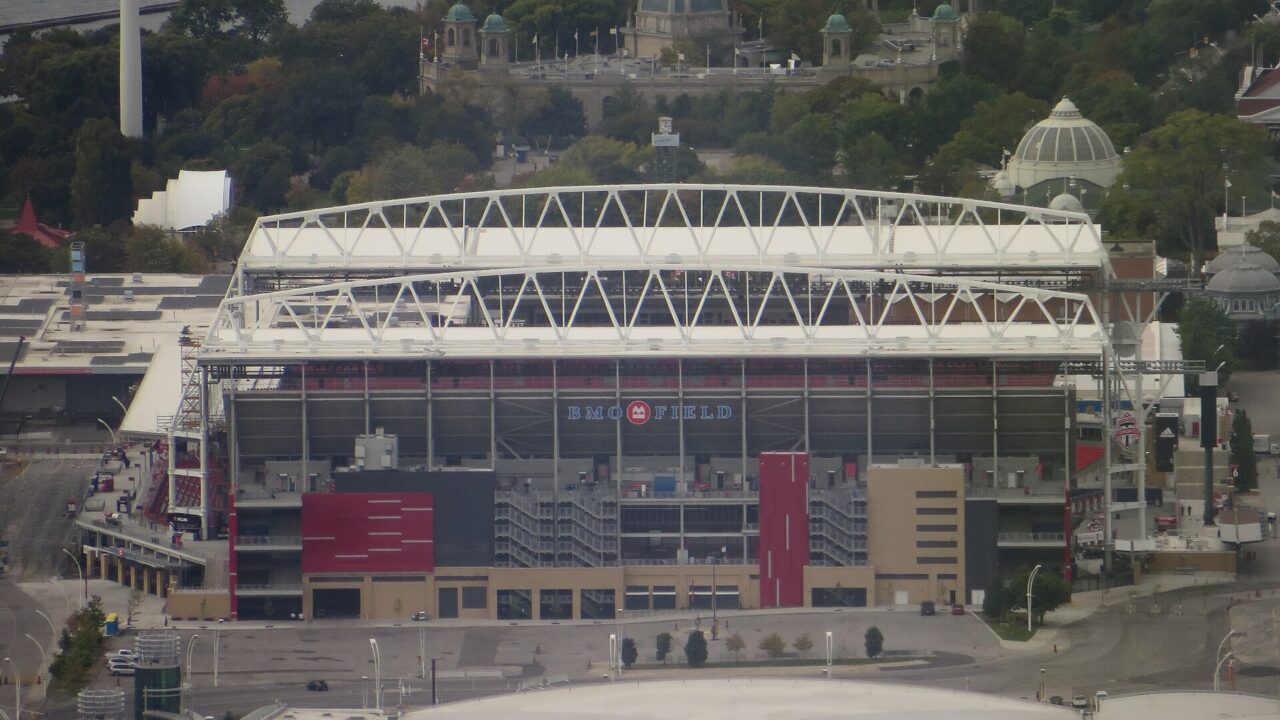
Get off the 511 streetcar at Exhibition Loop about seventy minutes before kick-off and you will hear the stadium before you see it. The south end starts early — drums, a couple of hundred voices, a flag the size of a tennis court going up over the heads of people who have been standing since the gates opened. Then you come round the corner past the Coca-Cola Coliseum and there it is, low and red and squeezed between the lake and the Exhibition grounds. BMO Field is not a grand stadium and it does not pretend to be one, but it is the loudest building in Toronto sport, and on a warm evening with a full south stand it is genuinely one of the better nights out in the city.
This guide covers who plays there and when, how to get to the ground without a car, where to sit and where not to, the bag and payment rules that catch people out at the gate, what tickets realistically cost, and what to do in the two hours either side of the match. Details were checked in September 2026; prices are in Canadian dollars and should be treated as the right order of magnitude, and the seating configuration in particular is in flux this year for reasons explained below.
At a Glance
| Detail | What to know |
|---|---|
| Address | 170 Princes’ Boulevard, Exhibition Place, Toronto |
| Teams | Toronto FC (MLS), Toronto Argonauts (CFL) |
| Normal capacity | Around 28,000 |
| Nearest rail | Exhibition GO, one stop from Union |
| Nearest streetcar | 509 Harbourfront and 511 Bathurst to Exhibition Loop |
| Payment | Fully cashless — cards and mobile only |
| Bags | Clear bags to 30.5 × 16 × 30.5 cm, or a clutch under 16.5 × 11.5 cm |
| Ticket office | Opens 3 hours before the event |
| TFC season | Late February to October, plus playoffs |
| Argos season | June to November, plus playoffs |
Who Plays Here
Toronto FC
Toronto FC joined Major League Soccer in 2007 as the league’s first Canadian club, and BMO Field was built for them — the first purpose-built soccer stadium in Canada. The early years were famously bleak and famously well-attended, which set the tone: this is a club whose supporters showed up long before the team gave them a reason to. That changed in 2017, when TFC won the Supporters’ Shield, the Canadian Championship and MLS Cup in the same season, a treble that remains the high-water mark of Canadian club football.
The season runs from late February to October with playoffs after, which means the first few home matches are played in weather that is objectively unsuitable for football and that the regulars treat as a badge of honour. Bring more layers than you think you need to anything before May.
Toronto Argonauts
The Argos moved here from the Rogers Centre in 2016 and are a completely different proposition: an old, old club — founded in 1873, and among the oldest professional sports teams in North America — playing Canadian football on a wider, longer field in front of crowds that are smaller and considerably more relaxed than TFC’s. Grey Cup wins in 2017 and 2022 are recent enough to matter.
If you have never seen Canadian football, it is worth an evening: three downs instead of four, twelve players a side, a deeper end zone and a rule that rewards kicking the ball into it. The game is faster and more chaotic than the American version, tickets are cheaper, and nobody will mind if you have to ask what just happened. Our Toronto sports guide covers how the two codes fit alongside hockey, basketball and baseball in the city’s calendar.
Concerts and one-off matches
BMO Field also takes summer stadium concerts, international friendlies and Canadian national team fixtures. Those are the dates when the ground fills with people who do not usually come, the queues at the gates are longest and the transit crush afterwards is worst. Budget an extra half hour at both ends.
The World Cup Has Changed the Seat Map
This matters if you are booking for late 2026 or reading an older seating guide. Ahead of the 2026 FIFA World Cup, the stadium went through a redevelopment costing somewhere around $150 million. Roughly 17,756 temporary seats were added — about 10,000 at the north end and 7,000 at the south — taking capacity from just under 28,000 to 45,736 for the tournament, in which Toronto hosted six matches. That made it the smallest ground at the World Cup and the largest BMO Field has ever been.
The temporary stands come out again afterwards, returning the ground to its normal size of around 28,000. Some of the work is permanent: new luxury boxes and a rooftop patio holding a thousand people on the north side, and a centre-field lounge on the west. The practical consequence for a visitor in the back half of 2026 is simple — check the interactive seat map on the day you book rather than trusting a section number you read in an article, because section numbering and sightlines in the end zones are not what they were two years ago.
Getting to BMO Field
By GO train — the fastest option
Exhibition GO station is one stop west of Union on the Lakeshore West line, roughly seven minutes, and the platform is a five-minute walk from the stadium. On event days GO usually runs extra service, and the post-match crush is handled better here than anywhere else. If you are coming from anywhere on the Lakeshore corridor, this is comfortably the best way in.
By streetcar
The 509 Harbourfront runs from Union Station along Queens Quay to Exhibition Loop; the 511 Bathurst runs south from Bathurst station on Line 2 and terminates at the same loop. Both drop you a two-minute walk from the ground. The 509 is the more pleasant ride and the 511 is usually the faster one from the Bloor Street area. Either way, tap a PRESTO card or a contactless card — our PRESTO guide explains the fare system, and the TTC guide covers the streetcar network generally.
After the final whistle, the loop backs up badly. If you are not in a hurry, walk ten minutes east to the Princes’ Gates and pick up the streetcar there, or walk north into Liberty Village and get the 504 King from Dufferin — both beat standing in a queue of four thousand people.
On foot
From Liberty Village it is a fifteen-minute walk over the Strachan Avenue or Dufferin Street bridges. From the Fort York area, twenty minutes. From downtown proper, about forty-five minutes along the Martin Goodman Trail — pleasant on a summer evening, less so in March. Our Liberty Village and King West guide covers the neighbourhood you will be walking through and where to eat in it.
Driving and parking
Do not, if you can avoid it. Exhibition Place has lots and they are expensive on event days, and the exit onto Lake Shore Boulevard after a sell-out takes as long as the walk to Union would have. If you must drive, book a spot in advance through a parking app and park north of the tracks in Liberty Village rather than inside the grounds — you will pay less and get out faster.
Where to Sit
| Area | Character | Roof? | Best for |
|---|---|---|---|
| South end | Supporters’ sections — standing, drums, singing for 90 minutes | Partial | Atmosphere above all else |
| West stand (sideline) | Main stand, best sightlines, most expensive | Yes | Watching the football properly |
| East stand (sideline) | Good sightlines, cheaper than west, sun in your eyes early | Yes | Best value for a neutral |
| North end | Behind the goal, families, quieter | Partial | Children, first-timers |
| Corners | Cheapest seats in the ground | Varies | Budget, and you still see everything |
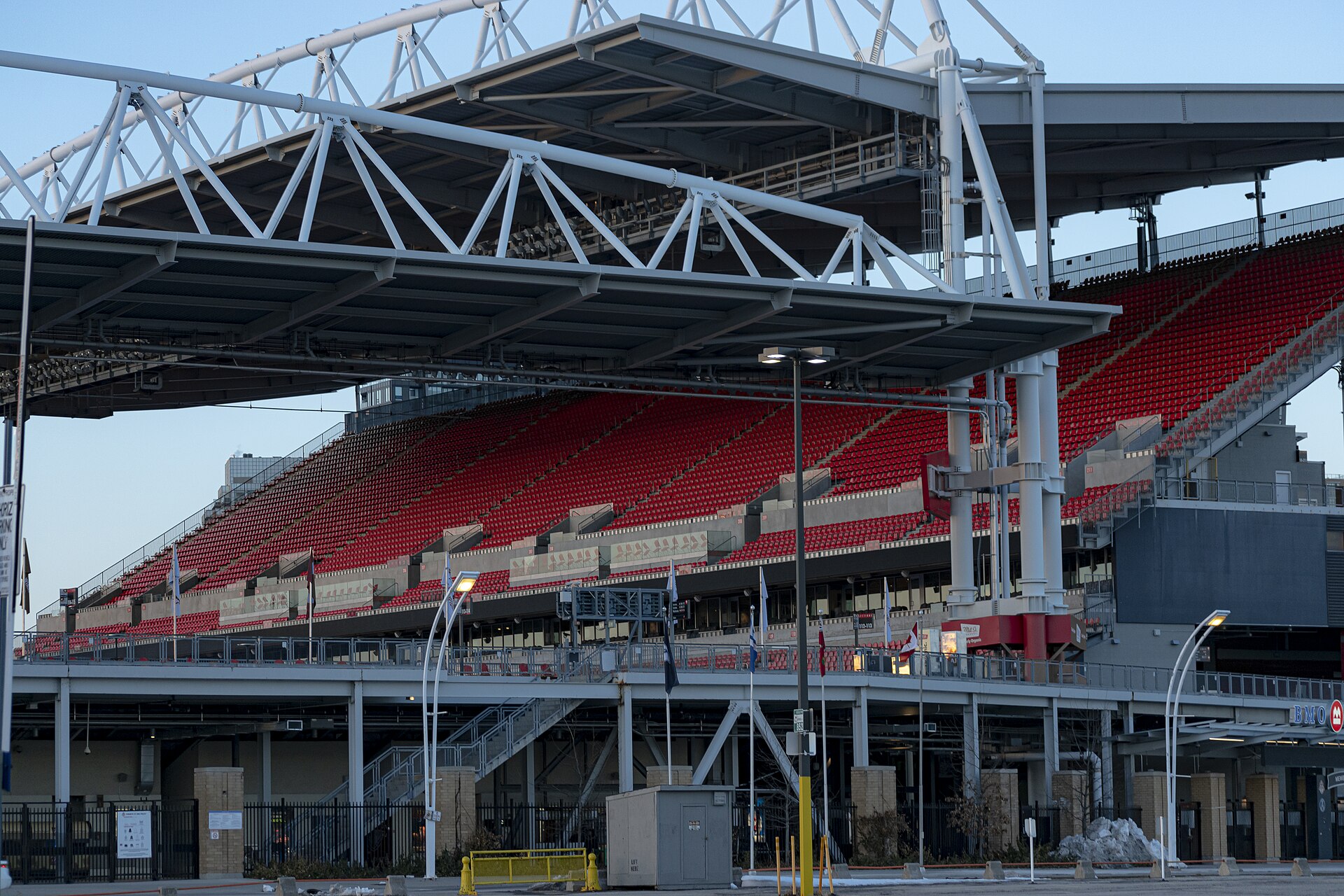
Three things determine whether you enjoy your seat here. Roof coverage is first: the canopies over the sidelines are real and they matter in April and October, while the end zones are more exposed. Sun is second — an early-evening kick-off in June puts the low sun in the eyes of the east stand for the first half-hour. Noise is third, and it cuts both ways: the south end is genuinely thrilling and genuinely relentless, and if you want to have a conversation or bring a seven-year-old, sit somewhere else and enjoy listening to it from a distance.
For a first visit to a TFC match, the honest recommendation is the lower east stand near the halfway line, or the corner where the east stand meets the south end — close enough to feel the supporters’ section, far enough to sit down.
Bags, Security and the Cashless Rule
These are the two things that catch out visitors, and both are easy to get right if you know in advance.
The bag policy is strict and specific. Clear bags are permitted up to 30.5 × 16 × 30.5 cm (12 × 6 × 12 inches), and the bag must be genuinely all clear — no buckles, hardware or decoration concealing part of it. A 3.8-litre clear plastic freezer bag is also fine. So is any small bag or clutch under 16.5 × 11.5 cm (6.5 × 4.5 inches), with or without a strap. Anything else does not come in. If you need a non-compliant bag for medical or other reasons, you will be admitted subject to a security inspection. There is a limited bag check outside Gate 3 at $10, and it fills up.
The practical version: bring a small clutch or a clear bag, and put everything else back at your hotel. A standard daypack will be turned away at the turnstile, and the walk back to Liberty Village to deal with it will cost you the first twenty minutes of the match.
The stadium is fully cashless. Debit, credit and contactless or mobile payments only — there is nowhere inside the ground that will take a banknote. Bring a card that works internationally, and be aware that a foreign card with a low contactless limit can be irritating at a busy concession.
Your ticket names a preferred gate, but you can enter at any of them, and the sensible move is to join the shortest queue rather than the one you were assigned. The ticket office opens three hours before the event and stays open until the start of the second half.
Matchday Atmosphere
Toronto FC’s supporters’ culture is the real attraction, and it is not manufactured. The groups at the south end — the ones with the drums, the tifo displays and the capos on the barriers — have been there since the club’s first, terrible season, and they sing continuously whether the team is winning or being taken apart. It is closer to a European away end than to anything else in North American sport, and it is why neutrals who came for a novelty often come back.
The rest of the ground is more conventional: a mix of families, office groups and people who have had season tickets since 2007. Alcohol is served, the queues at halftime are long, and the crowd noise around a goal is startling in a stadium this size — 28,000 people in a low, tight bowl sounds like considerably more.
Argonauts games are a different animal. Smaller crowds, more room, a lot of families, a marching-band-and-cannon presentation that is deliberately less serious, and tickets that are often a third of what you would pay for football. For a visitor with a free evening and mild curiosity, the Argos are the better value and TFC is the better spectacle.
Tickets: What to Expect to Pay
- Toronto FC, midweek against a mid-table opponent: upper corners from around $35–$50, sidelines $70–$120.
- Toronto FC, weekend or a marquee opponent: add fifty per cent or more; the biggest fixtures sell out.
- Toronto Argonauts: frequently $25–$60, with genuine bargains in the end zones.
- Concerts and national team fixtures: priced independently and usually much higher.
Buy through the club’s own site or the official resale platform. Sellers outside the ground are a risk that is not worth taking with a digital ticket, and Toronto’s secondary market is aggressive about fees. If you are combining a match with other sport, the Scotiabank Arena guide and the Rogers Centre guide cover the other two big venues and what they cost.
Before and After the Match

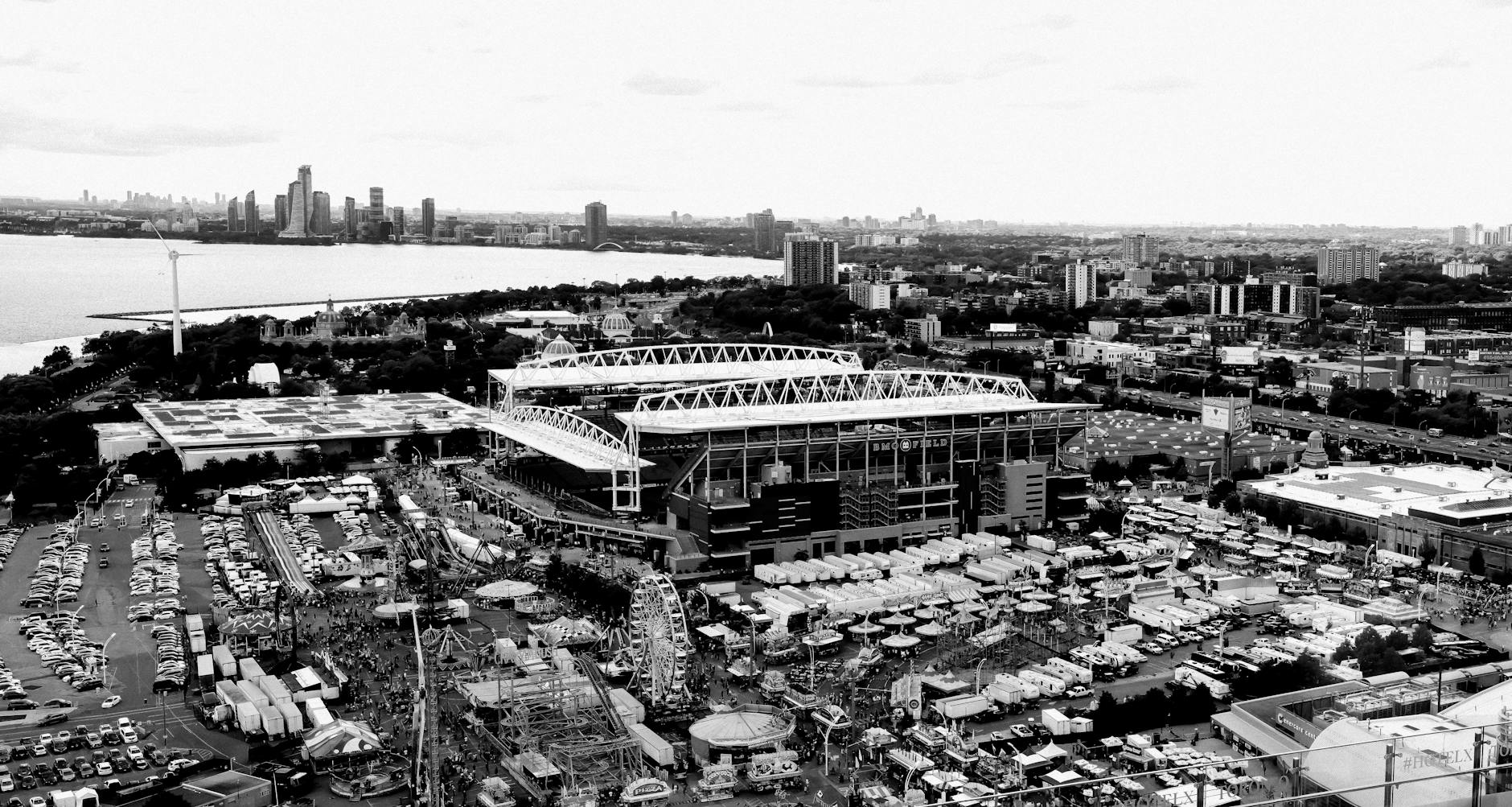
The immediate area around the stadium is Exhibition Place, which is a fairground rather than a neighbourhood: excellent for a pre-match wander in August when the CNE is on, fairly desolate the rest of the year. There is a beer hall in the grounds and a handful of concession-style options, and that is about it.
The move is to eat and drink north of the tracks. Liberty Village is fifteen minutes on foot and full of patios and brewpubs that are heaving before a match and manageable after one. King West is a little further and considerably better for a proper dinner. Our best bars in Toronto guide has the picks in both, and the Liberty Village and King West guide covers the neighbourhoods themselves.
If you have the afternoon free before an evening kick-off, the waterfront is a ten-minute walk south and the Martin Goodman Trail runs east from the grounds all the way to downtown along the lake.
What Is Not Worth It
- Driving to a sold-out match. Parking is expensive, the exit is slow, and the GO train from Union takes seven minutes.
- Premium club seats for a regular-season fixture. The sightlines from the ordinary lower sideline are already excellent in a stadium this small; you are paying for a lounge, not a better view of the football.
- Arriving fifteen minutes before kick-off. Security queues at a full house are long, the bag rules are enforced, and the walk from Exhibition Loop is longer than it looks on a map.
- Bringing a normal backpack. It will not get in, and the $10 bag check outside Gate 3 has limited space.
- Sitting in the south end if you want to watch the football. It is standing, singing and flag-obscured for ninety minutes. Wonderful, but not a viewing experience.
- An early-season TFC match if you feel the cold. February and March fixtures on the lake are properly, memorably cold, and no amount of enthusiasm substitutes for a proper coat.
Practical Tips
- Dress for the lake, not the forecast. The ground sits on open waterfront and is several degrees colder and windier than downtown.
- Gates typically open around 90 minutes before kick-off — confirm the time on your ticket, and get there early if you want to watch the tifo go up.
- Bring a card, not cash. Every point of sale inside is cashless.
- Screenshot your ticket in advance. Mobile data around a full stadium is unreliable at exactly the moment you need it.
- Accessible seating exists across the ground, but the good positions go early; book directly with the venue rather than through a resale site.
- Check whether the CNE is on. During the late-August fair, the whole of Exhibition Place is busier, and getting in and out takes noticeably longer.
- For an Argos game, sit lower than you think. Canadian football’s wider field means the far sideline is genuinely far away from a high seat.
Frequently Asked Questions
What is the capacity of BMO Field?
Around 28,000 in its normal configuration. For the 2026 FIFA World Cup, temporary stands added 17,756 seats for a tournament capacity of 45,736; those stands are being removed afterwards.
How do you get to BMO Field on public transport?
Exhibition GO station is one stop from Union on the Lakeshore West line — about seven minutes, then a five-minute walk. The 509 Harbourfront and 511 Bathurst streetcars both terminate at Exhibition Loop, two minutes from the gates.
What is the bag policy at BMO Field?
Clear bags up to 30.5 × 16 × 30.5 cm (12 × 6 × 12 inches) with no concealing hardware, a 3.8-litre clear freezer bag, or any small bag under 16.5 × 11.5 cm (6.5 × 4.5 inches). Non-compliant bags are only admitted for medical or similar reasons after inspection. Bag check outside Gate 3 costs $10 and space is limited.
Can you pay cash at BMO Field?
No. The stadium is entirely cashless and accepts debit, credit and contactless or mobile payments only.
Where is the best place to sit?
The lower sidelines, east or west, for watching the match — both are under the canopy. The south end for atmosphere, if you are happy to stand and sing for ninety minutes. The north end and corners for families and for the cheapest tickets.
How much are Toronto FC tickets?
Roughly $35–$50 for upper corners at a midweek fixture and $70–$120 along the sidelines, with marquee opponents and weekend matches priced considerably higher. Argonauts tickets are usually far cheaper, often $25–$60.
Is BMO Field covered?
Partly. The sideline stands have canopies that cover most seats; the end zones are more exposed. Matches are played in the rain, so bring a waterproof rather than an umbrella, which you will be asked to put down.
Does BMO Field have a roof for winter?
No. It is an open-air stadium, and the early-season TFC fixtures in February and March are played in genuine winter conditions on an exposed waterfront site. Dress accordingly.
Is it worth seeing an Argonauts game if you don’t know Canadian football?
Yes, and it is one of the better-value evenings in Toronto sport. Three downs instead of four and a bigger field make for a faster, more open game, tickets are cheap, and the crowd is relaxed enough that nobody minds a novice.
How early should you arrive?
An hour before kick-off for a normal fixture, ninety minutes for a sell-out or a concert. Security screening, the bag policy and the walk from the streetcar loop all take longer than visitors expect.
Related Toronto Guides
- Toronto Sports Guide — every team, venue and season in one place.
- Scotiabank Arena Guide — Raptors and Maple Leafs, tickets and transit.
- Rogers Centre Guide — Blue Jays baseball under the roof.
- CNE Guide — the fair that takes over Exhibition Place every August.
- Liberty Village & King West — where to eat before and drink after.
- Toronto TTC Guide — streetcars, subway and how the fare system works.
- Toronto Waterfront Guide — the trail and the lakefront ten minutes south of the ground.
Photo Credits
BMO Field and Exhibition Place from above: BMO Field, Toronto, Ontario (29969149766) by Ken Lund from Reno, Nevada, USA, CC BY-SA 2.0, via Wikimedia Commons.
The west stand and canopy: BMO Field Closeups 04 by Fabian Roudra Baroi, CC BY-SA 4.0, via Wikimedia Commons.