Toronto has been eating steak in the same few rooms for a very long time. Barberian’s opened on Elm Street in 1959, The Keg has been carving prime rib inside a Victorian mansion on Jarvis Street since 1976, and the towers around King and Bay have kept a steady supply of expense-account dining rooms busy through every boom and slump since. What has changed is the top end: Japanese Wagyu sold by the ounce, menus that list beef the way other places list wine, and a chef better known to millions as a character on The Bear running a steakhouse on West Queen West. Picking the best steakhouse Toronto has for your trip depends far more on the kind of night you want than on the steak itself, because at this level the steak is rarely the problem.
This page sorts the city’s steakhouses by what they are good for: the old guard, the modern big-night rooms, the two with settings you will remember longer than the meal, and the reliable mid-range chain that is honestly fine. There is also a plain-English explainer on beef grades and Wagyu, a frank section on what a steak dinner costs once tax and tip land, and a guide to which room to book before a game or a show. Restaurant details were checked in October 2026. Steakhouses rarely publish full menus with prices and change them often, so the budgets below are bands rather than menu prices — treat them as the right order of magnitude and check the restaurant’s own site when you book.
Toronto Steakhouses at a Glance
| If you want… | Book | Where | Budget* |
|---|---|---|---|
| A Toronto institution, open since 1959 | Barberian’s Steak House | Elm St, near Sankofa Square | Expensive |
| The serious Wagyu list and a big wine programme | Jacobs & Co. Steakhouse | CIBC Square | Very expensive |
| Steak and seafood before a Leafs or Raptors game | Harbour 60 | Harbour St, by Scotiabank Arena | Very expensive |
| A classic business dinner with proper cocktails | Hy’s Steakhouse & Cocktail Bar | Financial District | Expensive |
| A polished, modern room with a buzz | Black+Blue Toronto | Downtown | Very expensive |
| A chef-driven steak dinner with a younger crowd | Prime Seafood Palace | West Queen West | Very expensive |
| A heritage mansion and a ghost story at chain prices | The Keg Mansion | Jarvis St | Mid-range |
| Dinner inside a castle | BlueBlood Steakhouse | Casa Loma | Very expensive |
| A dependable steak with no fuss | The Keg Steakhouse + Bar | Several downtown locations | Mid-range |
*Before 13% HST and the tip, both of which go on top of the menu total. “Mid-range” means a steak dinner costs about what a good neighbourhood restaurant does; “expensive” and “very expensive” mean it is a planned splurge, and the Wagyu end of the menu can double it. See our Toronto tipping guide for how the tip is usually worked out.
How Steak Works in Toronto
A little vocabulary goes a long way at a Toronto steakhouse, because the menus assume you already speak it. Four things are worth knowing before you sit down.
Canadian beef grades
Canadian beef is graded mostly on marbling, the threads of fat running through the muscle. The top grade is Canada Prime, a small slice of what is produced; below it come AAA, AA and A. Look for the grade on the menu, and ask your server if it is not listed. Some rooms also carry USDA Prime from the United States. It is not automatically better than Canada Prime; the two systems use comparable marbling standards, so treat them as peers rather than rivals.
Dry-aged versus wet-aged
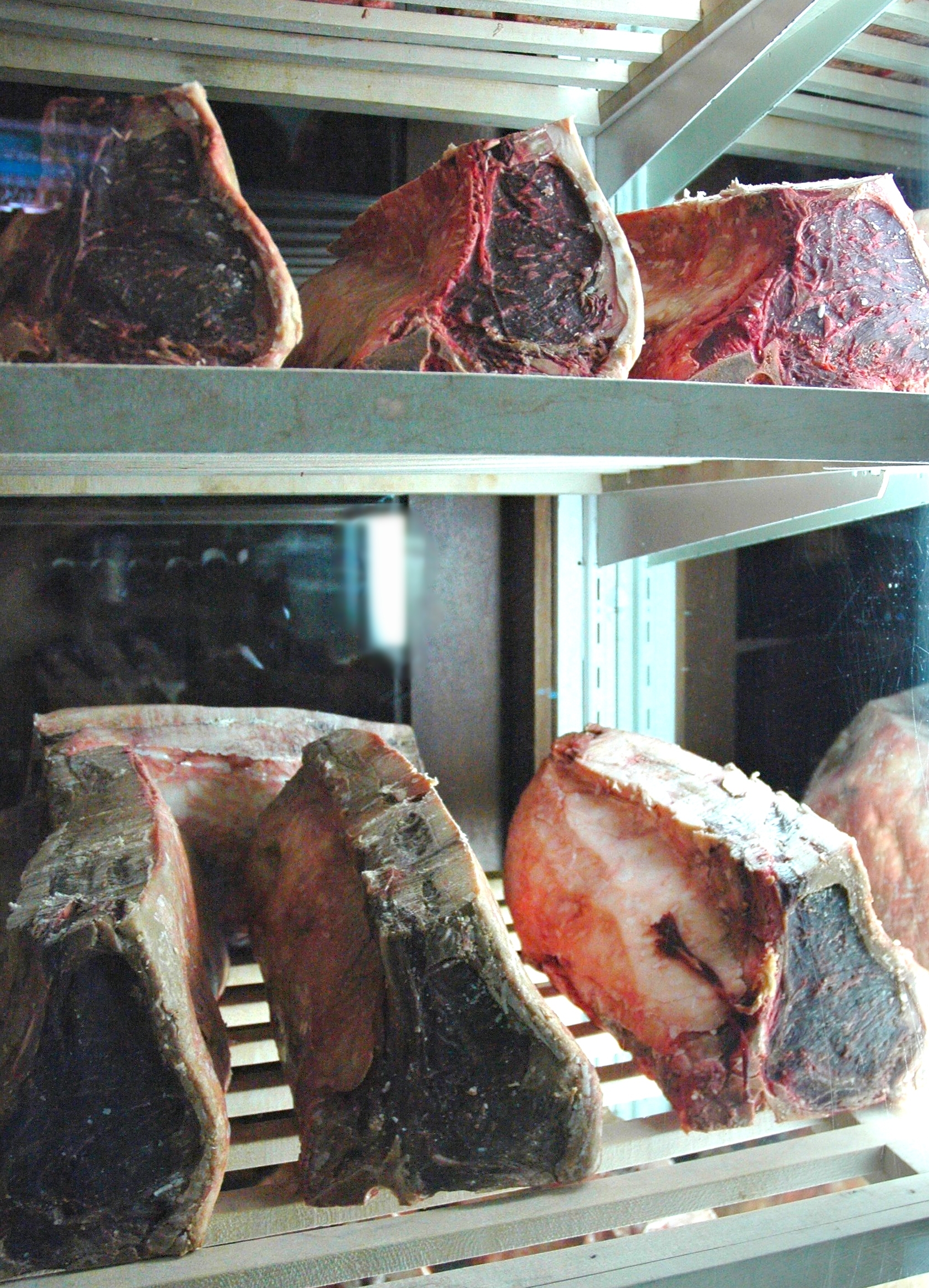
Dry-aging means leaving whole cuts on racks in a cold, carefully controlled room for weeks. Moisture evaporates, enzymes soften the muscle, and the flavour concentrates into something nutty and faintly funky; the dark crust that forms is trimmed off before the steaks are cut, which is part of why dry-aged beef costs more. Wet-aging happens in vacuum bags, loses less weight and is cheaper, so it is what most mid-range steaks are. A menu that names the number of days is telling you the beef is dry-aged. If you have never tried it, something around 30 to 45 days is a gentle introduction; much older than that and the taste edges towards blue cheese, which some people love and others do not.
Wagyu, A5 and the word “Kobe”
Wagyu simply means Japanese cattle breeds. Beef from Japan is graded on yield (A to C) and on quality (1 to 5), so A5 is the very top: meat so heavily marbled that it is closer in texture to foie gras than to a New York strip. It is sold by the ounce, usually with a minimum order, and served in small seared pieces. Australian and North American Wagyu, usually crossed with other breeds, is far less extreme and comes as a normal-sized steak. “Kobe” is a specific, certified Japanese beef from Hyogo prefecture; if a menu uses the word, it is fair to ask about certification.
Everything is à la carte
At every steakhouse in this guide except The Keg, the steak arrives on its own. Potatoes, vegetables, sauces and salads are ordered separately and are usually big enough to share between two or three. Ordering a side each is the most common way first-timers overspend — and over-eat.
The Old Guard: Toronto’s Classic Steakhouses
Three names have been feeding Toronto’s celebrations and business dinners for decades, and the city is better for the fact that none of them has tried very hard to modernise. If your idea of the best steakhouse is white tablecloths, a dimly lit room and a waiter who knows the wine list by heart, start here.
Barberian’s Steak House
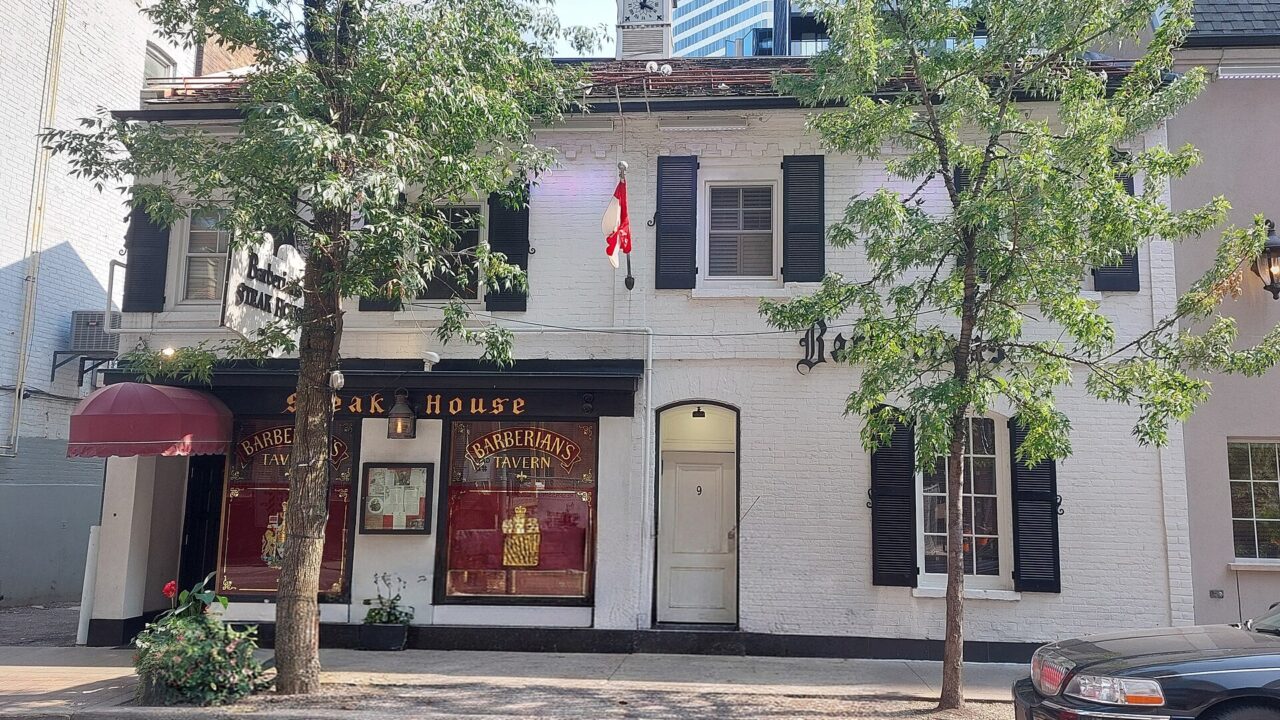
Harry Barberian opened his steakhouse at 7 Elm Street in 1959. Inside it looks and feels like a room that has never needed a redesign to stay busy, which is precisely its appeal.
The menu is the classic North American steakhouse in its purest form: the big cuts, the shrimp cocktail, the Caesar, the baked potato. The wine list is long and the cellar is one of the restaurant’s points of pride, so ask for a recommendation in your price range rather than ordering by label. Its favourite piece of lore is that Elizabeth Taylor and Richard Burton got engaged here in 1964; it is told so often that it has become part of the furniture.
Who it suits: first-time visitors who want a Toronto institution rather than a concept, and anyone going to a show on Yonge Street — the Ed Mirvish Theatre is about a five-minute walk away. Getting there: Line 1 runs beneath Yonge Street, a short walk east of the door. Verdict: not the most daring steak in the city and not trying to be. Pick it when the room and the history matter as much as the plate.
Harbour 60
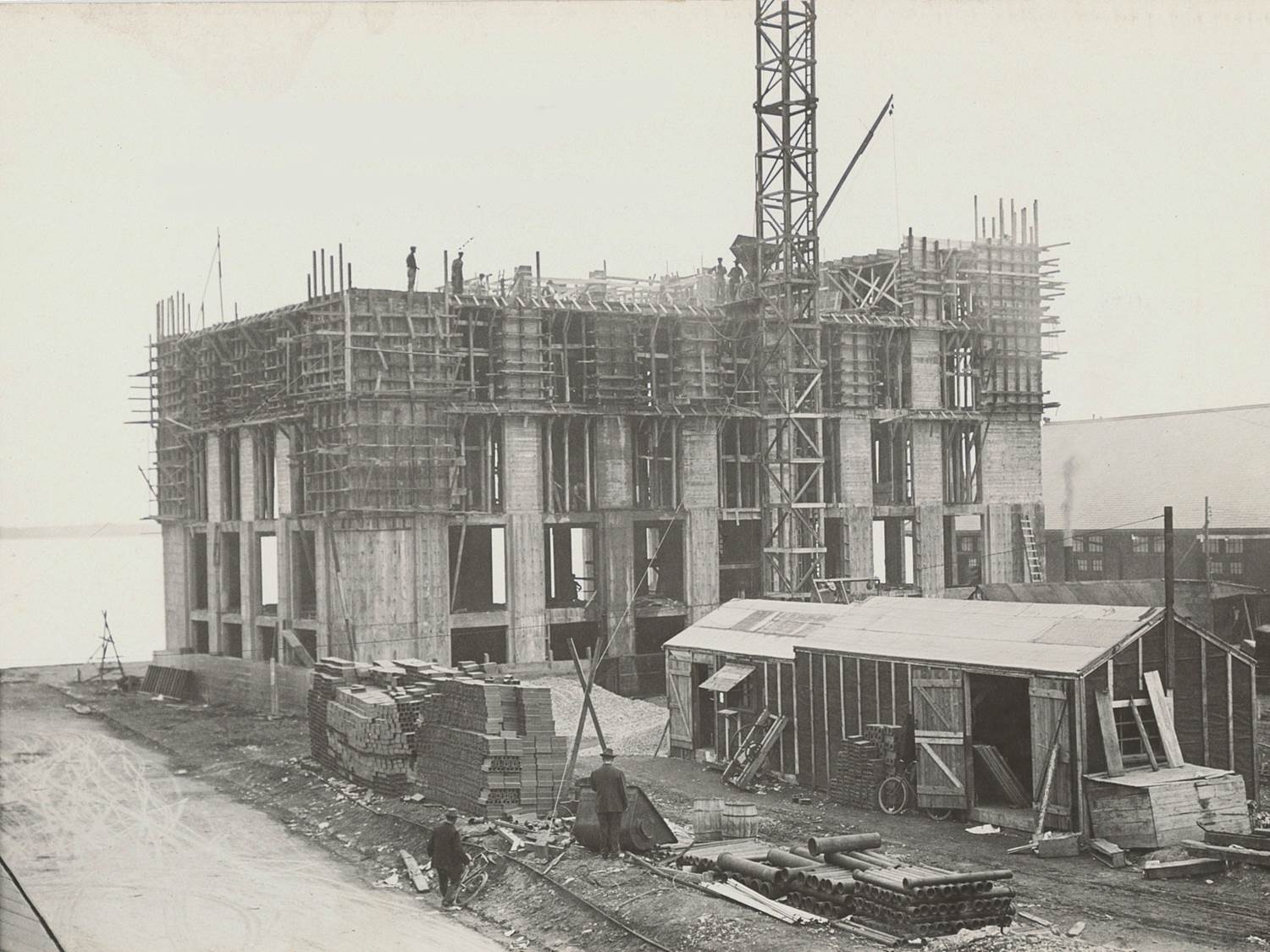
Harbour 60 occupies the Toronto Harbour Commission Building at 60 Harbour Street, a grand Beaux-Arts block that went up in the late 1910s on what was then the water’s edge. A century of lakefill has since pushed the shoreline several blocks south, which is why the old harbour authority’s headquarters now sits by the Gardiner Expressway rather than on the lake. The dining room has the formality the façade promises, and the menu gives steak and seafood equal billing.
Its great practical advantage is location. Scotiabank Arena is a short walk away, which makes Harbour 60 the obvious pre-game booking before a Maple Leafs or Raptors game, and Union Station is just to the north. On game nights, book well ahead and tell them what time you need to leave; a steakhouse dinner done properly takes longer than most people expect. Verdict: the city’s best-located special-occasion steakhouse, and among its most formal. Expensive, and it feels it.
Hy’s Steakhouse & Cocktail Bar
Hy’s is a Canadian steakhouse name that goes back to the 1950s, when Hy Aisenstat opened the first one in Calgary, and the Toronto room in the Financial District keeps the old-school spirit, with a bar that takes its martinis seriously — the “Cocktail Bar” in the name is not decoration. Regulars start with the chain’s famous cheese toast before they have opened the menu, and it is worth doing the same.
This is Toronto’s dependable business dinner: the room where a deal gets celebrated on a Thursday, where nobody needs the steak explained, and where the service runs to a well-worn rhythm. It is at 365 Bay Street, in the middle of the Financial District. Verdict: less theatrical than Harbour 60 and less of a pilgrimage than Barberian’s, but consistently good, and the bar alone is a fine place for a steak-and-a-drink evening if you do not want the full production.
The Modern Big-Night Steakhouses
Toronto’s newer steakhouses compete on the beef itself — origin, breed, age, grade — and on atmosphere. They are where you go when the steak is the point of the evening and you are happy to pay for it.
Jacobs & Co. Steakhouse
Jacobs & Co. moved to its new home at CIBC Square in 2025, and it remains the room to book when the beef matters more than anything else. Its menu reads like a wine list for beef, with Japanese Wagyu identified by where it was raised alongside Australian and North American alternatives and the usual Prime and dry-aged cuts. The Caesar is made tableside, the wine programme is big and serious, and the service is the thing reviewers praise most consistently after the beef.
If you are going to try A5 Wagyu once in your life, this is a sensible place to do it — but order a few ounces for the table as a tasting course, then follow it with a conventional steak each. That way you get the experience without paying Wagyu prices for something too rich to finish. Getting there: the restaurant is at CIBC Square, so check its website for directions before you set out. Verdict: the pick if you care most about the beef. A planned splurge, not a casual dinner.
Black+Blue Toronto
Black+Blue is the Toronto branch of a steakhouse born in Vancouver, run by the Glowbal group, and it does the modern steakhouse with confidence. It is a glossier, louder night than the old guard offers, which is exactly why some people book it — and exactly why others prefer Barberian’s.
Verdict: a strong choice for a group celebration or a date that wants a bit of energy in the room. If you are choosing between Black+Blue and Jacobs & Co. for the steak alone, Jacobs edges it; for atmosphere, it comes down to taste.
Prime Seafood Palace
Matty Matheson was a well-known Toronto chef long before he became familiar to a much wider audience as Neil Fak on The Bear, and Prime Seafood Palace on West Queen West is his steakhouse. Despite the name, beef is the point; the seafood is supporting cast. It sits in OpenTable’s top price band, it has been one of the city’s most talked-about tables since it opened, and reservations go quickly, so book ahead.
It suits a different crowd from the Bay Street rooms: younger, louder, more likely to be out for the evening than out on business. To make a night of it, our Queen Street West guide covers the bars and galleries on that stretch. Verdict: go for the scene and a chef-driven take on steak. Do not go expecting a quiet, white-tablecloth evening.
Steak With a Setting
Two of Toronto’s most memorable steak dinners are memorable mostly because of where they happen. Both are worth booking — just be clear about what you are paying for.
The Keg Mansion
The Keg Mansion at 515 Jarvis Street is a grand Victorian house completed in 1868 and bought in 1882 by Hart Massey, the industrialist whose family name is on Massey Hall. His daughter Lillian also lived here before moving to Santa Barbara, California, after her husband’s death in 1909; she died there in 1915. The house was designated a heritage property in 1975 and has been a Keg restaurant since 1976, so you eat in the mansion’s old rooms.
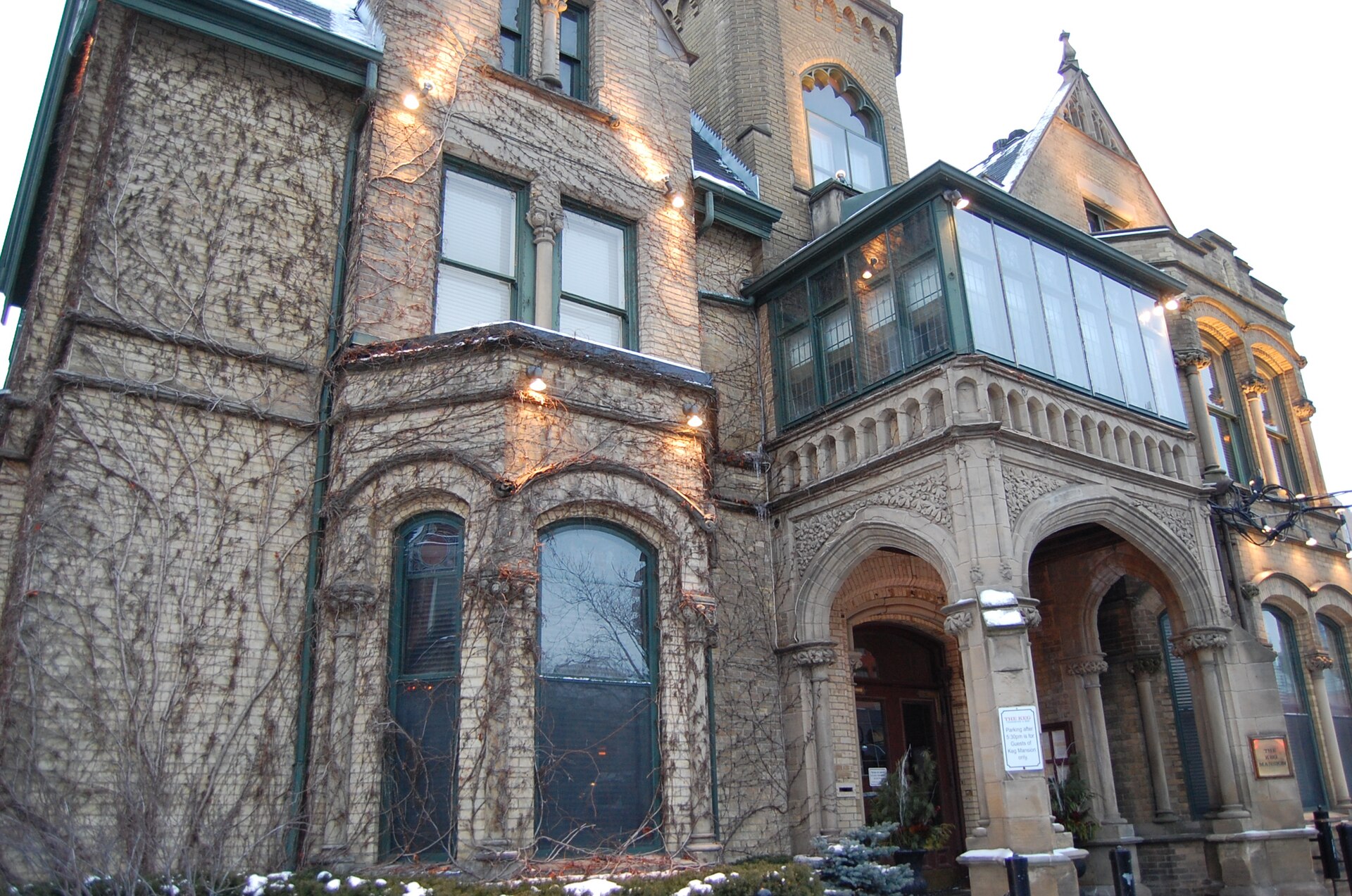
It also has Toronto’s best-known restaurant ghost story: a maid said to have hanged herself in the vestibule above the staircase after Lillian Massey died. It is best treated as folklore — Lillian died in California, not in this house — but it is part of the evening, and our guide to Toronto’s ghost tours and haunted places explains where the story came from.
The honest part is the best part. The menu is the familiar Keg menu, so you are eating a reliable chain steak in a far grander setting than the bill suggests. That makes it one of the best-value special-occasion dinners in the city, and it books up accordingly; reserve ahead for weekends. Getting there: walk east from Wellesley station on Line 1 to 515 Jarvis Street. Verdict: not the best steak in Toronto, but quite possibly the best evening per dollar.
BlueBlood Steakhouse at Casa Loma
BlueBlood is inside Casa Loma, the Gothic Revival castle that financier Sir Henry Pellatt built on the hill above Dupont Street between 1911 and 1914. When it opened, a Toronto Life headline called it the city’s “latest ode to conspicuous consumption”, and it has leaned into exactly that ever since: aged steaks, Wagyu cuts sold by the ounce, a cellar of vintage wines and an opulent dining room. With Wagyu or a serious bottle, the bill climbs quickly.
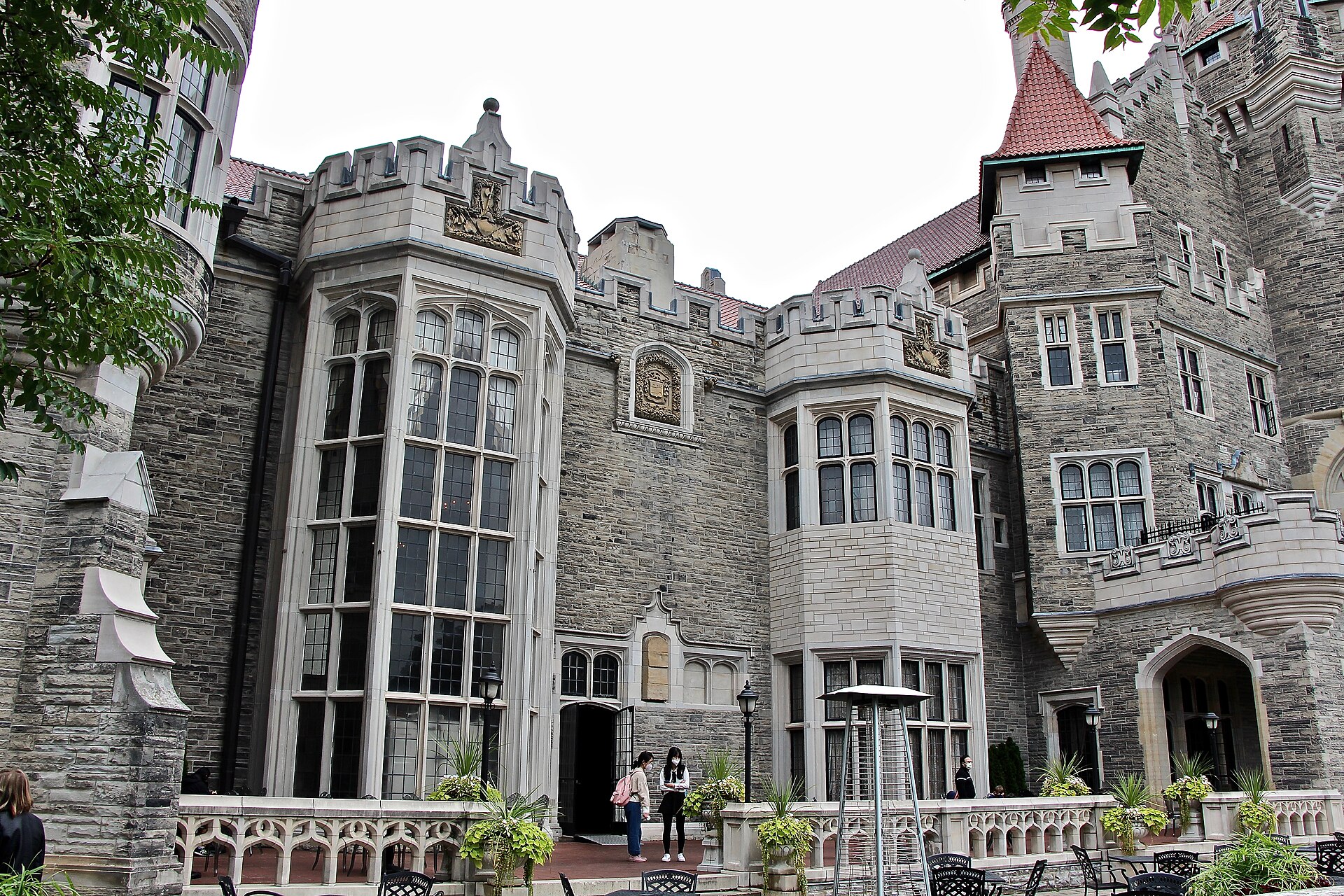
The castle sits at the top of the Baldwin Steps, a short but steep climb from Dupont station on Line 1. After dinner, and particularly in winter, a taxi back down is the kinder option. If you would like to see the castle by daylight too, our Casa Loma guide covers visiting hours, tickets and the gardens. Verdict: you are paying for the castle. The steak is good, but the reason to book is the setting — and for an anniversary or a proposal, that is worth a great deal. For a straightforward steak, Jacobs & Co. or Barberian’s give you more on the plate for the money.
The Keg and the Honest Mid-Range
The Keg Steakhouse + Bar started in North Vancouver in 1971 and is now a fixture across Canada; the Mansion on Jarvis Street is one of its Toronto restaurants. It is not trying to compete with the rooms above, and you should not expect it to. What it does is a correctly cooked steak, its well-known prime rib, a Caesar and a predictable bill, with sides included in a way the top-end steakhouses do not bother with. For families, groups and anyone who does not want dinner to become an event, that is exactly the point.
Beyond the steakhouses, plenty of Toronto bistros and brasseries do a good steak frites, and it is often the best-value steak in the city: a smaller cut, properly cooked, with fries and a sauce for a fraction of what a dedicated steakhouse charges. Our guide to the best restaurants in Toronto covers the wider dining scene if you would rather not commit a whole evening to beef.
One more mid-range option comes with a view. 360 Restaurant at the top of the CN Tower has a minimum food spend of $75 per person, and that spend includes the elevator ride and access to the observation levels — so on those terms it is a fair deal. Book it for the revolving view of the city and the lake; do not book it for the steak. Our CN Tower guide has the details.
Is Wagyu Worth It in Toronto?
Mostly, yes — as an experience, not as a steak. Japanese A5 is so rich that three or four ounces is plenty for two people, and it is priced accordingly: by the ounce, like a luxury, with minimum orders at most places. Treat it as a tasting course shared around the table, the way you might share a plate of oysters, and follow it with a conventional steak.
Where people go wrong is ordering A5 as a main course expecting a bigger, better ribeye. It is not that. It is soft, buttery and intense, and after a few bites many people have had enough. If you want a full-sized steak that is richer than usual, Australian or North American Wagyu is the better buy, and a well-marbled Canada Prime ribeye gets you a good part of the way there for considerably less.
The other trap is assuming a “Wagyu” label on a burger or a casual menu means anything special. The word covers a wide range of crossbreeds and grades. At a serious steakhouse the menu will tell you the origin and grade; if it does not, ask.
Choosing the Best Steakhouse by Neighbourhood
Location matters more than people expect, because most steakhouse dinners are attached to something else: a game, a show, or a hotel you do not want to cross the city to get back to.
Before a Leafs or Raptors game
Harbour 60 sits at 60 Harbour Street, close to Scotiabank Arena, and Hy’s is up at 365 Bay Street in the Financial District. Our Scotiabank Arena guide has gate times and how early to arrive; work backwards from that when you book.
Before a Blue Jays game
Jacobs & Co. is now at CIBC Square, so map the route to the stadium before you book a table; if time is tight, the King West restaurant strip has plenty of quicker options. See our Rogers Centre guide for the stadium side of the evening.
Before the theatre
For the Royal Alexandra, the Princess of Wales and the other King Street theatres, Black+Blue is the natural choice. For the Ed Mirvish Theatre and the Yonge Street houses, Barberian’s is a few minutes away. Tell the restaurant your curtain time when you book; a good steakhouse will pace the meal around it. Our Toronto theatre guide lists what is on.
Midtown, Church-Wellesley and the west end
BlueBlood at Casa Loma is a short taxi ride from Yorkville and the Annex. The Keg Mansion is a few minutes’ walk east of the Church-Wellesley Village, which makes it an easy dinner before a night out on Church Street. Prime Seafood Palace anchors the west end on Queen West.
If you are staying near Union Station
Harbour 60 lies just south of the station, and Hy’s is a few blocks north on Bay Street. If you have not booked a hotel yet, our guide to hotels near Union Station covers the options a short walk from both.
What a Steakhouse Dinner Costs in Toronto
The menu price is the start of the bill, not the end of it. Three things push a Toronto steakhouse dinner up, and it helps to see them coming.
- Sides and sauces: à la carte everywhere except The Keg. Two or three shared sides is plenty for two people.
- Wine: restaurant wine markups in Ontario are steep, and steakhouses lean on wine. A modest bottle can cost as much as a steak.
- Tax and tip: 13% HST goes on food and drink, and the tip comes on top of that, so budget well beyond the menu prices.
How to spend less
- Winterlicious and Summerlicious. The city’s two prix fixe festivals, in late January to early February and in July, regularly include upscale restaurants at set prices well below their usual menus. Participants change every year, so check the list; our Winterlicious and Summerlicious guide explains how booking works.
- Share a big cut. A porterhouse or a large bone-in ribeye for two often works out better than two separate steaks, and it is more fun.
- Eat at the bar. At the old-guard rooms especially, a steak at the bar with one glass of wine is a much lighter bill than the full dining-room experience.
- Bring your own wine, where allowed. Ontario lets licensed restaurants permit diners to bring their own bottle for a corkage fee the restaurant sets. Policies vary a great deal, so ask when you book.
- Choose the Keg Mansion. A special-occasion setting on a mid-range bill.
For how a steakhouse dinner fits into an overall trip budget, our Toronto travel cost guide breaks down daily spending at different levels.
Booking and Etiquette
Reservations: book ahead for Thursday to Saturday everywhere in this guide, and well ahead for game nights, Valentine’s Day, December and the weeks around TIFF in September. Most take reservations online. Mention a celebration when you book; the better rooms notice.
Dress: Toronto is a smart-casual city and none of these places expects a tie. Clean jeans and a decent shirt will get you through the door almost anywhere, but the old-guard rooms feel better with a collar and the castle feels better with a jacket.
Doneness: kitchens use the usual North American terms — rare, medium-rare, medium and so on — and most steakhouse chefs recommend medium-rare for the fattier cuts so the marbling renders. If you like it well done, say so plainly and order a leaner cut such as tenderloin, which suffers least.
Kids: The Keg locations are relaxed with children. At the high-end rooms, ask about children when you book. Our family restaurants guide has easier options.
Not everyone eats steak: every steakhouse here has fish and seafood, and most have at least one vegetarian main. It is worth checking the menu online if someone in your group does not eat meat at all.
Which Toronto Steakhouse Should You Book?
- First trip, want an institution: Barberian’s.
- The steak is the whole point: Jacobs & Co.
- Game night at Scotiabank Arena: Harbour 60.
- A business dinner that just works: Hy’s.
- An anniversary or a proposal: BlueBlood at Casa Loma — see also our list of romantic things to do in Toronto.
- A special evening on a sensible budget: the Keg Mansion.
- A night out with a younger crowd: Prime Seafood Palace.
- Families and big groups: any Keg.
Frequently Asked Questions
What is the best steakhouse in Toronto?
For the steak itself, Jacobs & Co., now at CIBC Square, is the pick for its Wagyu list and its consistency. For a classic experience, Barberian’s, open since 1959, is the institution. The best choice depends on the night: Harbour 60 before a game, BlueBlood for a castle setting, the Keg Mansion for a grand room at a mid-range price.
Which Toronto steakhouse has been open the longest?
Barberian’s on Elm Street is the long-standing name to know. Harry Barberian opened it in 1959, and its old-school steakhouse format is a big part of why people still book it.
How much does a steakhouse dinner cost in Toronto?
At the Keg, a steak dinner costs about what a mid-priced restaurant does. At the high-end steakhouses it is a splurge, with sides, sauces and wine priced separately, and Japanese Wagyu sold by the ounce on top. Add 13% HST and a 15–20% tip, which together raise the menu total by roughly a third. Winterlicious and Summerlicious prix fixe menus are the cheapest way into the top rooms.
Is the Keg Mansion really haunted?
The story of a maid who hanged herself after Lillian Massey’s death is Toronto’s most famous restaurant ghost tale, but it is almost certainly folklore. Lillian Massey died in Santa Barbara in 1915, far from Jarvis Street. The history is real, though: the house was completed in 1868, owned by the Massey family from 1882 and has been a Keg since 1976.
Do I need a reservation?
For Thursday to Saturday evenings, yes — at all of them. On nights when the Leafs, Raptors or Blue Jays are at home, the steakhouses near the arenas fill early, and the Keg Mansion books up on weekends year-round. Midweek you can sometimes walk in, particularly at the bar, but it is not worth the risk for a special occasion.
Is there a dress code at Toronto steakhouses?
Not a strict one. Smart casual works everywhere in this guide: a collared shirt or a smart top, clean jeans or trousers. Sportswear and flip-flops will look out of place at Barberian’s, Harbour 60 or BlueBlood. Nobody expects a tie.
Where can I eat steak near Scotiabank Arena?
Harbour 60, at 60 Harbour Street, is the obvious pick near the arena, and Hy’s is at 365 Bay Street in the Financial District. Book early on game nights and give the restaurant your puck-drop or tip-off time.
Related Toronto Guides
- Best restaurants in Toronto
- Michelin restaurants in Toronto
- Toronto food guide
- Casa Loma guide
- Toronto ghost tours and haunted places
- Scotiabank Arena: Raptors and Maple Leafs guide
- Romantic things to do in Toronto
- Toronto tipping guide
Photo Credits
Barberian’s on Elm Street: Barberians Steak House and Tavern Toronto by Alaney2k, CC BY 4.0, via Wikimedia Commons.
Beef dry-aging in a cabinet: Dry-aged beef-01 by Wonderlane from Seattle, USA, CC BY 2.0, via Wikimedia Commons.
The Harbour Commission building under construction: Construction of the Toronto Harbour Commission building -a by Arthur Beales, Public domain, via Wikimedia Commons.
The Keg Mansion at dusk: 515 Jarvis St. by BarberMA, CC BY-SA 3.0, via Wikimedia Commons.
Casa Loma terrace: 2020-09-08 Casa Loma 125 by Thomas1313, CC BY-SA 4.0, via Wikimedia Commons.