The door closes, the lights drop to a slow purple swirl, and a screen the size of a garage door starts playing a music video filmed on a beach in about 1998. There is a tambourine on the table, a laminated menu of fried chicken and soju, two wireless microphones, and a little button on the wall that summons a server. Nobody outside can hear you. This is what karaoke Toronto style mostly means once you get past the public bar nights: a private room in Koreatown or Chinatown, rented by the hour, where a group of friends can murder a power ballad in complete safety. Toronto also has plenty of the other kind — a stage, a crowd, a host with a clipboard — and knowing which one suits your group is most of the battle.
This guide covers both: how private karaoke rooms work and where the clusters are, the bars that run public karaoke nights (including a piano karaoke room on Dundas West), what it costs, how to plan a group night, and a few songs that will go down well in a Toronto room. Venues were checked in October 2026. Karaoke bars open, close, rebrand and change their nights more often than almost any other kind of venue, so check a place’s own social media or call ahead before you set off. Prices are in Canadian dollars.
Karaoke in Toronto at a Glance
| Type | Where | Best for | How you pay |
|---|---|---|---|
| Private karaoke rooms (KTV, noraebang) | Koreatown, Chinatown, Yonge Street, North York and the northern suburbs | Groups, birthdays, shy singers | Per room, per hour, plus food and drinks |
| Downtown karaoke bar with rooms | Boom Karaoke, 577 Yonge Street | A central night out with cocktails | Room rental plus drinks and bottle service |
| Public karaoke nights | Bars across the city, including Pegasus on Church and Church St. Garage | Couples, solo singers, people who want an audience | Usually free to sing; buy drinks |
| Piano karaoke | Jean Darlene Piano Room, Dundas West | Confident singers and theatre kids | Cover charge (check the bar’s site) |
| Themed karaoke events | Music venues such as Revival | Hip-hop fans and one-off parties | Event tickets or cover |
Private Rooms or Public Stage?
The single most important decision. Here is the honest comparison.
Choose a private room if…
- You are a group of four or more. Rooms are priced per room, so the cost per person drops as your group grows. For six or more friends, a room is almost always better value and more fun than a bar.
- Anyone in your group is nervous. Singing in front of your friends is a lot easier than singing in front of strangers, and the room’s echo makes everyone sound better than they are.
- You want to sing a lot. In a busy bar you might get two or three songs in a night. In a room you can sing for hours.
- You want songs in Korean, Cantonese, Mandarin or Japanese. The KTV systems have huge multilingual catalogues.
Choose a public karaoke night if…
- You are a couple or on your own. Paying for a room for two rarely makes sense.
- You want an audience. Some people come alive with a crowd; a good karaoke bar crowd cheers for everyone.
- You want a normal night out that happens to include karaoke, with the option of just watching.
- You are on a budget. Most public nights are free to sing, and you pay only for what you drink.
How Private Karaoke Rooms Work
If you have never been to a karaoke room, the format can be a bit mysterious. In Toronto it follows the Korean noraebang (“song room”) and Chinese KTV model.
- Book, or walk in. On weeknights you can often walk in. On Friday and Saturday nights, and for large groups, book ahead — rooms for bigger groups are limited, and some places ask for a deposit for parties.
- Get a room sized to your group. Rooms range from small booths for a handful of people to party rooms for twenty or more. Echo Karaoke, for example, has rooms for between six and twenty-five people.
- Pay by the hour. You are charged for the room, per hour, and the rate usually depends on the room size, the day of the week and the time of night. Weeknights and early evenings are cheaper. Ask whether there is a minimum number of hours or a minimum spend on food and drink.
- Pick your songs. A tablet or remote lets you search the catalogue by title, artist or language and queue songs up. Catalogues are large; if you want songs in a particular language, ask when you book.
- Order food and drinks to the room, often via a call button on the wall. Menus range from snacks and fried chicken to full Korean or Chinese dishes, beer, soju and cocktails.
- Watch the clock. Most places give a warning shortly before your time is up and let you add another hour if the room is not booked.
What it costs
Karaoke room prices vary between venues, room sizes and nights, so get the hourly rate for your group size when you book. As a rule of thumb, the per-person cost for a full room on a weeknight is low — often less than a round of cocktails each — while a large room on a Saturday night with food and drinks adds up quickly. Remember to add 13% HST and a tip for the server, and carry some cash as a backup.
Age and alcohol
The legal drinking age in Ontario is 19, and bars normally stop serving alcohol at 2am (New Year’s Eve is an exception), even if the room itself is open later. Policies on under-19s vary: some karaoke rooms welcome families and teenagers when alcohol is not being served, particularly earlier in the evening, while some licensed venues admit only those aged 19 and over. Check before bringing anyone underage, and bring photo ID.
Where to Find Karaoke Rooms in Toronto
Koreatown
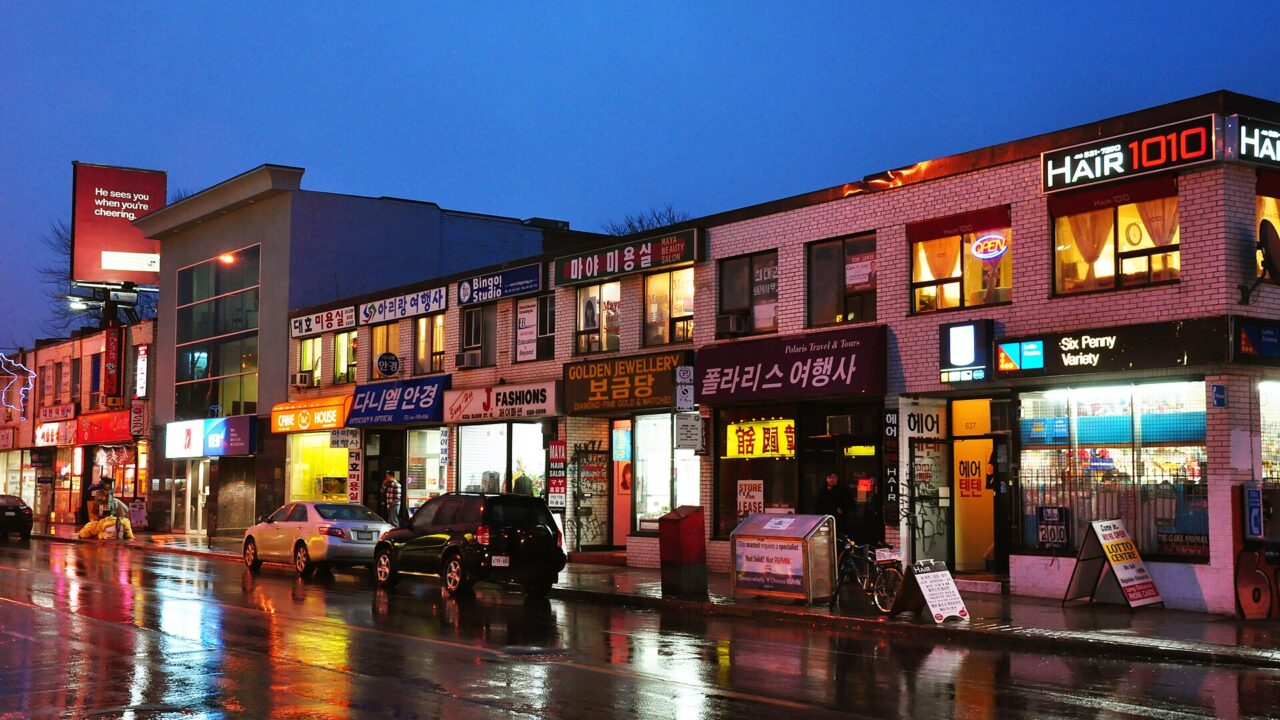
Koreatown runs along Bloor Street West roughly between Bathurst and Christie, right beside the Annex, and it is the most atmospheric place in the city for a karaoke night, because you can pair it with dinner. Start with Korean barbecue or fried chicken, then go downstairs to sing.
The K Karaoke is a good example: a basement karaoke space at 699 Bloor Street West, in the heart of Koreatown, with private rooms you can book ahead, drinks and late opening hours. It is exactly the kind of place Koreatown does well: unfussy, friendly and very easy to turn into a four-hour night.
Getting there: Line 2 to Christie or Bathurst station; Koreatown runs along Bloor Street between the two. Our Annex and Bloor West guide has more on the neighbourhood.
Chinatown
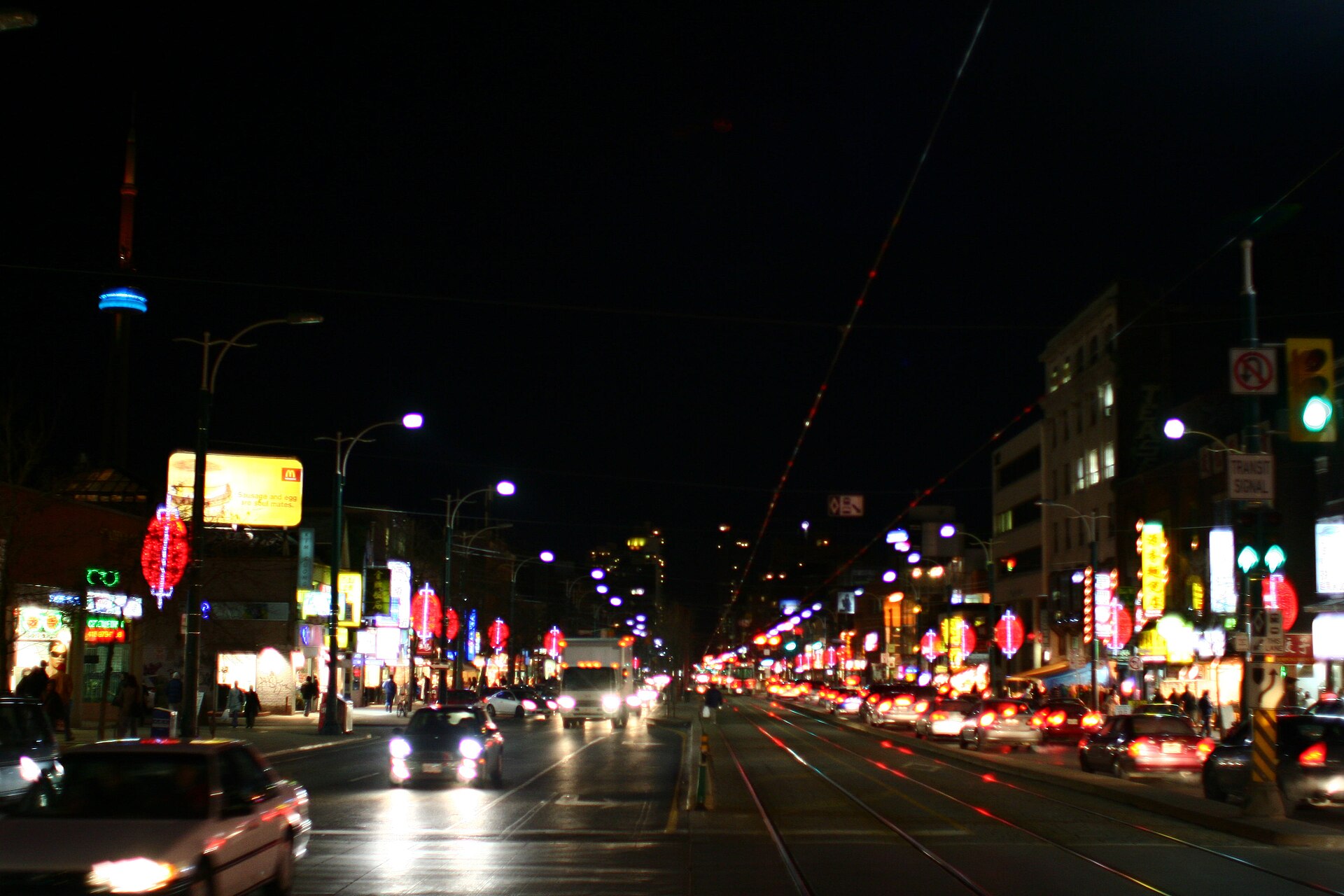
Chinatown, centred on Spadina Avenue and Dundas Street, has a cluster of KTV rooms, several of them on upper floors above the shops and restaurants, so look up as well as along. Two places to look up:
- 8090 KTV — ask about room sizes and the song catalogue when you book.
- B-Boss Karaoke — an upper-floor karaoke bar.
Chinatown makes it easy to eat well before or after, including late-night Cantonese and Vietnamese food. Take the 510 Spadina streetcar to Spadina Avenue at Dundas Street West. See our Chinatown guide.
Downtown Yonge Street
Boom Karaoke, at 577 Yonge Street near Wellesley, serves cocktails, beer and bottle service. It is the most central option for a group staying downtown and a good choice for a birthday or work night out.
Getting there: Line 1 to Wellesley, College or TMU station (formerly Dundas), depending on the venue.
North York and the northern suburbs
Not every KTV venue is downtown; there are more along Yonge Street in North York and beyond. Rooms here are often larger and newer, and the food can be excellent. The trade-off is distance: a late night up here without a car means a long ride home, so check the last train from your station before you set out. Worth it if you are staying nearby.
Public Karaoke Nights
If you would rather sing to a room full of strangers, Toronto has karaoke nights running somewhere most evenings of the week. The formats vary: some bars run a weekly night with a host (the “KJ”) who takes requests on slips of paper or via an app and calls singers up in turn; others are more casual. Nights change frequently, so check a bar’s listings for the current schedule.
Church-Wellesley Village
The Village is one of the most reliable parts of the city for a lively, supportive karaoke crowd. Pegasus on Church, a friendly neighbourhood bar with pool tables and no cover, runs karaoke along with trivia and drag bingo, and Church St. Garage has karaoke nights alongside its famous Saturday drag brunch. Expect a generous audience and ambitious song choices. See our Church-Wellesley Village guide for the neighbourhood.
Jean Darlene Piano Room
The most unusual karaoke night in the city. Jean Darlene Piano Room on Dundas Street West runs piano karaoke, which is closer to a singalong cabaret than a karaoke bar: the crowd tends to be enthusiastic, and show tunes and big ballads come into their own. There is a cover charge; the bar’s own site has the current amount. It is small and fills up, so arrive early. Our speakeasies and hidden bars guide covers more places like it.
Hip-Hop Karaoke and themed nights
Toronto’s music venues regularly host themed karaoke events. Hip-Hop Karaoke, where you rap over instrumentals with a crowd egging you on, returned to Revival on 11 September 2026. Bands and promoters also run one-off nights built around a single artist or decade. These events are ticketed or have a cover, and they sell out; follow local listings and venue social media. Our live music venues guide lists the venues most likely to host them.
Planning a Group Karaoke Night
Karaoke is one of the best group nights out in Toronto — birthdays, bachelorette parties, work socials, reunions. Some practical tips:
- Book ahead for Friday and Saturday, especially for groups of ten or more. Big rooms go first.
- Confirm the hourly rate, minimum hours, minimum spend and deposit in writing, and whether the price is per room or per person.
- Ask about food. Some rooms have full kitchens; others only snacks. If not, eat first nearby.
- Book two hours, then extend. Two hours feels like plenty until you are in the room. Extensions depend on availability.
- Set a song rule. One song each in rotation keeps things fair; free-for-all works for smaller, more confident groups.
- Bring cash for tips and in case a venue prefers it.
- Plan the trip home. Look up the last subway from your stop before you go out. After the trains stop, the TTC’s Blue Night buses run along the main routes — including Bloor Street and Yonge Street — or book a taxi or rideshare.
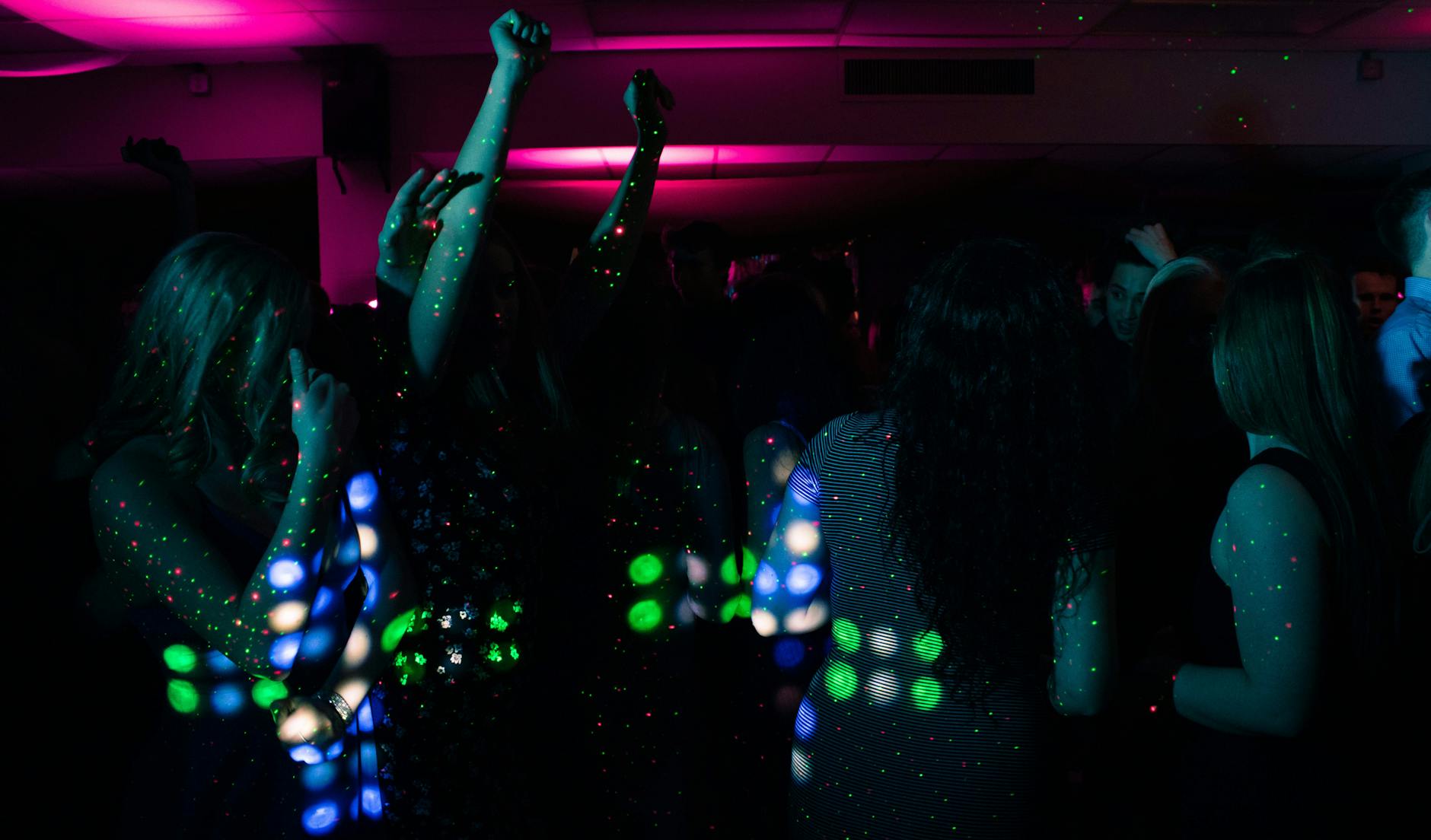
Combine it with dinner
The classic Toronto karaoke night starts with dinner in the same neighbourhood: Korean barbecue or fried chicken on Bloor, dim sum or late-night Cantonese in Chinatown, or anything on Yonge Street. Our guide to Toronto’s multicultural food will help you choose, and our cheap eats guide keeps the cost down.
Songs That Always Work in Toronto
A karaoke night in Toronto is a good excuse to lean into Canadian music. A few that reliably get a room on its feet:
- “One Week” by Barenaked Ladies — a Toronto band, and a genuine test of how fast you can read.
- “Summer of ’69” by Bryan Adams — a reliable singalong.
- “Man! I Feel Like a Woman!” by Shania Twain — a bachelorette essential.
- “Ironic” by Alanis Morissette — for the angsty singalong.
- “My Heart Will Go On” by Celine Dion — only if you truly mean it.
- “Call Me Maybe” by Carly Rae Jepsen — impossible to sing badly enough to ruin.
- “Complicated” or “Sk8er Boi” by Avril Lavigne — early-2000s nostalgia.
- “Hotline Bling” by Drake — for the hometown crowd. Keep the dance moves.
- “Blinding Lights” by The Weeknd — another Toronto artist, and a good closer.
Karaoke etiquette
- In a public bar, do not hog the mic. One song per turn, and do not pick an eight-minute epic when the list is long.
- Cheer for everyone. The worst singer in the room usually gets the loudest applause, and that is the point.
- Tip the host at a public night if they have looked after you.
- In a room, respect the equipment. Damaged microphones and spilled drinks on tablets can end up on your bill.
- Do not sing someone else’s song just because you got to the queue first.
Is Karaoke Worth It for Visitors?
For a group, absolutely. A karaoke room is one of the best-value nights out in Toronto once you have four or more people, it works in any weather — a strong option in our rainy day guide — and it gets you into neighbourhoods like Koreatown and Chinatown that you might otherwise only see in daylight. It is also a lovely way to end an evening after a big dinner.
For a couple or a solo traveller, a room is harder to justify on cost, and a public night is the better bet — especially the piano karaoke at Jean Darlene or a Village bar, where the audience is part of the fun. And if singing in public is your idea of a nightmare, there is no shame in going as a spectator. For more ideas, see our things to do in Toronto at night and the Toronto nightlife guide.
Frequently Asked Questions
Where can I do karaoke in Toronto?
For private rooms, try The K Karaoke at 699 Bloor Street West in Koreatown or Boom Karaoke at 577 Yonge Street downtown. Public karaoke nights run at bars across the city, including Pegasus on Church and Church St. Garage in the Village.
How much does a private karaoke room cost in Toronto?
Rooms are priced per room, per hour, and the rate depends on the room size, day and time. Weeknights are cheaper than weekends. Ask about minimum hours and minimum spend, and remember to add 13% HST and a tip. For a group of six or more, the per-person cost is usually modest.
Can you do karaoke for free in Toronto?
Yes. Most public karaoke nights at bars are free to sing at — you just buy drinks. Piano karaoke and special events usually have a cover charge.
What is a KTV or noraebang?
KTV is the Chinese name and noraebang (“song room”) the Korean name for the same thing: a private karaoke room rented by the hour, with a screen, microphones, a song catalogue and food and drinks served to the room.
Is there karaoke with a live pianist in Toronto?
Yes. Jean Darlene Piano Room on Dundas Street West runs piano karaoke. A cover charge applies.
Can under-19s go to karaoke in Toronto?
It depends on the venue. Ontario’s drinking age is 19, but licensed venues may admit minors, and some choose to restrict entry to those aged 19 and over. Some karaoke room venues allow under-19s, especially earlier in the evening, but policies vary, so check before you go.
How late are karaoke bars open in Toronto?
Closing times vary by venue, and alcohol service in Ontario normally ends at 2am. Check the last train from your station and plan your trip home.
If you’re planning the full Koreatown night, start with dinner at the grill. Bloor Street West has Korean barbecue restaurants a short walk from the noraebang rooms, from à la carte pork belly and short rib to all-you-can-eat. Our guide to the best Korean BBQ in Toronto covers where to go, how the meal works and what a table for two costs before you head downstairs to sing.
Related Toronto Guides
- Toronto Nightlife Guide — everything after dark.
- Best Bars in Toronto — for before and after.
- The Annex and Bloor West — including Koreatown.
- Chinatown Guide — KTV rooms and late-night food.
- Things to Do in Toronto at Night — more evening ideas.
- Speakeasies and Hidden Bars — including the piano karaoke room.
- Church-Wellesley Village — karaoke nights with the friendliest crowd in town.
Photo Credits
Koreatown on Bloor Street West at dusk: Toronto koreatown 2009x by chensiyuan, CC BY-SA 4.0, via Wikimedia Commons.
Spadina Avenue in Chinatown at night: Chinatown – Spadina (2204725719) by 松林 L from Toronto, Canada, CC BY 2.0, via Wikimedia Commons.