Beyond the CN Tower, the ROM, and the Saturday brunch crowds, there is a quieter Toronto — a city of speakeasy bars hidden behind unmarked doors, abandoned subway stations under busy streets, secret gardens kept by volunteers, and bookshops with vending machines that dispense random hardcovers. These are the hidden gems in Toronto tourists almost never see, the places locals quietly recommend to friends and rarely tag on social media. What follows is 40-plus of those best-kept secrets, sorted by neighbourhood and category, so you can build a day around the Toronto that lives between the headlines instead of on the postcard. If you would rather start with the marquee attractions, our full guide to things to do in Toronto covers those.
For up-to-date official information, see Atlas Obscura’s curated list of Toronto’s unusual attractions.
What Counts as a “Hidden Gem” in Toronto?
Toronto has a population of nearly three million people and a metropolitan area of more than seven million, which means almost nothing is truly secret here — only varying levels of underrated. The hidden gems on this list share a few common qualities: they are not on any standard 48-hour itinerary, they reward visitors who do a little homework, and they offer experiences you can’t replicate anywhere else. Some are weird (the Biblio-Mat random-book vending machine), some are beautiful (the Greek Theatre at Guild Park), and some are simply quiet places hiding in plain sight downtown (the cloistered courtyards of the Old Toronto General Hospital chapel).
Whether you’re a first-time visitor looking to round out an itinerary or a long-time resident hunting for a new Saturday afternoon, the entries below are organized by category. Use the table-of-contents structure to plan your route, and note that some of these spots have limited hours, seasonal closures, or appointment-only access — we’ve flagged the gotchas where they exist.
Secret Gardens, Conservatories & Quiet Green Spaces
Toronto has more than 1,500 named parks, but a handful of them are barely known even to people who’ve lived here for years. Each of these spots offers a quiet alternative to High Park or Trinity Bellwoods.
Allan Gardens Conservatory
Hidden inside Allan Gardens at Carlton and Sherbourne, just east of downtown, is a 100-year-old glass conservatory that opens onto six interconnected greenhouses, each set to a different climate. You walk from a tropical rainforest into an arid desert, then a Mediterranean cool house, all in the span of 60 seconds. The Palm House at the centre, built in 1910, has cathedral ceilings and a rotating seasonal flower show that peaks at the spring Easter bulb display and the December Christmas show. Admission is completely free, the conservatory is open 365 days a year from 10 a.m. to 5 p.m., and on a freezing February afternoon there is no better escape in the city. Most weekday visits, you’ll have entire greenhouses to yourself.
Guild Park and Gardens
This is the hidden gem locals are most likely to mention if you ask them where to go on a quiet Saturday. Guild Park sits on 88 acres of bluff-top forest in Scarborough on the shores of Lake Ontario, an hour from downtown by transit. It was once an artists’ colony, and when historic Toronto buildings were demolished in the 1960s and 70s, the founders rescued architectural fragments — carved limestone columns, gargoyles, ornamental archways — and arranged them throughout the woods like ruins. The centrepiece is the Greek Theatre, an open-air amphitheatre built from salvaged columns of the demolished Bank of Toronto. Wander the paths and you’ll find a sandstone arch from a long-gone hotel, a granite portico from the Imperial Bank, and a Doric colonnade looking out over the lake. There is no admission, no fences, and on a weekday afternoon you might see only one or two other visitors.
Music Garden on the Waterfront
Designed by cellist Yo-Yo Ma and landscape architect Julie Moir Messervy, the Toronto Music Garden on the Harbourfront is a literal interpretation of Bach’s First Suite for Unaccompanied Cello, with each of the suite’s six dance movements rendered as a different garden “room.” The Prelude is an undulating riverbed; the Allemande is a forest grove; the Sarabande is a quiet conifer-walled circle. Free guided audio tours are available year-round, and on summer Thursdays and Sundays the garden hosts free concerts in the Allemande grove.
Spadina Quay Wetland
One of the smallest and most surprising urban habitats in Canada sits between glassy condo towers at the foot of Spadina Avenue. The Spadina Quay Wetland is a one-third-acre pocket marsh that’s home to red-winged blackbirds, herons, ducks, painted turtles, and even the occasional muskrat — all within sight of the CN Tower. There are interpretive signs and a small boardwalk; expect to spend 15 unhurried minutes here.
The Glen Stewart Ravine
Most visitors don’t realise Toronto has the largest urban ravine system in the world, with more than 300 kilometres of forested gorges threading the city. The Glen Stewart Ravine in The Beaches is one of the most accessible: a 10-minute walk down from Kingston Road drops you into an old-growth forest of red oak and beech with a wooden boardwalk, songbirds, and almost no other people. It’s the closest thing to wilderness you’ll find within walking distance of a TTC streetcar stop.
Secret Bars, Speakeasies & Hidden Restaurants
Toronto’s nightlife scene loves a hidden door, and the city quietly produces some of the best speakeasies in North America. These places aren’t actually secret — you can find them on Google Maps — but they reward the people who bother to go looking.
BarChef on Queen West
Behind a deliberately understated facade on Queen West sits one of the most ambitious cocktail bars in the world. BarChef has been named to multiple international “Top 50 Bars” lists, and its multi-sensory tasting menus — cocktails served with smoke, dehydrated dust, edible terrariums, and ten-minute compositions — turn an evening drink into theatre. Reservations recommended, but late-night seats at the bar are sometimes available walk-in.
Cold Tea in Kensington Market
Tucked at the back of the Kensington Mall, Cold Tea has no street-facing entrance and no sign. You walk through what looks like an abandoned shopping arcade past a fishmonger, a vintage clothing booth, and a fortune teller, then through an unmarked door into a candle-lit bar with one of the most underrated dim sum menus in the city. Order the bao and a Negroni; thank us later.
Reposado’s Patio & the Tequila Library
From the front, Reposado looks like a small Ossington tequila bar — which it is — but the patio out back is a sprawling string-lit garden the size of a small park, and the upstairs Tequila Library has more than 200 bottles of agave spirits including rare Mexican releases that don’t make it to most North American shelves.
PrettyUgly & Civil Liberties
PrettyUgly on Queen West and Civil Liberties on Bloor are both natural-wine and craft-cocktail bars that locals love and tourists rarely find. PrettyUgly does whimsical, slightly absurd drinks with names you’ll Google; Civil Liberties has no menu — you tell the bartender what you like and they make something unique on the spot.
The Roof Lounge at Park Hyatt
The 18th-floor Roof Lounge at the Park Hyatt Toronto in Yorkville has one of the city’s most romantic skyline views, and it’s a favourite of writers (Margaret Atwood, Mordecai Richler, and others have been regulars over the decades). The vibe is Mad Men midcentury, the cocktails are classic-leaning, and the patio is open seasonally with views toward the ROM and the U of T campus.
Underground Toronto: Tunnels, Lost Subways & Speakeasies
Toronto has more underground than you’d guess. Some of it is famous (the PATH network), but the rest belongs in the city’s open secrets file.
The Lower Bay Subway Station
Beneath the busy Bay Street subway stop on the Bloor-Danforth line lies a second, identical platform that has been closed to commuters since 1966. Lower Bay Station was built as part of an experimental interlining scheme that the TTC abandoned within months. It’s now used almost exclusively for film shoots — you’ve seen it in Suicide Squad, The Incredible Hulk, Mimic, and dozens of other films — and on rare occasions the TTC opens it for public tours during Doors Open Toronto in May. Booking opens weeks ahead and tickets sell out within hours.
The R.C. Harris Filtration Plant
Known to locals as the “Palace of Purification,” the R.C. Harris Water Treatment Plant on the eastern Beaches lakefront is one of the most architecturally stunning buildings in Toronto — an Art Deco temple to civic engineering, complete with brass railings, marble lobbies, and travertine fountains. The exterior grounds are open to the public year-round; the interior opens for free guided tours during Doors Open Toronto every May, with the upper pump rooms showing off a level of grandeur usually reserved for cathedrals.
The PATH Network’s Quiet Corners
Most visitors who stumble into the 30-kilometre PATH (the world’s largest underground shopping complex) just see food courts and corporate towers. The hidden gems are quieter: the marble lobby of Commerce Court, the courtyard of First Canadian Place with its rotating sculpture installations, and the heritage tile work in Union Station’s Bay Concourse. Wander the PATH on a Sunday morning when the financial district is empty and you’ll hear your own footsteps echo.
Casa Loma’s Secret Tunnel
Even people who’ve toured Casa Loma sometimes miss the underground tunnel that connects the main castle to the stables across the property. The 250-metre tunnel was built in the 1910s and now houses an exhibit on the castle’s wartime use as a secret radar lab during WWII. It’s included in the standard admission ticket but tucked at the end of the basement route.
Independent Bookshops, Record Stores & Strange Shops
Toronto has a vibrant independent retail scene that punches well above its weight. These shops are gems specifically because they’re still here.
The Monkey’s Paw & the Biblio-Mat
The Monkey’s Paw on Bloor West specializes in old, weird, beautiful books — volumes on phrenology, vintage textbooks, defunct cookbooks, oddball reference works. In the corner sits the Biblio-Mat, the world’s first random book vending machine: drop in $3, choose nothing, and a randomly selected hardcover drops with a thump and a satisfying mechanical clang. It’s become a small Toronto cult institution.
Sonic Boom Records
Hidden inside the Honest Ed’s redevelopment at Bathurst and Bloor (or in its current incarnation on Spadina), Sonic Boom is one of the largest independent record stores in North America. New vinyl, used records by the thousands, rare Canadian indie pressings, and a knowledgeable staff who’ll find what you didn’t know you wanted.
The Merril Collection of Science Fiction
On the third floor of the Lillian H. Smith library on College Street is the largest publicly accessible science fiction, fantasy, and speculative literature collection in North America. More than 80,000 volumes — including pulp magazines, original manuscripts, and signed first editions — are free to browse, with reading rooms quiet enough to hear the air system. Bring ID and request rare items at the desk.
Soop Soop & Tabletop Games
Soop Soop is a vintage shop that feels like rummaging through the basement of a particularly stylish grandparent. Across the city, several specialty bookstores deserve a wander: Type Books on Queen West for design and architecture, Glad Day Bookshop on Church Street as the world’s oldest LGBTQ+ bookshop, and Ben McNally Books in the Financial District for thoughtful fiction picks.
Quiet Museums & Specialty Collections
Toronto has dozens of small museums that get a fraction of the foot traffic of the ROM and AGO — and several of them are spectacular.
The Aga Khan Museum
The Aga Khan Museum in Don Mills is one of Toronto’s most underrated cultural institutions. The white-granite building by Pritzker laureate Fumihiko Maki houses an extraordinary collection of Islamic art, manuscripts, and artifacts spanning 1,400 years and 50 countries. The reflecting pools at the entrance, the geometric tilework, and the rotating contemporary exhibitions are genuinely world-class. Admission is around $20 for adults; free Wednesday evenings after 4 p.m.
The Bata Shoe Museum
Yes, a museum about shoes — and yes, it’s great. The Bata Shoe Museum near the ROM holds a 13,000-piece collection that traces 4,500 years of human history through footwear: ancient Egyptian sandals, Inuit kamiks, Elton John’s platforms, and Marilyn Monroe’s heels. The architecture — an angled Raymond Moriyama design — is half the experience.
The Textile Museum of Canada
Hidden two blocks from the AGO, the Textile Museum holds 13,000 fabric works from over 200 countries and 2,000 years of history. The exhibitions are reliably interesting and almost never crowded, and the museum’s tucked-in lobby has the best small museum gift shop in the city.
Spadina Museum & Mackenzie House
Two of Toronto’s historic-house museums often go ignored even by locals. Spadina Museum, just south of Casa Loma, preserves the Austin family estate as it looked in the 1920s, with original furniture, art, and gardens. Mackenzie House on Bond Street is the home of William Lyon Mackenzie, Toronto’s first mayor, and operates a working 1850s print shop where you can press a souvenir broadside.
Secret Beaches, Lookouts & Sunset Spots
Toronto has 11 official beaches and dozens of unofficial waterfront lookouts — the ones tourists almost never find.
Cherry Beach
Five minutes from downtown by car (or 20 by streetcar plus a short walk), Cherry Beach is a wide, lifeguarded sand beach in the industrial Port Lands. Locals know it for its dog beach, its kite-surfing community, and its stand-up paddleboard rentals. Free parking, free BBQ pits, and stunning skyline views.
Polson Pier
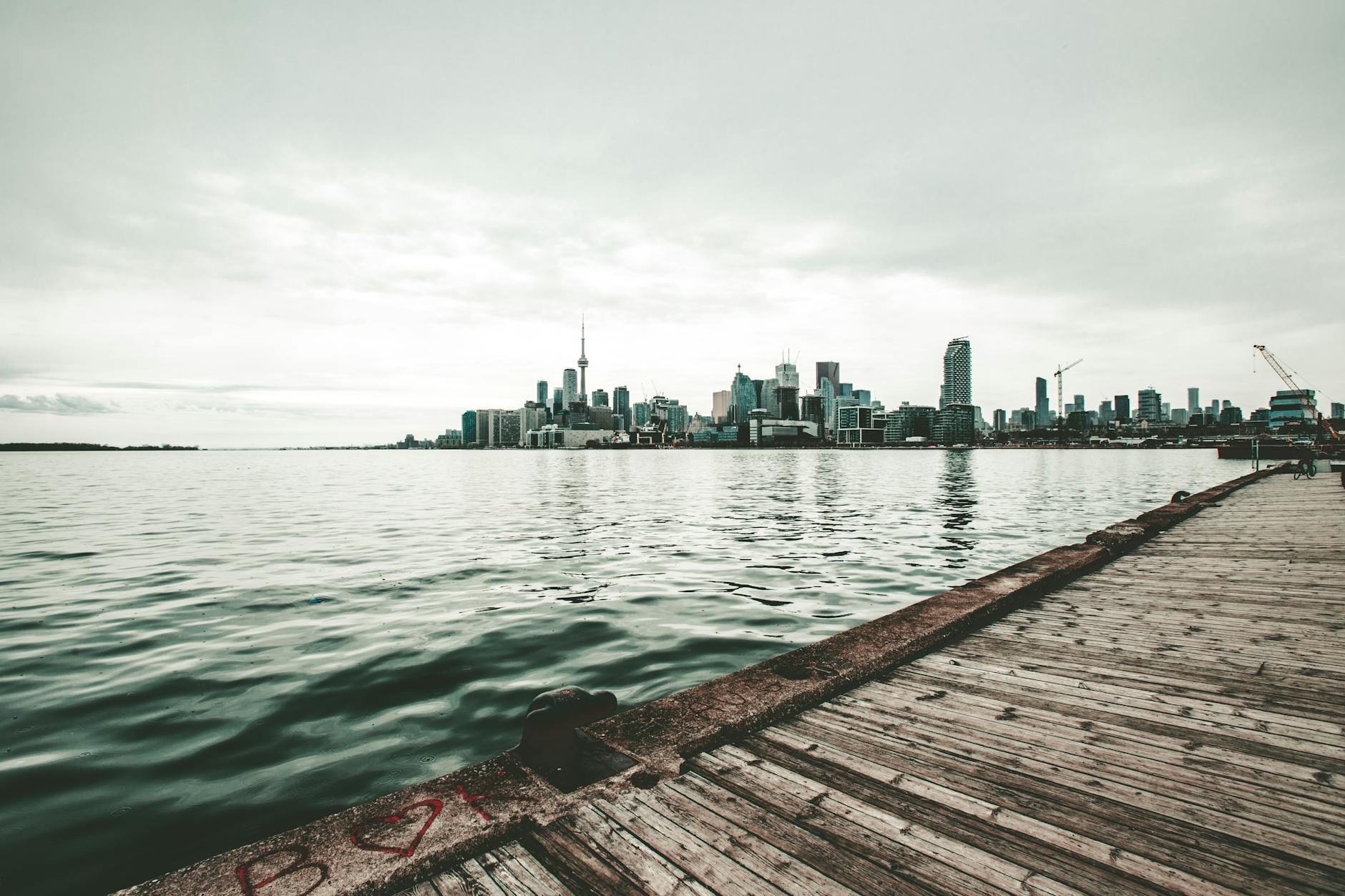
Right next to Cherry Beach, Polson Pier sticks out into the harbour and offers what photographers consider the single best skyline view in Toronto. There’s no parking at the pier itself (use Cherry Beach’s free lots), no concessions, and no signage — just an unobstructed view of the CN Tower against the water. Sunset on a clear evening is unforgettable.
Hanlan’s Point Beach
The westernmost beach on the Toronto Islands, Hanlan’s Point is the only clothing-optional beach in the city and one of the only ones you’ll have largely to yourself even in mid-July. The 800-metre stretch of sand faces the open lake with no skyline behind it, which makes for an unusually serene Toronto beach experience. Take the Hanlan’s Point ferry directly from Jack Layton terminal.
The Bluffer’s Park Overlook
Most visitors never see the Scarborough Bluffs, the 90-metre escarpment of stratified sand and clay cliffs that runs along Toronto’s eastern shore. Bluffer’s Park at the foot of Brimley Road has a small beach, a marina, and the most dramatic cliff views in the city — especially at sunrise. The summit at Cathedral Bluffs Park up the hill offers an even more sweeping vista; pack a thermos and a sweater.
Humber Bay Park West
On the city’s western lakeshore, Humber Bay Park West offers a rare west-facing waterfront location with prime sunset views over Lake Ontario, a butterfly garden, the Air India 182 Memorial, and the iconic photo composition of the CN Tower framed by the white-arched Humber Bay Arch Bridge.
Hidden Architectural Gems
Walk the same stretch of Bay Street twice and you might never notice some of the city’s most beautiful buildings. These are Toronto’s best hidden architectural moments.
Osgoode Hall & the Cow Gates
Osgoode Hall on Queen Street West has been the home of Ontario’s legal profession since 1832, and the building’s atrium — with its hand-laid marble floors, double-helix staircase, and stained glass — is open to the public on weekdays. Outside the front gates, look for the famous “cow gates,” metal swing-stiles designed in the 1860s to keep cattle from wandering in from the pasture that once surrounded the building. Free guided tours run weekday afternoons in summer.
The Toronto Reference Library
Designed by Raymond Moriyama in 1977, the central public reference library at Yonge and Bloor is one of Canada’s great modernist interiors: a five-storey atrium with cascading study floors, glass elevators, an indoor waterfall, and a permanent collection of Sherlock Holmes memorabilia (the Arthur Conan Doyle Collection on the fifth floor). It’s free to walk in, free to study, and easily one of the best places to spend a rainy afternoon.
The Historic Distillery District at Dawn
The Distillery District’s cobblestoned Victorian alleys are crowded most of the year, but visit on a Sunday morning before 8 a.m. and you’ll have the entire 13-acre former Gooderham & Worts whiskey complex to yourself. The light hits the brick warehouses just right, the cafes are quiet, and you can hear birds in the courtyards.
Old City Hall’s Gargoyles
Old City Hall on Queen Street has 15 grotesque gargoyles peering out from its sandstone facade — some of which are caricatures of city officials who refused to pay the architect’s fees in 1899. The faces nearest the main entrance are unmistakably mocking. Bring binoculars or zoom in with your phone camera.
Toronto’s Quiet Neighbourhoods
Some Toronto neighbourhoods get all the attention; others quietly do their own thing. These are the ones worth a deliberate detour.
Roncesvalles Village
Toronto’s historically Polish neighbourhood west of High Park has slowly become one of the city’s most charming residential strips. Roncesvalles Avenue between Queen and Bloor has cafes (Cafe Polonez for pierogis, Easy Restaurant for breakfast), bookshops (Type Books outpost, the Roncey neighbourhood library branch), and Sunday morning farmers’ markets in summer. The energy is village-like in a city of three million.
The Junction
The Junction in west-end Toronto was a dry neighbourhood until 1998 due to a 19th-century temperance bylaw, which is part of why it stayed off the radar so long. Today the Dundas Street strip between Keele and Quebec is one of the city’s most interesting design districts, with mid-century furniture stores, indie galleries, top-tier coffee at Rooster Coffee House, and one of Toronto’s best pizza spots at Pizzeria Defina.
Corktown & Cabbagetown
East of downtown, Corktown and Cabbagetown contain the largest collection of preserved Victorian houses in North America. Wander Cabbagetown’s Carlton Street and Wellesley Park on a Saturday morning and you’ll see brick-fronted heritage houses, ornate gingerbread trim, and gardens you didn’t expect. Riverdale Farm, a working historic farm in the centre of Cabbagetown, is free and includes goats, cows, horses, and chickens.
Wychwood Barns & Hillcrest
The Artscape Wychwood Barns — five restored 1913 streetcar repair barns turned into a community arts hub — host a year-round Saturday farmers’ market, artist studios, and a public greenhouse. The surrounding Hillcrest neighbourhood is one of the city’s quietest, with views over downtown and a small but mighty cafe scene on St. Clair West.
Free or Almost-Free Hidden Experiences
Some of Toronto’s best hidden gems don’t cost anything. Wallet-friendly experiences worth seeking out:
The TD Gallery of Inuit Art
On the mezzanine of the TD Centre’s south tower in the Financial District, behind a discreet glass wall, hides the largest free public Inuit art gallery in the city. Hundreds of soapstone and bone sculptures from across the Canadian Arctic, organized by region. Open weekday business hours; entirely free; rarely more than a handful of visitors.
The Bay of Spirits Gallery
Tucked on Front Street near the St. Lawrence Market, the Bay of Spirits Gallery is one of the country’s most respected commercial Inuit and Northwest Coast First Nations art galleries. Browsing is free; the curatorial staff are warm and informative; and you’ll see museum-quality work that would cost hundreds of dollars to view elsewhere.
Sunday Service at St. James Cathedral
Even non-religious visitors should consider sitting in for an evensong service at St. James Cathedral on King Street — the building dates to 1853, has the tallest spire in Canada, and the choir program is genuinely transcendent. Sunday afternoons are particularly affecting.
Doors Open Toronto
For one weekend each May, more than 150 architecturally and culturally significant Toronto buildings — many of which are normally closed to the public — open their doors for free. Past participants have included the R.C. Harris Filtration Plant, Lower Bay Subway Station, the Distillery District’s old whiskey vaults, and the Toronto Stock Exchange trading floor. Plan your visit around it if you can.
Day-Trip Hidden Gems Within an Hour
Some of Toronto’s best hidden gems aren’t actually in Toronto. These nearby spots make excellent half-day trips.
The Cheltenham Badlands
An hour northwest of Toronto in Caledon, the Cheltenham Badlands are a small but striking patch of red-and-grey eroded clay hills that look transplanted from the American Southwest. Boardwalks protect the soft soil; admission is by paid timed-entry pass through Ontario Heritage Trust.
Elora Gorge & Elora Quarry
The town of Elora, 90 minutes west of Toronto, sits on a 22-metre-deep limestone gorge that you can hike, raft (in spring), or photograph from cliffside trails. Nearby Elora Quarry is a swimmable spring-fed quarry pool where Torontonians escape on hot summer weekends. It pairs well with the other day trips from Toronto if you have a full day to spare.
Albion Hills & the Caledon Trailway
Within an hour’s drive of downtown, the Albion Hills Conservation Area and the connecting Caledon Trailway offer mountain biking, cross-country skiing, and quiet forested hikes that 99% of Toronto tourists never know about.
Frequently Asked Questions About Toronto Hidden Gems
What’s the most underrated thing to do in Toronto?
The Toronto Islands at sunset, Allan Gardens Conservatory in winter, and Guild Park in autumn all routinely surprise visitors who came for the CN Tower and ended up loving these instead.
Are Toronto’s hidden gems safe to visit alone?
Yes. Almost all the spots on this list are in safe, well-trafficked areas of the city. The waterfront beaches and parks are particularly comfortable for solo visitors during daylight hours. As with any city, exercise standard urban awareness after dark.
When is the best time to visit Toronto’s hidden gems?
Weekday mornings and Sunday mornings consistently offer the smallest crowds. For outdoor gems, late spring (May) and early fall (late September) hit the sweet spot for weather and quiet. Our breakdown of the best time to visit Toronto goes month by month if you are still picking dates.
Are there hidden gems for families with kids?
Absolutely. Riverdale Farm, the High Park Zoo, the Music Garden, and the Cherry Beach dog beach are all family favourites. The Bata Shoe Museum’s ground floor and the Toronto Reference Library’s children’s area both work well with younger visitors. There is plenty more in our guide to Toronto with kids.
How do I find new hidden gems in Toronto?
Locals usually share their favourites by word of mouth, but the BlogTO “hidden gems” tag, the Atlas Obscura Toronto entry, and the Heritage Toronto walking tour archive are all excellent starting points for further discoveries.
Find Your Own Toronto
The best part of seeking out hidden gems is that the list is never finished. New laneway galleries open each year, old speakeasies change names, and the city’s 300 kilometres of ravines hide more spots than any single guide can cover. Pick five or six from this list, build a half-day around each, and let curiosity handle the rest. The Toronto you stumble onto off the main itinerary tends to be the one you describe to people back home. When you want more in that vein, our guides to things to do in Toronto and the city’s genuinely unique things to do in Toronto pick up the thread.