Hockey is Canada’s defining sport, and the Hockey Hall of Fame in Toronto is its sacred ground. Housed in a stunning 1885 former Bank of Montreal building at the corner of Yonge and Front, the Hall holds the original Stanley Cup, every major NHL trophy, more than 65,000 square feet of interactive exhibits, and the largest collection of hockey artifacts in the world. Lifelong fans come for the trophies; plenty of people who can’t name a single current player leave won over by the building and the Cup itself. This guide runs through tickets and hours, the exhibits worth your time, how to get there, family logistics, and photography — with the questions first-timers tend to ask answered along the way. It’s also an easy downtown stop to fold into a wider tour of Toronto attractions.
For up-to-date official information, see the official Hockey Hall of Fame tickets and hours.
Hockey Hall of Fame Quick Facts
The Hockey Hall of Fame is located at 30 Yonge Street, in the thick of downtown Toronto’s Financial District. The Hall occupies the lower levels of the historic Bank of Montreal building (constructed in 1885 with hand-carved stone, marble columns, and a stained-glass dome) and an adjoining modern wing, totalling more than 65,000 square feet of exhibition space.
The Hall was founded in 1943 in Kingston, Ontario, before relocating to the Canadian National Exhibition grounds in Toronto in 1961, then to its current downtown location in 1993. It is administered as a not-for-profit institution by a board that includes representatives from the NHL, the NHLPA, the IIHF, and Hockey Canada. Inductees are voted in by an 18-member selection committee, with new members announced annually in late June.
Hockey Hall of Fame Hours & Tickets in 2026
Hours of Operation
The Hockey Hall of Fame is open 364 days a year (closed only on Christmas Day) with hours that adjust seasonally. Regular hours typically run 10 a.m. to 5 p.m. weekdays, and 10 a.m. to 6 p.m. on weekends and during summer school holidays. Last entry is approximately 60 minutes before closing. Confirm current hours at hhof.com before your visit, especially around major holidays and during the Stanley Cup Finals when special programming sometimes affects the schedule.
Ticket Prices
Adult general admission is approximately $25 plus tax (around $28 all-in). Seniors (65+) and youth (4–17) are around $20. Children 3 and under enter free. Family packages and multi-day passes are available; group rates apply to bookings of 10 or more.
Booking online is generally the easiest option, though walk-up tickets are typically available even on weekends. The Hall is rarely sold out, so timed-entry isn’t enforced as strictly as at other major Toronto attractions.
Free Admission & Discount Programs
The Hall offers complimentary admission to active military personnel and veterans with valid ID. Group rates and educational pricing are available for school field trips. Several Toronto Marriott hotels and other partners offer combo tickets bundling Hall admission with a CN Tower visit, hotel stay, or restaurant meal.
Toronto CityPASS
The Hockey Hall of Fame is not currently part of the Toronto CityPASS bundle (the bundle includes the CN Tower, Ripley’s, Casa Loma, the ROM, and either the Toronto Zoo or Ontario Science Centre). However, the Hall’s downtown location and reasonable standalone price make it easy to add as a separate stop.
How to Get to the Hockey Hall of Fame
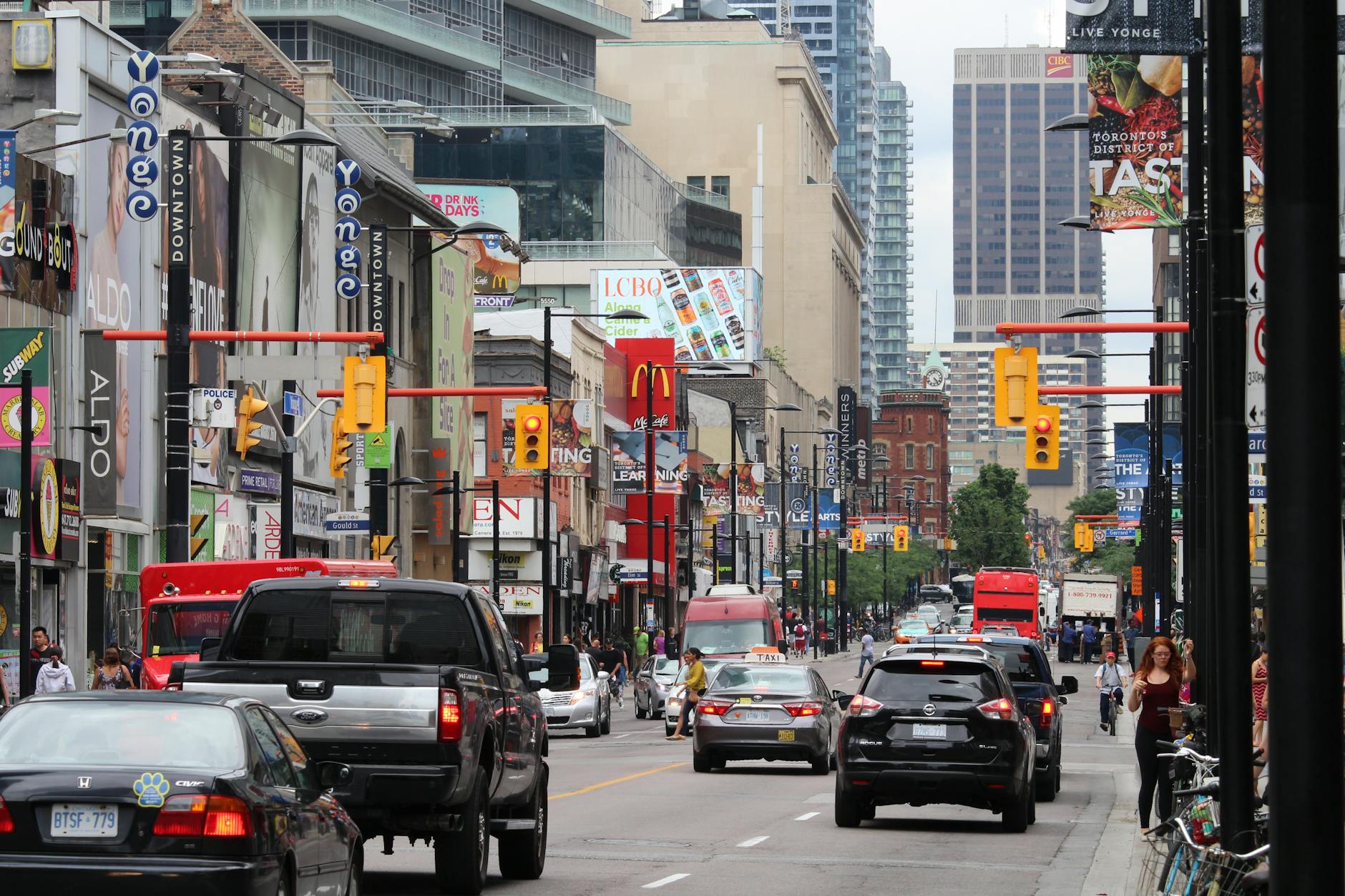
The Hall sits at one of downtown Toronto’s busiest intersections (Yonge and Front Street West) and is one of the most accessible major attractions in the city.
By Subway
Take the Yonge-University (Line 1) subway to Union Station and walk three minutes north on Yonge Street to the Hall’s entrance. The Hall is also accessible via the underground PATH network, climate-controlled and dry in any weather.
By Train or UP Express
All GO Transit commuter trains terminate at Union Station, three minutes from the Hall. The UP Express train from Pearson International Airport reaches Union in 25 minutes for $12.35.
By Car
Multiple paid parking garages serve the area, with the BCE Place underground lot directly beneath the Hall offering the most convenient access. Expect $20–$35 for a half-day. Public transit is significantly easier than driving in this area.
What to See at the Hockey Hall of Fame
The Hall’s 65,000 square feet are organised into themed zones, each with its own focus. The recommended self-guided tour takes most visitors 90 minutes to two hours, though serious hockey fans easily make it half a day.
The Esso Great Hall & the Stanley Cup
The emotional centrepiece of the Hall is the Esso Great Hall — the original 1885 banking floor of the Bank of Montreal, with hand-carved oak columns, marble walls, and the stunning stained-glass dome overhead. The walls hold the bronze portraits of every Hall of Fame inductee since 1943, arranged chronologically. At the centre of the room sits the original 1893 Stanley Cup — the actual trophy first donated by Lord Stanley of Preston, Governor General of Canada, to recognize the top amateur hockey team in the country.
Two Stanley Cups are on display: the original silver bowl (kept in a temperature-controlled vault behind glass) and the modern presentation cup (the larger trophy that’s actually awarded each June and has visited every player on every winning team since the early 1900s). Visitors can take a complimentary professional photo with the modern Cup — high-resolution prints and digital downloads are available afterwards. The line for the Cup photo can stretch 30–60 minutes on busy weekends; come early to skip the wait.
The Trophies Gallery
Beyond the Stanley Cup, the Trophies Gallery in the Great Hall holds every major NHL trophy: the Conn Smythe (playoff MVP), the Hart Trophy (regular-season MVP), the Vezina Trophy (top goaltender), the Norris Trophy (top defenceman), the Calder Trophy (rookie of the year), and the Lady Byng (sportsmanship). The IIHF World Cup, the Olympic gold medals, and various Hockey Canada national trophies are also displayed.
Honoured Members & Inductee Profiles
The Honoured Members exhibits trace the careers of every Hockey Hall of Fame inductee, with displays organized by era and position. From Maurice Richard and Gordie Howe through Wayne Gretzky, Mario Lemieux, and Sidney Crosby, the photographs, memorabilia, and game-worn equipment cover more than a century of hockey history.
The Arena Zone & the First Zamboni
The Arena Zone is one of the Hall’s most family-friendly sections. Highlights include the first Zamboni used in the NHL (1954), full goaltender masks from across the decades (including the legendary Jacques Plante 1958 fibreglass mask — the first goalie mask ever worn in an NHL game), historic Stanley Cup banners, and a recreation of the Montreal Forum dressing room with original lockers, equipment, and audio of Habs legends. The recreated Montreal Forum dressing room is genuinely moving for fans of the team or the game’s history.
Be a Player Interactive Zone
The interactive zone is the Hall’s most popular family stop and where many visitors lose the most time. Test your shooting accuracy in the “Shoot Out” rink (against a virtual NHL goaltender), put on goalie equipment in “Be a Goalie” and try to stop foam pucks fired at NHL speeds, or try your hand at calling a play-by-play in the Broadcast Zone with replay-style analysis. The interactive area is included with general admission; budget at least 30 minutes here.
Tim Hortons Theatre & Documentary Films
The Hall’s on-site theatre runs a rotating program of hockey documentaries and historic film footage throughout the day. Schedules are posted at the entrance; films are typically 15 to 20 minutes and are included with admission.
Original Six Era Exhibits
For older fans, the Original Six era (1942–1967) gallery covers the period when the NHL was just six teams — the Toronto Maple Leafs, Montreal Canadiens, Boston Bruins, Chicago Blackhawks, Detroit Red Wings, and New York Rangers. Game-worn jerseys, original sticks, and team artifacts trace the era that defined the modern league.
Women’s Hockey, IIHF & International Hockey
The Hall has expanded its coverage of women’s hockey, IIHF World Championships, and Olympic hockey in recent years. Permanent and rotating exhibits cover Canadian women’s teams, international hockey history, and the growth of professional women’s leagues.
Best Time to Visit the Hockey Hall of Fame
Best Time of Day
Weekday mornings (10 a.m. to noon) are reliably the quietest. The lunch-hour crowd from the Financial District thins out by mid-afternoon, with weekday afternoons offering a comfortable visit. Weekends are busier, especially during NHL playoff months (April–June) and around the annual induction ceremony in November.
Best Day of the Week
Tuesday, Wednesday, and Thursday are the consistently quietest days. Mondays often bring more school groups; weekends are family-heavy.
Best Time of Year
The Hall is busiest during the NHL playoffs (April–June), the induction week in November, and during major hockey events at Scotiabank Arena across town. The shoulder months — September through October and January through March — offer the quietest experience.
Special Hockey Weekends
If you’re visiting Toronto during a Toronto Maple Leafs home game, expect the Hall to be busy with fans visiting before the game. The Hockey Hall of Fame and Scotiabank Arena (home of the Leafs) are about 10 minutes apart on foot or 5 minutes by Yonge subway — an easy combination.
Hockey Hall of Fame with Kids: Family Tips
The Hall is one of Toronto’s most consistently family-friendly attractions. Children are reliably engaged by the Be a Player interactive zone, the photo with the Stanley Cup, the Arena Zone (especially the goalie mask collection), and the original Zamboni. Plan around 90 minutes to two hours total with younger children before energy flags.
Practical family logistics: strollers and large bags are welcomed throughout, the entire facility is wheelchair and stroller accessible via elevators, and family washrooms with baby-changing stations are available. The Stanley Cup photo line can be the family bottleneck — come early to avoid the wait.
If kids are along for the trip, our guide to Toronto with kids lays out what else fills a family day downtown.
Photography at the Hockey Hall of Fame
Personal photography is permitted throughout the Hall without flash, tripods, or selfie sticks. The dim-lit displays are challenging for photography, but the Esso Great Hall’s natural lighting through the stained-glass dome creates one of the most photogenic interiors in the city.
Best Photo Spots
The Esso Great Hall’s 1885 banking architecture and stained-glass dome are the most photogenic interior. The professional photo with the Stanley Cup is the must-have memento — high-resolution prints and digital copies can be downloaded after the visit. The Be a Player interactive zone offers active shots of family members in goalie gear or shooting drills. The first Zamboni from 1954 is a classic photo opportunity for kids.
Phone Settings
Flash is prohibited and would only reflect off the display cases anyway. Use your phone’s “night mode” for the dim Honoured Members galleries. Press the lens directly against display glass when possible to eliminate reflections.
The Hockey Hall of Fame Induction Ceremony
For serious hockey fans, the Hall’s annual induction ceremony each November is the headline event. Three to seven new inductees are honoured each year — living players (the famous “Honoured Members”), builders, broadcasters, and women players. The induction week typically includes a public Hall of Fame Game between the Toronto Maple Leafs and a visiting team, fan-accessible meet-and-greets with new inductees, and the formal black-tie induction ceremony itself.
Tickets to the induction game and the public events are released in early autumn each year and sell out quickly. Even visiting Toronto during induction week (without attending the actual ceremony) puts you in the city when the hockey world’s attention is centred there.
Where to Eat Near the Hockey Hall of Fame
The Hall sits in the dense core of the Financial District, surrounded by some of Toronto’s most concentrated dining options.
Quick Lunch Spots
The Brookfield Place atrium next door has multiple counter-service options, from Goodfellas Pizza to Sushi Couture. The PATH’s underground food courts are a 5-minute walk in any direction and offer fast options at all price points.
Sit-Down Restaurants
Real Sports Bar & Grill (a 5-minute walk south at Maple Leaf Square) is Canada’s biggest sports bar with 200+ TVs and is the natural pre-game stop for Leafs fans visiting the Hall and continuing to Scotiabank Arena. The Sterling Pub on Yonge offers traditional pub fare in a well-loved historic Toronto building. For something more elevated, Canoe Restaurant on the 54th floor of the TD Bank Tower offers Modern Canadian cuisine with a spectacular financial-district view (lunch only on weekdays).
Iconic Toronto Lunch Stops
Two Toronto institutions sit within a 10-minute walk: St. Lawrence Market (the 200-year-old food market) and the historic Senator Restaurant (Toronto’s longest continuously running dining room). Both are excellent post-Hall lunch options. For full Toronto dining context, see our complete Toronto food guide.
Accessibility at the Hockey Hall of Fame
The Hall is fully wheelchair accessible, with elevator access to all public exhibits and accessible washrooms throughout. Service animals are welcome. Wheelchair loans are available at the front desk on a first-come basis. The Hall is committed to accessibility and works with visiting families to accommodate specific needs — contact the visitor services team in advance for individualized planning.
What to See Near the Hockey Hall of Fame
Scotiabank Arena
The home of the Toronto Maple Leafs and Toronto Raptors is a 10-minute walk south at Maple Leaf Square. During hockey season (October–April), pair a Hall visit with an evening game for one of the great Toronto sports days.
CN Tower & Ripley’s Aquarium
Both attractions are a 10-minute walk west of the Hall. A morning at the Hall, lunch at Real Sports, and an afternoon at Ripley’s makes a perfect family day. See our complete guides to the CN Tower and Ripley’s Aquarium.
St. Lawrence Market
A 7-minute walk east on Front Street. The 200-year-old market is one of the world’s great food markets and a perfect lunch stop. Open Tuesday through Saturday.
Distillery District
A 15-minute walk further east, the Distillery District is Toronto’s 13-acre Victorian whiskey complex turned pedestrian art-and-dining district. A natural pairing for a half-day Toronto sampler.
Union Station & the Royal York Hotel
The 1927 Beaux-Arts Union Station and the historic 1929 Royal York Hotel sit immediately south of the Hall. Both are architectural landmarks worth a quick photo stop on your way through the area.

Frequently Asked Questions About the Hockey Hall of Fame
How long does a Hockey Hall of Fame visit take?
Plan 90 minutes to two hours for a complete visit at a comfortable pace. Serious hockey fans easily make it half a day. Visitors who only want to see the Stanley Cup, take the photo, and try a few interactive activities can do a focused 60-minute visit.
How much does the Hockey Hall of Fame cost?
Adult admission is approximately $25 plus tax. Seniors, youth (4–17), and family pricing apply. Children 3 and under are free. Active military and veterans receive complimentary admission.
Can you take a photo with the Stanley Cup?
Yes — this is one of the highlights of a Hall visit. Free professional photography is included with admission, and high-resolution prints and digital copies can be purchased afterwards. The line for the Cup photo can stretch 30–60 minutes on busy weekends, so come early to skip the wait.
Is the original Stanley Cup at the Hockey Hall of Fame?
Yes — the original 1893 Stanley Cup donated by Lord Stanley is permanently displayed in a temperature-controlled vault inside the Esso Great Hall. The modern presentation cup (the trophy actually awarded each year) is also displayed and is the version visitors take photos with.
Are there interactive games at the Hockey Hall of Fame?
Yes — the Be a Player interactive zone includes a virtual goaltending challenge, a shooting accuracy test against a virtual goalie, broadcast play-by-play simulation, and several other interactive experiences. All are included with general admission.
When is the Hockey Hall of Fame least crowded?
Tuesday through Thursday mornings (10 a.m. to noon) are consistently the quietest. The shoulder months — September, October, January, February — are quietest overall. The busiest stretches are NHL playoffs (April–June), induction week in November, and around major hockey events at Scotiabank Arena.
Is the Hockey Hall of Fame worth visiting if you’re not a hockey fan?
Yes — the historic Bank of Montreal building, the stunning Esso Great Hall architecture, the Stanley Cup photo, and the interactive zone are widely enjoyable regardless of fan status. Many non-hockey-fans report leaving with a new appreciation for the sport’s cultural place in Canadian life.
Can you buy hockey memorabilia at the Hockey Hall of Fame?
Yes — the on-site Spirit of Hockey gift shop carries jerseys, signed memorabilia, books, kids’ merchandise, and authentic NHL gear. Prices range from $5 souvenirs to $1,000+ signed jerseys.
Where is the Hockey Hall of Fame?
The Hockey Hall of Fame is at 30 Yonge Street in downtown Toronto, at the corner of Yonge and Front Street West, three minutes’ walk north of Union Station. Underground access via the PATH network is available for visitors arriving in poor weather.
Plan Your Hockey Hall of Fame Visit
The Hockey Hall of Fame is the rare attraction that delights both die-hard fans and casual visitors who barely know offside from icing. The combination of the breathtaking 1885 Bank of Montreal architecture, the original Stanley Cup, the comprehensive history of every major NHL trophy, and the genuinely fun interactive zone makes the Hall a consistently rewarding 90-minute to two-hour stop. For first-time visitors, target a weekday morning, prioritise the Esso Great Hall, take the Stanley Cup photo early, and try at least one interactive activity. For locals, the induction week in November is a memorable time to visit and brings the entire hockey world to Toronto.
To round out an itinerary around it, see the broader guides to Toronto attractions and things to do in Toronto.