Canada’s largest museum — and one of the most-visited museums in North America — the Royal Ontario Museum (ROM) holds 18 million artifacts, fossils, artworks, and natural history specimens across 40 galleries spanning four continents and 4.5 billion years of natural history. From a recently expanded Age of Dinosaurs gallery with full T. rex and Triceratops skeletons to the immersive Bat Cave, the soaring Michael Lee-Chin Crystal entrance designed by Daniel Libeskind, and Indigenous Canadian masterworks in the Daphne Cockwell Gallery, the ROM rewards every level of curiosity. This complete visitor’s guide covers ticket prices, hours, must-see exhibits, transit, dining, family tips, photography rules, and answers to the questions visitors ask most. For broader context, see our complete guide to Toronto arts, culture and museums.
For up-to-date official information, see the Royal Ontario Museum’s official visitor information.
Royal Ontario Museum Quick Facts
Before getting into the details: the Royal Ontario Museum is located at 100 Queen’s Park in Toronto’s Bloor-Yorkville neighbourhood, directly accessible from the Museum Subway Station on Line 1. The ROM was founded in 1912 and is governed by the province of Ontario, with deep affiliations to the University of Toronto. It is the most-visited museum in Canada, drawing more than one million visitors per year, and houses the world’s largest collection of fossils from the Burgess Shale, an extraordinary library and archive collection, and one of the most comprehensive Chinese cultural collections outside Asia.
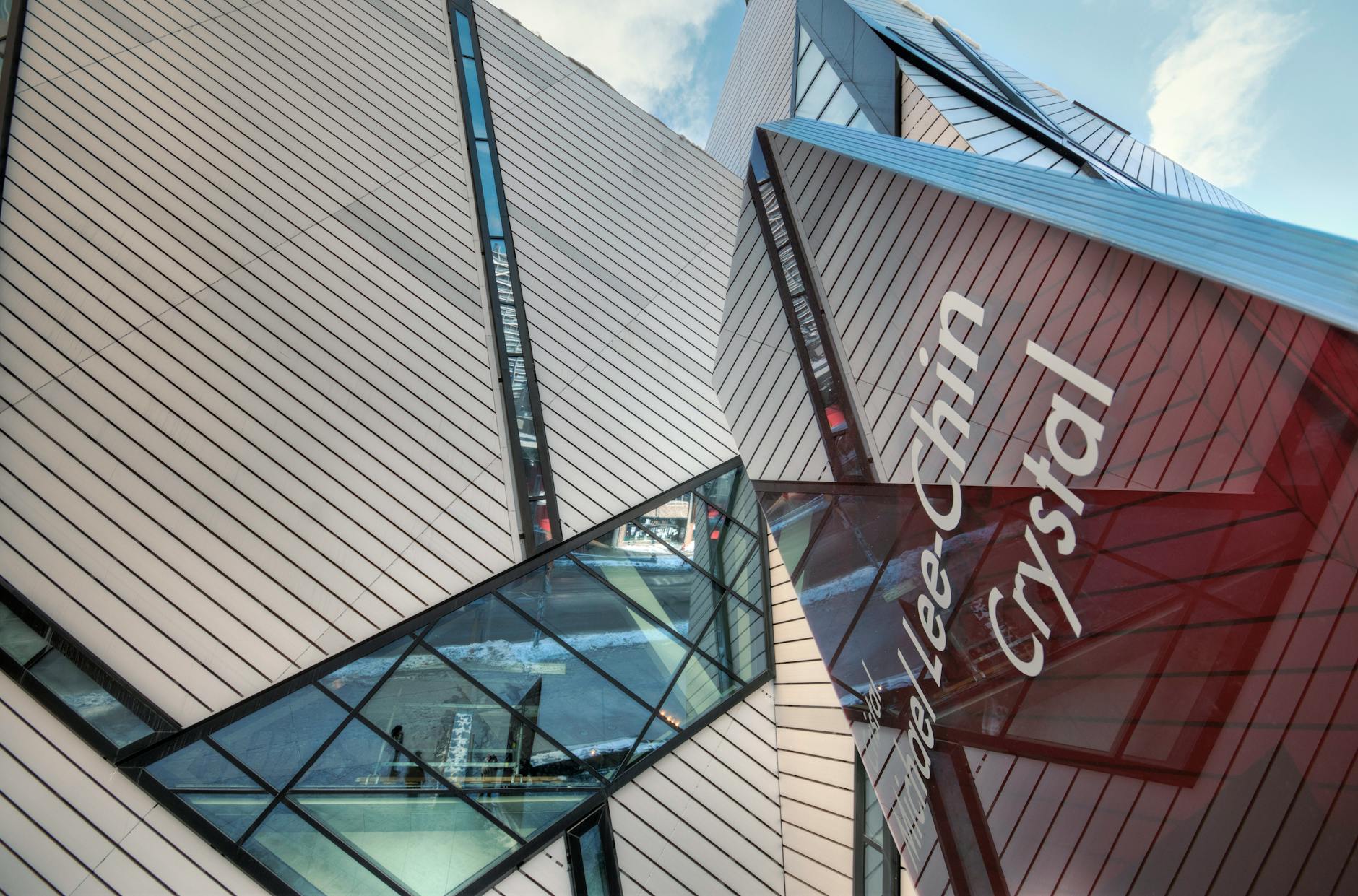
The ROM occupies two interlocked buildings: the original 1914 heritage building of pale Indiana limestone, and the 2007 Michael Lee-Chin Crystal addition by architect Daniel Libeskind — a deconstructivist composition of five interlocking aluminum-and-glass prisms that has become one of Toronto’s most recognizable contemporary buildings.
Royal Ontario Museum Hours & Admission
Plan around current hours and ticket pricing — both are subject to change, so confirm at rom.on.ca before your visit.
ROM Hours
The Royal Ontario Museum is closed Mondays and open Tuesday through Sunday from 10 a.m. to 5:30 p.m. The museum stays open later (until 8:30 p.m.) on the third Tuesday evening of each month for the popular free-admission evening, and selected Friday Night events run later in the year. Entry stops 30 minutes before closing. Statutory holiday hours occasionally vary — the museum is typically closed December 25 and open with reduced hours on January 1.
ROM Ticket Prices
General admission for adults starts at around $26 CAD when purchased in advance online, with last-minute and walk-up tickets sometimes priced higher under the museum’s Plan Ahead Pricing model — the further in advance you book, the more you save. Children 3 and under enter free. Discounted pricing is available for youth, students, seniors, and Ontario Indigenous community members. Special exhibitions sometimes carry an additional fee that can be added at booking.
Free Admission Programs
The ROM offers genuinely valuable free programs worth planning around:
Free Third-Tuesday Evenings: On the third Tuesday of every month from 4:30 p.m. to 8:30 p.m., admission is free for everyone, including all permanent galleries. These evenings can be busy — arrive when doors open at 4:30 p.m. for the most comfortable experience.
ROM Members: A standard ROM membership ($95/year for individuals at time of writing) pays for itself after roughly four visits and includes unlimited free admission, members-only previews, and access to special exhibitions. A worthwhile splurge if you live in or near Toronto.
University of Toronto Students: Current U of T students receive free admission with valid student ID at all times.
Toronto CityPASS
The Toronto CityPASS bundles the ROM with the CN Tower, Ripley’s Aquarium, Casa Loma, and either the Toronto Zoo or Ontario Science Centre. Total savings on admission come to roughly 38% off individual tickets. The pass is valid for 9 consecutive days, with mobile delivery, making it especially flexible for multi-day visits.
How to Get to the ROM
The Royal Ontario Museum is one of the easiest major attractions to reach in Toronto, with multiple convenient transit options.
By Subway
Take the Yonge-University (Line 1) subway to Museum Station — literally the stop before St. George Station — and emerge at the museum’s south entrance via a covered walkway. The Museum Station platform itself is a hidden gem of public art, with columns disguised as totemic Egyptian and Indigenous figures. The 5-minute ride from Union Station makes the ROM exceptionally easy to combine with downtown attractions.
By Streetcar & Bus
The 506 Carlton streetcar stops three blocks south on College Street. The Spadina (510) streetcar reaches Spadina-Bloor, a 12-minute walk west. The 7 Bay bus runs along Bay Street and provides north-south access from Yonge.
By Car
Driving to the ROM is workable but not ideal — downtown traffic can be slow, and parking is paid. The Cumberland Garage at 75 Bedford Road, the Bay-Bloor Centre Garage, and the Manulife Centre lot at 55 Bloor West are the closest paid options, typically $15–$30 for a full visit. Limited on-street meter parking exists on side streets but enforcement is strict.
By Bike or Walk
The ROM is walking distance from Yorkville (5 minutes), Queen’s Park and the Ontario Legislature (8 minutes), and the University of Toronto’s Convocation Hall (3 minutes). Bike Share Toronto stations are immediately adjacent to the museum’s south entrance.
Must-See Exhibits at the ROM
With 40 galleries and 18 million objects, the ROM is impossible to see in a single visit. Most visitors plan around 3 to 5 must-see anchors and use whatever time remains to wander. These are the highlights every first-time visitor should prioritize.
The James and Louise Temerty Galleries of the Age of Dinosaurs
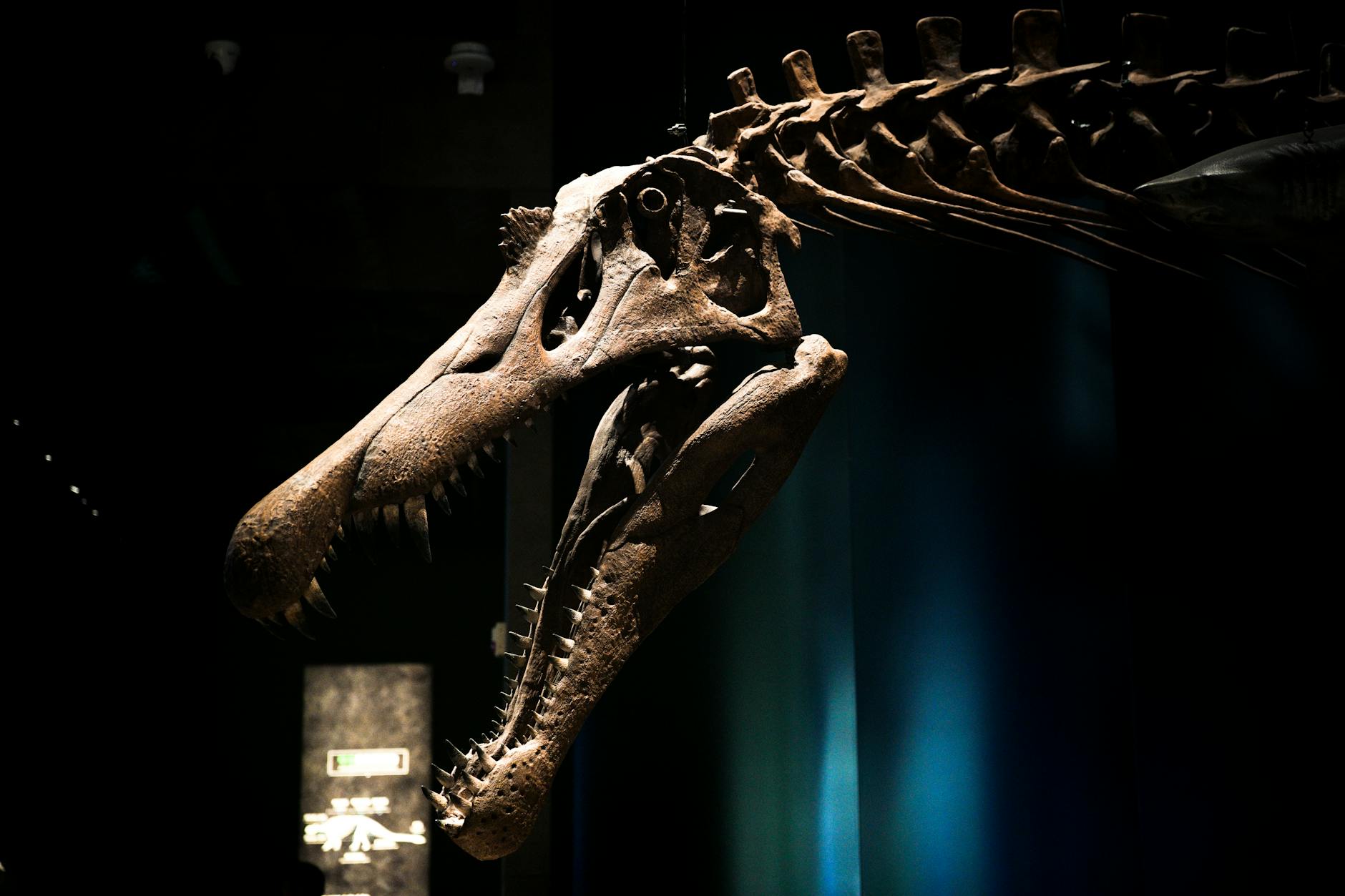
The ROM’s newly expanded Age of Dinosaurs galleries reopened in autumn 2025 after a major renovation that added more than 3,500 square feet of space and dozens of newly displayed specimens. The galleries showcase over 50 dinosaur fossil specimens, including a full-mounted Tyrannosaurus rex, a Triceratops, a Parasaurolophus, and the rare prosauropod Plateosaurus. Many of the new specimens have never been displayed publicly before, and a few are scientifically groundbreaking finds from the ROM’s active paleontological research program.
Allow 60–90 minutes for the dinosaur galleries alone — they reward unhurried exploration. The Dawn of Life adjacent gallery covers the deeper paleontological story before the dinosaurs, including a remarkable collection of Burgess Shale fossils from British Columbia.
The Bat Cave
The ROM’s Bat Cave is one of the most beloved exhibits in any Canadian museum — a fully immersive walk-through recreation of the St. Clair Cave in Jamaica, populated by more than 800 model bats and rich with sound design that simulates the experience of standing inside a working bat colony. Originally opened in the 1970s and recently reimagined with new audiovisual technology and special effects, the Bat Cave guides visitors from the shadowy cave mouth through a dramatic re-creation of the nightly exodus of bats taking flight at dusk. A favourite of children, atmospheric without being scary, and a perfect anchor for any first ROM visit.
The Michael Lee-Chin Crystal & the Stair of Wonders
The 2007 Daniel Libeskind addition is itself an exhibit. Walk into the museum’s main entrance off Bloor Street and you’re standing in a soaring four-storey atrium of angled aluminum panels and triangular glass voids. The Stair of Wonders — a glass staircase ascending the Crystal’s interior — is studded with rotating display cases containing some of the museum’s most evocative individual objects: a meteorite slice, an Egyptian shabti, a fragment of Roman fresco, an Inuit carving. Pause at every landing.
The Daphne Cockwell Gallery of Canada: First Peoples Art & Culture
On Level 1, this 9,000-square-foot gallery presents over 1,000 objects telling the story of Indigenous peoples across Canada from before European contact through to contemporary First Nations, Métis, and Inuit artists. Highlights include a 19th-century Haida totem pole, a full Haida canoe carved from a single cedar log, ceremonial regalia, beadwork, and contemporary sculpture from artists across the country. The gallery has been redeveloped in recent years with significant Indigenous community consultation, and its current presentation is one of the most thoughtful contemporary museum approaches to Indigenous Canadian heritage anywhere.
Chinese Temple Art & the Bishop White Gallery
The ROM holds one of the world’s most comprehensive Chinese collections outside Asia, including three monumental wall-sized murals from the 13th and 14th centuries depicting Buddhist and Daoist subjects. The Bishop White Gallery presents these paintings in a setting designed to evoke a Chinese temple, with dim lighting, side galleries displaying Buddhist sculpture, and a serene contemplative atmosphere. One of the museum’s quietest, most beautiful spaces.
Egyptian Galleries
The ROM’s Egyptian collection includes a complete Punic mummy, the painted coffin of Antjau, hieroglyphic stelae, and one of North America’s most extensive collections of pre-dynastic Egyptian artifacts. Pair this with the adjacent Nubian and Eastern Mediterranean galleries for a full ancient-world morning.
Mineralogy & Gems
The Teck Suite of Galleries covers the Earth Sciences with one of North America’s great mineral collections: massive crystals, fluorescent minerals under UV light, gold from across the world, and a permanent display of meteorites. The interactive earthquake simulator and the cross-section of a working mine are particular kid-pleasers.
Biodiversity Gallery & Mammals
The ground-floor biodiversity gallery is a standout for visitors interested in Earth’s ecosystems. Full mounted specimens of African elephants, polar bears, giant pandas, and a Bengal tiger are displayed alongside intricate dioramas of Canadian wildlife. The associated Schad Gallery of Biodiversity offers one of the museum’s most photographable interior spaces.
Special Exhibitions
The ROM hosts two to three major special exhibitions per year in the Roloff Beny Special Exhibitions Hall, drawing on its own collections and partnerships with major international museums. Recent exhibitions have included Auschwitz: Not Long Ago, Not Far Away; Wildlife Photographer of the Year; and major textile and fashion retrospectives. Special exhibitions often require a separate ticket; check the current schedule at rom.on.ca/exhibitions.
How Long to Spend at the ROM
This is the most-asked planning question, and the answer depends entirely on your interests.
For a focused 3-hour visit, prioritise: the Crystal entrance and Stair of Wonders, the Age of Dinosaurs galleries, the Bat Cave, and one cultural gallery (Indigenous Canada or Chinese Temple Art). This covers the highlights and leaves time to grab coffee at the on-site cafe.
For a half-day (4–5 hours) visit, add: the Egyptian galleries, the mineralogy collection, and one special exhibition if it’s a topic you’re curious about.
For a full day, the ROM rewards everything — you can comfortably visit every floor, eat lunch on-site at the C5 Restaurant, and still feel you’ve missed things. Keen museum visitors return to the ROM repeatedly over the course of a week-long Toronto trip.
For families with young children, plan for 2–3 hours before energy flags. The Bat Cave and dinosaurs are reliably gripping; rotate from gallery to gallery rather than trying to do everything in a single push.
ROM with Kids: Family Tips
The ROM is one of Toronto’s most family-friendly major attractions. Children love the Bat Cave (built specifically with kids in mind), the dinosaur galleries (the new T. rex skeleton in particular is a showstopper), the biodiversity dioramas, and the interactive earthquake simulator in the geology galleries.
The CIBC Discovery Gallery on Level 2 is a dedicated family space designed for kids ages 4–12, with hands-on activities, dress-up costumes from different cultures, and a working archaeological dig pit where children can excavate replica artifacts.
Practical family logistics: strollers are welcome throughout the museum (no bag-check required), all elevators are accessible, baby-changing rooms are available on every level, and the on-site C5 Restaurant and Druxy’s deli both have family-friendly menus. Free coat-check is available year-round near the main entrance.
For more family-friendly Toronto planning, see our complete guide to Toronto with kids.
Accessibility at the ROM
The ROM is fully wheelchair accessible. All galleries are step-free via elevators, accessible washrooms exist on every floor, and the museum offers free wheelchair loans on a first-come basis. Service animals are welcome throughout. Adult companions of guests with disabilities can request a complimentary admission ticket through the museum’s access programs — details on rom.on.ca/accessibility.
Touch-friendly tours and ASL/LSQ-interpreted programs are available on selected dates throughout the year. Sensory-friendly mornings — with reduced lighting, lower sound levels, and quiet rooms — are scheduled monthly for visitors on the autism spectrum or with sensory sensitivities.
Where to Eat at the ROM
The ROM has two on-site dining options and is surrounded by some of Toronto’s best restaurants in Yorkville and Bloor-Yorkville.
On-Site Dining
C5 Restaurant Lounge: The fine-dining option on the fifth floor of the Crystal, with one of Toronto’s most distinctive dining rooms — an angled glass-and-aluminum space with views over Bloor Street and the Yorkville rooftops. Modern Canadian menu, seasonal produce, ambitious wine list. Reservations recommended.
Druxy’s Famous Deli at the ROM: The casual ground-floor option near the Queen’s Park entrance. Sandwiches, soups, salads, and family-friendly options. Quick-service.
Coffee & Snacks: Several coffee bars throughout the museum offer espresso, pastries, and grab-and-go snacks for visitors who want to pause without leaving.
Nearby Restaurants
The ROM sits on the doorstep of Yorkville, one of Toronto’s densest fine-dining neighbourhoods. Walking distance options include Joso’s for Adriatic seafood, Sotto Sotto for Italian, the Coffee Mill for old-school Hungarian pastries, and the Yorkville branch of Buca for high-end Italian. For something more casual, the Yorkville Village complex on Avenue Road has a wide range of mid-range chains and independent options.
Five minutes south, the University of Toronto’s College Street strip has an enormous range of inexpensive student-friendly options. For full Toronto dining context, see our complete Toronto food guide.
Photography at the ROM
Personal photography is permitted in most areas of the ROM without flash, tripods, or selfie sticks. Some special exhibitions and individual loaned objects prohibit photography — signage is posted at gallery entrances. Tripod-supported photography requires advance permission through the museum’s Communications office.
The most photogenic interior spots: the Stair of Wonders in the Crystal atrium, the looking-up shot from the bottom of the central spiral staircase, the dinosaur gallery main hall, and the soft-lit Bishop White Gallery of Chinese murals. The exterior of the Crystal at dusk — lit from within with the angled glass faces glowing — is the iconic Yorkville photo.
ROM History & Architecture
The Royal Ontario Museum opened on March 19, 1914, as a joint provincial-university institution, with the heritage building designed by Toronto architects Frank Darling and John A. Pearson in a Neo-Romanesque style of pale limestone and terracotta. The original building’s most distinctive feature is the rotunda — a multi-coloured glass mosaic ceiling installed in 1933 that depicts cultural patterns from across the museum’s collection regions.
Throughout the 20th century the museum expanded incrementally with additional wings on the south, east, and north faces. In 2002, the museum announced its Renaissance ROM project, an ambitious renewal that culminated in 2007 with the opening of the Michael Lee-Chin Crystal — a $300-million addition by Polish-American architect Daniel Libeskind that became one of the most discussed architectural projects in Canada.
The Crystal’s five interlocking aluminum-and-glass prisms cantilever dramatically over Bloor Street, making the ROM’s northern face one of Toronto’s most photographed building exteriors. The design has been controversial — reviews ranged from visionary to disastrous — but the addition has unquestionably raised the ROM’s international profile and increased annual attendance significantly.
ROM Membership: Is It Worth It?
For visitors who live in or near Toronto, a ROM membership is one of the city’s best cultural deals. The standard individual membership at $95/year (price subject to change) includes unlimited general admission for one year, members-only previews of new exhibitions, discounts at the C5 restaurant and the museum shop, and reciprocal access to many partner museums across North America. Family memberships ($145–$185/year for two adults plus children) cover full households.
The membership pays for itself after roughly four visits. For Toronto residents who enjoy returning to anchor exhibits like the dinosaurs and the Bat Cave, or want unrestricted access to special exhibitions, it’s an exceptionally well-priced cultural subscription.
What to See Near the ROM
The ROM is in one of Toronto’s densest cultural neighbourhoods. Combine your visit with one or more of these adjacent experiences.
Yorkville Shopping & Cafes
Yorkville begins steps from the ROM’s main entrance and offers some of Toronto’s most distinctive shopping — Mink Mile luxury boutiques on Bloor Street, independent designers on Cumberland and Yorkville Avenue, and the Yorkville Park, a small public square with a chunk of Canadian shield granite and rotating public art.
Casa Loma
Toronto’s 98-room Gothic Revival castle is a 15-minute walk or 5-minute streetcar ride north of the ROM. Pair the two for a complete Toronto cultural day.
University of Toronto Campus
The U of T’s St. George campus immediately south of the ROM is one of North America’s most beautiful urban university grounds, with King’s College Circle, Convocation Hall, the Robarts Library, and the historic University College all within a short walk.
Bata Shoe Museum
Across the street from the ROM, the Bata Shoe Museum holds 13,000 pieces of footwear spanning 4,500 years of human history. An unexpectedly fascinating small museum, with admission well under $20.
Gardiner Museum
Two blocks south on Avenue Road, the Gardiner Museum is North America’s only major museum dedicated to ceramic art. Free Wednesday evenings; small enough to combine with the ROM in a single afternoon.
Frequently Asked Questions About the ROM
How much does the Royal Ontario Museum cost?
Adult admission starts at around $26 CAD with Plan Ahead Pricing online. Children 3 and under are free; discounted youth, student, and senior pricing is available. Special exhibitions sometimes require an additional fee. Free admission is offered the third Tuesday evening of each month from 4:30 to 8:30 p.m.
Is the ROM worth visiting?
Yes — particularly for first-time Toronto visitors interested in natural history, Indigenous cultures, ancient civilizations, or contemporary architecture. The combination of world-class collections (18 million objects, 40 galleries) and the architecturally distinctive Crystal entrance makes the ROM a defining Toronto cultural experience.
How long should I spend at the ROM?
Plan 3–4 hours minimum for a focused first visit covering the major must-see exhibits. A full-day visit (5–6 hours including a lunch break) lets you see most of the highlights without rushing. Families with young children will be comfortable in 2–3 hours.
Is the ROM free for kids?
Children 3 and under enter free. Children 4 and up require a discounted youth ticket. The third-Tuesday-evening free admission applies to all visitors regardless of age.
When is the ROM least crowded?
Tuesday and Wednesday mornings, especially in the off-season (November–March) are the quietest times. Sunday afternoons and weekend visits during March break, summer holidays, and Christmas school break are the busiest. Avoid the third Tuesday evening if you want a less crowded experience — the free admission program draws a large crowd.
Can you take photos at the ROM?
Yes, in most galleries without flash, tripod, or selfie stick. Some special exhibitions or individual loan objects prohibit photography; signage is posted at gallery entrances.
Does the ROM have a coat check?
Yes — complimentary coat check is available year-round near the main Crystal entrance. Strollers and large bags can also be checked.
Is there parking at the ROM?
The ROM does not have its own visitor parking lot, but multiple paid garages exist within a 5-minute walk: the Cumberland Garage, the Bay-Bloor Centre, and the Manulife Centre on Bloor are the closest. Subway access via Museum Station is significantly easier than driving.
What’s the best entrance to the ROM?
The Crystal entrance on Bloor Street is the architecturally striking arrival and the closest to Museum Subway Station. The Queen’s Park entrance on the south side is quieter and provides direct access to the original heritage building’s rotunda. Both lead to the same ticket counter.
Is the ROM the same as the AGO?
No. The Royal Ontario Museum (ROM) covers natural history, world cultures, and ancient civilizations. The Art Gallery of Ontario (AGO) covers visual art — painting, sculpture, photography, contemporary art. The two are distinct institutions on different sites and require separate admissions.
Plan Your ROM Visit
The Royal Ontario Museum is one of those rare museums that genuinely earns its “must-see” reputation. Whether you’re visiting Toronto for the first time and want a single anchor cultural experience or you’re a returning visitor working through Toronto’s cultural offerings systematically, the ROM rewards every visit. Book online for the best price, target Tuesday or Wednesday mornings for the quietest experience, prioritise the dinosaurs and the Bat Cave, and leave time to wander the Crystal’s Stair of Wonders without watching the clock.
For more cultural inspiration, see our complete guides to Toronto arts, culture and museums and Toronto attractions.